Comprendere l’ultimo rapporto IPCC: che effetti avrá la crisi climatica su di te?

Il Gruppo Intergovernativo di Scienziati sul Cambiamento Climatico (IPCC) ha pubblicato il suo ultimo rapporto sul clima. Con tutto ció che sta accadendo in giro per il mondo, molti di noi si sono persi questa notizia per strada. Tuttavia, quel che é scritto al suo interno è terrificante e non puó essere ignorato. É il momento di affrontarlo insieme.

Il report si focalizza sui punti in cui gli esseri umani e la natura sono vulnerabili alla crisi climatica – e di cosa abbiamo bisogno per proteggerci. Ci mette di fronte agli occhi quello per cui gli attivisti per il clima stanno giá lottando: una sempre piú stretta finestra di tempo per riuscire a mantenere il riscaldamento globale entro la soglia di 1,5°.

Il report IPCC è scritto in uno stile molto tecnico. É piú per scienziati e decisori politici che per “persone normali”. Tuttavia, riguarda ognuno di noi – sí, anche in Unione Europea. Riguarda la nostra sopravvivenza. Se il nostro pianeta rimarrá abitabile per noi e per le piante ed animali con cui lo condividiamo. É davvero importante che comprendiamo cosa ci aspetta. Come possiamo gestire la crisi climatica? Cosa possiamo fare per fermarla?

Continua a leggere per scoprirlo.

Cos’é il report sul clima dell’IPCC e cosa ci dice?

Cos’è l’IPCC?

L’Intergovernmental Panel on Climate Change (IPCC) è l’autorità mondiale sulla scienza del clima. È un organo delle Nazioni Unite (ONU) ed è stato fondato nel 1988. Scienziati di diverse discipline lavorano insieme per capire meglio gli effetti del cambiamento climatico. L’IPCC consiglia i politici e i responsabili politici su cosa significa il cambiamento climatico per l’umanità e il pianeta, e su come possiamo evitare che la crisi climatica peggiori ulteriormente.

Ogni 7 anni, l’IPCC pubblica un rapporto di valutazione sul clima. Dalla sua creazione, nel 1988, sono usciti finora sei rapporti completi. Ognuno di essi é diviso in quattro parti, ognuna scritta da un Gruppo di Lavoro (WG). Ora, a febbraio 2022, il WG2 ha presentato il suo pezzetto per il sesto rapporto, che si concentra sugli impatti del cambiamento climatico e come possiamo adattarci ad essi. Esso analizza anche la vulnerabilità della specie umana. Ci spinge a pensare a chi giá oggi sta subendo le conseguenze della crisi climatica e non “soltanto” a pensare alle conseguenze future su natura, biodiversitá e meteo. Forse sará questa la volta che ci accorgeremo di quanto urgente sia questo problema e di quanto poco tempo ci sia rimasto per agire.

In parole povere, il rapporto ripete quello che giá sapevamo: stiamo andando incontro ad un immenso aumento del livello dei mari che fará sprofondare oltre a tantissime isole nell’oceano, anche intere cittá come Londra, o addirittura nazioni come i Paesi Bassi. Le ondate di calore colpiranno le persone piú vulnerabili piú frequentemente. La nostra sicurezza alimentare e le scorte di acqua potabile saranno in grave pericolo. La perdita di biodiversitá e gli eventi meteorologici estremi non saranno piú casi isolati. Fino a 3.6 miliardi di persone saranno estremamente vulnerabili per etá, zona geografica, povertá e non solo. Sí, miliardi, hai letto bene. É quasi una persona su due in tutto il pianeta.

La crisi climatica é qui – Cosa significherá questo per te?

Okay, ora sappiamo cosa aspettarci. Ma sappiamo anche che i paesi occidentali sono responsabili della maggior parte delle emissioni di CO2, pur non essendo coloro che ne subiranno le peggiori conseguenze. Come abbiamo ricordato, peró, la crisi climatica colpisce tutti. Certo, ci sono altri paesi molto piú vulnerabili agli impatti immediati del clima, ma in Europa dovremmo migliorare la nostra capacità di far fronte a disastri naturali sempre piú frequenti.

Solo per fare un esempio, secondo le previsioni l’innalzamento del livello dei mari metterebbe perennemente a rischio di inondazione città vicine ai fiumi (come Londra) e interi paesi (come i Paesi Bassi), fino a farli affondare. Qui potete vedere la scioccante mappa del livello dei mari a Londra, proiettati al 2030. Ci mostra che ampie parti della capitale britannica saranno sommerse in soli 8 anni. (clicca sull’immagine sottostante per aprire l’animazione in una nuova finestra):
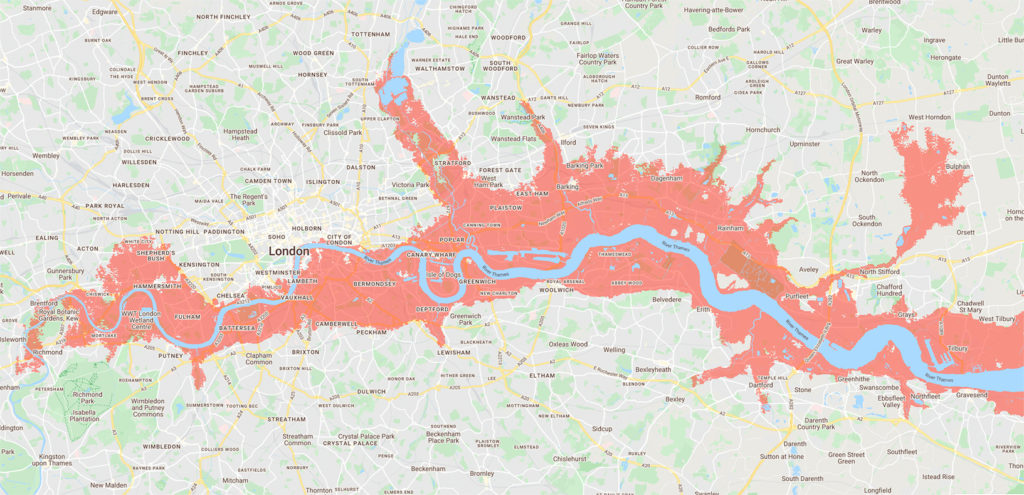
Map of flooding London / Source: climatecentral.org
Mappa dei potenziali allagamenti a Londra / fonte: climatecentral.org
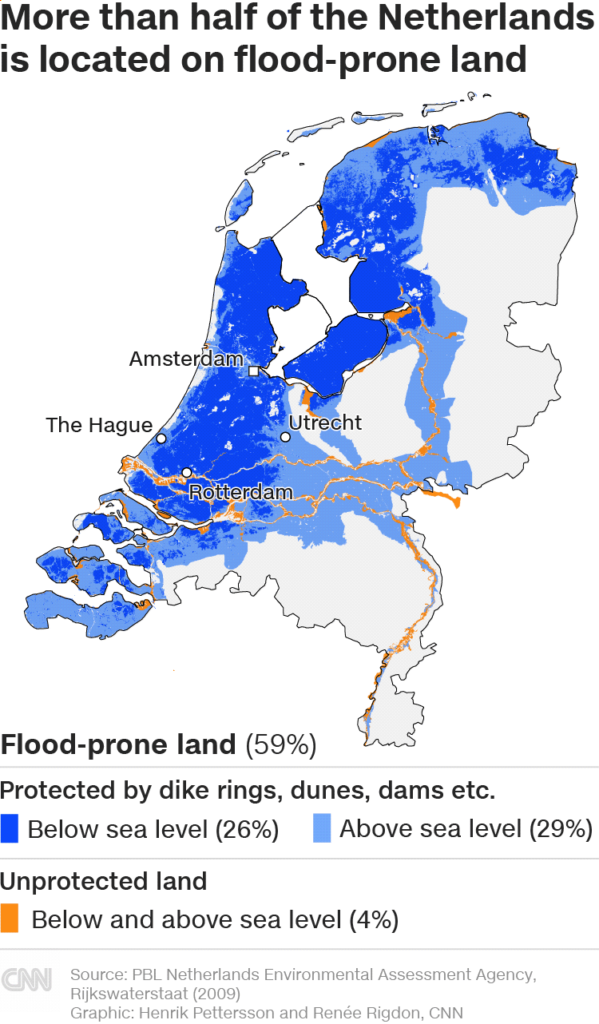
Map of flooding The Netherlands
Source: PB Netherlands Environmental Assessment Agency,
Rijkswaterstaat(2009) Graphic: Henrik Pettersson and Renée Rigdon, CNN
Mappa dei potenziali allagamenti nei Paesi Bassi

Non è certo un segreto che – essendo costruiti prevalentemente sull’acqua – piú della metà del territorio dei Paesi Bassi è già a rischio inondazione. É inimmaginabile come potrebbe apparire questa nazione in seguito ad un drastico aumento del livello dei mari. Questa mappa mostra quali porzioni di territorio siano giá in zona di inondazione:

Con il peggioramento della crisi climatica, inoltre, non dimentichiamo che dovremo affrontare scarsità di cibo e acqua dovute a siccità ed eventi meteo estremi. Le FAQ dell’IPCC spiegano:

“I bambini che nel 2020 avevano dieci anni o piú giovani, è previsto che subiranno un aumento di 4 volte degli eventi estremi se rimarremo sotto la soglia di 1,5°C di riscaldamento globale al 2100 e un aumento di 5 volte in caso di 3°C delle temperature. Queste conseguenze non saranno percepite da persone che nel 2020 siano state di etá superiore ai 55 anni.

Tutte queste catastrofi costeranno miliardi di dollari ogni anno e, soprattutto, un numero incalcolabile di vite umane.

L’IPCC dice di agire ORA. Ma cosa deve cambiare per fermare la crisi climatica?

Sì, lo sappiamo, tutta sta roba suona malissimo. Ma non siamo impotenti, al contrario! L’IPCC ci dice che abbiamo ancora tempo per evitare gli scenari peggiori. Possiamo ancora migliorare la nostra capacità di adattamento e limitare i danni.

“L’unica condizione è che agiamo ora!”

Prima di tutto, dobbiamo essere molto chiari: non sono le persone comuni le responsabili dei disastri climatici. Tutti noi facciamo ció che possiamo, ma cambiare le nostre abitudini non avrá molta importanza se non esigeremo politiche efficaci e dure restrizioni alle grandi compagnie fossili. Piú del 70% delle emissioni di CO2 sono prodotte da sole 100 compagnie. E indovinate un po’, la maggior parte di loro sono produttrici di combustibili fossili.

Abbiamo necessità di mantenere il riscaldamento globale entro la soglia di 1,5°C. Per riuscirci, ci vogliono forti leggi per il clima a livello europeo e nazionale. Ci vogliono restrizioni per le compagnie che emettono grandi quantitá di CO2. Ci vogliono incentivi per le aziende sostenibili. Le soluzioni in realtà esistono già, ciò che serve sono politici disposti a trasformarle in leggi.

Bene il report IPCC, ma ora? Cosa puoi fare per mobilitarti?

Ti chiederai: che posso fare se i miei politici non si danno una mossa? Beh, la maggior parte di loro non fará nulla di sua spontanea volontá, é necessario che diverse persone facciano loro pressione. Hanno bisogno di vedere che diversi cittadini hanno a cuore la causa climatica. Dobbiamo fargli capire che non ci faremo abbindolare da piú o meno maldestri tentativi di greenwashing (come di recente, quando la Commissione Europea ha proposto di includere gas e nucleare nella lista degli “investimenti sostenibili”). I politici devono sentire che per rimanere sulle loro poltrone devono affrontare seriamente la crisi climatica.

Una vecchia strategia usata in politica è quella di complicare inutilmente le cose, in modo da evitare il più possibile le lamentele dei cittadini. Ma non conoscono la nostra generazione – non ci fermeremo finché non avremo ottenuto il nostro diritto ad un mondo socialmente giusto e vivibile.

Quindi, capiamolo, ogni frazione di grado che ci tiene al di sotto di 1,5, conta. Ogni grado evitato salva delle vite e ogni vita salvata rende irrinunciabile questa battaglia. Abbiamo il dovere di fermare una catastrofe, ma abbiamo anche l’opportunitá di cambiare il modo spesso malato in cui la nostra società funziona, migliorando la nostra qualitá della vita. Non solo per noi, ma per chiunque condivida questa Terra, oggi e in futuro.

Se vuoi dare il tuo supporto alla protesta, raccogli le forze, fatti sentire e manifesta la tua indignazione, unisciti al Global Climate Strike organizzato da Fridays For Future.

Il prossimo avrá luogo venerdí 25 marzo 2022. Trova la cittá piú vicina a te e unisciti alla manifestazione!

Ci vediamo lí!

Il report IPCC – Glossario

Mitigazione climatica

La mitigazione punta a limitare l’aumento del riscaldamento globale affinché i suoi danni siano limitati il piú possibile. É la nostra “spada” nella battaglia contro la crisi climatica.

Adattamento climatico

Adattarsi al cambiamento climatico significa cercare di ridurre la nostra vulnerabilitá e al contempo sfruttare gli eventuali benefici e opportunitá derivanti dalle conseguenze del clima che cambia. É come una sorta di “armatura”.

Resilienza climatica

La resilienza é necessaria per far fronte alle catastrofi future, é il nostro “scudo” per proteggerci.

Vulnerabilitá alla crisi climatica

Le popolazioni vulnerabili sono particolarmente esposte agli impatti della crisi climatica, come ondate di calore, siccitá e inondazioni. Non si tratta solo di tutelare le donne o le persone anziane, ma di adottare un approccio intersezionale che tenga insieme diversi aspetti. Seguendo la metafora, le persone vulnerabili spesso hanno difficoltá nell’impugnare la spada, lo scudo o indossare un’armatura. Per questo dobbiamo preoccuparci di avere un occhio di riguardo nei loro confronti.

Der neueste IPCC Bericht erklärt: Wie wird die Klimakrise dich betreffen?

Der IPCC (Intergovernmental Panel on Climate Change) – im Deutschen auch Weltklimarat genannt – hat vor kurzem den neusten Teilbericht zur Klimakrise veröffentlicht. Bei allem, was gerade in der Welt abgeht, haben viele Menschen nichts davon mitbekommen. Und das, obwohl die Fakten des IPCC Bericht erschreckend sind und nicht ignoriert werden dürfen. Es wird Zeit, dass wir uns diese Fakten gemeinsam ansehen.

Der IPCC Bericht betrachtet, in welcher Art und Weise Menschen und die Natur von der Klimakrise gefährdet sind. Er sagt auch was wir jetzt tun müssen, um uns vor der Klimakatastrophe zu schützen. Die Klima-Analyse bietet Beweise für das, wovor Klimaaktivist*innen schon länger warnen: Es gibt immer weniger Möglichkeiten, die globale Erwärmung auf 1.5°C zu reduzieren.

Dabei ist der IPCC Bericht sehr technisch geschrieben, eher für Wissenschaftler*innen und Politiker*innen als für “normale” Menschen. Und das, obwohl die Klimakrise uns alle betrifft – ja, sogar uns in der EU. Aber es geht um unser Überleben. Es geht darum, ob unser Planet für uns bewohnbar bleibt und für all die Pflanzen und anderen Tiere, mit denen wir ihn teilen. Es ist so wichtig, dass wir verstehen, was auf uns zukommt. Aber wie können wir die Klimakrise managen? Was können wir tun, um sie zu stoppen?

Lies weiter, um zu erfahren, was der IPCC Bericht darüber aussagt, wie die Klimakrise uns betreffen wird – und was wir dagegen unternehmen können.

Was ist der IPCC AR6 Bericht und was sagt er aus?

Was ist der IPCC?

IPCC steht für Intergovernmental Panel on Climate Change und ist die Autorität, wenn es um Klimawissenschaften geht. Im deutschen Sprachraum ist er auch bekannt als “Weltklimarat”. Er gehört zur UN (Die Vereinigten Staaten) und wurde 1988 gegründet. Wissenschaftler*innen aus verschiedensten Disziplinen arbeiten dort zusammen, um die Effekte des Klimawandels besser zu verstehen. Der Weltklimarat hilft Politiker*innen und anderen Entscheidungstragenden zu verstehen, was der Klimawandel für die Menschheit und den Planeten bedeutet und wie wir die zu erwartenden Schäden der Klimakrise möglichst gering halten können.

Der IPCC veröffentlicht alle 7 Jahre eine Einschätzung – (Assessment Report, AR) zum Klimawandel. Seit der Gründung 1988 wurden bereits sechs solcher Berichte veröffentlicht, jeweils unterteilt in vier Zwischenberichte. Diese Zwischenberichte stammen von verschiedenen Arbeitsgruppen. Vor kurzem, im Februar 2022, hat die zweite Arbeitsgruppe ihren Teil des 6. Assessment-Reports präsentiert.

Der letzte IPCC Bericht konzentriert sich auf den Einfluss des Klimawandels und wie wir uns an die Klimakrise anpassen können. Er zwingt uns darüber nachzudenken, wie der Klimawandel das Leben der Menschen jetzt schon beeinflusst, statt immer “nur” über die zukünftigen Veränderungen von Natur, Biodiversität und Wetter zu reden. Hoffentlich ermöglicht er uns allen, endlich zu verstehen, wie dringend dieses Thema ist und dass es keine Zeit mehr zu verschwenden gibt. Der dritte Teil erscheint Anfang April 2022 und behandelt mögliche Lösungsansätze zur Klimakrise.

Generell wiederholt der Bericht das, was wir bereits wussten: Zum Beispiel werden wir einen immensen Meeresspiegelanstieg erleben, was nicht nur dazu führt, dass Inseln auf der anderen Seite des Pazifiks untergehen. Das wird auch größere Städte wie London betreffen, oder ganze Länder wie die Niederlande, die langsam aber sicher im Meer verschwinden werden. Hitzewellen werden die verletzlichsten Menschen noch häufiger treffen als bisher. Nahrungsmittelsicherheit und Wasserverfügbarkeit werden abnehmen. Biodiversitätsverlust und extreme Wetterereignisse werden keine Seltenheit mehr sein. Bis zu 3.6 Milliarden Leute werden besonders in Gefahr sein, aufgrund ihres Alters, wo sie leben, Armut usw. Ja, Milliarden, du hast richtig gelesen. Das ist mehr als jede zweite Person auf diesem Planeten!

Die Klimakrise ist hier – Was heißt das für dich?

Okay, jetzt wissen wir, was uns erwartet. Wir wissen auch, dass die westlichen Länder für die meisten CO2-Emissionen verantwortlich sind, obwohl sie nicht die stärksten Konsequenzen spüren werden. Ja, es gibt Länder, die die Auswirkungen der Klimakrise noch viel stärker spüren werden, allen voran Länder des globalen Südens.  Aber auch in Europa müssen wir gegen aufkommende Naturkatastrophen gewappnet sein.

Um nur ein Beispiel zu nennen: Der erwartete Meeresspiegelanstieg wird für Städte neben Flüssen (wie z.B. London) und tief liegende Küstengebiete (wie in den Niederlanden) Überflutungen zur Normalität machen. Im schlimmsten Fall könnte der Meeresspiegelanstieg dafür sorgen, dass sie eventuell sogar dauerhaft versinken. Hier siehst du eine erschreckende Karte mit dem für 2030 vorhergesagten Meeresspiegelanstieg in London. Sie zeigt, wie große Teile der Hauptstadt von Großbritannien in nur acht Jahren unter Wasser stehen werden:

Map of flooding London / Source: climatecentral.org
Map of potential flooding of London / Source: climatecentral.org
Map of flooding The Netherlands
Source: PB Netherlands Environmental Assessment Agency,
Rijkswaterstaat(2009) Graphic: Henrik Pettersson and Renée Rigdon, CNN
Map of potential flooding of The Netherlands

Es ist kein Geheimnis, dass – hauptsächlich auf Wasser gebaut – mehr als die Hälfte der Landmasse der Niederlanden bereits heute ein enormes Flutrisiko aufweisen. Man will sich gar nicht vorstellen, in welchen Zustand das Land nach einem immensen Meeresspiegelanstieg geraten würde. Diese Karte zeigt, welche Teile der Niederlanden bereits auf hochwassergefährdeten Gebiet liegen:

Da die Klimakrise immer schlimmer wird, sollten wir nicht die ganzen zu erwartenden Probleme mit der Essens- und Wasserversorgung vergessen. Der Weltklimarat erklärt in seinen FAQs:

“Kinder, die im Jahr 2020 zehn Jahre oder jünger sind, werden bei einer 1.5°C globalen Erwärmung bis 2100 eine nahezu 4-fache Zunahme von Extremwetterereignissen erfahren und eine 5-fache Zunahme im Fall einer 3°C Erwärmung. So ein Anstieg würde von einer im Jahre 2020 55-jährigen Person in ihrer verbleibenden Lebenszeit nicht erlebt werden, egal wie stark die Erwärmung ausfällt.”

Jede dieser Katastrophen wird Billionen Dollar kosten, jedes Jahr. Und, noch viel wichtiger, eine unzählbare Anzahl an Menschenleben.

Der IPCC sagt, wir müssen JETZT handeln. Was muss sich ändern, wenn nicht das Klima?

Ja, wir wissen, dass das schrecklich klingt. Aber wir sind nicht machtlos – im Gegenteil! Der Weltklimarat sagt, dass wir immer noch Zeit haben, die schlimmsten Szenarien zu vermeiden. Wir können uns noch immer zumindest begrenzt an den Klimawandel anpassen und eine Widerstandsfähigkeit gegenüber Naturkatastrophen entwickeln.

“Die einzige Bedingung ist, dass wir jetzt handeln!”

Lass uns zuerst etwas klarstellen: Es sind nicht die Durchschnittsbürger*innen, die hauptsächlich für die Klimakatastrophen verantwortlich sind. Wir alle können tun, was in unserer Macht liegt, aber es ergibt keinen Sinn, unser Verhalten zu ändern, ohne dass dieses von einem politischen Rahmen gestützt wird und große Unternehmen beschränkt werden, denn: Mehr als 70% der Emissionen lassen sich auf nur 100 Unternehmen zurückführen[1] [2] [3] . Es braucht nicht viel, um zu erraten, dass die meisten davon Öl-Anbieter sind.

Das heißt nicht, dass wir nicht unser Bestes geben sollten, bewusst zu konsumieren. Trotzdem sind es die Politiker*innen, die jetzt dringend handeln müssen! Sie haben die Macht, das Ruder noch rumzureißen. Ein erster Schritt wäre es, Veränderungen herbeizuführen, die uns helfen, uns dem Klimawandel anzupassen (climate adaptation) und seine Effekte einzudämmen (climate mitigation). Aber Klimawandelanpassung hat seine Grenzen.

Nur zur Visualisierung: Wenn uns heiß ist, können wir nur so viel Kleidungsstücke ausziehen, bevor wir nackt sind, danach wird uns nur noch heißer. Deshalb muss ein stärkerer Fokus darauf gelegt werden, den Klimawandel zu verlangsamen. Wir müssen die globale Erwärmung unter 1.5°C drücken. Um das zu erreichen, brauchen wir starke Klimagesetze auf EU-Ebene und auf nationaler Ebene. Wir brauchen Beschränkungen für Unternehmen, die zu viel CO2 emittieren. Wir brauchen Anreize für Unternehmen, um nachhaltiger zu werden. Es gibt bereits Lösungen dafür. Was wir wirklich brauchen, sind Politiker*innen, die engagiert genug sind, diese Lösungen auch in Gesetze zu transformieren.


Der IPCC Bericht und jetzt was? Was du gegen die Klimakrise tun kannst

Aber was kann ich tun, wenn meine Politiker*innen nicht handeln, fragst du? Naja, die meisten von ihnen würden wohl nicht von alleine die nötigen Aktionen setzen. Wir brauchen Leute, die Druck auf sie ausüben. Sie müssen sehen, dass es genug Leuten gibt, denen das Thema unheimlich wichtig ist und dass sie sich nicht von politischem Greenwashing übers Ohr hauen lassen (z.B. als die Europäische Kommission vorgeschlagen hat, Gas und Atomkraft auf die Liste der “nachhaltigen Investitionen” zu setzen). Sie müssen merken, dass sie die Klimakrise adäquat adressieren müssen, wenn sie weiterhin an der Macht bleiben wollen.

Eine Strategie in der Politik ist es, Sachverhalte zu verkomplizieren, sodass die meisten Menschen nicht genug verstehen, um sich darüber zu beschweren. Aber wenn sie denken, dass sie damit durchkommen, kennen sie unsere Generation nicht – wir werden nicht aufhören für unser Recht zu kämpfen, in einer sozial gerechten und lebenswerten Welt zu leben!

Also, lass uns Klartext reden: Jedes kleine Bisschen an Grad zählt, das wir auf unserem Weg zu 1.5°C erreichen. Jedes Zehntel-Grad rettet Leben und jedes gerettete Leben macht den Kampf lohnenswert. Also ist der Kampf es immer wert. Wir haben die Verpflichtung, eine Katastrophe aufzuhalten. Gleichzeitig haben wir auch die Chance, Dinge anders zu machen. Unsere Welt zu verändern und unsere Lebensqualität zu verbessern. Nicht nur für uns, sondern für alle, die diesen Planeten bewohnen.

Wenn du den Protest unterstützen willst, kanalisiere deine Energie, sei laut und zeig deine Frustration, indem du zum nächsten Klimastreik von Fridays For Future kommst!

Wenn du erfahren willst, was DU tun kannst, um das Klima ein Stück zu retten, klick hier.

Der IPCC-Bericht – Glossar

Klima-Mitigation / Eindämmung

Die Eindämmung hat zum Ziel, die globale Erwärmung zu gering wie möglich zu halten, damit der Schaden nicht zu groß ausfällt. Sie ist das Schwert in unserem Kampf gegen die Klimakrise.

Klima-Adaption / Klimawandelanpassung

Sich an den Klimawandel anzupassen, bedeutet zu versuchen, den zu erwartenden Schaden zu reduzieren und sich vorsorgend zu schützen. Es ist wie die Rüstung für den Klimakampf.

Klima-Resilienz / Widerstandsfähigkeit

Wir brauchen Widerstandsfähigkeit, um die Klimakatastrophen besser aushalten zu können, die uns erwarten werden. Wie ein Schild, das uns beschützt.

Klima-Vulnerabilität / Verletzlichkeit gegenüber der Klimakrise

Verletzliche Personen werden besonders stark von den Auswirkungen der Klimakrise betroffen sein, wie Hitze, Dürren und Überflutungen. Man kann diese Verletzlichkeit dabei nicht auf Geschlecht oder Alter runterbrechen. Es geht um einen intersektionalen Ansatz, der diverse Aspekte berücksichtigt. Diese verletzlichen Personen haben vielleicht nicht die Kraft, ein Schild oder Schwert zu halten, weshalb wir sie besonders schützen müssen.

La guerra di putin mette a rischio la sicurezza alimentare globale. Ecco perché abbandonare il green deal non è la soluzione

La carenza di produzione di cibo in Ucraina richiede un’azione umanitaria urgente. Chi vuole destabilizzarci cercherà di ridurre le nostre possibilità di raccolto e renderci sempre più vulnerabili in futuro, in modo da far deragliare le ambizioni dell’UE su un futuro alimentare sostenibile. Continua a leggere per scoprire cosa dobbiamo fare per garantire la sicurezza alimentare in Ucraina.

L’aggressione di Putin contro l’Ucraina sta causando enormi interruzioni per l’economia mondiale. L’Europa è diventata massicciamente dipendente dal gas naturale russo e da altri combustibili fossili negli ultimi decenni. Questo è il motivo per cui l’energia è stata giustamente in primo piano nel dibattito europeo. Tuttavia, un altro tema di estrema rilevanza dovrebbe attirare la nostra attenzione quando si parla della guerra in Ucraina: il cibo.

Gli ucraini, in quanto direttamente colpiti dalla scarsità di cibo a causa della guerra di Putin, hanno bisogno di un’urgente sopporto umanitario. Il conflitto colpisce direttamente l’accesso al cibo, in particolare nelle città assediate dall’esercito russo. L’Unione europea e la comunità internazionale, in particolare il Programma alimentare mondiale e l’Organizzazione delle Nazioni Unite per l’alimentazione e l’agricoltura (FAO), hanno cercato di proteggere la sicurezza alimentare in Ucraina e di garantire che tutti abbiano accesso al cibo di cui hanno bisogno.

Carenza di cibo in Ucraina – queste sono le azioni umanitarie necessarie e concrete:

  • In primo luogo, l’UE dovrebbe aumentare la sua assistenza umanitaria al popolo ucraino per garantire la sicurezza alimentare a breve termine in Ucraina e per i rifugiati nel suo territorio. Inoltre, dovrebbe anche contribuire al piano di risposta rapida della FAO per l’Ucraina. La FAO sta cercando un finanziamento di 50 milioni di dollari per assistere 240.000 persone vulnerabili che vivono nelle zone rurali dell’Ucraina. Finora è stato fornito solo il 9% (4,6 milioni di dollari). Più di tre milioni di rifugiati sono già in Europa a causa della catastrofica situazione umanitaria in Ucraina. Non c’è tempo da perdere. L’Europa deve agire ora!
  • Allo stesso modo, la Commissione europea e gli Stati membri dell’UE dovrebbero aumentare i loro contributi al Programma alimentare mondiale utilizzando lo strumento di riserva di solidarietà e per gli gli aiuti di urgenza (SEAR) del bilancio dell’UE. Questo potrebbe significare 420 milioni di euro in più, che rappresentano circa un milione di tonnellate di grano agli attuali tassi di esportazione e altrettante pagnotte di pane cotto per le persone in difficoltà.
  • L’UE deve proteggere la sicurezza alimentare nei paesi con elevate importazioni di alimenti di base. Con l’attuale aumento dei prezzi, i paesi che dipendono massicciamente dalle importazioni di alimenti di base potrebbero non essere in grado di finanziare le loro importazioni. Questo sarebbe una catastrofe per la loro popolazione. I paesi esportatori, a cominciare dagli Stati membri dell’UE, devono fare di tutto per evitare questa situazione.

Sicurezza alimentare globale – qual è il contributo di Ucraina, Russia e Bielorussia al commercio alimentare globale?

Il problema di sicurezza alimentare non si ferma ai confini dell’Ucraina. Infatti, sia l’Ucraina che la Russia sono attori chiave nel commercio alimentare globale. Rappresentano circa il 30% del commercio globale di grano. L’Ucraina da sola rifornisce il 15% del mercato mondiale del mais. La Russia, d’altra parte, è un grande esportatore di fertilizzanti azotati sintetici e dei loro componenti. Lo stesso vale per la Bielorussia, che esporta fertilizzanti potassici usati ampiamente nell’agricoltura convenzionale.

Con la guerra che imperversa, la maggior parte di queste esportazioni sono crollate. Questo ha portato a un forte aumento dei prezzi degli alimenti e dei costi di produzione. La situazione dei mercati agricoli sta diventando ancora più tesa. Anche prima dell’invasione, l’indice dei prezzi alimentari della FAO aveva già raggiunto livello più alto degli ultimi dieci anni.

Quali paesi dipendono dalle importazioni dalla Russia e dall’Ucraina?

Alcuni paesi, soprattutto in Africa e nel Medio Oriente, dipendono fortemente dalle importazioni dalla Russia o dall’Ucraina per la loro sicurezza alimentare nazionale. Per esempio, il 90% delle importazioni di grano dell’Egitto provengono dall’Ucraina e dalla Russia, in particolare per cuocere il pane. Al momento, il prezzo del grano è di circa 400 euro a tonnellata. Sono 100 euro a tonnellata in più rispetto al periodo della crisi alimentare del 2008.

Di conseguenza, paesi come l’Egitto stanno affrontando un enorme problema di accessibilità economica. In parole povere, se i prezzi continuano a salire, potrebbero non essere in grado di pagare le importazioni di cibo da cui dipendono. Questo avrà conseguenze dirette sulla sicurezza alimentare della loro popolazione.

L’UE deve garantire che la guerra in Ucraina non aggravi l’insicurezza alimentare in questi paesi.

Carenza di cibo nell’UE – dobbiamo temere la scarsità di cibo?

Nell’Unione europea la situazione è un po’ diversa. L’UE è un esportatore netto di prodotti agroalimentari. Questo significa che l’UE esporta più cibo di quanto ne importi. La buona notizia è che non dobbiamo temere carenze di cibo. Tuttavia, l’aggressione della Russia contro l’Ucraina ha già portato a un forte aumento dei costi di produzione alimentare. Come per tutti i tipi di produzione, l’aumento dei prezzi dell’energia sta portando ad un aumento del prezzo dei combustibili agricoli.

Il 30% dei fertilizzanti azotati sintetici dell’UE (e i loro ingredienti) provengono dalla Russia. Il 27% dei fertilizzanti potassici dell’UE vengono dalla Bielorussia. I prezzi di questi stanno aumentando rapidamente. Gli allevatori non sono risparmiati, poiché la situazione è simile per la produzione dei mangimi.

L’aumento dei costi di produzione degli alimenti e prezzi mondiali più alti potrebbero portare a un aumento dei prezzi nei nostri supermercati. Questo potrebbe essere devastante per le famiglie già in difficoltà economica, soprattutto perché i prezzi dell’energia sono destinati a salire ancora di più.

Di fatto, anche se è improbabile che vedremo carenze di cibo nell’UE, la guerra in Ucraina influenzerà i nostri prezzi alimentari. Di conseguenza, avremo bisogno di azioni a breve termine per proteggerci da questi effetti. Ma ciò non significa che l’Europa dovrebbe lasciare da parte la sua visione a lungo termine. Abbiamo bisogno di un piano per evitare crisi simili in futuro.

L’azione a breve termine per salvaguardare la sicurezza alimentare nell’UE deve essere duplice. Abbiamo bisogno di azioni umanitarie concrete per aiutare la gente in Ucraina. Allo stesso tempo, abbiamo bisogno di rafforzare la sicurezza alimentare nell’UE per diventare più resistenti contro le crisi future. Continuate a leggere le nostre proposte per la sicurezza alimentare dell’UE.

C’è una crisi alimentare in Europa – come possiamo rafforzare la sicurezza alimentare nell’UE?

Due anni dopo che COVID ha mostrato la vulnerabilità del nostro sistema alimentare globale, la guerra di Putin in Ucraina ha riportato la sicurezza alimentare sul tavolo di lavoro dell’UE. Ecco le nostre proposte su come rafforzare la sicurezza alimentare in Europa:

  • L’UE dovrebbe fare tutto per evitare una possibile crisi di disponibilità. La Commissione europea dovrebbe valutare tutte le scorte di risorse disponibili a livello dell’UE e valutare i modi per mobilitarle per alleviare i problemi di disponibilità e accessibilità, in particolare nei paesi terzi.
  • Dobbiamo fermare la speculazione sui mercati delle materie prime agricole, per assicurarci che i paesi vulnerabili abbiano facile accesso ai prodotti alimentari necessari alla loro popolazione. La speculazione di mercato, la manipolazione e il commercio delle materie prime alimentari possono gonfiare artificialmente i prezzi all’ingrosso e portare alla volatilità del mercato.
  • Certe pratiche dovrebbero essere proibite, come la vendita allo scoperto o il trading ad alta frequenza nelle materie prime alimentari, che possono portare alla manipolazione del mercato, alla fissazione di prezzi predatori e alla realizzazione di profitti a spese delle persone bisognose. Tutto questo dovrebbe finire. Il cibo deve appartnere in primo luogo alle persone.
  • Non dovremmo più produrre così tanto mangime per gli animali. Il 60% della produzione di cereali dell’UE è destinata all’alimentazione animale! È giunto il momento di attuare finalmente un ambizioso piano proteico, concentrandosi in particolare sulle leguminose, che possono fornire mangimi domestici e sostituire o ridurre l’uso di fertilizzanti fissando l’azoto.
  • La Commissione dovrebbe porre un freno temporaneo all’uso di colture commestibili per la produzione di agrocarburanti per almeno 2 anni. Il più presto possibile. Nel 2021 l’UE ha prodotto 4950 milioni di litri di bioetanolo da colture e 12.330 milioni di litri di biodiesel da oli vegetali. Ciò rappresenta 11 milioni di tonnellate di cereali e 8,6 milioni di tonnellate di oli vegetali che potrebbero essere reindirizzati al consumo umano e animale. Chi può accettare che tali quantità di colture commestibili non vadano alle persone bisognose, ma alimentino invece le automobili di un gruppo di pochi ricchi?
  • L’UE dovrebbe affrontare urgentemente lo spreco di cibo, dato che ancora 88 milioni di tonnellate di cibo vengono sprecate ogni anno nell’UE. Questo avrebbe un impatto immediato sulla sicurezza alimentare!

Con tutte queste richieste, una visione a lungo termine è ancora necessaria per rendere il nostro sistema alimentare globale sostenibile.

Il Green Deal e la strategia Farm to Fork devono rimanere la nostra bussola in un’ottica lungo termine verso la sicurezza alimentare nell’UE

Le pratiche attuali dell’agricoltura convenzionale ci hanno portato a diventare dipendenti da alcune risorse critiche per la nostra produzione alimentare: fertilizzanti, pesticidi e mangimi. Gran parte delle colture che coltiviamo (60%) non sono coltivate per nutrire le persone, ma per nutrire il bestiame in Europa. Per non parlare della nostra dipendenza dai mercati esterni per vendere le nostre esportazioni.

Mentre c’è una scarsità di grano a livello globale a causa della guerra in Ucraina, noi continuiamo ad utilizzare il nostro surplus di grano per alimentare il bestiame. La situazione getta pone un grave accento sull’irrazionalità di questo sistema.

Allo stesso tempo, l’uso eccessivo di pesticidi sintetici che sostengono monocolture sempre più grandi, sta portando ad un’estinzione di massa degli insetti. Abbiamo bisogno di quegli insetti per impollinare le nostre colture, e una protezione dei nostri suoli che sostengono i nostri sistemi alimentari. Man mano che questi ecosistemi si degradano ulteriormente, lo stesso vale per le rese delle colture.

Secondo l’IPCC entro il 2100, un terzo dei terreni agricoli potrebbe essere inadatto alla coltivazione a causa del degrado ambientale. Gli obiettivi di riduzione dell’uso di input sintetici fissati dalla strategia « Farm to Fork » sono quindi particolarmente rilevanti per la nostra sicurezza alimentare nell’immediato futuro. La scienza dimostra che la riduzione dell’uso di pesticidi a lungo termine non ha un impatto negativo sulle produzioni.

Abbiamo bisogno del Green Deal per un futuro sostenibile

È ancora più importante ricordare che l’obiettivo centrale di questa strategia, e del Green Deal in generale, è quello di combattere il cambiamento climatico e l’erosione della biodiversità. Questi due fenomeni costituiscono delle minacce terribili per la nostra sicurezza alimentare collettiva a lungo termine.

Il rapporto dell’IPCC, pubblicato proprio il giorno dell’aggressione di Putin all’Ucraina, ci ricorda che la produttività agricola sta diminuendo a causa di molteplici degradazioni ambientali. Mantenere gli ecosistemi sani, è fondamentale in quanto essenziali per la resilienza delle comunità umane agli shock ambientali. Quindi, la lotta per la sovranità alimentare è una lotta contro il cambiamento climatico e l’erosione della biodiversità.

Un attacco alla natura è un attacco alla sicurezza alimentare

Citando fonti di preoccupazioni sulla sicurezza alimentare, stiamo ora assistendo ad un attacco coordinato da parte dell’agroindustria contro le politiche alimentari sostenibili nel Green Deal. La Commissione europea ha già rinviato l’EU Restoration Law e il regolamento sui pesticidi. Inoltre, la presidenza francese dell’UE ha recentemente annunciato che sospenderà la strategia « Farm to Fork ».

È ora e più che mai importante ricordare che l’obiettivo centrale del Green deal è la lotta contro il cambiamento climatico e l’erosione della biodiversità. Questi due fenomeni costituiscono delle minacce terribili per la nostra sicurezza alimentare collettiva a lungo termine. La scienza ha dimostrato che lo status quo è inadatto allo scopo, poiché sacrifica la nostra sicurezza alimentare a medio e lungo termine per guadagni a breve termine come l’alimentazione del bestiame e i fermentatori di biocarburanti. Coloro che sostengono il contrario stanno ignorando questo punto fondamentale.

Abbiamo bisogno di azioni umanitarie immediate per affrontare la scarsità di cibo dell’Ucraina. Allo stesso tempo abbiamo bisogno di garantire che la scarsità di cibo a livello globale non abbia un impatto sulle persone, in particolare nei paesi in via di sviluppo. Questa richiesta non è in contraddizione con gli obiettivi di un sistema alimentare più sostenibile nell’ambito del Green Deal. Gli attacchi contro questa agenda, d’altro canto, pongono serie minacce alla nostra futura sicurezza alimentare.

Vuoi saperne di più? Ecco la nostra scheda informativa sulla guerra in Ucraina e la situazione dell’approvvigionamento alimentare

A cura del deputato dei Verdi/ALE Martin Häusling e della deputata dei Verdi tedeschi Renate Künast

Putins krieg gefährdet die globale Ernährungssicherheit. Warum ein Ausstieg aus dem Green Deal keine Lösung ist.

Die Nahrungsmittelknappheit in der Ukraine erfordert dringende humanitäre Maßnahmen. Versuche, die Ambitionen der EU in Bezug auf nachhaltige Lebensmittel zu untergraben, werden landwirtschaftliche Erträge verringern und uns in Zukunft noch verwundbarer machen. Hier erfahrt ihr, was wir tun müssen, um die Ernährungssicherheit in der Ukraine zu sichern.

Putins Überfall auf die Ukraine verursacht enorme Probleme in der Weltwirtschaft. Europa ist in den letzten Jahrzehnten massiv von russischem Erdgas und anderen fossilen Brennstoffen abhängig geworden. Deshalb steht das Thema Energie zurecht im Mittelpunkt der jetzigen europäischen Debatte. Im Zusammenhang mit dem Krieg in der Ukraine sollten wir unsere Aufmerksamkeit jedoch auf einen weiteren Faktor lenken: Lebensmittel.

Die Ukrainer:innen, die aufgrund von Putins Krieg direkt von Nahrungsmittelknappheit betroffen sind, benötigen dringend humanitäre Unterstützung. Denn der Konflikt beeinträchtigt direkt die Verfügbarkeit von Nahrungsmitteln, insbesondere in den Städten, die von der russischen Armee belagert sind. Die Europäische Union und die internationale Gemeinschaft, insbesondere das Welternährungsprogramm und die Ernährungs- und Landwirtschaftsorganisation der Vereinten Nationen (FAO), bemühen sich, die Ernährungssicherheit in der Ukraine zu gewährleisten und dafür zu sorgen, dass alle Menschen Zugang zu wichtigen Nahrungsmitteln haben.

Nahrungsmittelknappheit in der Ukraine – das sind die erforderlichen humanitären Maßnahmen:

  • Erstens sollte die EU ihre humanitäre Hilfe für die ukrainische Bevölkerung aufstocken, um kurzfristig die Ernährungssicherheit in der Ukraine sowie für die Flüchtlinge in der EU zu gewährleisten. Außerdem sollte sie einen Beitrag zum Krisenreaktionsplan der FAO für die Ukraine leisten. Die FAO bittet um Mittel in Höhe von 50 Mio. USD zur Unterstützung von 240.000 bedürftigen Menschen, die in der ländlichen Ukraine leben. Bislang wurden nur 9 % (4,6 Mio. USD) bereitgestellt. Aufgrund der katastrophalen humanitären Lage in der Ukraine befinden sich bereits über drei Millionen Flüchtlinge in Europa. Es gibt keine Zeit zu verlieren. Europa muss jetzt handeln!
  • Gleichermaßen sollten die Europäische Kommission und die EU-Mitgliedstaaten ihre Beiträge zum Welternährungsprogramm erhöhen, indem sie die Solidaritäts- und Notfallreserve des EU-Haushalts nutzen. Dies könnte zusätzliche 420 Millionen Euro ausmachen, was bei den derzeitigen Exportraten etwa einer Million Tonne Weizen und ebenso vielen Broten entspricht, die für Menschen in Not gebacken werden.
  • Die EU muss die Ernährungssicherheit in Drittländern mit hohen Importen von Grundnahrungsmitteln schützen. Bei dem derzeitigen Preisanstieg könnten Länder, die massiv auf den Import von Grundnahrungsmitteln angewiesen sind, nicht mehr in der Lage sein, ihre Importe zu finanzieren. Das wäre eine Katastrophe für die betroffene Bevölkerung. Exportländer, allen voran die EU-Mitgliedstaaten, müssen alles tun, um diese Situation zu vermeiden.

Globale Ernährungssicherheit – was tragen die Ukraine, Russland und Belarus zum globalen Lebensmittelhandel bei?

Das Problem macht jedoch nicht an den Grenzen der Ukraine halt. Sowohl die Ukraine als auch Russland sind wichtige Akteure im globalen Handel mit Lebensmitteln. Auf sie entfallen etwa 30 % des weltweiten Weizenhandels. Die Ukraine allein beliefert 15 % des weltweiten Maismarktes. Russland ist andererseits ein wichtiger Exporteur von synthetischen Stickstoffdüngern und deren Bestandteilen. Das Gleiche gilt für Belarus: es exportier Kalidünger, der in der konventionellen Landwirtschaft großflächig zum Einsatz kommt.

Durch den anhaltenden Krieg sind die meisten dieser Exporte nun zusammengebrochen. Das hat zu einem starken Anstieg der Lebensmittelpreise und Produktionskosten geführt. Die Lage auf den Agrarmärkten wird immer angespannter. Schon vor der Invasion hatte der Lebensmittelpreisindex der FAO seinen höchsten Stand der letzten zehn Jahre erreicht.

Welche Länder sind von Importen aus Russland und der Ukraine abhängig?

Vor allem Länder in Afrika und im Nahen Osten sind für ihre nationale Ernährungssicherheit in hohem Maße auf Importen aus Russland oder der Ukraine angewiesen. Ägypten beispielsweise bezieht 90 % seiner Weizenimporte aus der Ukraine und Russland, insbesondere zum Backen von Brot. Zurzeit liegt der Weizenpreis bei 400 € pro Tonne. Das sind 100 € pro Tonne mehr als während der Lebensmittelkrise im Jahr 2008.

Länder wie Ägypten stehen damit vor einem riesigen Problem der Bezahlbarkeit. Einfach ausgedrückt: Wenn die Preise weiter steigen, ist Ägypten möglicherweise nicht mehr in der Lage, die Lebensmittelimporte zu bezahlen, auf die es angewiesen ist. Und das gefährdet die Ernährungssicherheit der Menschen.

Die EU muss dafür sorgen, dass der Krieg in der Ukraine die Ernährungsunsicherheit in diesen Ländern nicht noch verschlimmert.

Nahrungsmittelknappheit in der EU – müssen wir Engpässe befürchten?

In der Europäischen Union stellt sich die Situation etwas anders dar. Die EU ist ein Nettoexporteur von Agrar- und Ernährungsprodukten. Das bedeutet, dass die EU mehr Lebensmittel exportieren als sie importieren. Die gute Nachricht dabei ist, dass wir selbst keine Nahrungsmittelknappheit befürchten müssen. Aber der Angriff Russlands auf die Ukraine hat bereits zu einem starken Kostenanstieg in der Lebensmittelproduktion geführt. Wie in allen anderen Produktionszweigen auch, führt der Anstieg der Energiepreise in der Landwirtschaft ebenfalls zu einer Verteuerung der fossilen Brennstoffe.

30 % der synthetischen Stickstoffdünger (und ihrer Inhaltsstoffe) in der EU stammen aus Russland. 27 % der Kalidünger in der EU kommen aus Belarus. Die Preise für diese Rohstoffe steigen rapide an. Auch die Viehzüchter bleiben davon nicht verschont, da die Situation bei den Futtermitteln ähnlich aussieht.

Steigende Lebensmittelproduktionskosten und höhere Weltmarktpreise können zu höheren Preisen in unseren Supermärkten führen. Dies könnte für arme Haushalte verheerdene Folgen haben, zumal auch die Energiepreise noch weiter steigen werden.

Auch wenn eine Lebensmittelknappheit in der EU unwahrscheinlich ist, wird sich der Krieg in der Ukraine auf unsere Lebensmittelpreise auswirken. Wir werden kurzfristige Maßnahmen brauchen, um uns vor diesen Auswirkungen zu schützen. Aber Europa darf seine langfristige Strategie dabei nicht aus den Augen verlieren. Wir brauchen einen Plan, um ähnliche Krisen in der Zukunft zu vermeiden.

Kurzfristige Maßnahmen zur Gewährleistung der Ernährungssicherheit in der EU müssen in zweierlei Hinsicht getroffen werden. Wir brauchen konkrete humanitäre Maßnahmen, um den Menschen in der Ukraine zu helfen. Gleichzeitig müssen wir die Ernährungssicherheit in der EU stärken, um gegen künftige Krisen besser gewappnet zu sein. Hier findet ihr unsere Vorschläge für die Ernährungssicherheit in der EU.

Lebensmittelkrise in Europa – wie können wir die Ernährungssicherheit in der EU gewähren?

Zwei Jahre nachdem COVID die Verwundbarkeit unseres globalen Ernährungssystems aufgezeigt hat, wirft Putins Krieg in der Ukraine wichtige Fragen über die Ernährungssicherheit in der EU auf. Hier sind unsere Vorschläge, wie die Ernährungssicherheit in Europa verbessert werden kann:

  • Die EU sollte alles tun, um eine mögliche Versorgungskrise zu vermeiden. Die Europäische Kommission sollte alle auf EU-Ebene verfügbaren Vorräte bewerten und prüfen, wie diese mobilisiert werden können, um Probleme der Versorgung und Bezahlbarkeit zu lindern – insbesondere in Drittländern.
  • Wir müssen der Spekulation auf den Agrarrohstoffmärkten Einhalt gebieten, um sicherzustellen, dass gefährdete Länder weiterhin Zugang zu den für ihre Bevölkerung notwendigen Nahrungsmitteln haben. Marktspekulationen, Manipulationen und der Handel mit Nahrungsmitteln können die Großhandelspreise künstlich in die Höhe treiben und zu Marktvolatilität führen.
  • Bestimmte Praktiken wie Leerverkäufe oder Hochfrequenzhandel mit Nahrungsmitteln, die zu Marktmanipulation, Verdrängungspreisen und Gewinnstreben auf Kosten der Bedürftigen führen können, sollten verboten werden. Lebensmittel müssen zu allererst bei Menschen ankommen.
  • Wir sollten weniger Futtermittel für Tiere produzieren. 60 % der EU-Getreideproduktion sind für Tierfutter bestimmt! Es ist an der Zeit, endlich eine ehrgeizige Eiweißstrategie umzusetzen, die sich vor allem auf Leguminosen konzentriert. So könnten ausreichend einheimische Futtermittel produziert und durch die damit einhergehende Stickstoffbindung der Einsatz von Düngemitteln reduziert oder sogar ganz ersetzt werden.
  • Die Kommission sollte die Verwendung essbarer Kulturpflanzen für die Agrotreibstoffproduktion so schnell wie möglich für mindestens zwei Jahre vorübergehend stoppen. Im Jahr 2021 produzierte die EU 4 950 Millionen Liter Bioethanol aus Pflanzen und 12,33 Millionen Liter Biodiesel aus Pflanzenölen. Dies entspricht 11 Millionen Tonnen Getreide und 8,6 Millionen Tonnen Pflanzenöl, die stattdessen für den menschlichen und tierischen Verzehr verwendet werden könnten. Wie können wir hinnehmen, dass solche Mengen an essbaren Pflanzen nicht an Bedürftige gehen, sondern die Autos einiger weniger Wohlhabender betanken?
  • Die EU sollte dringend etwas gegen die Lebensmittelverschwendung unternehmen, denn noch immer werden in der EU jedes Jahr 88 Millionen Tonnen Lebensmittel verschwendet. Dies würde sich unmittelbar auf die Ernährungssicherheit auswirken!

Bei all diesen Forderungen ist immer noch eine langfristige Strategie erforderlich, um unser globales Lebensmittelsystem nachhaltig zu gestalten.

Der Green Deal und die Farm-to-Fork-Strategie müssen unser langfristiger Kompass für die Ernährungssicherheit in der EU bleiben

Die derzeitigen Praktiken der konventionellen Landwirtschaft haben dazu geführt, dass wir von gewissen kritischen Ressourcen für unsere Lebensmittelproduktion abhängig geworden sind: Düngemittel, Pestizide und Futtermittel. Ein großer Teil der von uns angebauten Pflanzen (60 %) wird nicht für die Ernährung der Menschen, sondern für die Viehzucht in Europa angebaut. Ganz zu schweigen von unserer Abhängigkeit von externen Märkten, um unsere Exporte zu verkaufen.

Die jetzige Situation wirft ein grelles Licht auf die Unsinnigkeit dieses Systems: Während es aufgrund des Krieges in der Ukraine weltweit zu einer Verknappung von Getreide kommt, verfüttern wir unser Getreide weiter an Nutztiere. Vor allem, wenn in anderen Teilen der Welt aufgrund des Krieges in der Ukraine Nahrungsmittelknappheit herrscht.

Gleichzeitig führt der übermäßige Einsatz von synthetischen Pestiziden zur Förderung immer größerer Monokulturen zu einem Massensterben von Insekten. Wir brauchen diese Insekten zur Bestäubung unserer Nutzpflanzen und zum Schutz unserer Böden, die unsere Nahrungsmittelsysteme tragen. Wenn diese Ökosysteme weiterhin zerstört werden, sinken auch die Ernteerträge.

Nach Angaben des IPCC könnte bis zum Jahr 2100 ein Drittel der landwirtschaftlichen Nutzfläche aufgrund der Umweltzerstörung nicht mehr für den Anbau geeignet sein. Die Ziele der Farm-to-Fork-Strategie, den Einsatz dieser synthetischen Stoffe zu reduzieren, sind daher für unsere Ernährungssicherheit in nächster Zukunft besonders wichtig. Die Wissenschaft zeigt, dass die Verringerung des Pestizideinsatzes langfristig keine negativen Auswirkungen auf die Ernteerträge hat.

Wir brauchen den Green Deal für eine nachhaltige Zukunft

Umso wichtiger ist es, daran zu erinnern, dass das zentrale Ziel dieser Strategie und des Green Deal im Allgemeinen darin besteht, den Klimawandel und den Verlust der biologischen Vielfalt zu bekämpfen. Diese beiden Phänomene stellen eine ernsthafte Bedrohung für unsere langfristige Ernährungssicherheit dar.

Der IPCC-Bericht, der genau am Tag von Putins Überfall auf die Ukraine veröffentlicht wurde, zeigt auf, dass die landwirtschaftliche Produktivität aufgrund einer zunehmenden Verschlechterung der Umweltbedingungen abnimmt. Auch die Erhaltung gesunder Ökosysteme ist somit von fundamentaler Bedeutung, denn sie sind entscheidend für die Widerstandsfähigkeit menschlicher Gesellschaften gegenüber Umweltschocks. Daher ist der Kampf für Ernährungssouveränität auch ein Kampf gegen den Klimawandel und gegen den Verlust der biologischen Vielfalt.

Ein Angriff auf die Natur ist ein Angriff auf die Ernährungssicherheit

Wir erleben jetzt einen koordinierten Angriff der Agrarindustrie auf die nachhaltige Lebensmittelpolitik des Green Deal mit der Begründung, dass die Lebensmittelsicherheit gefährdet sei. Die Europäische Kommission hat bereits das Gesetz zur Wiederherstellung der Natur und die Reform der Verordnung über Pestizide verschoben. Und die französische EU-Ratspräsidentschaft hat kürzlich angekündigt, dass sie die Farm to Fork-Strategie aussetzen wird.

Die Wissenschaft hat bewiesen, dass der Status quo unhaltbar ist, da er unsere mittel- und langfristige Ernährungssicherheit kurzfristigen Gewinnen wie der Fütterung von Nutztieren und der Herstellung von Agrokraftstoffen opfert. Diejenigen, die anders argumentieren, lassen diesen grundlegenden Faktor völlig außer Acht.

Wir brauchen sofortige humanitäre Maßnahmen, um die Nahrungsmittelknappheit in der Ukraine zu bekämpfen. Gleichzeitig müssen wir sicherstellen, dass die weltweite Lebensmittelkrise nicht zu Lasten der Menschen geht, insbesondere in Entwicklungsländern. Das steht nicht im Widerspruch zu den Zielen eines nachhaltigeren Lebensmittelsystems im Rahmen des Green Deal. Die Angriffe gegen die Farm-to-Fork-Strategie stellen hingegen eine ernsthafte Bedrohung für unsere künftige Ernährungssicherheit dar.

Willst du mehr wissen? Hier ist unser Faktenblatt zum Krieg in der Ukraine und die Nahrungsmittelknappheit.

Von den Grünen/EFA Mitgliedern des Europäischen Parlaments Martin Häusling und Bundestagsabgeordnete Renate Künast

LA GUERRE DE POUTINE MET EN DANGER LA SÉCURITÉ ALIMENTAIRE MONDIALE. POURQUOI L’ABANDON DU PACTE VERT N’EST PAS LA SOLUTION.

Les pénuries alimentaires en Ukraine nécessitent une action humanitaire de toute urgence. Mais les efforts visant à réduire l’ambition de l’Union Européenne (UE) en matière d’alimentation durable, auront pour conséquence la réduction de la productivité et une plus grande vulnérabilité à l’avenir. Voici nos recommandations pour garantir la sécurité alimentaire en Ukraine et au-delà.

L’agression de Poutine contre l’Ukraine provoque d’énormes perturbations dans l’économie mondiale. Au cours des dernières décennies, l’Europe est devenue massivement dépendante du gaz naturel russe et d’autres combustibles fossiles. C’est pourquoi l’énergie a été, à juste titre, au premier plan du débat européen. Pourtant, un autre aspect essentiel devrait retenir notre attention à propos de la guerre en Ukraine : l’alimentation.

Les Ukrainien·ne·s sont directement touché·e·s par la pénurie alimentaire due à la guerre de Poutine et ont besoin d’une action humanitaire urgente. Le conflit affecte l’accès à la nourriture, notamment dans les villes assiégées par l’armée russe. L’UE et la communauté internationale, en particulier le Programme alimentaire mondial et l’Organisation des Nations unies pour l’alimentation et l’agriculture (FAO), s’efforcent de protéger la sécurité alimentaire en Ukraine et de faire en sorte que chacun·e ait accès à la nourriture dont il/elle a besoin.

Pénurie alimentaire en Ukraine – voici les actions humanitaires concrètes dont nous avons besoin :

  • Tout d’abord, l’UE devrait augmenter son aide humanitaire au peuple ukrainien pour assurer la sécurité alimentaire à court terme en Ukraine et pour les réfugié·e·s dans l’UE. Elle devrait également contribuer au plan de réponse rapide de la FAO pour l’Ukraine. La FAO est à la recherche de 50 millions de dollars pour aider 240 000 personnes vulnérables vivant dans les zones rurales de l’Ukraine. Seuls 9% (4,6 millions de dollars) ont été fournis à ce jour. Plus de trois millions de réfugiés se trouvent déjà en Europe en raison de la situation humanitaire catastrophique en Ukraine. Il n’y a pas de temps à perdre. L’Europe doit agir maintenant !
  • De plus, la Commission européenne et les États membres de l’UE devraient augmenter leurs contributions au Programme alimentaire mondial en utilisant la réserve de solidarité et d’urgence du budget de l’UE. Cela pourrait représenter 420 millions d’euros supplémentaires, soit environ un million de tonnes de blé aux taux d’exportation actuels et autant de pain pour les personnes dans le besoin.
  • L’UE doit protéger la sécurité alimentaire dans les pays qui importent beaucoup de denrées alimentaires de base. Avec la hausse actuelle des prix, les pays qui dépendent fortement des importations de ces denrées pourraient ne pas être en mesure de financer leurs importations. Ce serait une catastrophe pour leur population. Les pays exportateurs, à commencer par les États membres de l’UE, doivent tout faire pour éviter cette situation.

Sécurité alimentaire mondiale : quelle est la contribution de l’Ukraine, de la Russie et de la Biélorussie au commerce alimentaire mondial ?

Mais le problème ne s’arrête pas aux frontières de l’Ukraine. L’Ukraine et la Russie sont toutes les deux essentielles au commerce alimentaire mondial. Elles représentent environ 30 % du commerce mondial du blé. L’Ukraine fournit à elle seule 15 % du marché mondial du maïs. La Russie, quant à elle, est un grand exportateur d’engrais azotés synthétiques et de leurs composants. Il en va de même pour le Belarus, qui exporte des engrais potassiques énormément utilisés dans l’agriculture conventionnelle.

Avec la guerre qui fait rage, la plupart de ces exportations se sont effondrées. Cela a entraîné une forte augmentation des prix des denrées alimentaires et des coûts de production. La situation sur les marchés agricoles devient encore plus tendue. Même avant l’invasion, l’indice des prix alimentaires de la FAO était à son niveau le plus élevé depuis dix ans.

Quels sont les pays qui dépendent des importations en provenance de Russie et d’Ukraine ?

Certains pays, principalement en Afrique et au Moyen-Orient, dépendent fortement des importations en provenance de Russie ou d’Ukraine pour leur sécurité alimentaire nationale. Par exemple, 90 % des importations de blé de l’Égypte proviennent d’Ukraine et de Russie, notamment pour faire du pain. En ce moment, le prix du blé est d’environ 400€ par tonne. C’est 100€ de plus par tonne que lors de la crise alimentaire de 2008.

Des pays comme l’Égypte sont confrontés à un énorme problème d’ordre financier. Pour faire simple, si les prix continuent d’augmenter, ces pays pourraient ne pas être en mesure de payer les importations de denrées alimentaires dont ils dépendent. Cela aurait des conséquences directes sur la sécurité alimentaire de leur population.

L’UE doit veiller à ce que la guerre en Ukraine n’exacerbe pas l’insécurité alimentaire dans ces pays.

Pénurie alimentaire dans l’UE – devons-nous craindre les pénuries alimentaires ?

Dans l’UE, la situation est quelque peu différente. L’UE est un exportateur net de produits agroalimentaires, ce qui signifie que l’UE exporte plus de denrées alimentaires qu’elle n’en importe. La bonne nouvelle est que nous n’avons pas à craindre de pénurie alimentaire. Mais l’agression de la Russie contre l’Ukraine a déjà entraîné une forte augmentation des coûts de production des denrées alimentaires. Comme pour tous les types de production, la hausse des prix de l’énergie entraîne une augmentation du prix des carburants agricoles.

30 % des engrais azotés synthétiques de l’UE (et de leurs ingrédients) proviennent de Russie. 27 % des engrais potassiques de l’UE proviennent du Belarus. Les prix de ces produits augmentent rapidement. Les éleveurs de bétail ne sont pas épargnés, car la situation est similaire pour les aliments pour animaux.

La hausse des coûts de production des denrées alimentaires et des prix mondiaux pourrait entraîner une augmentation des prix dans nos supermarchés. Cela pourrait être dévastateur pour les ménages pauvres, d’autant plus que les prix de l’énergie devraient également augmenter encore davantage.

Même s’il est peu probable que l’UE connaisse des pénuries alimentaires, la guerre en Ukraine aura donc une incidence sur les prix des denrées alimentaires. Des mesures à court terme sont nécessaires pour nous protéger de ces effets. Mais l’Europe ne doit pas laisser de côté sa vision sur le long terme. Nous avons besoin d’un plan pour éviter qu’une telle crise ne se reproduise à l’avenir.

L’action à court terme pour préserver la sécurité alimentaire dans l’UE doit comporter deux volets. Nous devons mener des actions humanitaires concrètes pour aider la population ukrainienne et renforcer la sécurité alimentaire dans l’UE afin de devenir plus résistants aux crises futures. Vous trouverez ci-dessous nos propositions pour la sécurité alimentaire de l’UE.

Face à la crise alimentaire en Europe, comment renforcer notre sécurité alimentaire ?

Deux ans après que le COVID ait souligné la vulnérabilité de notre système alimentaire mondial, la guerre de Poutine en Ukraine remet la sécurité alimentaire de l’UE en question. Voici nos propositions pour renforcer la sécurité alimentaire en Europe :

  • L’UE doit tout faire pour éviter une éventuelle crise de disponibilité des denrées alimentaires. La Commission européenne devrait évaluer tous les stocks disponibles au niveau de l’UE et étudier les moyens de les mobiliser pour atténuer les problèmes de disponibilité alimentaire et de capacité financière, notamment dans les pays tiers.
  • Nous devons mettre fin à la spéculation sur les marchés des produits agricoles de base, afin de garantir aux pays vulnérables un accès facile aux denrées alimentaires nécessaires pour leur population. La spéculation, la manipulation et le commerce des produits alimentaires de base peuvent gonfler artificiellement les prix de gros et entraîner la volatilité du marché.
  • Certaines pratiques doivent être interdites, comme la vente à découvert ou le trading à haute fréquence des produits alimentaires de base, qui peuvent conduire à la manipulation du marché, à la fixation de prix d’éviction et à la réalisation de profits aux dépens des personnes dans le besoin. La nourriture doit aller en priorité à la consommation humaine.
  • Nous devrions réduire la production de nourriture pour nos animaux. 60% de la production céréalière de l’UE est destinée à l’alimentation animale ! Le temps est venu de mettre enfin en œuvre un plan protéines ambitieux, axé notamment sur les légumineuses, qui permettent de fournir des aliments pour nos animaux issus d’une production locale. Les légumineuses permettent également de remplacer ou de réduire l’utilisation d’engrais car elles peuvent fixer l’azote.
  • La Commission devrait stopper l’utilisation de cultures comestibles pour la production d’agro carburants pendant au moins 2 ans, et ce dès que possible. En 2021, l’UE a produit 4950 millions de litres de bioéthanol à partir de cultures et 12,330 millions de litres de biodiesel à partir d’huiles végétales. Cela représente 11 millions de tonnes de céréales et 8,6 millions de tonnes d’huiles végétales qui pourraient être réorientées vers la consommation humaine et animale. Qui peut accepter que de telles quantités de cultures comestibles ne soient pas destinées à des personnes dans le besoin, mais servent à alimenter les voitures d’une poignée de riches ?
  • L’UE devrait s’attaquer d’urgence au gaspillage alimentaire, car 88 millions de tonnes de nourriture sont encore gaspillées chaque année dans l’UE. Cela aurait un impact immédiat sur la sécurité alimentaire !

Malgré toutes ces demandes, une vision à long terme est toujours nécessaire pour développer un système alimentaire mondial durable.

Le Pacte Vert et la Stratégie « de la ferme à la fourchette » doivent rester notre boussole à long terme pour la sécurité alimentaire dans l’UE.

L’agriculture conventionnelle nous a rendus dépendants de certaines ressources critiques pour notre production alimentaire : engrais, pesticides et nourriture spécifique pour les animaux. Une grande partie des cultures que nous pratiquons (60 %) n’est pas destinée à nourrir les êtres humains, mais à nourrir le bétail en Europe. Sans parler de notre dépendance à l’égard des marchés extérieurs pour écouler nos exportations.

La situation jette une lumière crue sur l’irrationalité de ce système : alors qu’il y a une pénurie de céréales au niveau mondial en raison de la guerre en Ukraine, nous donnons nos céréales au bétail.

Par ailleurs, l’utilisation excessive de pesticides synthétiques pour des monocultures de plus en plus grandes entraîne une extinction massive des insectes. Nous avons besoin de ces insectes pour la pollinisation de nos cultures et pour la protection de nos sols qui soutiennent nos systèmes alimentaires. Plus ces écosystèmes se dégradent, plus le rendement des cultures diminue. Selon le GIEC, d’ici 2100, un tiers des terres agricoles pourraient être impropres à la culture en raison de la dégradation de l’environnement. Les objectifs de réduction de l’utilisation des intrants synthétiques fixés par la Stratégie « de la ferme à la fourchette » sont donc cruciaux pour notre sécurité alimentaire dans un avenir immédiat. La science montre que la réduction de l’utilisation des pesticides sur le long terme n’a aucun impact négatif sur les rendements.

Nous avons besoin du Pacte Vert pour un avenir durable

Il est d’autant plus important de rappeler que l’objectif central de la Stratégie « de la ferme à la Fourchette », et du Pacte Vert en général, est de lutter contre le changement climatique et l’érosion de la biodiversité. Ces deux phénomènes constituent de terribles menaces pour notre sécurité alimentaire collective à long terme.

Le rapport du GIEC, publié le jour même de l’agression de Poutine contre l’Ukraine, nous rappelle que la productivité agricole diminue en raison de multiples dégradations environnementales. Il est également vital de maintenir des écosystèmes sains. Ceux-ci sont essentiels pour la résilience des communautés humaines aux chocs environnementaux. Par conséquent, la lutte pour la souveraineté alimentaire est une lutte contre le changement climatique et l’érosion de la biodiversité.

Une attaque contre la nature est une attaque contre la sécurité alimentaire

Nous assistons actuellement à une attaque coordonnée de l’agro-industrie contre les politiques alimentaires durables du Pacte Vert, qui invoquent des problèmes de sécurité alimentaire. La Commission européenne a déjà reporté le « Paquet Nature[1] » ainsi que le règlement sur les pesticides et la présidence française de l’UE a récemment annoncé qu’elle suspendrait la Stratégie « de la ferme à la fourchette ».

L’objectif central du Pacte Vert est de lutter contre le changement climatique et l’érosion de la biodiversité. Ces deux phénomènes constituent de terribles menaces pour notre sécurité alimentaire collective à long terme. La science a prouvé que le statu quo est inadapté, car il sacrifie notre sécurité alimentaire à moyen et long terme pour des gains à court terme comme l’alimentation du bétail et les biocarburants.

Nous avons besoin d’actions humanitaires immédiates pour faire face à la pénurie alimentaire en Ukraine. Nous devons aussi veiller à ce que les pénuries alimentaires à l’échelle mondiale n’affectent pas les populations, en particulier dans les pays en développement. Cela n’est pas contradictoire avec les objectifs d’un système alimentaire plus durable dans le cadre du Pacte Vert. En revanche, les attaques contre cet agenda font peser de graves menaces sur notre sécurité alimentaire présente et future.


En savoir plus

Lire notre fiche d’information sur la guerre en Ukraine et l’état de l’approvisionnement alimentaire.

Par le eurodéputé Verts/ALE Martin Häusling & la députée Bündnis 90/Die Grünen Renate Künast

Putin’s war puts global food security at risk. Why abandoning the Green Deal is not the solution.

Ukraine’s food shortages require urgent humanitarian action. Efforts to derail the EU’s ambition on sustainable food will reduce yields and make us more vulnerable in the future. Continue reading to find out what we need to do to ensure food security in the Ukraine.

Putin’s aggression against Ukraine is causing huge disruptions for the world economy. Europe has become massively dependent on Russian natural gas and other fossil fuels over the past decades. This is why energy has rightly been at the forefront of the European debate. Yet, another commodity should get our attention when it comes to the war in the Ukraine: food.

Ukrainians, as the ones directly affected by food scarcity due to Putin’s war, need urgent humanitarian action. Conflict directly affects access to food, particularly in the towns besieged by the Russian army. The European Union and the international community, in particular, the World Food Programme and the Food & Agriculture Organisation of the United Nations (FAO), have been trying to protect food security in Ukraine and to ensure that everyone has access to the food they need.

Food scarcity in the Ukraine – these are the concrete humanitarian actions needed:

  • First, the EU should increase its humanitarian assistance to the Ukrainian people to ensure short-term food security in Ukraine and for refugees in the EU. It should also contribute to the FAO rapid response plan for Ukraine. The FAO is seeking US$ 50 million in funding to assist 240,000 vulnerable people living in rural Ukraine. Only 9% (US$4.6 million) has been provided to date. Over three million refugees are already in Europe due to the catastrophic humanitarian situation in the Ukraine. There is no time to lose. Europe must act now!
  • Likewise, the European Commission and EU Member States should increase their contributions to the World Food Programme by using the solidarity and emergency reserve from the EU budget. This could mean an extra €420 million, representing about one million tonnes of wheat at current export rates and as many loaves of bread baked for people in need.
  • The EU must protect food security in countries with high imports of basic food. With the current rise of prices, countries which rely massively on imports of basic food might not be able to finance their imports. This would be a catastrophe for their population. Exporting countries, starting with the EU Member States, must do anything to avoid this situation.

Global food security – what do Ukraine, Russia and Belarus contribute to the global food trade?

But the problem does not stop at the borders of Ukraine. Both Ukraine and Russia are key players in the global food trade. They account for about 30% of the global wheat trade. Ukraine alone supplies 15% of the world’s maize market. Russia, on the other hand, is a major exporter of synthetic nitrogen fertilisers and their components. The same goes for Belarus, which exports potash fertilisers used widely in conventional farming.

With the war raging on, most of these exports have now collapsed. It’s led to a sharp increase in food prices and production costs. The situation in agricultural markets is getting even more tense. Even before the invasion, the FAO’s food price index was at its highest level in a decade.

Which countries are dependent on imports from Russia and Ukraine?

Some countries, mainly in Africa and the Middle East, rely heavily on imports from Russia or Ukraine for their national food security. For example, 90% of Egypt’s wheat imports come from Ukraine and Russia, notably to bake bread. At the moment, the price of wheat is around 400€ per ton. That’s 100€ per ton more than during the food crisis in 2008.

Countries like Egypt are facing a huge issue of affordability. Put simply, if prices continue to rise they may not be able to pay for the food imports they rely on. This will have direct consequences on food security for their population.

The EU must ensure that the war in Ukraine does not exacerbate food insecurity in these countries.

Food scarcity in the EU – do we have to fear food shortages?

In the European Union, the situation is somewhat different. The EU is a net exporter of agri-food products. This means that the EU exports more food than it imports. The good news is that we do not have to fear food shortages. But Russia’s aggression against Ukraine has already led to a sharp increase in food production costs. As with all types of production, the rise in energy prices is leading to an increase in the price of agricultural fuels.

30% of the EU’s synthetic nitrogen fertilisers (and their ingredients) come from Russia. 27% of the EU’s potash fertilisers come from Belarus. The prices of these are rising swiftly. Livestock farmers are not spared, as the situation is similar for animal feeds.

Rising food production costs and higher world prices could lead to higher prices in our supermarkets. This could be devastating for poor households, especially as energy prices are also set to rise even higher.

Even though we’re unlikely to see food shortages in the EU, the war in the Ukraine will affect our food prices. We will need short-term actions to protect against these effects. But Europe should not leave its long-term vision aside. We need a plan to avoid a similar crisis in the future.

Short-term action to safeguard food security in the EU needs to be two-fold. We need concrete humanitarian actions to help the people in Ukraine. At the same time, we need to strengthen food security in the EU to become more resilient against future crises. Read on for our proposals for EU food security.

A food crisis in Europe – how can we strengthen food security in the EU?

Two years after COVID showed the vulnerability of our global food system, Putin’s war in Ukraine has brought food security in the EU back on the table. Here are our proposals on how to strengthen food security in Europe:

  • The EU should do everything to avoid a possible availability crisis. The European Commission should assess all stocks available at EU level and evaluate ways of mobilising them to alleviate problems of availability and affordability, particularly in third countries.
  • We need to stop speculation in agricultural commodity markets, to make sure vulnerable countries have easy access to foodstuffs necessary for their population. Market speculation, manipulation and trading in food commodities can artificially inflate wholesale prices and lead to market volatility.
  • Certain practices should be prohibited, such as short selling or high frequency trading in food commodities, which can lead to market manipulation, predatory pricing and profit making at the expense of people in need. This should be over. Food needs to go to people first.
  • We should no longer produce so much feed for animals. 60% of the EU cereal production is intended for animal feed! Time has come to finally implement an ambitious protein plan, focusing notably on leguminous crops, which can provide home-grown feed and replace or reduce fertiliser use by fixing nitrogen.
  • The Commission should put a temporary halt to the use of edible crops for agrofuel production for at least 2 years as soon as possible. In 2021 The EU produced 4950 million litres of bioethanol from crops and 12.330 million litres of biodiesel from vegetable oils. This represents 11 million tonnes of cereals and 8.6 million tonnes of vegetable oils that could be redirected to human and animal consumption. Who can accept that such amounts of edible crops do not go to people in need but instead fuel the cars of a wealthy bunch of few?
  • The EU should urgently address food waste, as still 88 million tonnes of food is wasted in the EU each year. This would have an immediate impact on food security!

With all these demands being made, a long-term vision is still necessary to make our global food system sustainable.

The Green Deal and the Farm to Fork strategy must remain our long-term compass towards food security in the EU

Current practices of conventional agriculture have led us to become dependent on certain critical resources for our food production: fertilisers, pesticides and, animal feed. A large proportion of the crops we grow (60%) are not being grown to feed people, but to feed livestock in Europe. Not to mention our dependence on external markets to sell our exports.

The situation casts a harsh light on the irrationality of this system; while there is a grain scarcity globally due to war in Ukraine, we are feeding our grain to livestock instead. Particularly when other parts of the world face food shortages due to the war in Ukraine.

At the same time, the overuse of synthetic pesticides that support increasingly large monocultures are leading to a mass extinction of insects. We need those insects to pollinate our crops, and a protection of our soils that support our food systems. As these ecosystems further degrade, so do crop yields.

According to the IPCC by 2100, one third of agricultural land could be unfit for cultivation because of environmental degradation. The objectives of reducing the use of synthetic inputs set by the Farm to Fork strategy are therefore particularly relevant for our food security in the immediate future. Science shows that reducing pesticide use in the long-term has no negative impact on yields.

We need the Green Deal for a sustainable future

It is all the more important to remember that the central objective of this strategy and of the Green Deal in general, is to fight against climate change and the erosion of biodiversity. These two phenomena constitute terrible threats to our collective long-term food security.

The IPCC report, released on the very day of Putin’s aggression against Ukraine, reminds us that agricultural productivity is decreasing due to multiple environmental degradations. It is also vital to maintain healthy ecosystems. These are essential for the resilience of human communities to environmental shocks. Hence, the fight for food sovereignty is a fight against climate change and the erosion of biodiversity.

An attack on nature is an attack on food security

We’re now witnessing a coordinated attack by agri-industry against the sustainable food policies in the Green Deal, citing food security concerns. The European Commission has already postponed the nature package as well as the regulation on pesticides. And the French Presidency of the EU recently announced it will suspend the Farm to Fork Strategy.

It is all the more important to remember that the central objective of the Green deal is to fight against climate change and the erosion of biodiversity. These two phenomena constitute terrible threats to our collective long-term food security. Science has proven that the status quo is unfit for purpose, as it sacrifices our medium and long-term food security for short-term gains such as the feeding of livestock and biofuels fermenters. Those who argue otherwise are missing this fundamental point.

We need immediate humanitarian actions to address Ukraine’s food scarcity. At the same time we need to ensure food shortages globally do not impact people, particularly in developing countries. This is not contradictory with the goals of a more sustainable food system under the Green Deal. The attacks against this agenda on the other hand, pose serious threats to our future food security.

Want to know more? Here is our factsheet on the war in the Ukraine and the food supply situation

By Greens/EFA MEP Martin Häusling & German Greens MP Renate Künast

Understanding the latest IPCC report: How will the climate crisis affect you?

FRIDAY 8 April

The IPCC on climate mitigation: How can we save humanity from itself?

Giacomo Zattini

Giacomo Zattini, Climate Justice Activist at Fridays for Future

Yesterday we saw the release of the third part of the sixth IPCC climate report. Why is it so important?

In December the first part was released, which tells us about the damage to the planet. A month ago the second part came out, which talks about the damage we are doing to ourselves. This last part talks about mitigation, about the solutions to the climate crisis.

Good climate news: yes, there are solutions.

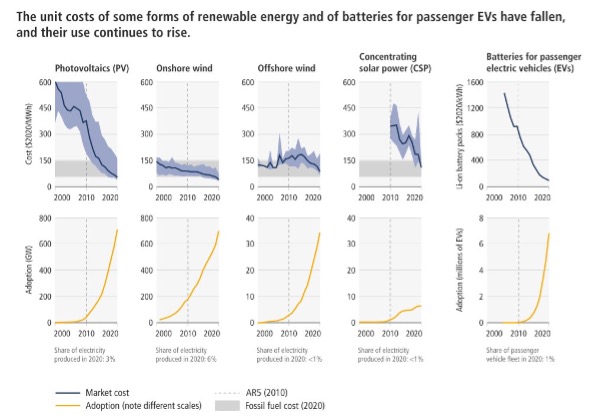
We know how to produce clean, low-cost energy. The technologies are there, what is needed is political will and investment.

cost of the main renewable energy sources graph

Cost of the main renewable energy sources and increase in their use over the last 20 years. Source: 6th IPCC report, 2022.

But there is one thing we do not have: time to waste. In his opening speech, UN Secretary-General Antonio Guterres made it clear: “Some governments and business leaders say one thing and do another. Simply put, they are lying. And the result will be catastrophic, this is a climate emergency”.

The IPCC report on climate mitigation: “It’s now or never”

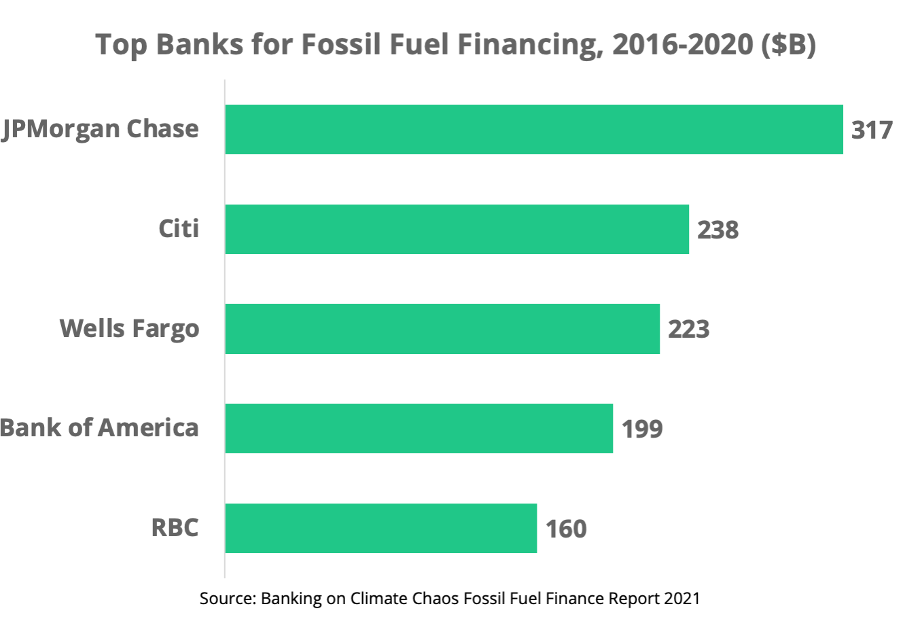
The peak of climate-changing emissions must be reached by 2025. After that, it will have to fall dramatically. By 2030 we should have reduced net emissions by 43%, and this is possible if we make a serious effort. That’s eight years. There is no one solution for every context, but every context (energy, cities, transport, food) has its solutions. “Now or never” says the IPCC. There are no more excuses. Today the obstacles are only political and financial. We have to unblock finance and the IPCC says it clearly, the money is there, but it is being diverted elsewhere. Where? Here:

top banks for fossil fuel financing graph

This graph shows the thousands of billions that financed coal, oil and gas from 2016 to 2020

It is clear that every time we hear the phrase “it can’t be done”, they are actually telling us that they don’t want to do it. Immediately after the release of the IPCC report, many people on social media also noted that “science is cautious” and that this report “has been watered down by nations in negotiations”, said Greta Thunberg in a tweet. One more motivation to act.

We don’t need fear, but the courage to act

 Guterres: “Climate activists are sometimes depicted as dangerous radicals, but the truly dangerous radicals are the countries that are increasing the production of fossil fuels. Investing in fossil fuels infrastructure is moral and economic madness.”

This report shows us what we could do, if we wanted to. It confronts all of us, politicians and citizens, with a crossroads in history. There will be no other major IPCC reports in the next few years, we will have to make do with this one to find the courage we need to change.

WEDNESDAY 23 March

Understanding the latest IPCC report: How will the climate crisis affect you?

Helena Wieländner

Helena Wieländner, Climate Justice Activist at Fridays for Future

The Intergovernmental Panel on Climate Change (IPCC) has published their latest report on climate change. With everything going on in the world right now, many people missed it. But the facts in the report are chilling and cannot be ignored. It’s time to face them together.

The report looks at the ways humans and nature are vulnerable to the climate crisis – and what we need to do to protect ourselves. It provides evidence for what climate activists are already fighting for: there is a rapidly narrowing window of opportunity to reduce global warming down to 1.5°C.

The IPCC report is written very technically. It’s more for scientists and policymakers than for “normal people”. But it affects all of us – yes, even in the European Union. It’s about our survival. About whether our planet will remain habitable for us and for the plants and animals we share it with. It’s so important that we understand what’s coming. How can we manage the climate crisis? What can we do to stop it?

Continue reading to find out what the IPCC report says about how the climate crisis will affect us – and what we can do about it.

What is the IPCC climate report and what does it say?

What is the IPCC?

The Intergovernmental Panel on Climate Change (IPCC) is the world’s authority on climate science. It is a body of the United Nations (UN) and was founded in 1988. Scientists from all kinds of different disciplines work together to better understand the effects of climate change. The IPCC advises politicians and policymakers on what climate change means for humanity and the planet, and how we can prevent the climate crisis from getting even worse.

Every 7 years, the IPCC publishes an assessment report on climate change. There have been six full reports since it was established in 1988. The reports are split into four parts from different Working Groups (WG). Now, in February 2022, the WG2 presented their part of the 6th assessment report. The latest IPCC report concentrates on the impacts of climate change and how we can adapt to the climate crisis. It also looks at human vulnerability. It forces us to think about how climate change is affecting people’s lives right now, instead of “only” talking about future changes to nature, biodiversity and the weather. Maybe this finally makes it possible for us all to grasp how urgent this topic is and that there’s no time to waste anymore.

Generally speaking, the report repeats what we already knew: we’re going to face immense sea level rise leading not only to unknown islands drowning but also cities, like London, or even whole countries, like the Netherlands, vanishing beneath the sea. Heatwaves will hit the most vulnerable people more frequently. Food security and water availability will decrease. Biodiversity loss and extreme weather events won’t be rare anymore. Up to 3.6 billion people will be extra vulnerable due to their age, where they live, poverty and so on. Yes, billion, you read that right. It’s almost every second person on the planet.

The climate crisis is here – What will it mean for you?

Okay, now we know what to expect. We also know that the Western world is responsible for most CO2 emissions, even though they won’t feel the harshest consequences. But, as we said, climate change affects everyone. Yes, there will be other countries that are much more vulnerable to the immediate impact of the climate crisis. But in Europe, we must work on our resilience against recurring natural disasters too.

Just to pick one example, the projected sea level rise would put cities next to rivers (like London) and Low Elevation Coastal zones (like in the Netherlands) at an extreme risk of regular flooding… and eventually sinking. Here you can see the shocking sea level rise map of London projected for 2030. It shows that large parts of the UK’s capital will be underwater in only eight years’ time (click on the image below to open the interactive in a new window):

Map of flooding London / Source: climatecentral.org
Map of potential flooding of London / Source: climatecentral.org
Map of flooding The Netherlands
Source: PB Netherlands Environmental Assessment Agency,
Rijkswaterstaat(2009) Graphic: Henrik Pettersson and Renée Rigdon, CNN
Map of potential flooding of The Netherlands

It is not a secret that – being mostly built on water – more than half of the land of the Netherlands is already at flood risk. It is unimaginable what the country would look like after a drastic sea level rise. This map of the Netherlands shows which parts of the country are already on flood-prone land:

As the climate crisis worsens, let’s also not forget that we’ll face problems with our food and water supplies due to droughts and extreme weather events. The IPCC FAQs state that:

Children aged ten or younger in the year 2020 are projected to experience a nearly four-fold increase in extreme events under 1.5°C of global warming by 2100, and a five-fold increase under 3°C warming. Such increases in exposure would not be experienced by a person aged 55 in the year 2020 in their remaining lifetime under any warming scenario”.

All these catastrophes will cost trillions of dollars each year. And, most importantly of all, an uncountable number of human lives.

The IPCC says we need to act NOW. What needs to change to stop climate change?

Yeah, we know. This sounds terrible. But we aren’t powerless – on the contrary! The IPCC says we still have time to prevent the worst scenarios. We can still adapt to climate change and grow resilience towards natural disasters.

“The only condition is that we act now!”

First and foremost, let’s be really clear: it’s not everyday people who are responsible for climate disasters. We all do what we can, but changing our own behaviour doesn’t make sense without supporting policies and harsh restrictions on big companies. More than 70% of CO2 emissions come from just 100 companies. No prizes for guessing that most of them are oil suppliers.

That doesn’t mean that we shouldn’t do our best to consume consciously. But it’s the politicians who must act now! They hold the power to turn the tide. A first step would be to carry out changes that will help us adapt to climate change and lessen its effects, known as climate adaptation and climate mitigation. Climate adaptation has its limits. Just for visualisation: when we’re hot, we can only take off so many clothes before we’re naked. So there needs to be an even stronger focus on slowing down climate change.

We need to hold global warming under 1.5°C. To achieve this we need strong climate laws for the EU and for our home countries. We need restrictions on companies that emit too much CO2. We need subsidies for companies to become more sustainable. The solutions are actually already there. What we really need are politicians willing to make these solutions into laws.

The IPCC report and now what? What you can do to take action

But what to do if my politicians don’t act, you ask? Well, most of them won’t take urgent  action on their own. They’ll need people putting pressure on them. They need to see that enough people care deeply about the climate. We need them to know that we won’t be tricked by greenwashing in politics (like when the European Commission recently suggested adding gas and nuclear power to their list of “sustainable investments”). They need to feel that they have to address the climate crisis to stay in power.

One strategy in politics is to overcomplicate things so people won’t understand enough to complain.  But they don’t know our generation – we won’t stop fighting for our right to a socially just and liveable world.

So, let’s be clear here: every fraction of a degree that we keep below the 1.5°C limit matters. Every degree saves lives, and every saved life is worth the fight. So, it’s always worth fighting. We have a duty to stop a catastrophe. But we also have an opportunity to do things differently. To change our world and improve our quality of life. Not only for us, but for everyone who shares this planet.

If you want to support the protest, channel your energy, be loud and show your frustration, join the Global Climate Strike organised by Fridays For Future.

The next one takes place on Friday 25th March 2022. Find out where the nearest Climate Strike is to you.

See you there!

The IPCC Report – Glossary

Climate Mitigation

Mitigation aims at limiting global warming so the harm is not going to be too bad. It’s the sword in our fight against the climate crisis.

Climate Adaptation

To adapt to climate change means trying to reduce the expected harm and taking advantage of beneficial opportunities. It’s like building the right armour for the fight.

Climate Resilience

Resilience is needed to withstand the expected climate catastrophes. Like a shield that protects us.

Vulnerability to the Climate Crisis

Vulnerable people are especially exposed to climate change impacts, like heat, drought and floods. One cannot simply break this down by gender or age. It’s about an intersectional approach which takes diverse aspects into consideration. Vulnerable people might face challenges to hold a sword, a shield or wear armour which is why we need to protect them even more.

Join us on March 25th for the Global Climate Strike in a city near you!

There are some moments in history when acting is more important than at other times. We’re in exactly one of those moments. Join the Global Climate Strike!

For the past two years the entire world has been challenged by a pandemic. Now a war has broken out right within Europe’s borders. Finally, there is the climate crisis that threatens life on this planet as we know. Yet, it always seems to be put aside in light of more tangible crises.

In this difficult moment of our history, we at Fridays for Future want to transform our depression into action. Let’s turn our anxiety into hope and our fear into courage.

Because there is one thing that gives me hope these days: getting together and feeling the community of the people fighting for change!

Wether you are in Barcelona, Berlin or Milan – will you join us for our next Fridays for Future Global Climate Strike on March 25th?

The climate crisis, a global pandemic and the war – How to act in difficult times

When different crises come together at the same time we have to connect the dots. We have to make the connections and understand that, for example, wars and CO2 emissions are linked. If we were less energy dependent on Russian gas, we could take a stronger position to force Putin to stop the bombing and invasion of Ukraine.

If the air in our cities would have been less polluted, our longues would probably have suffered less from the consequences of Covid-19. So it becomes more evident how life-improving it would be to stop building our societies around the extraction and combustion of oil, coal and gas.

On this year’s global climate strike we want the politicians to hear our message. The climate crisis is the most colossal crisis that humanity has ever had to face because it is so far-reaching. Yet, it involves every area of society, the behaviour of each of us, our economic system and our values. We are at a crossroads in history. We can either sink or improve and live better!

In times of crisis, what role can politics play?

Until now, most of politics has remained deaf to the warnings of scientists. This has caused us to lose precious years of time in combating the climate crisis. Between false promises and greenwashing, politicians have shown us their inability to make urgent and effective decisions to protect future generations from the worst consequences of the climate crisis.

This way of doing politics has brought us one step closer to the climate “point of no return”. This point marks the threshold of emissions not to be exceeded, beyond which a series of unstoppable chain effects would be triggered. One example is that the melting of glaciers and the consequential rise of the sea levels would lead to lasting floods, also in the UK or the Netherlands. So will you join us for our global climate strike in London or Amsterdam?

Fridays for Future: all we ask for is for politicians to act!

Crowd of people in a climate march
Crowd during a climate march

We at Fridays for Future have been asking for a long time for capable and motivated politicians, who know how to make the right choices. Of course those are most of the time not the easy ones. What we need is someone in leadership who knows how to team up with experts and civil society, so that decisions are based on scientifically proven facts. At the same time, those decisions are then shared and accepted by citizens. This is why we ask for courageous politicians to put the common good first, not themselves. Someone who knows how to be a credible guide.

This is why we must take to the streets with a global climate strike to demonstrate the need to abandon fossil fuels. We need to remain united in the battles by finding points of connection and to give a voice to science, which has long remained unheard.

The climate crisis is here – why become a climate activist?

As climate activists, we are first of all humans, with everyday passions and everyday fears.

Are you a person that tries to be informed and has decided to do something about the climate crisis?

Do you fear the worst consequences of climate change such as increasingly devastating fires, food and water shortages, rising sea levels and other extreme events, like the most recent IPCC report suggests?

Are you a person that has a higher sense of inner justice, who wants to fight for those already suffering?

Do you think you can change something and agree that every little bit of everyday activism helps?

Do you sometimes feel like a hero in disguise, because you believe that you can actually make a difference?

If you have answered one or more questions with a YES! then there you are – you are already a climate activist!

Let’s join other climate activists in this Global Climate Strike near you!

I want to become a climate activist – what should I do?

People demonstrating holding a sign

No one is too young to make a difference. No one is too old to have nothing important left to give. That’s why the climate movement is intersectional in each term: social background, sex, ability, age.

Young people are the backbone of the message of change, but this message is addressed to all. The climate crisis is already here and we want to build a better world for everyone. When we think about fixing the climate, we should not only focus on how to avoid a catastrophe. We have to think about how we can take advantage of this gigantic opportunity to improve everyone’s quality of life.

By taking to the streets on March 25 with the global climate strike 2022 we are protesting against the collapse of the planet. For the phasing out of fossil fuels. To be able to breathe cleaner air. We are fighting for more and better jobs, for healthier food and to improve relationships between people. Last but not least, we will be in the streets to fight for peace and against wars fuelled by fossil fuels. We want the fight for the climate to be first and foremost the key to peace between peoples on this planet.

Because there is no peace on a dead planet!

This Friday, in every country of the world we will mobilise together.

See you in the streets!

Letters from Lviv, Ukraine – MEP Erik Marquardt visits the Polish-Ukrainian border

The humanitarian consequences of Putin’s war on Ukraine have been devastating. Almost three million people have fled their homes to seek safety in the EU. Since the war began, 75,000 children a day have become refugees, according to the United Nations (UN). Greens/EFA MEP Erik Marquardt visited the border between Ukraine and Poland in early March to find out about the situation on the ground.

The first thing I saw, driving to the border crossing point of Kroscienko in Poland, was a long queue of cars and vans. Hundreds of them. All waiting to bring donations to Ukraine.

Standing at the border, a steady stream of women, children and elderly people were arriving on foot. Most of them were waiting for relatives or friends to pick them up. A makeshift reception tent was handing out hot tea, food and essentials. People told me about their long journeys on trains, buses and in cars – often over several days – within Ukraine. And five to six hour waits – on that day – in the cold to enter the European Union. Just to be safe.

Goodbye at the EU border – families separated by Putin’s war

As I went further north to the border crossing of Medyka, I saw more and more people. They were waiting for buses to transport them to the closest town. Kind volunteers were offering a very basic welcome. Despite the cold, people were waiting outside (including little babies and young mothers) without access to any trustworthy information.

A young woman with a 2-year-old girl told me how her husband, a police officer in Ukraine, had driven her to the border.  She then crossed the border walking with a stroller in one hand, a suitcase in the other and a backpack on her heavy shoulders. She told me she was waiting for her sister to pick her up. The mother was exhausted after a three day trip, but still had a two day car ride to her sister’s house ahead of her. Her husband had to remain in the Ukraine. All able-bodied men between the ages of 18 and 60 must stay behind to fight against Putin. HoweverThis family was not a rare sight: I witnessed too many fathers taking their wives and children to the train station before going back to the war.

What happens when you make it across the Polish border?

Those getting on the bus arrive at the Polish town of Przemyśl, where an empty department store acts as a first reception facility. The parking lot is bustling with vehicles and volunteers giving out donations. Inside, people are trying to rest. There is no privacy and very limited hygiene facilities. And, there is also almost no control over who enters a building full of young women and small children.

All the people who told me their stories came to Poland via the city of Lviv. Their journey to a safe place begins there, where trains bring refugees from the war-torn cities of Ukraine into the European Union. Lviv is where I was heading.

On the way to Lviv, I crossed many military checkpoints guarded by armed men. At Lviv’s train station, the crowd was tense and the situation was desperate. I saw a family attempting to carry a paralysed family member off the train without medical staff. Young children who  had a safe home until a few days ago were now on the floor of the station.

Driving back towards the border, a line of cars kilometres long were waiting to cross into Poland. I spent one night in the queue watching people arrive. Watching men saying goodbye to their wives, mothers and children or trying to negotiate access to the border crossing with soldiers.

Russia’s war against Ukraine – why the EU must step up solidarity

This war of aggression has been going for less than one month and already over three million people have fled Ukraine to seek refuge from Putin’s bombs.

More refugees will be coming and the EU needs to be ready to receive them. European countries recently agreed to activate the Temporary Protection Directive which gives refugees from Ukraine the right to a temporary residence permit in the EU for at least one year. It is our job now to ensure to take care of those arriving.

What we need to do to make sure Ukrainian refugees are welcomed to the EU:

  • EU member states to make generous reception pledges to welcome them
  • the EU to quickly allocate funds to those who welcome refugees
  • a European mechanism that will allow us to fairly distribute refugees who do not yet know where to go

Most of all, we need to use this momentum to show that we stand in solidarity with those fleeing war and persecution irrespective of where they are from.

What can you do?

What is the Temporary Protection Directive (TPD)?

The Temporary Protection Directive (TPD) is an EU law that grants temporary protection to people fleeing situations of crisis. It is intended for use in cases when a sudden influx of people arrive in the EU, like the millions of refugees currently escaping from Ukraine. The law was introduced in 2001 and has just been activated for the first time in 20 years. In practical terms, this means that refugees from Ukraine will have the right to a temporary residence permit in the EU for at least one year (with a possible two-year extension), access to the labour market, education for minors and basic healthcare.

A law to heal our forests: why we need to restore nature now

The EU is planning to bring back nature. The European Commission has promised a law that will help restore the nature we have lost, the EU Nature Restoration Law. This could be a game changer for nature protection and restoration. It would be the first real nature legislation in the EU in 20 years.

But the new law is already under attack. The Commission has already delayed it from its original publication date in 2021. Green MEPs, Jutta Paulus and Ville Niinistö, explain why we need the nature restoration law now.

We need healthy ecosystems – for people, animals and the planet

We need strong ecosystems to face the challenges of climate change. Globally, the UN’s Intergovernmental Panel on Climate Change (IPCC) has called for the conservation of “30 to 50 percent of Earth’s land, freshwater and ocean habitats”. This is so we can “benefit from nature’s capacity to absorb and store carbon”.

Essentially, we cannot solve the climate crisis without the help of nature.

Nature also has value in its own right. The IPCC’s little sister, the Intergovernmental Science-Policy Platform on Biodiversity and Ecosystem Services (IPBES) has recognised nature’s many important “contributions to people”. Without healthy ecosystems, there is no drinkable water, no clean air and no fertile soils. In addition, nature permeates through our cultures and religions. It supports our wellbeing and our mental health.

But the IPBES has also shown that, globally, more than a million species are at risk. They have warned that “we are eroding the very foundations of our economies, livelihoods, food security, health and quality of life worldwide”.

This also applies to Europe, says a recent EU assessment. According to IPBES, Europe is the region with the least intact ecosystems, after India. And this doesn’t even take into account that our consumption habits fuel the destruction of ecosystems in other parts of the world.

Ecosystem recovery – how do we bring back nature? 

Nature restoration is all about assisting the recovery of ecosystems that are broken (or “degraded”, in technical terms). This can require active repair, like removing dams in a river. It can also mean leaving nature alone to heal itself. This could be done for example by allowing trees to die naturally and leaving the deadwood in our forests.

Today, we have at least 100,000 unnecessary barriers in European rivers, mostly out-of-use weirs and other small structures. These break up habitats by stopping wildlife and sediment from flowing freely down the river. Removing just 2 percent of them could free up to 30,000 km of rivers.

Natural peatlands have been drained for agriculture, forestry and peat extraction. Instead of storing carbon as they have done for millenia, they have become a major source of carbon emissions. In the European Union, 50% of peatlands are degraded. In Germany, only 5% of near-natural peatlands remain.

Peatlands Lakes in Great Kemeri Bog, Latvia
Peatlands Lakes in Great Kemeri Bog, Latvia/ GRID-Arendal/ Flickr 2.0 Generic (CC BY 2.0)

Besides rivers and peatlands, we also need to restore other ecosystems to a semi-natural or natural state, such as grasslands and forests.

Good news for European ecosystems – Restoration is possible and already happening

In Finland, we have successfully restored some of our wetlands that had been drained for tree plantations. We are on track to restore 12,000 hectares of ditched mires by 2023, thanks to increased government funding.

Many of Finland’s forests are in a poor condition, though. Around 225,000 hectares of natural boreal forest have been altered beyond recognition for use by the commercial forestry industry. They do not provide suitable habitat for many endangered forest species.

Only on 17,000 hectares, efforts have been made to restore these forests to a semi-natural state. This only happened after they were designated for protection.

In Germany, we have found a new way of financing wetland restoration through carbon credits.

These are good actions but we need to do more to save nature and our planet!

Big Timber – why the new nature restoration law is under attack

The logging industry lobby is already out to fight the new nature restoration law. They are more concerned about short-term profits than protecting precious ecosystems and habitats. Three forest industry associations – from Finland, Sweden and Estonia – have asked to only include forests in existing EU-protected areas in the new law. Other forests, they pretend, are doing well enough.

Now, it would be hard for anyone to argue that forests in protected areas are doing well. EU reports show that they are not. And that forests in the Nordic region (so-called boreal forests) are doing the worst of all EU forest types.

Across the EU, only 29 percent of EU forests are in “Natura 2000” protected areas. The condition of our forests outside these areas is also concerning.

In Germany, exceptional drought and bark beetle attacks degraded almost 5 percent of forests in just over three years. Researchers said this damage was “unprecedented”. They noted that neighbouring countries like the Czech Republic and Austria were facing similar challenges.

Whether or not forests are managed only for conservation or for wood production, we need to make them more resilient against climate-driven disturbances like droughts, fires and pests. We cannot allow short-sighted economic interests to undermine the long-term maintenance of our livelihoods. 

No more delays – we need a strong nature restoration law now!

As the Greens/EFA, we are glad that the EU is stepping up action to bring back nature. We have called for an ambitious proposal that effectively counters the biodiversity crisis. Together with many others, we have written to the Commission to set out our demands.

The war in Ukraine cannot be a reason to delay this action. Concerns about negative impacts on short-term food security are misplaced. In fact, without intact ecosystems, we will not be able to feed ourselves in the future. Protecting nature now means we can keep growing enough food in the long run.