Join us on March 25th for the Global Climate Strike in a city near you!

There are some moments in history when acting is more important than at other times. We’re in exactly one of those moments. Join the Global Climate Strike!

For the past two years the entire world has been challenged by a pandemic. Now a war has broken out right within Europe’s borders. Finally, there is the climate crisis that threatens life on this planet as we know. Yet, it always seems to be put aside in light of more tangible crises.

In this difficult moment of our history, we at Fridays for Future want to transform our depression into action. Let’s turn our anxiety into hope and our fear into courage.

Because there is one thing that gives me hope these days: getting together and feeling the community of the people fighting for change!

Wether you are in Barcelona, Berlin or Milan – will you join us for our next Fridays for Future Global Climate Strike on March 25th?

The climate crisis, a global pandemic and the war – How to act in difficult times

When different crises come together at the same time we have to connect the dots. We have to make the connections and understand that, for example, wars and CO2 emissions are linked. If we were less energy dependent on Russian gas, we could take a stronger position to force Putin to stop the bombing and invasion of Ukraine.

If the air in our cities would have been less polluted, our longues would probably have suffered less from the consequences of Covid-19. So it becomes more evident how life-improving it would be to stop building our societies around the extraction and combustion of oil, coal and gas.

On this year’s global climate strike we want the politicians to hear our message. The climate crisis is the most colossal crisis that humanity has ever had to face because it is so far-reaching. Yet, it involves every area of society, the behaviour of each of us, our economic system and our values. We are at a crossroads in history. We can either sink or improve and live better!

In times of crisis, what role can politics play?

Until now, most of politics has remained deaf to the warnings of scientists. This has caused us to lose precious years of time in combating the climate crisis. Between false promises and greenwashing, politicians have shown us their inability to make urgent and effective decisions to protect future generations from the worst consequences of the climate crisis.

This way of doing politics has brought us one step closer to the climate “point of no return”. This point marks the threshold of emissions not to be exceeded, beyond which a series of unstoppable chain effects would be triggered. One example is that the melting of glaciers and the consequential rise of the sea levels would lead to lasting floods, also in the UK or the Netherlands. So will you join us for our global climate strike in London or Amsterdam?

Fridays for Future: all we ask for is for politicians to act!
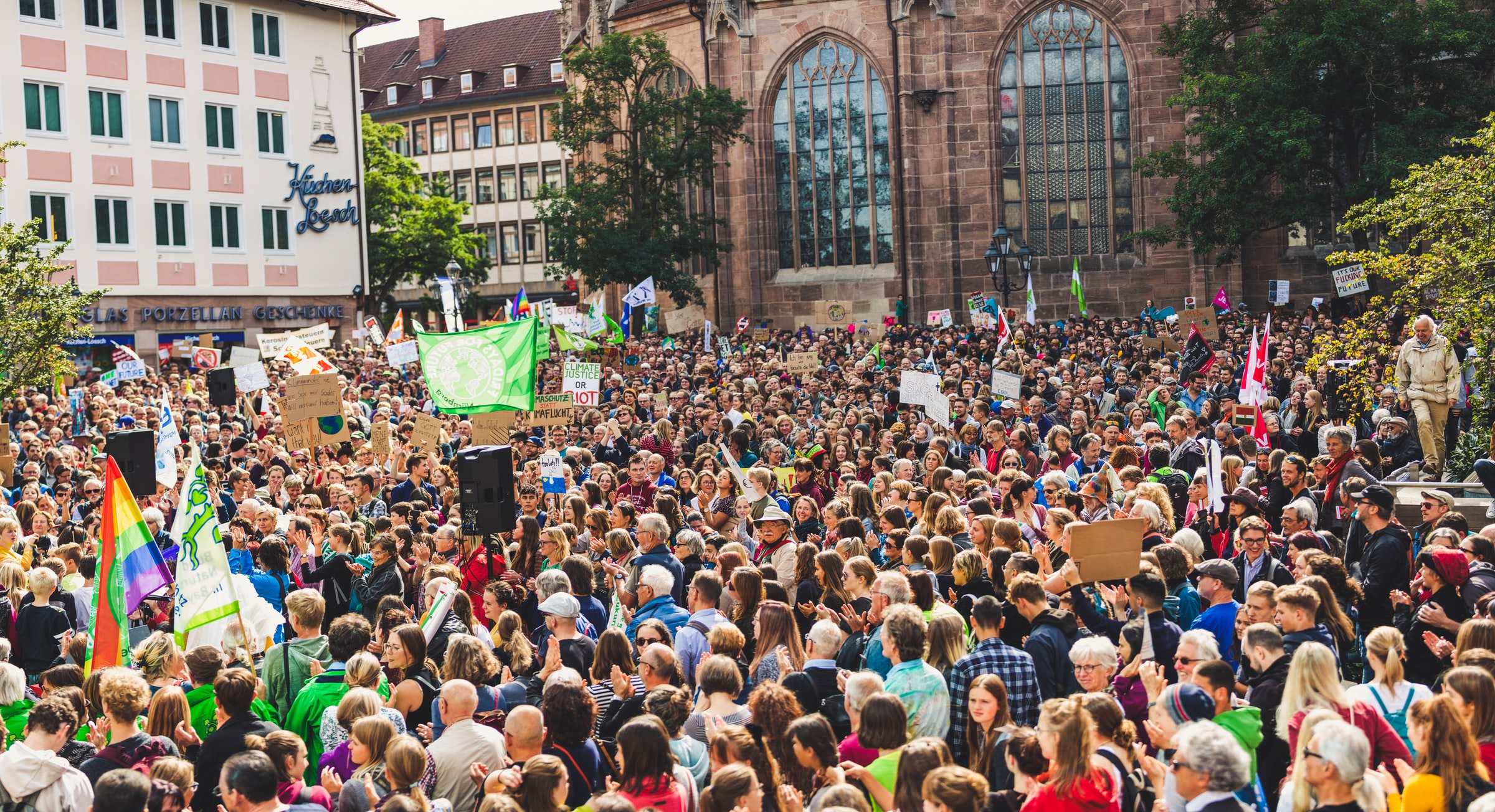
Crowd of people in a climate march
Crowd during a climate march

We at Fridays for Future have been asking for a long time for capable and motivated politicians, who know how to make the right choices. Of course those are most of the time not the easy ones. What we need is someone in leadership who knows how to team up with experts and civil society, so that decisions are based on scientifically proven facts. At the same time, those decisions are then shared and accepted by citizens. This is why we ask for courageous politicians to put the common good first, not themselves. Someone who knows how to be a credible guide.

This is why we must take to the streets with a global climate strike to demonstrate the need to abandon fossil fuels. We need to remain united in the battles by finding points of connection and to give a voice to science, which has long remained unheard.

The climate crisis is here – why become a climate activist?

As climate activists, we are first of all humans, with everyday passions and everyday fears.

Are you a person that tries to be informed and has decided to do something about the climate crisis?

Do you fear the worst consequences of climate change such as increasingly devastating fires, food and water shortages, rising sea levels and other extreme events, like the most recent IPCC report suggests?

Are you a person that has a higher sense of inner justice, who wants to fight for those already suffering?

Do you think you can change something and agree that every little bit of everyday activism helps?

Do you sometimes feel like a hero in disguise, because you believe that you can actually make a difference?

If you have answered one or more questions with a YES! then there you are – you are already a climate activist!

Let’s join other climate activists in this Global Climate Strike near you!

I want to become a climate activist – what should I do?
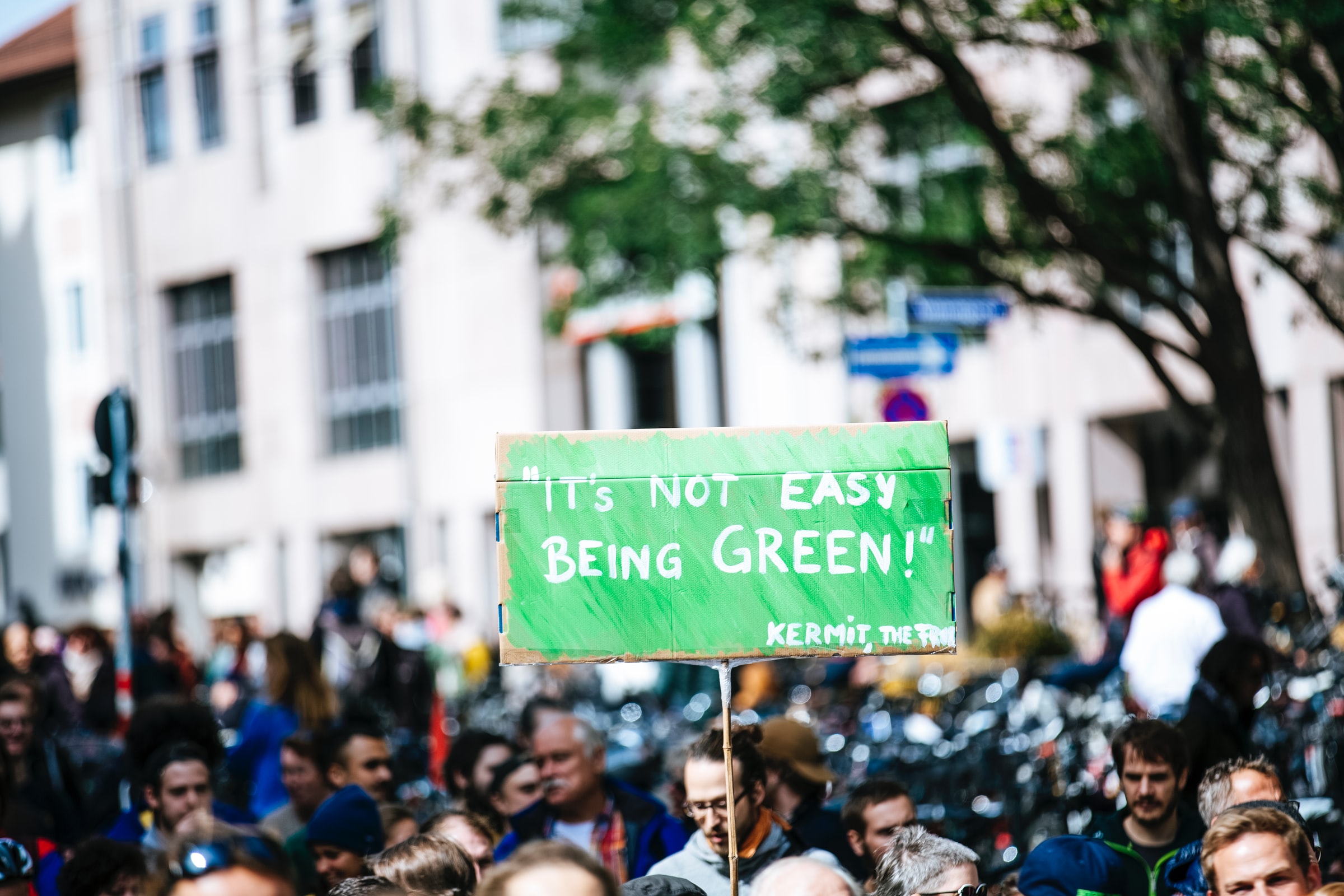
People demonstrating holding a sign

No one is too young to make a difference. No one is too old to have nothing important left to give. That’s why the climate movement is intersectional in each term: social background, sex, ability, age.

Young people are the backbone of the message of change, but this message is addressed to all. The climate crisis is already here and we want to build a better world for everyone. When we think about fixing the climate, we should not only focus on how to avoid a catastrophe. We have to think about how we can take advantage of this gigantic opportunity to improve everyone’s quality of life.

By taking to the streets on March 25 with the global climate strike 2022 we are protesting against the collapse of the planet. For the phasing out of fossil fuels. To be able to breathe cleaner air. We are fighting for more and better jobs, for healthier food and to improve relationships between people. Last but not least, we will be in the streets to fight for peace and against wars fuelled by fossil fuels. We want the fight for the climate to be first and foremost the key to peace between peoples on this planet.
Because there is no peace on a dead planet!

This Friday, in every country of the world we will mobilise together.

See you in the streets!

Letters from Lviv, Ukraine – MEP Erik Marquardt visits the Polish-Ukrainian border

The humanitarian consequences of Putin’s war on Ukraine have been devastating. Almost three million people have fled their homes to seek safety in the EU. Since the war began, 75,000 children a day have become refugees, according to the United Nations (UN). Greens/EFA MEP Erik Marquardt visited the border between Ukraine and Poland in early March to find out about the situation on the ground.

The first thing I saw, driving to the border crossing point of Kroscienko in Poland, was a long queue of cars and vans. Hundreds of them. All waiting to bring donations to Ukraine.

Standing at the border, a steady stream of women, children and elderly people were arriving on foot. Most of them were waiting for relatives or friends to pick them up. A makeshift reception tent was handing out hot tea, food and essentials. People told me about their long journeys on trains, buses and in cars – often over several days – within Ukraine. And five to six hour waits – on that day – in the cold to enter the European Union. Just to be safe.

Goodbye at the EU border – families separated by Putin’s war

As I went further north to the border crossing of Medyka, I saw more and more people. They were waiting for buses to transport them to the closest town. Kind volunteers were offering a very basic welcome. Despite the cold, people were waiting outside (including little babies and young mothers) without access to any trustworthy information.

A young woman with a 2-year-old girl told me how her husband, a police officer in Ukraine, had driven her to the border.  She then crossed the border walking with a stroller in one hand, a suitcase in the other and a backpack on her heavy shoulders. She told me she was waiting for her sister to pick her up. The mother was exhausted after a three day trip, but still had a two day car ride to her sister’s house ahead of her. Her husband had to remain in the Ukraine. All able-bodied men between the ages of 18 and 60 must stay behind to fight against Putin. HoweverThis family was not a rare sight: I witnessed too many fathers taking their wives and children to the train station before going back to the war.

What happens when you make it across the Polish border?

Those getting on the bus arrive at the Polish town of Przemyśl, where an empty department store acts as a first reception facility. The parking lot is bustling with vehicles and volunteers giving out donations. Inside, people are trying to rest. There is no privacy and very limited hygiene facilities. And, there is also almost no control over who enters a building full of young women and small children.

All the people who told me their stories came to Poland via the city of Lviv. Their journey to a safe place begins there, where trains bring refugees from the war-torn cities of Ukraine into the European Union. Lviv is where I was heading.

On the way to Lviv, I crossed many military checkpoints guarded by armed men. At Lviv’s train station, the crowd was tense and the situation was desperate. I saw a family attempting to carry a paralysed family member off the train without medical staff. Young children who  had a safe home until a few days ago were now on the floor of the station.

Driving back towards the border, a line of cars kilometres long were waiting to cross into Poland. I spent one night in the queue watching people arrive. Watching men saying goodbye to their wives, mothers and children or trying to negotiate access to the border crossing with soldiers.

Russia’s war against Ukraine – why the EU must step up solidarity

This war of aggression has been going for less than one month and already over three million people have fled Ukraine to seek refuge from Putin’s bombs.

More refugees will be coming and the EU needs to be ready to receive them. European countries recently agreed to activate the Temporary Protection Directive which gives refugees from Ukraine the right to a temporary residence permit in the EU for at least one year. It is our job now to ensure to take care of those arriving.

What we need to do to make sure Ukrainian refugees are welcomed to the EU:

  • EU member states to make generous reception pledges to welcome them
  • the EU to quickly allocate funds to those who welcome refugees
  • a European mechanism that will allow us to fairly distribute refugees who do not yet know where to go

Most of all, we need to use this momentum to show that we stand in solidarity with those fleeing war and persecution irrespective of where they are from.

What can you do?

What is the Temporary Protection Directive (TPD)?

The Temporary Protection Directive (TPD) is an EU law that grants temporary protection to people fleeing situations of crisis. It is intended for use in cases when a sudden influx of people arrive in the EU, like the millions of refugees currently escaping from Ukraine. The law was introduced in 2001 and has just been activated for the first time in 20 years. In practical terms, this means that refugees from Ukraine will have the right to a temporary residence permit in the EU for at least one year (with a possible two-year extension), access to the labour market, education for minors and basic healthcare.

A law to heal our forests: why we need to restore nature now

The EU is planning to bring back nature. The European Commission has promised a law that will help restore the nature we have lost, the EU Nature Restoration Law. This could be a game changer for nature protection and restoration. It would be the first real nature legislation in the EU in 20 years.

But the new law is already under attack. The Commission has already delayed it from its original publication date in 2021. Green MEPs, Jutta Paulus and Ville Niinistö, explain why we need the nature restoration law now.

We need healthy ecosystems – for people, animals and the planet

We need strong ecosystems to face the challenges of climate change. Globally, the UN’s Intergovernmental Panel on Climate Change (IPCC) has called for the conservation of “30 to 50 percent of Earth’s land, freshwater and ocean habitats”. This is so we can “benefit from nature’s capacity to absorb and store carbon”.

Essentially, we cannot solve the climate crisis without the help of nature.

Nature also has value in its own right. The IPCC’s little sister, the Intergovernmental Science-Policy Platform on Biodiversity and Ecosystem Services (IPBES) has recognised nature’s many important “contributions to people”. Without healthy ecosystems, there is no drinkable water, no clean air and no fertile soils. In addition, nature permeates through our cultures and religions. It supports our wellbeing and our mental health.

But the IPBES has also shown that, globally, more than a million species are at risk. They have warned that “we are eroding the very foundations of our economies, livelihoods, food security, health and quality of life worldwide”.

This also applies to Europe, says a recent EU assessment. According to IPBES, Europe is the region with the least intact ecosystems, after India. And this doesn’t even take into account that our consumption habits fuel the destruction of ecosystems in other parts of the world.

Ecosystem recovery – how do we bring back nature? 

Nature restoration is all about assisting the recovery of ecosystems that are broken (or “degraded”, in technical terms). This can require active repair, like removing dams in a river. It can also mean leaving nature alone to heal itself. This could be done for example by allowing trees to die naturally and leaving the deadwood in our forests.

Today, we have at least 100,000 unnecessary barriers in European rivers, mostly out-of-use weirs and other small structures. These break up habitats by stopping wildlife and sediment from flowing freely down the river. Removing just 2 percent of them could free up to 30,000 km of rivers.

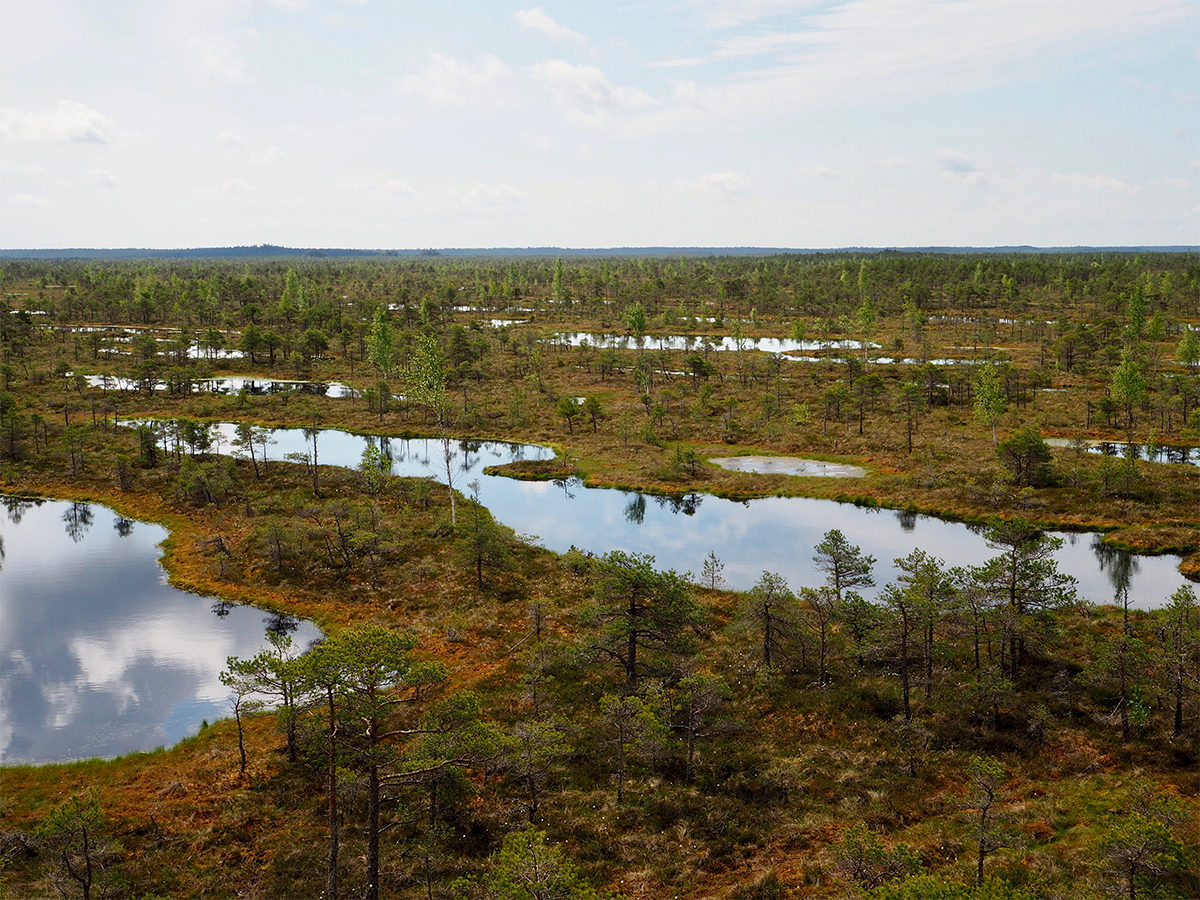
Natural peatlands have been drained for agriculture, forestry and peat extraction. Instead of storing carbon as they have done for millenia, they have become a major source of carbon emissions. In the European Union, 50% of peatlands are degraded. In Germany, only 5% of near-natural peatlands remain.

Peatlands Lakes in Great Kemeri Bog, Latvia
Peatlands Lakes in Great Kemeri Bog, Latvia/ GRID-Arendal/ Flickr 2.0 Generic (CC BY 2.0)

Besides rivers and peatlands, we also need to restore other ecosystems to a semi-natural or natural state, such as grasslands and forests.

Good news for European ecosystems – Restoration is possible and already happening

In Finland, we have successfully restored some of our wetlands that had been drained for tree plantations. We are on track to restore 12,000 hectares of ditched mires by 2023, thanks to increased government funding.

Many of Finland’s forests are in a poor condition, though. Around 225,000 hectares of natural boreal forest have been altered beyond recognition for use by the commercial forestry industry. They do not provide suitable habitat for many endangered forest species.

Only on 17,000 hectares, efforts have been made to restore these forests to a semi-natural state. This only happened after they were designated for protection.

In Germany, we have found a new way of financing wetland restoration through carbon credits.

These are good actions but we need to do more to save nature and our planet!

Big Timber – why the new nature restoration law is under attack

The logging industry lobby is already out to fight the new nature restoration law. They are more concerned about short-term profits than protecting precious ecosystems and habitats. Three forest industry associations – from Finland, Sweden and Estonia – have asked to only include forests in existing EU-protected areas in the new law. Other forests, they pretend, are doing well enough.

Now, it would be hard for anyone to argue that forests in protected areas are doing well. EU reports show that they are not. And that forests in the Nordic region (so-called boreal forests) are doing the worst of all EU forest types.

Across the EU, only 29 percent of EU forests are in “Natura 2000” protected areas. The condition of our forests outside these areas is also concerning.

In Germany, exceptional drought and bark beetle attacks degraded almost 5 percent of forests in just over three years. Researchers said this damage was “unprecedented”. They noted that neighbouring countries like the Czech Republic and Austria were facing similar challenges.

Whether or not forests are managed only for conservation or for wood production, we need to make them more resilient against climate-driven disturbances like droughts, fires and pests. We cannot allow short-sighted economic interests to undermine the long-term maintenance of our livelihoods. 

No more delays – we need a strong nature restoration law now!

As the Greens/EFA, we are glad that the EU is stepping up action to bring back nature. We have called for an ambitious proposal that effectively counters the biodiversity crisis. Together with many others, we have written to the Commission to set out our demands.

The war in Ukraine cannot be a reason to delay this action. Concerns about negative impacts on short-term food security are misplaced. In fact, without intact ecosystems, we will not be able to feed ourselves in the future. Protecting nature now means we can keep growing enough food in the long run.

Solidarity with the people in Ukraine – what we can do now to help

On February 24th Russia launched a full-scale invasion of Ukraine, with coordinated assaults throughout the country. This is an unprecedented attack against a European country. Against a democracy. Against peace in Europe.

It is now up to us to speak with a united and strong voice against this aggression.

The European Union stands united with Ukraine

We as Greens/EFA in the European Parliament strongly condemn these unprovoked actions by Russia and stand firmly with Ukraine. Ukraine’s sovereignty as a democratic nation and its territorial integrity are undisputable. Russia’s military actions are in direct violation of international law and should stop immediately.

It is now up to us, the European Union, to show our solidarity with Ukraine in a swift and coordinated response. We cannot let Putin succeed in his attempt to bring down Europe’s peace architecture. Given his continued escalation, further targeted and hard-hitting sanctions must be brought to bear immediately.

Our hearts go out to the people of Ukraine, who now face stark realities. We must strengthen our financial, economic and humanitarian assistance to Ukraine and be prepared to provide a safe haven to people fleeing the invasion. All the above will test the resolve, unity and solidarity of the European Union. Collectively, we are convinced we have the means and the will to meet the challenge.

Please follow our social media channels for any developing news.

How to help people in the Ukraine – links and resources

Now is the time to show our support and solidarity to the people in and fleeing from Ukraine. Now is the time to show them they are not alone.

There are many things you can do to help the people in the Ukraine:

  • Donate
  • Attend a demonstration
  • Check on your friends and family who might be affected by the situation
  • Share news and ways to help
  • Check your sources and be mindful of misinformation

If you can, donate to these organisations to help people in and fleeing Ukraine:

Spot the tax haven? Avoiding the blacklist is a game for zero tax countries

The EU’s latest ‘blacklist’ for tax havens has just been released, but some of the biggest names are not on the list. Certain territories are getting away with offering 0% tax rates – meaning multi-billion dollar corporations who register there can pay no tax (while the rest of us are contributing our fair share).

It’s time for the EU to take its own blacklist seriously and stop treating tax avoidance like a game, write Kira Peter-Hansen and Ernest Urtasun.

Twice a year, European countries get together to decide which countries outside of the EU are going to make it into the so-called ’blacklist’, a list of the biggest tax havens in the world. The threat of being added to the tax haven blacklist is supposed to dissuade countries from offering low tax rates as a perk for corporations. Tax havens rob all of us from the benefit of tax money that should rightfully be paid in countries where these corporations actually do business.

The newest version of the EU’s tax haven blacklist came out today. There are some conspicuous names missing from the list: the Cayman Islands, Jersey, the Bahamas, the Isle of Man. These are all countries that offer corporationsa tax rate of 0% but they have not been blacklisted. There’s a game being played behind the scenes, and ordinary people are on the losing side. Let’s look into what’s really going on here.

What is a tax haven and why tax havens are bad ?

Tax havens are countries that offer extremely low tax rates to giant multinational corporations and rich individuals to help them avoid taxes in their home countries, where they would traditionally pay a fairer sum. 

So, for example, a well-known Swedish furniture brand can do most of their business in Sweden but base their headquarters in the Cayman Islands or Jersey. Does that mean that they are transferring their business to the middle of the Caribbean Sea? Not at all. What it means is that they are setting up a fictional office on a tropical island and claiming that they make all of their money there so that they can benefit from the 0% tax rate. So, while the workers of the Swedish furniture brand are diligently paying their taxes in Sweden, the owners are using a tropical paradise to escape the taxes they have to pay.  

Why are some of the world’s biggest tax havens missing from the EU’s blacklist?

In 2017, the EU started collecting the names of some of these countries that offer special benefits to the super rich in the tax haven list. The blacklist is supposed to be a tool for the EU to fight tax avoidance and to name and shame countries who create unfair tax competition.

But the catch is that they leave out some of the biggest players in the tax benefit world. Why? Because the criteria for who should be put on the list are too weak. If you don’t believe it, look at the tax haven blacklist from October. The Cayman Islands, the Seychelles, Jersey, the British Virgin Islands and other countries that offer corporationsa tax rate of 0% were missing from the blacklist. Another example is Switzerland. Even with scandals like the Suisse Secrets, Switzerland benefits from the weak criteria and isn’t listed as it should be.

There is also a weaker version of the blacklist called the grey list. It’s the blacklist’s little sibling. The grey list is for countries whose tax practices warrant further scrutiny, but who have at least made some commitment to change. Countries entering the grey list are fully aware that this is happening and they get a warning from the EU, but their intention to change their tax systems gives them a pass out of the blacklist.

If this doesn’t sound fair, it’s because it isn’t at all. Turkey has repeatedly failed to comply  with the criteria or change its tax system, but it has managed to avoid the blacklist for years now. South Dakota in the US also gives preferential tax deals to corporations. But the US is far from appearing on the blacklist, despite playing a big role in the Pandora Papers and the European Parliament asking for it to be added. Bermuda, the British Virgin Islands and the Bahamas offer big corporations a 0% tax rate but are still only making it onto the grey list because they manage to jump through the right loopholes.

How can we fix the EU’s tax haven blacklist?

All this means that the blacklist is being undermined. It should be a strong tool to fight against tax avoidance and unfair tax competition in the world. But right now it feels like a game of hide and seek, where it’s too easy for countries to be let off the hook. 

We have repeatedly asked for the criteria for blacklisting tax havens to be stronger. We’ve also called for the list to be updated in a way that is both transparent and accountable, to put an end to the political games.And we are not alone in this, the European Parliament has demanded the list be revised multiple times.

It is time for the biggest tax havens to make it onto the list. Countries offering 0% tax deals should be listed immediately. The criteria need to be properly applied both inside and outside the EU.

If this doesn’t happen, we will not be able to achieve tax justice. Large corporations will still benefit from not paying taxes and it will be EU citizens who will have to pay for a mess that their own governments have the power to fix.

‘Sportswashing’ – Why the Beijing Winter Olympics pose a threat to human rights

With the Winter Olympics starting this week in Beijing, and the FIFA World Cup in Qatar later this year, human rights organisations are sounding the alarm on ‘sportswashing’. Gwendoline Delbos Corfield MEP and Patrick Breyer MEP investigate how big sporting events operate as a distraction from persecution, mass surveillance and human rights violations.

Are mass-scale sports events being used to normalise the use of surveillance technologies in our cities? Biometric mass surveillance, like high-tech facial recognition, is on the rise – but what is the cost to our human rights?

What do sports events have to do with human rights violations?

On 4th February, the Winter Olympics will kick off in Beijing, China, against a dark backdrop of serious human rights concerns. International human rights associations have warned participants of human rights violations and security concerns linked to the games. They are calling the sports event an apparent attempt to “sportswash” away its abusive rights reputation. What’s more, there are grave security concerns about the ‘My2022’ app that participants are required to download and use. The app monitors the health and travel data of athletes, but has been found to have a “devastating” encryption flaw that leaves this sensitive data open to attack.

Later this year, the FIFA World Cup will be hosted in Qatar. The country has come under criticism for the abuse of two million migrant workers, limited press freedom, a total absence of LGBTIQ+ rights, and a male guardianship system that severely limits the basic rights of women and girls.

With this year’s two biggest sporting events being hosted by major human rights abusers, it is hard not to see this as a worrying trend that normalises a complete disregard for human rights. The effect is similar to ‘greenwashing’, where corporations use marketing to claim their environmentally-friendly credentials in order to boost their sales and image. Instead, authoritarian states are using ‘sportswashing’ to create the same positive effect for their bad public image.

Alarmingly, research shows that China and Qatar are not the only countries ‘sportswashing’ their human rights reputation. Ahead of the upcoming 2024 Paris Olympics, organisers in Europe are also exploring the possibility of using biometric mass surveillance, like facial recognition, in cities hosting major sporting events.

What would this mean for our human rights?

An Olympic-sized threat to human rights and democratic societies

One of the biggest threats for democracy and a diverse society is the use of biometric mass surveillance technology. The potential for abuse is unprecedented. These technologies threaten our right to self-determination and human dignity, for example by forcing athletes at the 2022 Winter Olympics in Beijing to use an app that does not handle users’ personal data in a sensitive way. These are core fundamental rights that must be respected in a democracy governed by the rule of law.

European countries are experimenting with increasingly intrusive technology, without ever demonstrating its efficiency and added-value. This is despite continuous requests for evidence. If left unregulated, they have the potential to change our societies fundamentally. It’s time to acknowledge the adverse effect of biometric surveillance methods on our fundamental rights. We need to act now before it’s too late.

The true cost of biometric surveillance: Loss of privacy, attacks on freedom of expression, division and discrimination

In order to understand the full impact on our rights, we commissioned a study to find out what exactly is at stake. According to our team of international researchers, biometric mass surveillance in public places, like the sportswashing at the Winter Olympics in Beijing, poses a risk to our rights and our privacy by:

  • resulting in the violation of our right to private life. This means that biometric data, like an image of your face on CCTV, are stored for surveillance before an offence has been committed.
  • leading to an unjustified loss of personal development and personal autonomy. Individuals who feel they are being monitored may have a tendency to censor themselves. They might modify their behaviour or avoid meeting someone in a publicly accessible place.
  • posing a genuine, ongoing and serious threat to self-determination and to dignity. Data collected through video and audio surveillance, as well as biometric characteristics that are used to identify or categorise people, relate to the human body and the human mind. They need to be protected. These rights should not be restricted in a democracy governed by the rule of law.

Our study also finds that biometric mass surveillance is not in line with our right to freedom of expression and the right to freedom of assembly:

  • By promoting self-censorship. Freedom of expression is an “essential foundation” of democracy and the rule of law. It is “one of the basic conditions for its progress” according to the European Court of Human Rights.  States have a positive obligation to ensure its effectiveness. This means giving citizens the confidence to express themselves without fear. States must not monitor them if not duly justified, necessary and framed. Chinese leaders promised to uphold these rights in light of the 2022 Beijing Winter Olympics but have since arrested journalists, lawyers and women’s rights activists for expressing their beliefs.

Biometric mass surveillance is also in conflict with the absolute right to hold a belief:

  • Technology that identifies or guesses the emotions or thoughts of real people can manipulate these people and encourage them to overly monitor their own behaviour. This impact contradicts the right to hold a belief, which is an absolute right. These technologies are powerful and cannot be used without the informed consent of the people concerned. Not even in cases of internal security or to prevent crime.

Biometric mass surveillance: Why data is never foolproof

The risks linked to errors and to the theft of biometric identifiers are many and they are common, to name a few:

  • Technical errors: Technology can be liable to falsely recognise or authenticate a person, or to not recognise or authenticate a person where it should. A striking example of errors is provided by an independent report, which concludes that the facial recognition system used by the London Metropolitan Police is “verifiably accurate in just 19% of cases[1], which means that “81% of ‘suspects’ flagged by [the] technology [are] innocent[2].
  • Human-based errors and weaknesses: The code behind the categories used to detect and classify people is human-based and subjective. Errors may arise. The way technology is used may itself lead to unwanted impacts, like reinforcing stereotypes.

What can sports fans do to keep enjoying the Olympics and FIFA without sportswashing? Call for an EU ban on biometric mass surveillance now!

We don’t want to live in a society in which people are tracked, judged and classified based on their appearance, identity or behaviour.

The Member States of the European Union are confronted with a crucial political choice. We must decide between maintaining the principles and values of the rule of law and the respect of human rights, or the choice to stray from this path and go down the road of division and discrimination.

Huge sports events and sportswashing cannot be used to open the door to these dangerous technologies. This is why we need the European Commission to impose a ban of biometric mass surveillance technologies in all public spaces throughout the European Union. This way we can send a strong signal against human rights violations all across the globe.

Sign the European Citizen’s Initiative #ReclaimYourFace today!


Check out our NEW STUDY:

‘Impacts of the use of Biometric and Behavioural Mass Surveillance Technologies on Human Rights and the Rule of Law’

This study includes a summary of the legal framework that regulates the use of such technologies, in addition to an analysis of the ways in which these technologies impact on human rights and on the rule of law.

What is biometric mass surveillance?

When biometric data, for example highly sensitive data about our body or behaviour collected by cctv-cameras, is monitored, tracked and processed in one way or the other, we call it Biometric mass surveillance. When used to scan individuals or groups in an indiscriminate or arbitrarily targeted manner in public or publicly accessible spaces (a form of mass surveillance), biometric processing violates a wide range of fundamental rights.

What is sportswashing’?

Sportswashing refers to the practice of an individual, group, corporation, or a state using major international sports events to improve its reputation and public image, and to direct attention away from wide-spread human rights violations. Countries like China and Qatar have been under scrutiny for using lucrative sports events as an opportunity to launder their image.

Human rights organisations have criticised China, for instance, on its deteriorating human rights situation, including the on-going mass persecution of Uyghurs in Xinjiang, and the clampdown on freedom of speech.

Did you know? Many European cities and regions are already experimenting with these dangerous technologies. Last year, as an effort to promote privacy and human rights, we got together with a team of international experts to understand where biometric mass surveillance is put to use at this very moment in different European cities and states.

Check out our study and an interactive map on the current practises here!

Les entreprises européennes inquiètes de l’accord UE-Mercosur: un nouveau sondage YouGov le montre

Un nouveau sondage YouGov, publié aujourd’hui, a recueilli l’opinion des chefs d’entreprise sur l’accord commercial UE-Mercosur.

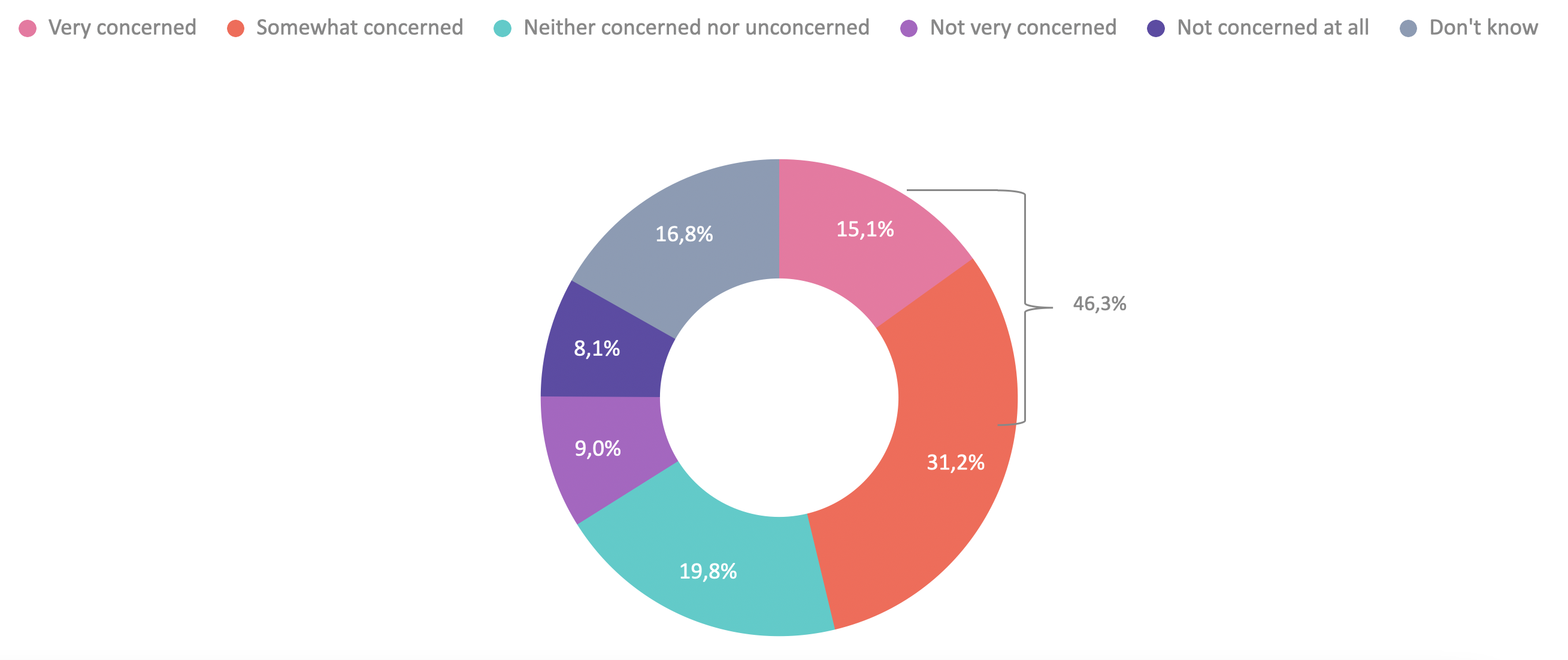
Le sondage montre que près de la moitié (46,3 %) des chefs d’entreprise sont préoccupés par les incidences environnementales de l’accord.

Un nombre encore plus élevé (49 %) est favorable à des protections environnementales juridiquement contraignantes dans l’accord, y compris des sanctions en cas de violation des normes environnementales.

Le sondage a été réalisé tout au long du mois de novembre 2021 auprès de 2 420 chefs d’entreprise de huit États membres de l’UE (France, Allemagne, Pays-Bas, Italie, Espagne, Irlande, Belgique et Hongrie). Il a été commandé par le Groupe des Verts/ALE.

L’accord commercial UE-Mercosur entraînera une augmentation des exportations de bœuf, de soja, de bioéthanol (principalement dérivé de la canne à sucre) et d’autres produits agricoles de la région du Mercosur vers l’UE. Il entraînera également une augmentation des exportations de l’UE vers le Mercosur, notamment de voitures, de pièces détachées, de machines, de produits chimiques et de produits pharmacologiques.

L’accord s’est révélé controversé. Les activistes, la société civile et les experts ont tiré la sonnette d’alarme sur les ramifications possibles pour l’environnement et les droits de l’homme. Le Médiateur européen a critiqué la Commission européenne pour ne pas avoir finalisé l’évaluation de durabilité de l’accord UE-Mercosur avant de conclure les négociations[1]. Néanmoins, la Commission européenne reste désireuse de ratifier l’accord aussi rapidement que possible.

Près de la moitié des chefs d’entreprise sont préoccupés par l’impact environnemental de l’accord.

Le sondage révèle que près de la moitié des chefs d’entreprise interrogés sont préoccupés par l’impact environnemental de l’accord. 46,3 % des chefs d’entreprise se sont déclarés “très préoccupés” ou “plutôt préoccupés” par l’impact de l’accord sur l’environnement.

Des préoccupations importantes concernant l’impact potentiel de l’accord sur l’environnement et le climat ont été soulevées au cours des dernières années par diverses parties prenantes, y compris les États membres eux-mêmes. Le Parlement européen a déclaré à deux reprises qu’il ne ratifiera pas l’accord dans sa forme actuelle en raison des préoccupations environnementales[2],[3].

Une étude d’experts commandée par le gouvernement français a estimé que l’accord entraînera une augmentation de 25 % de la déforestation en Amérique du Sud[4]

Dans quelle mesure êtes-vous inquiets des impacts environnementaux de l’accord UE-Mercosur?

EU-Mercosur graphic
Dans quelle mesure êtes-vous inquiets des impacts environnementaux de l’accord UE-Mercosur?

Les chefs d’entreprise souhaitent que l’accord UE-Mercosur comporte des normes de durabilité pouvant être sanctionnées

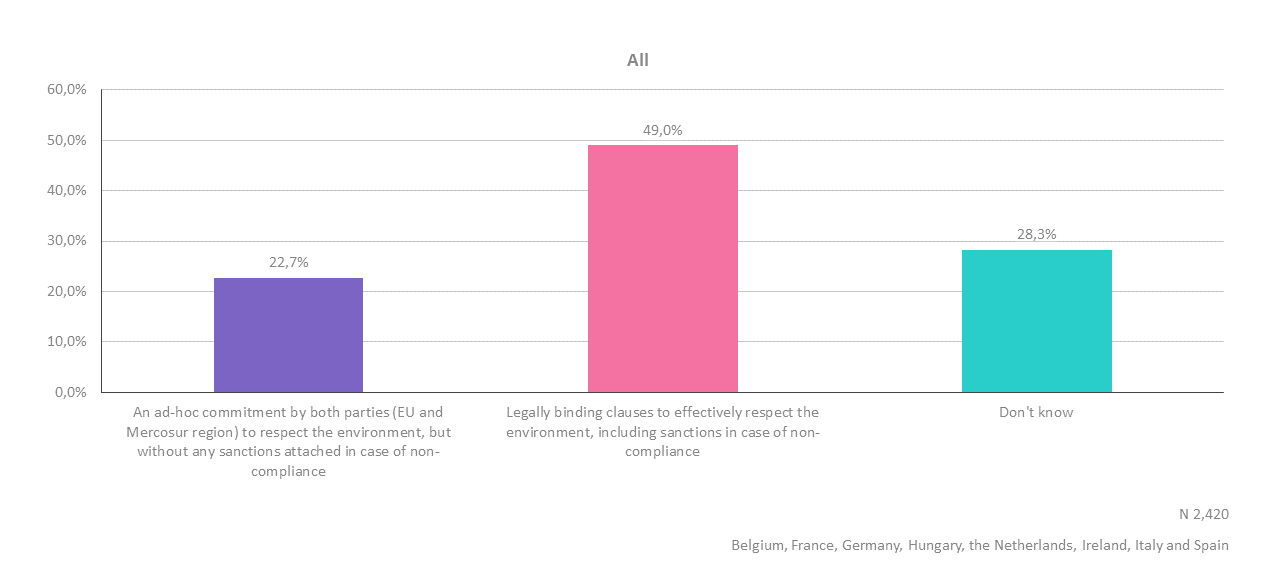
Un grand nombre de chefs d’entreprise interrogés (49 %) estiment que la meilleure façon de répondre à ces préoccupations environnementales serait d’adopter des clauses juridiquement contraignantes, assorties de sanctions en cas de non-respect. Seuls 22,7 % préféreraient des engagements sans sanctions. Un groupe important (28,3 %) ne sait pas comment répondre au mieux aux préoccupations environnementales.

Ces résultats envoient un signal clair à la Commission européenne, qui refuse à ce stade d’inclure des normes de durabilité sanctionnables dans l’accord UE-Mercosur. La Commission cherche à créer un protocole additionnel avec les pays du Mercosur. Celui-ci inclurait des engagements en matière de protection de l’environnement, mais ne prévoirait pas de sanctions en cas de non-respect, ce qui est largement insuffisant.

Comment pensez-vous que ces problèmes peuvent être résolus au mieux dans l’accord?

EU-Mercosur graphic
Comment pensez-vous que ces problèmes peuvent être résolus au mieux dans l’accord?

La plupart des entreprises ne connaissent pas l’accord et ne croient pas qu’il puisse affecter leur activité

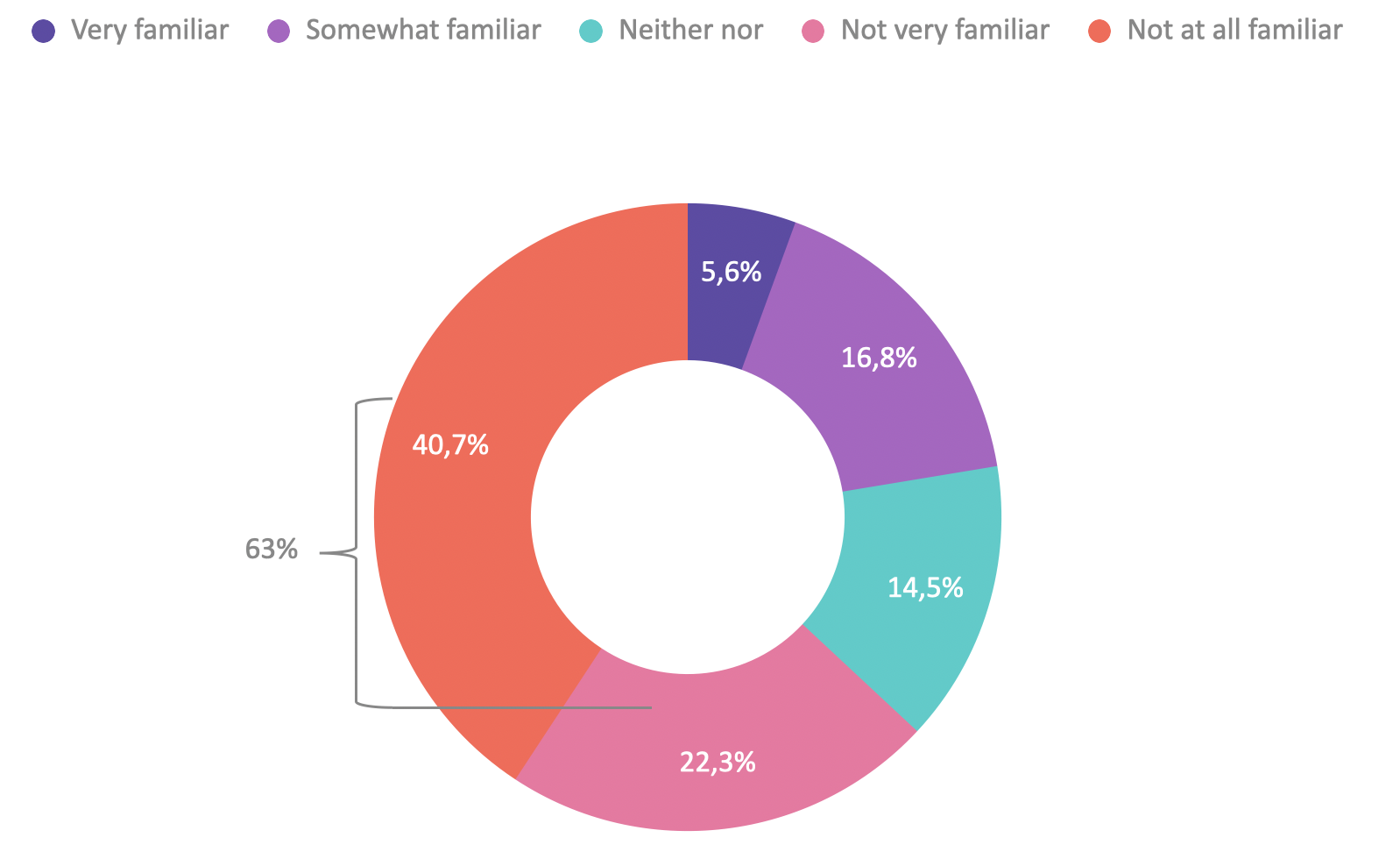
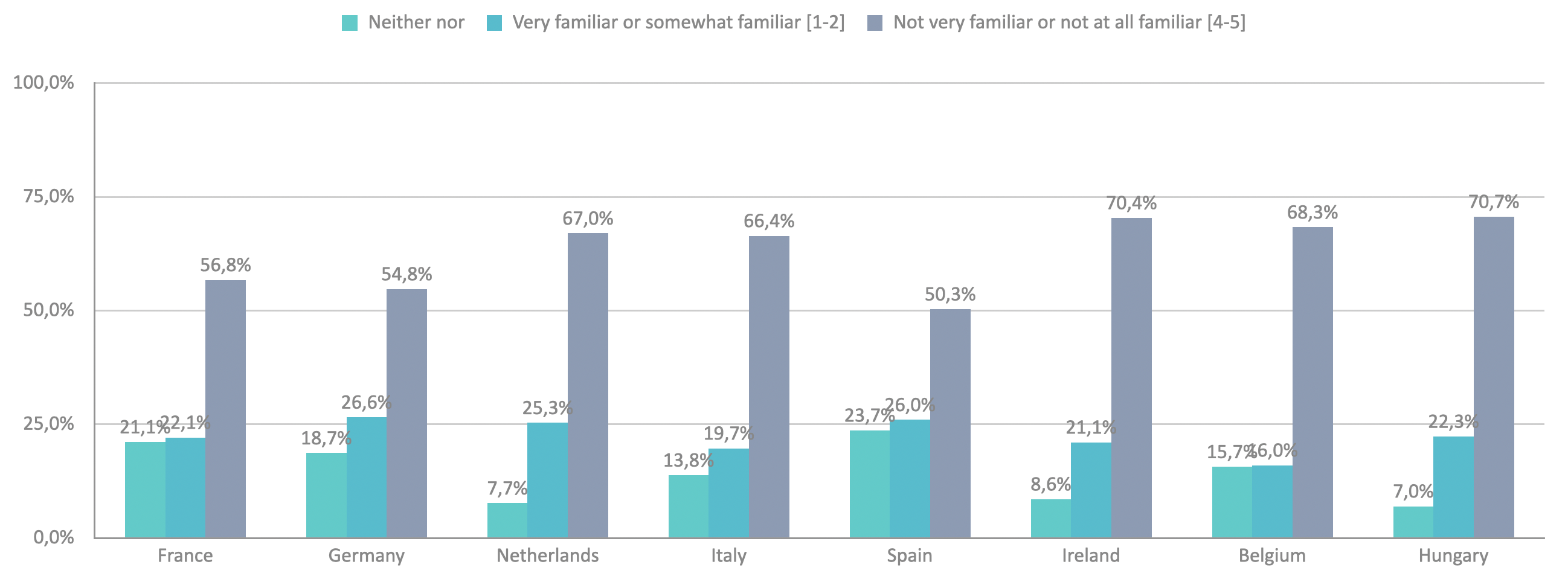
La Commission européenne s’efforce de faire ratifier l’accord commercial UE-Mercosur en raison de ses avantages pour l’industrie européenne. Cependant seulement un chef d’entreprise sur cinq (22,4 %) dans les huit États membres interrogés connaissait l’accord commercial UE-Mercosur, 40,7 % des personnes interrogées ne le connaissaient pas du tout et 22,3 % ne le connaissaient pas très bien.

A quel point connaissez-vous l’accord UE-Mercosur et son contenu?

EU-Mercosur graphic
A quel point connaissez-vous l’accord UE-Mercosur et son contenu?
EU-Mercosur graphic
A quel point connaissez-vous l’accord UE-Mercosur et son contenu?

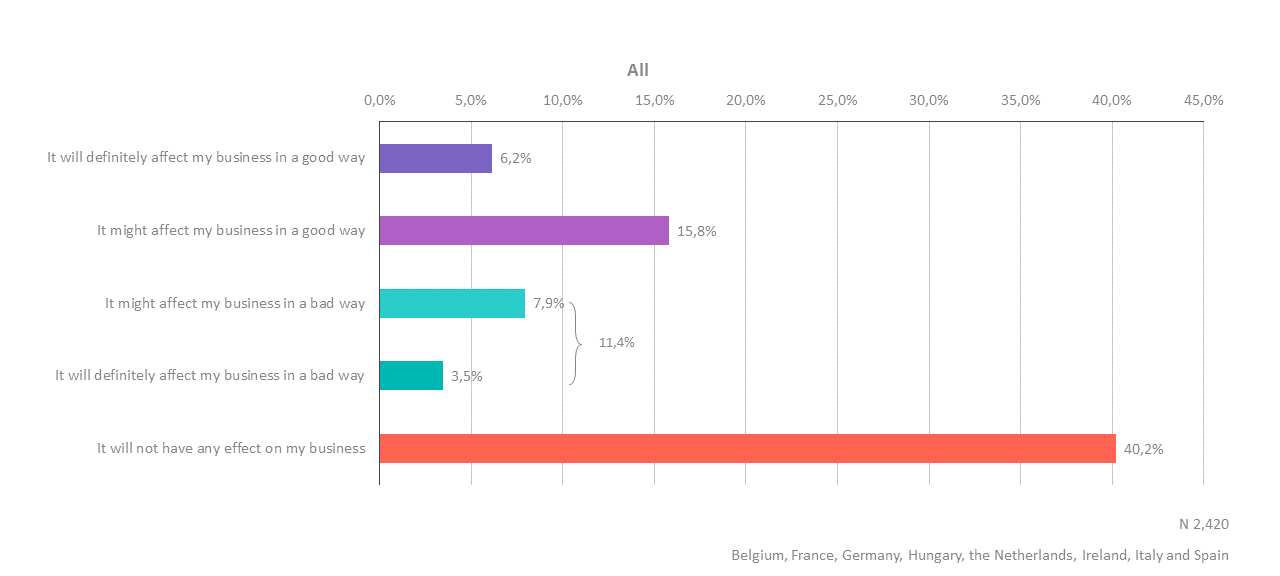
De plus, après que les principales caractéristiques de l’accord leur aient été expliquées, un grand nombre des personnes interrogées (40,2%) a déclaré penser que l’accord n’aurait aucun effet sur leur activité et seuls 22% pensent que l’accord aura un effet positif sur leur activité[5]. Une part faible mais significative (11,4%) des chefs d’entreprise interrogés pensent que l’accord aura un effet négatif sur leur activité.

Une fois signé, comment pensez-vous que l’accord UE-Mercosur impactera votre entreprise?

EU-Mercosur graphic
Une fois signé, comment pensez-vous que l’accord UE-Mercosur impactera votre entreprise?

L’eurodéputée Verts/ALE Anna Cavazzini, rapporteur fictif sur l’accord UE-Mercosur, commente :

“Nous entendons encore et encore le même argument : L’industrie veut l’accord commercial UE-Mercosur ! Mais cette affirmation ne tient pas la route. En fait, l’enquête montre que le soutien à l’accord commercial controversé UE-Mercosur n’est pas particulièrement élevé dans le milieu des affaires européen.

Les chefs d’entreprise partagent nos préoccupations quant à l’impact de l’accord sur le climat, les forêts tropicales et les droits de l’homme, tandis que beaucoup ne voient pas de conséquences positives directes pour leur entreprise. Ce n’est pas surprenant, car l’accord UE-Mercosur comporte trop de défauts. La plupart des chefs d’entreprise européens soutiennent la demande d’inclusion de normes de durabilité sanctionnables dans l’accord. La Commission européenne doit enfin changer de cap pour que cela se produise.”

L’eurodéputé des Verts/ALE Yannick Jadot, rapporteur fictif sur l’accord UE-Mercosur, commente :

“Les résultats de ce sondage auprès des chefs d’entreprise sur l’accord UE-Mercosur sont éloquents. La moitié des chefs d’entreprise interrogés à travers l’Europe s’inquiètent de son impact environnemental. Et ils ont raison. Pour les petites et moyennes entreprises (PME) en particulier, c’est un très mauvais accord, écrit au profit des plus grands business tels que BASF et Bayer Monsanto qui exportent plus facilement de dangereux pesticides pourtant interdits dans l’UE.  En facilitant les exportations pour les grands business, l’accord accentue la concurrence, à laquelle seront exposées les PME. Le texte de l’accord n’offre aucune garantie pour ces petites entreprises exposées à une concurrence indue. C’est un mauvais accord pour l’environnement, pour la santé, pour les PME. Refusons l’accord UE-Mercosur !”

Disclaimer

Cette enquête a été menée par YouGov auprès de personnes occupant un poste de direction dans huit États membres de l’UE (Allemagne, France, Belgique, Hongrie, Pays-Bas, Irlande, Italie et Espagne), avec un total de 2 420 entretiens, répartis de manière égale entre les huit pays. Les entretiens ont eu lieu du 8 au 18 novembre 2021.


[5] “L’Union européenne et les pays du Mercosur (Brésil, Argentine, Uruguay, Paraguay) sont sur le point de signer un accord de libre-échange. Cet accord entraînera une augmentation des exportations de bœuf, de soja, de bioéthanol (principalement dérivé de la canne à sucre) et d’autres produits agricoles du Mercosur vers l’UE. Il entraînera également une augmentation des exportations de l’UE vers le Mercosur de voitures, de pièces détachées, de machines, de produits chimiques et de produits pharmaceutiques.”

European businesses have concerns about the EU-Mercosur deal: new YouGov poll shows

A new YouGov poll, published today, has captured the opinion of business leaders on the EU-Mercosur Trade deal.

The poll shows that nearly half (46.3%) of business leaders have concerns about the deal’s environmental impacts.

An even higher number (49%) are in favour of legally binding environmental protections in the agreement, including sanctions in the cases where environmental standards are breached.

The poll ran throughout November 2021 and surveyed 2,420 business leaders from across 8 EU Member States (France, Germany, Netherlands, Italy, Spain, Ireland, Belgium and Hungary). It was commissioned by the Greens/EFA Group.

The EU-Mercosur Trade Agreement will lead to an increase in the export of beef, soy, bioethanol (mostly derived from sugar cane) and other agricultural goods from the Mercosur region to the EU. It will also lead to an increase of exports from the EU to Mercosur, particularly of cars, car parts, machinery, chemicals, and pharmacological products.

The deal has proven to be controversial. Activists, civil society and experts have sounded the alarm about the possible ramifications for the environment and human rights. The European Ombudsman criticised the European Commission for not finalising the sustainability assessment on the EU-Mercosur deal before concluding negotiations[1]. Nonetheless, the European Commission remains eager to ratify the deal as swiftly as possible.

Nearly half of business leaders are concerned about the deal’s environmental impacts

The poll reveals that nearly half of business leaders surveyed have concerns about the deal’s environmental impacts. 46.3% of business leaders declared themselves to be either “very concerned” or “somewhat concerned” about the deal’s impact on the environment.

Significant concerns about the agreement’s potential impact on the environment and the climate have been raised in the past few years by a variety of stakeholders, including Member States themselves. The European Parliament has twice stated that it will not ratify the deal in its current form because of environmental concerns[2],[3].

An expert study commissioned by the French Government estimated that the agreement will lead to an expected 25% increase in deforestation in South America[4]

To what extent are you concerned about the environmental impacts of the EU-Mercosur Trade agreement?

EU-Mercosur graphic
To what extent are you concerned about the environmental impacts of the EU-Mercosur Trade agreement?

Business leaders want sanctionable sustainability standards in the EU-Mercosur deal

A majority of business leaders surveyed (49%) believe that the best way to address these environmental concerns would be via legally binding clauses, including sanctions in the case of non-compliance. Only 22.7% would prefer commitments without sanctions. A large group (28.3%) did not know how the environmental concerns could be best addressed.

This sends a clear signal to the European Commission, which currently opposes sanctionable sustainability standards in the EU-Mercosur agreement. Instead, the Commission is seeking to create an additional instrument with the Mercosur countries. This could include commitments on environmental protection, but would stop short of sanctions in the case of non-compliance, which is far from sufficient.

How do you think these concerns would be best addressed in the trade agreement?

EU-Mercosur graphic
How do you think these concerns would be best addressed in the trade agreement?

European businesses do not know enough about the EU-Mercosur trade deal and believe it will not affect them

The European Commission has been pursuing a ratification of the EU-Mercosur Trade Agreement on the grounds of its benefits for European industry. However, only one in five (22.4%) business leaders across the eight surveyed EU Member States were even familiar with the EU-Mercosur Trade Deal. Meanwhile, 40.7% of those surveyed were not at all familiar and 22.3% were not very familiar with the deal.

How familiar are you with the EU-Mercosur Trade agreement?

EU-Mercosur graphic
How familiar are you with the EU-Mercosur Trade agreement?
EU-Mercosur graphic
How familiar are you with the EU-Mercosur Trade agreement?

Furthermore, many business leaders do not see any direct positive consequences for their company. After the main features[5] of the deal in terms of exports and imports was explained to them, a large percentage of the respondents (40,2%) said they think the deal will not have any effect on their business whatsoever. Only 22% think the deal will affect their business in a good way. A small but relevant part (11.4%) of the business leaders surveyed think the deal will have a negative effect on their business.

How do you believe the EU-Mercosur Trade agreement once signed will affect your business?

EU-Mercosur graphic
How do you believe the EU-Mercosur Trade agreement once signed will affect your business?

Anna Cavazzini MEP, Greens/EFA Shadow Rapporteur on the EU-Mercosur Agreement, has commented:

Again and again we hear the same argument: The industry wants the EU-Mercosur trade agreement! But this statement does not hold water. In fact, the survey shows that support for the controversial EU-Mercosur trade agreement is not particularly high in the European business community.

Business leaders share our concerns about the impact of the agreement on the climate and rainforests, while many do not see any direct positive consequences for their company. This is not surprising, since the EU-Mercosur agreement has too many flaws. Most European business leaders support the demand to include sanctionable sustainability standards in the agreement. The European Commission must finally change its course in order to make that happen.”

Yannick Jadot MEP, Greens/EFA Shadow Rapporteur on the EU-Mercosur agreement, has commented:

“The results of this survey among business leaders on the EU-Mercosur agreement are clear. Half of the business leaders surveyed across Europe are concerned about its environmental impact. And rightly so. For small and medium-sized enterprises (SMEs) in particular, it is a very poor agreement, written to benefit the biggest businesses, such as BASF and Bayer Monsanto, who would more easily be able to export dangerous pesticides that are banned in the EU. Furthermore, the agreement increases competition between the biggest businesses and the rest. The text of the agreement offers no guarantee that small businesses would not be exposed to undue competition. It is a harmful agreement for the environment, for health and for SMEs. ”

Disclaimer

This survey was conducted by YouGov among people at a managerial level in eight different EU member states (Germany, France, Belgium, Hungary, the Netherlands, Ireland, Italy and Spain) with a total of 2,420 interviews, evenly distributed among the eight countries. The interviews took place from 8th – 18th November 2021.


[5] The survey provided a short overview, as follows: “The European Union and the Mercosur countries (Brazil, Argentina, Uruguay, Paraguay) are about to sign a free trade agreement. It will lead to an increase of Mercosur exports of beef, soy, bioethanol (mostly derived from sugar cane) and other agricultural goods to the EU. It will also lead to an increase of exports from the EU to Mercosur in  cars, car parts, machinery, chemicals, and pharmacological products.”

Wem gehört deine Stadt? Wie institutionelle Vermieter:innen Profit aus Wohnraum schlagen

Warum haben wir das Gefühl, dass die Mieten immer teurer werden? Wie kann es sein, dass die Immobilienpreise immer weiter steigen, während Löhne in vielen Ländern stagnieren? Warum bauen die Städte glänzende neue Hochhäuser, die dann aber leer stehen?

Für viele Menschen wird es immer schwieriger eine bezahlbare Wohnung zu finden, und die Obdachlosigkeit nimmt stetig zu. Die Europaabgeordneten der Grünen/EFA, Rasmus Andresen öffnet die Türen zur europäischen Wohnungskrise und findet für uns heraus, wer wirklich die Kontrolle über unseren Wohnungsmarkt hat.

Melden Sie sich für unsere Newsletter zur Wohnraum-Kampagne an, um auf dem Laufenden zu bleiben.

Eines der großen Probleme ist die “Finanzialisierung” des Wohnungsmarktes.

Große institutionelle Investoren haben immer mehr und mehr Einfluss auf unsere Städte. Investmentfirmen versuchen verstärkt Wohnungen zu aufzukaufen – von Mehrfamilienhäusern bis hin zu Mehrfamilienwohnungen – um diese dann gewinnbringend zu vermieten. Häuser werden so zu einer Möglichkeit Geld zu verdienen. Ein sicheres Investment anstelle von einem gesicherten Zuhause.

Institutionelle Vermieter:innen sind vor allem in den großen europäischen Städten, wie Paris, Berlin, Madrid, Amsterdam, Dublin und Kopenhagen zu finden. Aber auch in kleinen Städten sind große Investoren:innen präsent, wie z. B. in den Niederlanden. Mit diesen Graphen und dieser Karte kannst du dir ein Bild davon machen, in welchen Städten die Investoren:innen sind und wie viel Geld jeweils im Spiel ist.

Steigende Mieten und Immobilienpreise: Wer profitiert wirklich vom europäischen Wohnungsmarkt?

In Spanien ist der größte Vermieter ein einziges Unternehmen namens Blackstone. Blackstone besitzt 40.000 Wohneinheiten und 40 % aller von institutionellen Investoren gehaltenen Wohnungen in Spanien. Als die neuen spanischen Wohnungsbaugesetze diskutiert wurden, sprach sich Blackstone gegen eine Zielvorgabe von 30 % für sozialen Wohnungsbau in institutionellen Portfolios aus. Sie argumentierten, dass die Regierung zusätzliche Subventionen für den sozialen Wohnungsbau zahlen sollte, anstatt dafür zu sorgen, dass Unternehmen diese bereitstellen müssen.

In Berlin haben institutionelle Vermieter:innen, wie Blackstone und andere Unternehmen, einen Umsatz von 40 Milliarden Euro mit Immobilien in der Stadt erzielt. Genauso wurden in Paris in den letzten zehn Jahren, zwischen 2011 und 2021 rund 43 groß Investitionen im Wert von mindestens 14 Milliarden Euro in Wohnraum getätigt. In Amsterdam, Rotterdam und Den Haag kommt man zusammen gerechnet, in den Jahren zwischen 2013 und 2021 etwa auf 120 große Transaktionen im Wert von 13,82 Mrd. Euro (wobei es sich aufgrund von Datenlücken um eine ungefähre Schätzung handelt).

So scheint es, dass es jeweils zwei Seiten einer Stadt gibt: Eine für die Investoren und eine für den Rest von uns. Für diejenigen, die in Städten leben und arbeiten, bedeuten steigende Mieten und Immobilienpreise, dass sie jeden Monat bis zu 40 % oder mehr ihres Einkommens für ihren Wohnraum ausgeben müssen. Steigende Energiepreise erhöhen zusätzlich die Kosten für Wohnungen. Viele Menschen kommen dadurch in eine Schieflage, während institutionelle Investoren (von denen die meisten außerhalb der EU sitzen), die nicht einmal in den Häusern, die sie besitzen, wohnen, einen Gewinn daraus abschöpfen.

Auf Veränderung drängen: Wie können wir für bezahlbaren Wohnraum in der EU sorgen?

Angesichts dieser Situation fühlt man sich schnell machtlos. Und es ist schwer sich vorzustellen, wie man an der jetzigen Situation etwas ändern kann. Die Städte und die nationalen Regierungen spielen bei der Veränderung eine große Rolle. Das Gleiche gilt aber auch für die Europäische Union. Wir neigen leider dazu, die Thematik um Wohnraum nicht als europäisches Thema zu betrachten. Dabei sind genau europäische Verordnungen und Finanzvorschriften die, die diese Entwicklung vorantreiben und Auswirkung darauf haben, wie Länder ihre Vorschriften für Investor:innen gestalten.

Die europäischen politischen Entscheidungsträger:innen werden langsam aufmerksam. Es gibt viele Möglichkeiten, wie sie sich für Veränderungen einsetzen können. Ein Umdenken und Wandel kann uns helfen, mehr bezahlbaren Wohnraum für alle zu schaffen, Wohnraum für Menschen und nicht für Profit.

Folgendes schlagen wir europäischen Entscheidungsträger:innen vor, um die Wohnungskrise zu entspannen:

  • Regelmäßiger Austausch zwischen Wohnungs- und Finanzministerien der EU, um für die vielschichtige Thematik gemeinsam Ideen auszutauschen und Lösungen auszuarbeiten.
  • Städte müssen mehr Werkzeuge zur Steuerung von kurzfristigen Mietverhältnissen wie Airbnb bekommen.
  • Eine genaue Bewertung und Untersuchung, wie die derzeitigen Regularien für Investitionen innerhalb der EU (the Capital Markets Union), europaweite Bank Regularien sowie allgemein europäische Finanzvorschriften die Entwicklung des Wohnungsmarktes befeuern. Dabei sollte auch untersucht werden, ob der gegebene regulatorische Rahmen es institutionellen Investoren erst ermöglicht, Wohnraum in dem derzeitigen Stil in eine Anlage umzuwandeln. Änderungen der Regularien sollten dementsprechend vorgeschlagen werden.
  • Es muss offengelegt werden, wem die Städte wirklich gehören. Mehr Transparenz über institutionelles Eigentum und Immobilienpreise auf dem Wohnungsmarkt.
  • Investor:innen müssen zur Verantwortung gezogen werden, wenn es um Renovierungen und Erfüllung von Energieeffizienzstandards der Wohnungen geht.
  • Investor:innen müssen sozial-nachhaltige Standards (wie Mietpreisbindung und langfristige Mietverhältnissen) für in ihren Besitz befindlichen Wohnungen erfüllen.

Die oben genannten Vorschläge sind einige Änderungen, die wir uns von der Europäischen Union wünschen würden. Jetzt liegt es an der Europäischen Kommission, dem entsprechende Entwürfe zu politischen Maßnahmen vorzuschlagen.

Die französische Regierung hat derzeit die europäische Ratspräsidentschaft inne. Diese veranstaltet am 7. und 8. März 2022 ein Ministerium treffen zum Thema Wohnungsbau in Nizza. Das könnte eine echte Chance für die Ministerien sein, bei diesem Treffen ihr Engagement für menschenwürdigen und erschwinglichen Wohnraum zu bekräftigen.

Mein Zuhause ist eine Anlagevermögen (“My home is an asset class”): eine neue Studie der Grünen/EFA über die Finanzialisierung des Wohnens

Die Fraktion der Grünen/EFA im Europäischen Parlament hat eine Studie veröffentlicht (Donnerstag, 27. Januar), die sich mit der Finanzialisierung des Wohnungswesens in Europa befasst, und mit der Frage, was die EU für bezahlbaren Wohnraum tun kann.

Wenn Du tiefer in das Thema eintauchen möchtest, finden Sie hier weitere Informationen:

Chi possiede davvero la mia città?

Perché sembra che gli affitti siano in continuo aumento? Hai notato come nelle città vengono costruiti nuovi e scintillanti grattacieli che però restano vuoti, mentre c’è una generale carenza di alloggi a prezzi accessibili e un numero sempre più alto di senzatetto? Com’è possibile che in molti paesi i salari siano stagnanti, mentre i prezzi delle case e gli affitti sono in vertiginoso aumento? Vi siete mai fermati a chiedervi cosa sta realmente accadendo, dietro le quinte?

Questo fenomeno è noto come ‘finanziarizzazione degli alloggi’ e significa che i grandi investitori istituzionali o “corporate landlords” hanno un potere crescente nelle nostre città. Le società d’investimento cercano di acquistare alloggi – condomini, appartamenti plurifamiliari – e poi li usano come un bene che affittano e da cui ricavano un profitto. Le case diventano un modo per fare soldi, un investimento stabile.

I proprietari aziendali sono concentrati soprattutto nelle grandi città europee, da Parigi a Berlino, Madrid, Amsterdam, Dublino e Copenhagen. Ma il quadro è variegato, e gli investitori hanno un’impatto anche nelle città più piccole, nei Paesi Bassi per esempio. Da questi grafici e da questa mappa, si ottiene un quadro di dove sono gli investitori e una stima di quanto denaro è coinvolto.

In Spagna una sola azienda, Blackstone, è il più grande proprietario di unità residenzili. Blackstone possiede 40.000 unità abitative e il 40% di tutte le abitazioni di proprietà istituzionale in Spagna. Quando le nuove leggi spagnole sugli alloggi erano in discussione, Blackstone si è opposto alle misure per un obiettivo del 30% di alloggi sociali nei portafogli istituzionali, sostenendo che lo stato dovrebbe sovvenzionare piuttosto che imporre la fornitura di alloggi sociali.

A Berlino, i corporate landlords come Blackstone, tra gli altri, hanno guadagnato 40 miliardi di ricavi dagli immobili della città. A Parigi, nel decennio tra il 2011 e il 2021, circa 43 accordi di investimento residenziale sono stati pari ad almeno 14 miliardi di euro.

Aumento degli affitti e dei prezzi delle case

Questa è la storia di due città possibili. Per coloro che vivono e lavorano in città, l’aumento degli affitti e dei prezzi delle case significa spendere fino al 40% o più del loro reddito per l’alloggio ogni mese. L’aumento dei prezzi dell’energia sta rendendo i costi del riscaldamento delle case più alti e molti sentono una pressione insostenibile. Nel frattempo, i grandi investitori istituzionali che non vivono nelle case che possiedono, possono trarne profitto.

È facile sentirsi impotenti di fronte a questo fenomeno. Sembra difficile immaginare un cambiamento di rotta. Le città e i governi nazionali hanno un grande ruolo da svolgere. Ma anche l’Unione Europea. Non riusciamo a pensare agli alloggi come ad una questione europea, ma i regolamenti europei e le regole finanziarie hanno un impatto su come i paesi possono organizzare le loro regole nei confronti di questi investitori.

Una spinta al cambiamento

I politici europei stanno iniziando a rendersi conto di questo problema, e ci sono tutta una serie di modi in cui potrebbero aiutare a spingere per un cambiamento reale. Questo cambiamento può aiutarci a creare case e città più accessibili, per le persone e non per il profitto.

  • Un esempio è l’organizzazione di incontri regolari dei ministri degli alloggi e delle finanze dell’UE, in modo che possano scambiarsi idee e lavorare insieme per trovare soluzioni.
  • Un’altra azione è quella di dare alle città più controllo sugli affitti a breve termine come AirBnB.
  • I politici europei dovrebbero anche valutare i molti modi in cui l'”unione dei mercati dei capitali”, le regole bancarie e finanziarie a livello europeo, in realtà rendono più facile per gli investitori istituzionali l’accesso agli alloggi come bene e fissare queste regole.
  • Una maggiore trasparenza sulla proprietà istituzionale è necessaria per rivelare chi possiede davvero le nostre città. E con queste informazioni, sarebbe più facile chiedere conto agli investitori quando si tratta di standard ambientali (efficienza energetica, ristrutturazioni) e sociali (controllo degli affitti, affitto a lungo termine) degli edifici che gestiscono.

Questi sono alcuni dei cambiamenti che vorremmo vedere a livello europeo. La Commissione europea, incaricata di avanzare nuove proposte legislative, può contribuire a far sì che ciò avvenga. Il governo francese ha la presidenza del Consiglio europeo in questo momento e sta organizzando una riunione ministeriale sugli alloggi a Nizza il 7-8 marzo. Chiediamo che in occasione della riunione ministeriale di marzo i ministri dichiarino chiaro e tondo il loro impegno per case dignitose e accessibili per tutti. 

La mia casa è un Asset Class: Studio dei Verdi/EFA al Parlamento Europeo

Il gruppo Greens/EFA al Parlamento europeo ha pubblicato un nuovo studio che esplora la finanziarizzazione degli alloggi in Europa e le risposte politiche dell’UE a questo fenomeno.

Potete trovare maggiori informazioni qui: