Europe is in the grip of another energy crisis. Whether you’re a single parent in Poland, a student in Italy, or looking for work in Denmark, you’ve felt it: the sharp rise in the cost of heating your home, filling your car, or even putting food on the table. The reason? The reckless Iran war, escalated by Trump and Netanyahu, has sent oil and gas prices soaring – again.

The big winners? Big oil and gas companies, their CEOs, and speculating billionaires, who are raking in record profits while ordinary people struggle. The solution is clear: Europe must impose a strong windfall profits tax on these excessive profits and use the money to fund home-grown renewable energy and support families across Europe.

First and foremost, the war in Iran is not just about energy prices, it is a human catastrophe. Thousands of civilians have been killed, families torn apart, and entire cities reduced to rubble. Children who should be in school are instead fleeing for their lives. Hospitals struggle to treat the wounded as supplies run out. This is the brutal reality of a conflict fueled by geopolitical greed and the world’s insatiable appetite for oil and gas.

Wars in oil-rich regions are becoming more frequent, not less. From Iraq to Libya, from Ukraine to Yemen, the pattern is clear: where there are fossil fuels, there is conflict. Our dependence on oil and gas from unstable and authoritarian regimes doesn’t just make us vulnerable to price shocks – it directly funds wars, arms races, and human rights abuses. Our greed for cheap energy has turned entire regions into battlegrounds, with ordinary people paying the price in blood and suffering.

This cycle must end. Every euro spent on fossil fuels from conflict zones is a euro that prolongs war and suffering. By taxing excessive profits and investing in renewables, we can cut off the funding that keeps these wars going. We could finally build a future where energy doesn’t come at the cost of human lives.

Since the outbreak of the Iran war in late February 2026, energy prices in Europe have spiked dramatically. Oil prices jumped by 8% and gas prices by 20% in just days – and they’ve kept climbing. The closure of the Strait of Hormuz and attacks on energy infrastructure have disrupted global supplies, pushing European gas prices to nearly double by mid-March.

This isn’t just a temporary blip. The European Commission warns that prices won’t return to normal any time soon, even if the war ends tomorrow. The economic fallout is already severe: the European Central Bank has delayed interest rate cuts, inflation is rising, and major economies like Germany and Italy face recession.Europe is spending billions more on fossil fuel imports – money that flows straight to authoritarian regimes and war profiteers. At the end of March, 30 days after the start of the war,  the EU has spent an extra €14 billion on fossil fuels, on top of the usual €400 billion annual. Meanwhile, US oil companies alone are set to make over €56 billion extra this year if prices stay high.

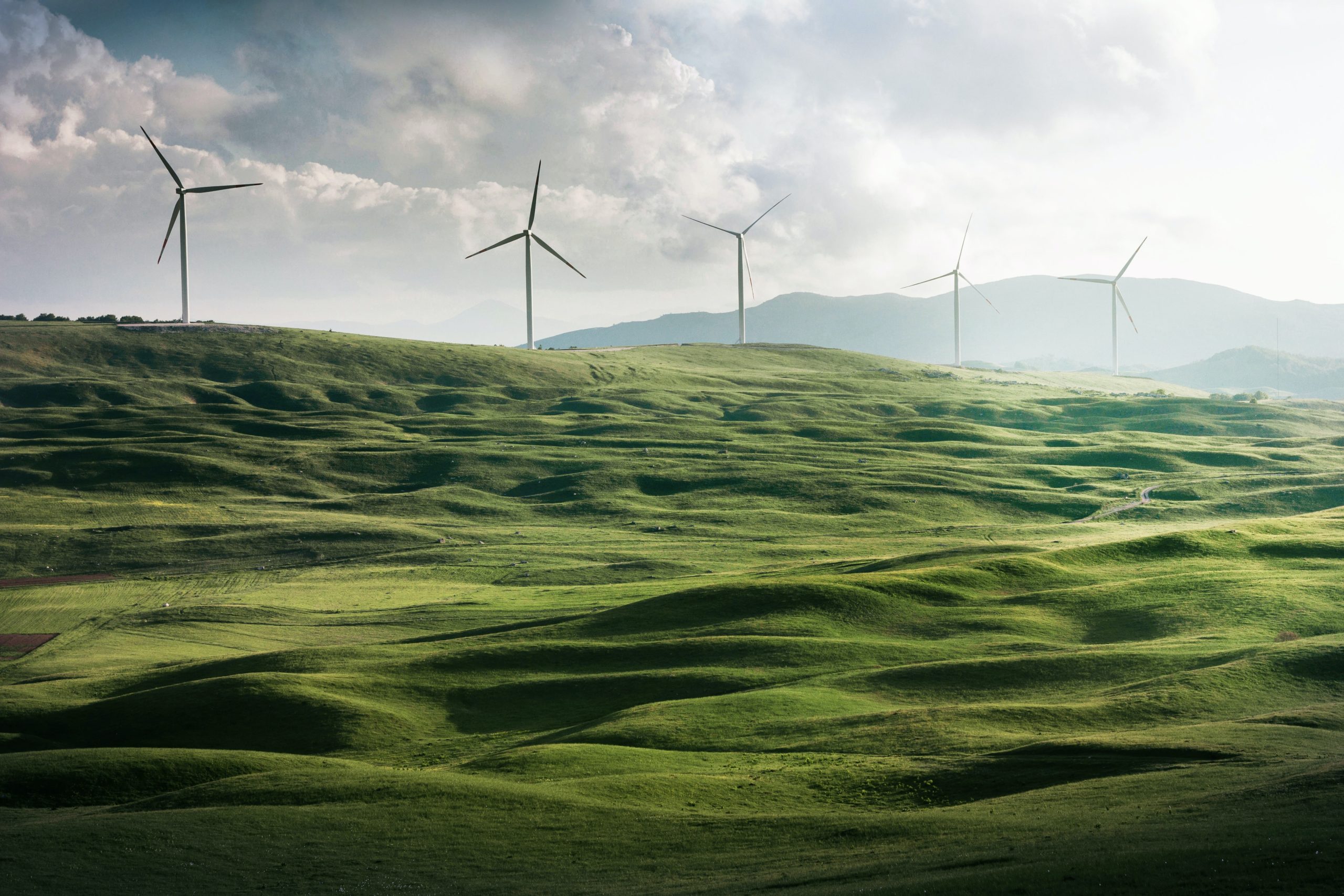
Gas Station

Despite progress in renewable energy, Europe still imports 67% of its energy as oil and petroleum products, and 24% as natural gas – mostly from Norway, the US, and Algeria. This dependence leaves us vulnerable to price shocks, geopolitical blackmail, and supply disruptions.

The Iran war has exposed a harsh truth: Europe’s energy security is still held hostage by fossil fuels. The blockade of the Strait of Hormuz and the suspension of Qatari LNG shipments have forced Europe to compete for scarce supplies on the global market, driving up costs for everyone.

While families and small businesses struggle, fossil fuel giants are making record profits. ExxonMobil, Chevron, Shell, and BP have seen their share prices and profits soar since the war began. In 2024, the five largest oil companies made over $100 billion in profits – with even higher excessive profits (windfalls) expected in 2026 as prices rise.

A windfall profit is an unexpected, large financial gain that a company or individual receives due to external events (like war, crises, or market shocks) rather than their own efforts. It’s called a “windfall” because, like fruit blown from a tree by the wind, the money seems to fall into their laps by luck, not skill.

This is not just unfair, it’s unsustainable. The crisis is being used to line the pockets of polluters, not to protect people or the planet.

The solution: A strong windfall profits tax

We, the Greens/EFA in the European Parliament are calling for a windfall profits tax of at least 50%, based on the average profits of recent years. Here’s how it would work:

  • Immediate relief for people
    Part of the tax revenue would go directly to helping households and small businesses cope with soaring energy bills. This is common sense: when companies make unexpected profits from a crisis, they should contribute to easing the burden on those who are suffering.
  • Accelerate the shift to renewables
    The rest of the money should fund wind and solar projects, energy efficiency, home insulation, battery storage, and grid upgrades. This is the only durable solution to free Europe from the cycle of energy crises and high prices.
  • Break free from fossil fuel dependence
    By investing in renewables and energy efficiency, we can reduce our reliance on imported fossil fuels and shield ourselves from future price shocks. Wind and solar already generate more electricity than fossil fuels in 14 EU countries, we need to build on this success.

Why current EU measures fall short

So far, the European Commission’s response has been inadequate. Proposals like lowering carbon prices or capping energy costs mostly benefit big, energy-intensive industries, while offering limited relief to vulnerable households and small businesses. These short-term fixes don’t address the root cause: Europe’s addiction to imported fossil fuels.

Worse, some governments are pushing to weaken the EU Emissions Trading System (ETS), which would reward polluters and slow down the transition to clean energy.

Sign the petition

And demand that the European Commission introduce a strong windfall profits tax to fund renewables and lower bills for all.

A turning point for Europe

This crisis is a turning point. We can either continue to fund war profiteers and authoritarian regimes, or we can take back control of our energy future.

A strong windfall tax is the first step. It’s time for the European Commission to act:

  • Tax excessive profits at least 50% and use the money to fund renewables and support people.
  • Accelerate investments in wind, solar, and energy efficiency to cut bills and reduce dependence on fossil fuels.
  • Empower citizen energy communities so that people, not corporations, control their energy supply.
Fit for 55

What you can do

The Greens/EFA are leading the call for a fair and sustainable solution. If you agree, join us:

Together, we can end Europe’s dependence on dirty, expensive fossil fuels – and build a cleaner, fairer energy system for everyone.

Dreaming of watching the sunset in Lisbon, grabbing street food in Prague, or hiking in Slovenia – all in one trip? The DiscoverEU train pass might be your golden ticket. But this isn’t just about travel. It’s about how you travel – smarter, greener, and more meaningful. Find out how to apply and how travelling in Europe might become even greener in the future below.

What is DiscoverEU?

DiscoverEU is an EU initiative that gives 18-year-olds a free train pass to explore Europe. It’s part of the Erasmus+ programme and is designed to promote sustainable travel, cultural exchange, and youth mobility.

If you’re born between 1 July 2007 and 30 June 2008, you can apply for the next round, which opens on 8 April 2026 and closes on 22 April 2026 at midday Brussels time. Successful applicants get a travel pass valid for up to 30 days, plus a discount card for culture, accommodation, and local transport—all while traveling by train, the most eco-friendly way to see Europe.

  • Free Travel: Get a free Interrail Global Pass to explore up to 33 countries by train.
  • Sustainable Adventure: Traveling by train slashes your carbon footprint compared to flying.
  • Cultural Perks: Access discounts on museums, hostels, and local experiences.

  • You must be 18 years old (born between 1 July 2007 and 30 June 2008).
  • You must be a citizen or legal resident of an EU Member State or a country associated with Erasmus (Iceland, Liechtenstein, North Macedonia, Norway, Serbia, Türkiye)
  • Applications open: 8 April 2026, 12:00 Brussels time
  • Applications close: 22 April 2026, 12:00 Brussels time
  • Travel period: 1 July 2026 to 30 September 2027
  • Valid ID, passport, or residence permit number.
  • Be ready to answer a short quiz on the EU 
  • Visit the European Youth Portal and click “Apply Now” when the round opens.
  • You can apply solo or with up to 4 friends (each must apply individually using your group code)
  • If selected, you’ll receive your travel pass and discount card by email.

With thousands of young people applying, it’s important to put your best foot forward. The DiscoverEU team uses a combination of quiz scores and, in some cases, a first-come, first-served approach if there are too many eligible applicants. That means applying early can give you an edge.

Take the time to research the quiz topics. The questions are usually about the EU, its history, and its youth initiatives, so a quick online search can help you prepare. If you’re applying with friends, make sure everyone is on the same page and submits their application on time.

Finally, start thinking about your itinerary. While you don’t need to have a detailed plan when you apply, having a rough idea of where you want to go can help you hit the ground running once you’re selected. Consider destinations that are easy to reach by train and offer a mix of culture, nature, and adventure.

Tips for a successful application

Apply early: If there are too many applicants, a “first come, first served” principle may apply Brush up on EU knowledge: The quiz is short but can be decisive. Plan your itinerary: Think about destinations that are less touristy and more sustainable.

DiscoverEU isn’t just about free travel – it’s about experiencing Europe in a way that’s kind to the planet. You’ll receive a travel pass valid for up to 30 days, plus a discount card for museums, hostels, local transport, and more. The best part? You’ll be traveling by train, the most eco-friendly way to see the continent, and connecting with a community of young explorers just like you.

As the Greens/EFA in the European Parliament, we believe that travel should be as good for the planet as it is for the traveler. DiscoverEU is a fantastic opportunity to explore Europe in a way that aligns with our values of sustainability, inclusivity, and responsible tourism.

Europe’s most famous cities are often crowded with tourists, which can put a strain on local communities and the environment. With DiscoverEU, you have the freedom to explore lesser-known destinations that are just as rich in culture and history. The program even suggests routes focused on sustainability, accessibility, and local experiences, so you can discover hidden gems and support communities that benefit from tourism.

Cities like Barcelona, Venice, and Amsterdam are struggling with too many visitors, which can:

  • Push out local communities
  • Damage ecosystems
  • Strain infrastructure

So what can you do? Go off the beaten track and explore smaller cities, rural regions or lesser-known destinations. You’ll often get a more authentic experience – and better prices.

Tourism can also harm fragile environments. Where possible, choose destinations and activities that respect nature and local wildlife.

Flying might seem faster, but it comes at a cost – especially for the climate. Choosing trains or other shared transport like buses or carpooling means:

  • Lower emissions per passenger
  • Less environmental damage
  • A more relaxed, scenic travel experience

We believe public policy should support this shift by:

  • Expanding subsidies for train travel so it’s cheaper than flying
  • Offering affordable season tickets for young people
  • Introducing a kerosene tax on aviation fuel to level the playing field

Right now, flying is often artificially cheap. That needs to change.

Instead of rushing through as many cities as possible, consider spending more time in fewer places. Slow travel allows you to immerse yourself in local culture, reduce your carbon footprint, and create deeper connections with the people and places you visit. It’s also a great way to save money, as you’ll spend less on transport and more on experiences. 

Small changes can make a big difference. Pack a refillable water bottle, reusable cutlery, and a tote bag to avoid single-use plastics. Choose eco-friendly accommodations, eat at local restaurants, and support small businesses. By traveling responsibly, you’ll leave a positive impact on the places you visit.

The Greens/EFA proposals for more sustainable travel

DiscoverEU is a step in the right direction, but we believe more can be done to make sustainable travel accessible to everyone. At Greens/EFA, we’re advocating for policies that support low-carbon mobility and responsible tourism.

We’re calling for subsidies to make train travel more affordable, cheap season tickets to encourage frequent use of public transport, and a kerosene tax to reflect the true environmental cost of flying. We also want to see greater investment in rail infrastructure, so that trains are faster, more reliable, and more widely available across Europe.

Our vision is a future where everyone can explore the world without harming the planet. By supporting policies that prioritise sustainability, we can ensure that programs like DiscoverEU continue to grow and inspire the next generation of travelers.

Individual choices matter—but systemic change matters more. To make sustainable travel the norm, not the exception, we’re pushing for:

Train travel should be:

  • Affordable
  • Reliable
  • Accessible across Europe

Right now, aviation benefits from tax exemptions. That’s why we support:

Young people should be able to explore Europe regardless of income. That’s why programmes like DiscoverEU must be expanded.

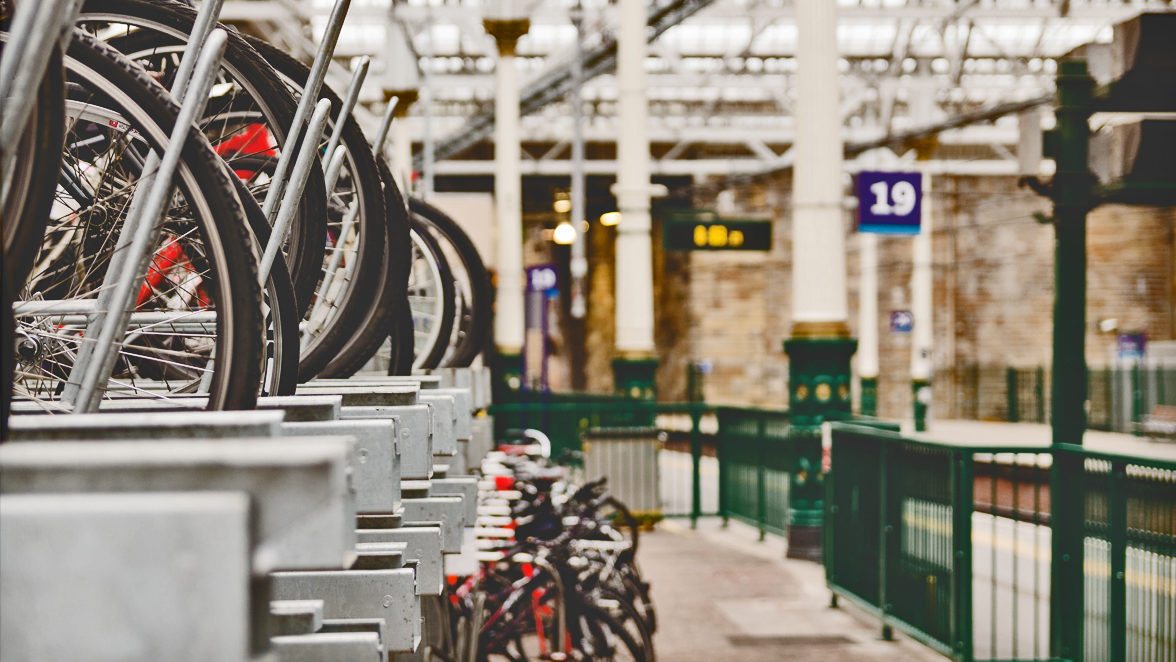
Bikes at train station

Stay Informed with the Greens/EFA newsletter

Want more tips on sustainable travel, EU policies, and how to make a difference? Sign up for our newsletter and be the first to know about opportunities like DiscoverEU, green travel guides, and ways to get involved in shaping a sustainable future.

Want more tips on sustainable travel, EU policies, and how to make a difference? Sign up for our newsletter below and be the first to know about opportunities like DiscoverEU, green travel guides, and ways to get involved in shaping a sustainable future.

Stay Informed with the Greens/EFA newsletter

The EU’s proposed relaxation of cosmetics safety rules could expose you and your family to dangerous chemicals – here is what we can do to stop it.

Every day, millions of Europeans reach for their favorite lipstick, sunscreen, or perfume, trusting that these products are safe. But what if the very items meant to enhance our beauty and protect our skin contained hidden toxins? What if the European Commission was about to roll back hard-won protections, allowing dangerous chemicals back into our cosmetics?

This isn’t a dystopian scenario, it’s a real proposal on the table. After 16 years of keeping carcinogens and reproductive toxins out of our cosmetics, the EU is considering a dangerous U-turn. The reason? Pressure from wealthy corporations prioritising profits over public health.

Our message is clear: No poisonous chemicals in our cosmetics. Here’s what you need to know – and how you can help stop this reckless plan.

From your favorite lipbalm to the sunscreen you trust, some of the most common cosmetics contain hidden toxins. Here are the dangerous chemicals you should never let near your skin or body:

CMRs are chemicals that are carcinogenic, mutagenic, or toxic for reproduction. They have been banned from cosmetics in the EU since 2008. This ban was a victory for public health, ensuring that products like lipstick, perfume, and sunscreen couldn’t contain substances linked to cancer, birth defects, or fertility issues.

But now, the European Commission wants to weaken these rules, allowing CMRs back into cosmetics if companies can claim they’re “safe” when absorbed through the skin.

The European Commission’s argument hinges on a dangerous assumption: that if a chemical isn’t harmful when absorbed through the skin, it’s safe. But this ignores how we actually use cosmetics: perfumes are inhaled, lipsticks are ingested and children tend to put everything in their mouth, no matter the labels on the product.

Inhalation and ingestion are not the same as skin absorption. Allowing CMRs in cosmetics isn’t simplification, it’s deregulation at the expense of human health.

CMRs, chemicals classified as carcinogenic, mutagenic, or toxic for reproduction are among the most dangerous substances found in everyday products. These chemicals can cause cancer, alter DNA, or harm fertility and unborn children. Despite their risks, some are still used in cosmetics, cleaning products, and even food packaging. Here’s what each term means and what to look out for when buying new products:

1. Carcinogenic: Chemicals that can cause cancer

Carcinogens are substances that can damage cells and lead to cancer after repeated or prolonged exposure. In cosmetics, they can be found in everything from hair dyes to nail polish.

  • Formaldehyde: used in shampoos, liquid soaps, and nail hardeners
  • Coal tar: Found in some dandruff shampoos and hair dyes, coal tar contains benzene, a potent carcinogen linked to leukemia and other cancers
  • Certain parabens: restricted in the EU due to potential links to breast cancer

2. Mutagenic: Chemicals that damage our DNA

Mutagens alter genetic material (DNA), which can lead to birth defects, miscarriages, or cancer. Even small doses can cause permanent damage, especially in developing fetuses or children.

  • Ethylenediaminetetraacetic acid (EDTA): Used in some creams and cleansers
  • Certain hair dye ingredients: Chemicals like p-phenylenediamine (PPD), found in many permanent hair dyes, can cause DNA damage and allergic reactions
  • Nitrosamines: Found in some foundations and sunscreens and are strongly linked to cancer and genetic mutations

3. Toxic for reproduction: Chemicals that harm fertility and unborn children

These chemicals disrupt hormones, damage reproductive organs, or cause developmental issues in babies. Pregnant women and those planning to conceive are especially vulnerable.

  • Phthalates: Often hidden under “fragrance” or “parfum,”, linked to reduced fertility, birth defects, and hormonal imbalances. 
  • Triclosan: Common in antibacterial soaps and toothpaste, can affect thyroid hormones and fetal development
  • Retinyl palmitate (Vitamin A derivative): Found in many anti-aging creams and sunscreens

The EU banned most CMRs from cosmetics in 2008 for a reason: No amount of cancer-causing, DNA-damaging, or fertility-harming chemicals should be considered “safe” in products we use daily. Yet, the European Commission’s proposal could allow these toxins back in – putting profits before people.

Next time you check a label, watch out for these red flags:

Next time you check a label, watch out for these red flags:

  • “Fragrance” or “parfum” (can hide phthalates)
  • Formaldehyde-releasing preservatives (like DMDM hydantoin)
  • Coal tar, PPD, or EDTA in the ingredients list

Your health is not negotiable. Demand cosmetics free from CMRs.

The drive to relax these rules isn’t coming from scientists or health experts. It’s coming from big cosmetics corporations, who stand to profit from cheaper, less regulated ingredients. By lobbying the EU, these companies are putting their bottom line above the well-being of European families.

This is not about innovation or consumer choice, it’s about cutting corners and boosting profits.

The most vulnerable are at greatest risk if CMRs are allowed back into our cosmetics by the EU:

  • Children: Their developing bodies are more sensitive to toxins, and their natural curiosity means they’re more likely to ingest cosmetics.
  • Pregnant people: Exposure to CMRs can affect both pregnant person and child, with potential lifelong consequences.
  • Everyone else: No one is immune to the risks of carcinogens or reproductive toxins, whether through daily use or accidental exposure.

We, the Greens/EFA in the European Parliament, fought hard to ban these chemicals 16 years ago – and we’re not about to let them back in. But we need your help. Here’s how you can make a difference:

The louder we are, the harder it will be for the EU to quietly push this through.

Our health should never be a bargaining chip. The EU’s proposal to allow poisonous chemicals back into cosmetics is a step backwards, one that puts profits before people. But together, we can stop it.

Demand better, demand safer, demand #ToxicFreeBeauty.

” data-instgrm-version=”14″ style=” background:#FFF; border:0; border-radius:3px; box-shadow:0 0 1px 0 rgba(0,0,0,0.5),0 1px 10px 0 rgba(0,0,0,0.15); margin: 1px; max-width:540px; min-width:326px; padding:0; width:99.375%; width:-webkit-calc(100% – 2px); width:calc(100% – 2px);”>

At COP30, ten years after Paris, the climate clock is running out. In November 2025, world leaders, civil society, and climate activists will gather in Belém, Brazil, for the 30th UN Climate Conference (COP30). It’s a milestone event – exactly ten years after the Paris Agreement, when nations pledged to limit global heating to 1.5°C.

But as the UN Secretary-General António Guterres warned this week, “humanity has missed the 1.5°C target” unless we change course now. Global carbon emissions are still climbing, and 2024 saw the largest annual rise in CO₂ levels ever recorded.

COP30 isn’t just another climate summit – it’s the last big chance to rescue the Paris promise and show that political courage can match the energy of millions of citizens and activists demanding action.


A deal has been reached late in the day in Belém at COP30. It has been a chaotic and slow COP, with even a real fire breaking out in one of the conference venues. But in these politically difficult times a compromise, as weak as it may look, should not be taken for granted. On the plus side, the negotiating parties agreed to triple international funding for climate adaptation by 2035. On the downside they could not agree on a roadmap to phase out fossil fuels once and for all. 10 years after the Paris-Agreement we would have hoped for more ambition, especially from the EU. Meanwhile, influence from fossil and gas lobbyists was at an all time high at COP30.

MEP Bas Eickhout, President of the Greens/EFA Group and part of the European Parliament delegation to COP30 comments: “This could have been the COP that agreed to the phase out of fossil fuels but the Saudi, Indian and other governments held the world back. We cannot allow global efforts to end the use of climate killing fuels to be thwarted by oil giants and fossil fuel addicts.”

Hope at COP30 came in the shape of thousands of climate activists and Indigenous communities protesting at the conference and fighting for a liveable future. Join the fight and sign up on this page.

Delegations from nearly 200 countries will meet from 10th–22nd November under the UN Framework Convention on Climate Change (UNFCCC). They will negotiate national commitments, or NDCs (Nationally Determined Contributions), which set each country’s emissions targets and adaptation plans.

Crucially, COP30 will be the first COP held in the Amazon, a region symbolising both the planet’s climate potential and its vulnerability. The Amazon rainforest, often called “the lungs of the Earth”, is now dangerously close to a tipping point due to deforestation and fires.

Hosting the conference in Belém should send a clear signal: Protecting nature, indigenous peoples, and biodiversity is inseparable from protecting the climate.


In October Members of the European Parliament adopted their resolution ahead of COP30, calling on the EU to show global leadership and keep the 1.5°C goal alive. We, as the Greens/EFA Group, pushed for strong language: tripling renewables, doubling energy efficiency, and phasing out fossil fuels.

The promises made to younger generations in Paris ten years ago must be kept. The EU must act as a world leader on climate and commit to the strongest possible 2040 target.
Green MEP Pär Holmgren

Yet Europe’s credibility is on shaky ground. Despite a UN deadline for submitting new national climate plans, the EU has so far missed the mark, submitting only a non-binding statement of intent. Without unity, Europe risked arriving in Belém empty-handed, undermining its negotiating power and its claim to climate leadership.

Only one week before COP – and after the EPP had delayed the negotiations massively – the EU can now present its climate target for 2040, but it’s a weakened one. The goal is still to reduce greenhouse gas emissions by 90 per cent by 2040. But the majority in the European Parliament voted to outsource five per cent of this to certificates for EU-funded climate projects in countries outside the EU. This will cost around €100 billion – money that will not be invested into climate protection investments by the EU. 


The stakes could not be higher. This year’s European heatwaves killed more than 16,000 people, wildfires ravaged forests from the Mediterranean to the Amazon, and droughts have intensified global food insecurity.

At COP30, leaders will need to:

  1. Reaffirm the 1.5°C target and commit to stronger NDCs
  2. Phase out fossil fuels and end fossil fuel subsidies once and for all
  3. Scale up renewables and energy efficiency, the fastest path to energy security
  4. Deliver on climate finance, especially for vulnerable countries facing floods, droughts, and rising seas
  5. Operationalise the Loss and Damage Fund, agreed at COP27, to compensate those already suffering the consequences of climate chaos
  6. Advance the Global Goal on Adaptation, ensuring nations prepare for unavoidable impacts
  7. Strengthen rights and equity, especially for women, Indigenous Peoples, and youth

After three years of exclusion under the shadow of autocratic hosts and Big Polluters’ lobbies, civil society is finally back at COP. And it matters. Every major leap in global climate action, from the Paris Agreement to the Loss and Damage Fund, was pushed forward by people power.

Movements for climate justice, youth strikes, Indigenous rights, and just transition will once again have their voices heard in Belém. They’ll remind negotiators that climate action isn’t just about carbon numbers — it’s about human lives, fairness, and survival.

Send an email to your government and ask them which side they are on 👇

Are they with European citizens demanding climate action? Of with the far right fear mongers slowing down climate action for their personal benefit? Send them an email now.

Step 1: Enter some details about yourself.
Step 2: We have a draft ready for you to send. The more personal you write your message, the more effect it will have.

The European Parliament’s resolution sets out clear expectations:

  • Reaffirm 1.5°C as the non-negotiable limit
  • Commit to tripling renewables and doubling energy efficiency
  • End fossil fuel subsidies and define a clear phase-out timeline
  • Provide transparent, grant-based finance aligned with the Paris Agreement
  • Advance a new Gender Action Plan and a Just Transition Programme
  • Uphold the rights of Indigenous Peoples and protect biodiversity

But will EU leaders follow through? Without a unified 2040 target, the EU might fail to deliver strong climate ambition. As Greens/EFA Co-President warned:

China is just waiting to fill the climate policy gap. EU governments must not allow President von der Leyen to go to the UN Climate Conference empty-handed.
Bas Eickhout

The Commission has proposed a 90% emissions cut by 2040, paving the way to climate neutrality by 2050. But without agreement, that proposal remains just empty promises.


Guterres’s message this week couldn’t be clearer: “Change course now.”
The world has already overshot many safety limits, from record heat to collapsing ecosystems, but the future isn’t set in stone yet. Every tonne of carbon avoided, every megawatt of clean energy installed, and every hectare of forest protected still makes a difference.

“The promises made in Paris must not become empty words. We owe it to those who died in Europe’s heatwaves, to future generations, and to the planet we share.
Lena Schilling, Greens/EFA MEP

Ten years after Paris, the test is not whether we can make new promises, but whether we have the political will to keep them.


COP30 will test whether the global community, and especially the European Union, can rise to the challenge of the decade. Ten years after Paris, we’re out of excuses.

If the EU wants to remain a credible leader, it must go to Belém with a united front, ambitious targets, and the courage to act.The planet cannot afford another round of empty words.
Belém must be where promises become progress.

What You Can Do

As citizens, voters, and consumers, we all have a role to play in holding leaders accountable. Here are five ways to support climate action ahead of COP30:

  • Vote for climate leadership – demand strong national commitments
  • Support civil society groups fighting for climate justice and Indigenous rights
  • Stay informed — follow COP30 developments and share trusted updated
  • Speak up — use your voice online and offline to demand courage from decision-makers


PFAS, or per- and polyfluoroalkyl substances, are a group of over 10,000 man-made chemicals used in many everyday products. They’ve been around since the 1940s, mainly because of their unique ability to resist water, oil, stains and heat. This resistance has made them popular in products like non-stick cookware, rainproof clothing, food packaging and cosmetics. But these same properties are what make PFAS dangerous: they don’t break down easily in the environment or in the human body.

Known as “forever chemicals“, PFAS have now spread across the planet. We find them in our soil, our water, our food, and even into our bloodstreams. Scientists are concerned and governments are starting to take action. But these chemicals are still in thousands of products, from your favourite lipstick to the glass of wine you drink at dinner.

Why are PFAS so dangerous?

One of the biggest problems with PFAS is their persistence. These chemicals stay in the environment for years — often decades — without breaking down. That means once they get into rivers, lakes or soil, they’re very difficult to remove. Rain can carry them into groundwater and, from there, into our drinking water.

Research shows PFAS are linked to serious health problems, like:

  • liver damage
  • thyroid issues
  • obesity
  • fertility problems
  • and even cancer.

But even low levels of these chemicals exposure over long periods can lead to health risks. This is especially worrying because most people are exposed without even knowing it – through drinking water, food or common products, like skin creams and non-stick pans.

Why are PFAS not being regulated?

Governments and scientists are now debating just how much exposure to PFAS is dangerous. The World Health Organization (WHO) and the European Commission are working on stricter safety guidelines.

The European Union is planning to take strong steps to tackle the threat of chemical pollution through tighter regulations. They plan to ban over 10,000 PFAS chemicals under the EU’s REACH chemicals regulation. This would be one of the largest chemical bans in EU history. 

The goal is to phase out PFAS use in most consumer products, including cosmetics, food packaging, textiles and firefighting foams, with limited exceptions where no alternatives exist. Some countries, like France, are going even further by proposing national bans on PFAS in specific sectors, such as cosmetics and clothing by 2026. 

The European Commission is also working on stricter drinking water standards to limit PFAS exposure. They have added several substances to the list of priority pollutants under the Water Framework Directive.

But the chemical industry is lobbying to delay or weaken these measures. Help us to keep up the pressure by signing our petition to protect public health and the environment from these persistent and toxic substances.

Sign here and help us to ban PFAS

Forever chemicals in our nature and in water: what’s at risk?

One of the main ways people are exposed to PFAS is through drinking water. These chemicals have seeped into water sources near factories, airports, and military bases, where firefighting foams or industrial waste have been used. Once they enter water systems, they are extremely difficult to remove.

Water filters can help to reduce personal exposure to PFAS in drinking water but not all filters remove it reliably. This is why it is still important to advocate for stronger PFAS regulations. This way we can force polluters to clean up contaminated water in your local area.

PFAS have a serious and long-lasting impact on nature and the environment. They accumulate in soil, rivers, lakes, and even in remote ecosystems far from where they were originally used. Wildlife, including fish, birds, and mammals, can absorb the chemicals through contaminated water or food. This leads to harmful effects such as reduced fertility, hormone disruption, and weakened immune systems. This kind of pollution can also affect entire food chains, as these chemicals move up from smaller organisms to larger predators. In agricultural areas, PFAS-contaminated water and sludge can enter the soil and be absorbed by crops, further spreading the pollution. This widespread and invisible contamination threatens biodiversity and puts ecosystems under long-term stress, making it one of the most dangerous forms of modern chemical pollution.

Here are only a few examples of how PFAS pollution is harming nature and the environment:

  • Contaminated rivers and lakes: PFAS have been detected in surface water bodies across Europe, including the Rhine and the Danube, affecting aquatic ecosystems and drinking water sources.
  • PFAS in fish and wildlife: Studies have found high levels of chemicals in fish in Scandinavian lakes and rivers, making them unsafe to eat and disrupting aquatic life.
  • Soil contamination from sewage sludge: In Germany and the Netherlands, PFAS from industrial waste and sewage sludge have polluted farmland soil, leading to long-term damage to crops and groundwater.
  • Arctic pollution: PFAS have been found in the blood of polar bears and Arctic foxes, showing that these chemicals travel long distances through air and ocean currents.
  • Bird population health: PFAS might reduce hatching success and developmental problems in bird species such as gulls and ospreys near contaminated wetlands.
  • Bioaccumulation in marine animals: Seals, dolphins, and whales in European coastal waters have been found with forever chemicals in their tissues, raising concerns about the health of marine ecosystems.

PFAS in your make-up and skincare

You might be surprised to learn that many beauty products contain PFAS. In fact, studies have found the chemicals in foundations, mascaras, lipsticks, eyeliners, and even sunscreens. These chemicals are often added to make products waterproof or long-lasting. But when you apply them to your skin or accidentally swallow them from lip products the toxic chemicals can be absorbed into your body.

The good news is that more brands are now offering PFAS-free cosmetics. Look for makeup labeled “PFAS-free” or “free from toxic chemicals.” If you’re unsure, check the ingredients list for chemical names like PTFE, perfluoroalkyl, or anything with “fluoro” in the name. Choosing cosmetic brands without these chemicals is one of the simplest ways to reduce exposure and protect your health.

Chemicals in wine: what’s really in your glass?

You may not think of wine when you think of pollution, but chemicals like PFAS can make their way into wine through water, soil and wine-making equipment. While they aren’t directly added to wine, they can contaminate vineyards through pesticides, polluted water or the winemaking process itself. A recent study on PFAS has shown that these pesticides can be found in wine from 10 EU countries, including wine from Italy.

In some cheap wines, leftover residues from chemicals used in wine-making may remain in the final product. These can include sulfites, stabilizers and other synthetic additives. And while not all of these are harmful, there is growing concern about toxic wine and chemical residues in red wine—especially for people who drink it regularly.

That’s why consumers are increasingly looking for chemical-free wine or non-toxic wine options. Organic and biodynamic wines, for instance, are often made without synthetic pesticides or industrial additives. They may be a safer choice if you’re worried about wine making chemicals or PFAS in your food and drink. 

Wine is part of our European culture and heritage. A lot of local communities thrive off wine production. If European wine were to become unsafe, and wine-makers were unable to sell it, it could cause irreparable damage to local economies. If you want to help us to protect our Merlot or Chardonnay – and our wine-making communities – sign our action here.

Chemicals in clothing and food packaging

PFAS aren’t only in water and beauty products, they’re also often part of waterproof jackets, carpets, and even pizza boxes. The same properties that make these chemicals so useful, like resisting stains or grease, mean they’re added to everything from hiking gear to fast food wrappers. But they don’t stay in these products forever. Over time, PFAS can wear off, end up in household dust, or leach into your food.

Many fast food items come wrapped in PFAS-treated packaging. Items like microwave popcorn bags often contain coatings made with the toxic chemicals. Unless labeled “PFAS-free,” they may expose you to these chemicals when heated.

To avoid unnecessary exposure, more and more people consider buying chemical-free clothing and skip non-stick, stain-resistant or water-repellent labels unless the product is clearly marked as PFAS-free. Choosing fresh foods over packaged ones is always better (where possible). Cooking at home can also limit exposure from takeout containers and food wrappers.

So, when are PFAS being banned?

Some types of PFAS, like PFOA and PFOS, are already banned in Europe. The EU has introduced restrictions through the REACH regulation, and a broader proposal to ban thousands of these chemicals is under consideration. France, for instance, plans to ban PFAS in cosmetics and textiles from 2026, with wider bans by 2030.

We in the Greens/EFA group in the European Parliament have been actively pushing for stronger laws. We support a complete ban on PFAS in consumer products and we want chemical companies to pay for cleaning up pollution. 

How to protect yourself from PFAS

The best way to reduce your exposure is to stay informed and make simple changes:

  • switch to PFAS-free products
  • filter your water if needed
  • avoid non-stick and stain-resistant items when possible
  • look for beauty brands that offer make-up without PFAS
  • support winemakers that produce chemical-free wines
  • choose clothing brands that avoid synthetic water-repellent coatings
  • most importantly, speak up: support our petition and share it with your friends!

PFAS: Forever Chemicals, Lasting Impact

PFAS are one of the most pressing chemical threats of our time. Found in everything from drinking water to makeup, wine, and clothing, they pose serious risks to both human health and the planet. Because they don’t break down, their impact can last for generations.

But it’s not too late to act. Governments are finally starting to respond, and consumers have more choices than ever. By staying informed and choosing safer alternatives, we can reduce exposure, demand accountability, and help clean up our world.

Members of the European Parliament have voted in favour of the College of Commissioners, for the new legislative term. A slim majority of Greens/EFA MEPs supported the college, while a sizable minority opposed. Greens/EFA remain critical on several elements and opposed to Fitto and Várhelyi in the College. Our Group will also make sure simplification will not lead to deregulation. And we still deplore that it is unclear how this Commission can truly be a Commission of investments.   

Read our press release on the election of the College of Commissioners (27 Nov.)

Read our reaction on postponed decision-making on Commissioners designate (13 Nov.)


On Tuesday 17th September 2024,  Commission President Ursula von der Leyen presented her proposal for the new European Commission. All Commissioner-designates faced hearings by the Members of the European Parliament between 4th and 12th November. The Greens/EFA MEPs thoroughly assessed all the Commissioner-designates with a strong focus on climate, social justice and defending democracy.

⬇ Scroll down for more info about all hearings in chronological order

➡ or navigate through the list in the sidebar (click here on mobile)


Hearings of the Executive Vice-Presidents designate
(12 Nov. 2024)

TUESDAY, 12/11/2024 | 18:30-21:30

Teresa Ribera (Spain)

Proposed portfolio:

Executive Vice-President for the Clean, Just and Competitive Transition

Main responsible Committee: ENVI, ECON, ITRE
Invited Committees: IMCO, EMPL, TRAN, REGI, AGRI
Documents: Curriculum Vitae / Declaration of interests / Written questions and answers / Mission letter

our questions

Rasmus Andresen on Competition policy:
High food – energy or housing prices hit ordinary citizens quite hard.The cost of living crisis is one of the major challenges we politicians should deal with. Market concentration and price agreements from big corporations are part of the problem and they are hurting consumers. One example of firms coordinating price hikes to increase their profit margin is the sweets industry, where big corporations had to pay fines because of illegal price agreements and information sharing. Illegal price gouging should be high on our agenda. And Competition policy has to play a role. So i would like to ask you, if you would commit to an assessment of unfair pricing for key sectors like food and will this include an analysis of all approved mergers over the last 20 year in those sectors including their impact on market concentration? And to develop a framework for enforcement in case of unfair pricing for example for the food or energy sector?

2nd question: It‘s good to hear you will prioritise the cost of living crisis. One way of doing this more explicitly in the field of competition is Article 102 TFEU, which gives you the ability to act. So my follow up question goes on specific measures linked to Article 102. Would you be willing to explore how Article 102 TFEU applies to price increases in the context of bottlenecks? Do you commit to publishing during your mandate guidelines not only on exclusionary but also exploitative abuses to make enforcement of Article 102 TFEU more effective?

Kai Tegethoff on climate adaptation:
First of all, let me express my sorrow for the ongoing situation in Valencia and solidarity with the victims and those affected by the flooding. In Spain and elsewhere across Europe, we are witnessing entire communities being swept away, families being displaced, livelihoods being lost. It is clear that we will need massive funding to adapt to the impacts of climate change. Obviously we need to address this on the European level and find European solutions and obviously we need to talk about this here today. Nature-based solutions are not only often more cost-effective than concrete infrastructure projects, but also provide co-benefits in terms of disaster risk reduction, human health, food and water security, biodiversity and climate change mitigation. And actually address the root cause of climate related disasters. So I’m pleased to hear you set an focus on this on the past. How will you ensure that the upcoming Water Resilience Strategy and Climate Adaptation Plan follow this approach? Will you require member states to reduce each of the risks identified by the European Climate Risk Assessment report, climate-proof all critical infrastructure, protect the most affected citizens and workers?

Sara Matthieu on Social conditionalities / Social Climate Fund:
Delivering a just and social transition means more financing, especially under the Social Climate Fund, but also better financing. However, too often, public funds are used to cover corporate risks, which benefits companies and their shareholders, while on the other hand taxpayers and citizens don’t share in the rewards. Do you commit to ensure that national state aid and EU funding to the private sector is conditional on fulfilling environmental and social commitments such as transition plans, decent wages and respect for workers’ rights, re-skilling, and banning dividends and share buy-backs? Will you clawback public funding when companies have not complied with these conditions? And will new state aid rules exclude fossil fuel based projects and large companies that face no barriers to access private finance? Finally, workers need guarantees that big changes due to the industrial transition are anticipated and managed well. Will you propose a directive on just transition, which includes social dialogue and collective bargaining as leading principles?

our reactions


Henna Virkkunen (Finland)

Proposed portfolio:

Executive Vice-President for Tech Sovereignty, Security and Democracy

Main responsible Committee: ITRE, IMCO
Invited Committees: LIBE, JURI, AFET, CULT
Documents: Curriculum Vitae / Declaration of interests / Written questions and answers / Mission letter

our questions

Alexandra Geese on tech sovereignty:
The victory of Donald Trump is closely linked to the support of Elon Musk and other Tech tycoons who explicit stated they want to avoid any kind of regulation. The incoming Vice-President J.D. Vance even threatened to pull out of NATO if Europe wants to X to comply with European law. The enormous proliferation of disinformation poses very serious risks to European elections and public discourse and at the same time there will be pressure by the US government to suspend enforcement of our digital legislation. I operate on the assumption that as Executive Vice-President you will be strongly committed to applying that legislation and will not bend your knee.
But I am conscious of the fact that it will be increasingly difficult to enforce European legislation if we don‘t have a credible and well-working European digital infrastructure.

Europe’s dependence on US digital infrastructure becomes even more problematic: US-centred digital ecosystems, composed of cloudcomputing, online platforms, AI Large Language Models and more technologies, affect not only the the functioning of our own democracies., but also Europe’s industrial competitiveness.
Hence my questions:
1. Can you commit to the fact that building a sustainable and privacy-friendly technological infrastructure based on open standards that we can design, understand and regulate in Europe will be the first priority for your DG and that this policy will inform the work of the whole European Commission, for example the competitiveness fund, the MFF, the Cloud and AI innovation Act, the public procurement proposal, Horizon and the Digital Europe programme?

2. Will you come up with a comprehensive strategy for European Tech Sovereignty based on a scientific study in the first six months of your mandate?
3. Will you introduce performance measurements for public money to ensure that all the different initiatives already taken by the European Commission in that direction really deliver the desired results?

Digital technologies require a physical infrastructure of which data centres are an important element. Currently the bulk of cloud infrastructure is run by non-European companies which are subject to non-European jurisdictions. Therefore our data cannot be considered safe, even if data centers are located in Europe. IN spite of this concerning fact, the market share of European cloud providers is declining.
Will you make sure that the European Cloud and AI Development Act provides a framework in which European cloud providers and SMEs which comply with European data protection and efficiency standards can actually thrive?

Damian Boeselager on Data economy:
The EU data economy is estimated to be worth over 800 billion euros, which would make up for 2-6% of our GDP by 2025. Yet only 7% of our non-personal data is used for industrial purposes. The Data Act and DGA aimed to pave the way for increased use of data. To increase the use and commercialization of industrial data, do you commit to set up a European Industrial Data Markets Competition with prizes for the best 10 European Data Markets for industrial data?
And on talent :
By 2050, Europe will be short of 44 million workers. 1 in 2 European SMEs identified shortage of skills as a key issue preventing them from scaling up. Will you commit to
i. make it easier for start-ups to hire across EU borders for remote work to attract e.g. digital nomads?
ii. together with Mr Brunner, will you work on attracting international talent via e.g. start-up visa and youth mobility schemes?

Reinier van Lanschot on Energy, DMA, AI, Cloud:
On sustainable tech: we are on the brink of an unprecedented and exponential surge in technological infrastructures. And while I share your vision for the urgent development of Europe’s tech ecosystem, we cannot ignore a critical reality: the energy consumption of these new AI factories and data centres is enormous. In fact, their energy demand is projected to triple by 2030. This is a challenge we must address head-on as we move forward. To ensure we stay on course towards a climate-neutral economy, will investments be tied to clear conditionalities, such as net-zero climate goals? Can you commit these considerations will be part of the AI and Cloud Development Act?

Kim van Sparrentak:
Platforms are designed to keep you glued to your screen for as long as possible. This is what makes them the most profit. Platforms choose profit over people and democracy. In practice they promote posts that evoke anger, because that’s what people react and click on.
Recommender systems based on clicks and interaction push radicalisation, hate and disinformation to the top of your timeline. And we have known this for years! We need to give people choice on what they get to see online, rather than a few platform billionaires deciding.
Do you agree these recommender systems pose a systemic risk to public discourse and elections that warrant urgent mitigating measures?
What will you concretely do to tackle these addictive and disinformation spreading algorithms based on clicks and interaction? Will you support steps that give power to chose content back to users?

our reactions

TUESDAY, 12/11/2024 | 14:30-17:30

Roxana Mînzatu (Romania)

Proposed portfolio: Executive Vice-President for People, Skills and Preparedness

Main responsible Committee: EMPL, CULT
Invited Committees: FEMM, LIBE
Documents: Curriculum Vitae / Declaration of interests / Written questions and answers / Mission letter

OUR QUESTIONS

Kim Van Sparrentak on workers’ rights in the twin transition:
The world of work is drastically changing and strengthening workers rights and accompanying workers in the twin transition is key to fulfill your mission. Your mission letter instructs you to focus on the impact of digitalisation in the world of work. Algorithmic management and more generally the deployment of AI is rapidly spreading across the entire labour market. Ample evidence has been provided. We successfully regulated this for platform workers and should build on this work. The AI Act recognises that automated decision-making poses significant risks to decent working conditions and fundamental rights, but does not actually regulate the use of algorithmic management at work – nor labour rights.
Do you agree that the current legal framework is not sufficient ? Will you propose the ‘initiative on algorithmic management’ announced in the mission letter in the form of a directive? Will it cover the protection of workers’ rights, fundamental rights, health and safety, transparency, and how to organize social dialogue on its introduction and use?


On a directive for a Just Transition:
It is not digitalisation alone that is rapidly changing our jobs. The entire economy is at the same time undergoing a deep transformation in order to meet our climate goals and in this we can’t leave anyone behind. In this context, workers need to be equipped with green and digital skills. How will you ensure the right to training for all workers is ensured in the context of the twin transition? You have been tasked to develop a Quality Jobs Roadmap to ensure a just transition for all. For this transformation to be successful workers need to have the opportunity to be involved in shaping it. Social Dialogue will be key. Will you propose a Directive for a Just Transition that guarantees the mentioned training and the anticipation and management of change and effective information and consultation of trade unions? Will you make sure that the Green Deal is properly reflected in the Quality Jobs framework ?

Diana Riba on digital and media literacy/multilingualism:
You have acknowledged that digital and media literacy, multilingualism, and communication skills are essential for navigating the complexity of a globalized world. This connection between education, the media/digital environment, and languages seems very relevant to us. In fact, the STOA study on “Language Equality in the Digital Age,” commissioned by the Culture Committee, states that we are heading de facto toward a monolingual English policy that would leave behind 60% of the European population, especially in the digital realm. The gap between English and all other official and co-official EU languages is enormous. We would like to hear your vision on how you will promote this digital and media literacy and whether we can count on your commitment to ensure a truly multilingual approach.

Benedetta Scuderi on Erasmus+ and unpaid internship:
Madame Commissioner-Designate, I am here to give voice to millions of young people who ask for concrete answers to their needs. They want to believe again in a Europe that seriously invests in their present and makes decisions ‘with them’ and not ‘for’ them. I listened carefully to your answers on the importance of Erasmus+ and in general the focus on the skills necessary to build a social and sustainable Europe. But to do this we need to put young people and their rights back at the centre of the EU political agenda, from early childhood education and care to the right of quality education and jobs that fulfill their aspirations. And the truth is that after years of studying, sacrifices and promises they face insurmountable obstacles to enter the job market. This is how they lose hope in politics and the institutions. Do you agree or not on the need to put an end to unpaid internships in the labour market as requested by this Parliament. What’s your view on the best way to solve this problem? Don’t you think it’s the best way to guarantee young people the right to stay?

Katrin Langensiepen on homelessness:
My political group is proud to have put the end homelessness by 2030 goal on the map. I have 3 questions:
Firstly, will you ensure that homelessness will be a specific priority in the new Anti-Poverty Strategy, and will the MFF earmark funding to take action in relation to it?
Secondly, how will the European Platform on Combatting Homelessness be included in the new action plan to deliver on the European Pillar of Social Rights? Will it have a dedicated budget?
And finally, will you guarantee that some of the investments planned under the Affordable Housing Plan will go towards housing homeless people, for example by scaling up the “Housing First principle” in Europe?

OUR REACTIONS


Stéphane Séjourné (France)

Proposed portfolio: Executive Vice-President for Prosperity and Industrial Strategy

Main responsible Committee: ITRE, IMCO, ENVI, ECON
Invited Committees: INTA, EMPL, BUDG, JURI
Documents: Curriculum Vitae / Declaration of interests / Written questions and answers / Mission letter

OUR QUESTIONS

Isabella Lövin on the Clean Industrial Deal:
Do you commit to prioritise and earmark funding into the Clean Industrial Deal for the manufacturing of the top 5 net-zero technologies that are the most needed throughout the Union for the energy transition according to NECPs, the most cost-efficient, and for which the security of supply is the most urgent to secure ? Namely PV, heat pumps, wind, batteries, electrolysers, power cables.

On the social aspects of industrial policy:
We firmly believe that a strong social dimension must be the cornerstone of our EU industrial strategy, because without the buy-in from workers and tax paying citizens, crucial investments will face massive resistance. That’s why our Industrial policies need to be fair and affordable for all citizens, in particular the most vulnerable. For that reason can you commit to add a fourth guiding principle on social justice and fairness for all citizens in the European Competitiveness Fund by:
-applying social conditionalities such as transition plans, decent wages and respect for workers’ rights, re-skilling, and banning or limiting dividends and buyback shares, on all forms of public support to businesses, and including a “claw back” mechanism in case of non-compliance;
-and setting up an EU social funding scheme prioritising most vulnerable households for the uptake of EU manufactured green technologies (like electric vehicles, heat pumps and building renovation) ?

Alice Kuhnke on the revision of public procurement directive:
For a green, just transition, public authorities must lead by example and should be required to purchase sustainably by rewarding best-performing products and services in terms of environmental impact while making sure that they have been produced under fair working conditions. In order to move away from the current lowest-price only criteria in the award of public contracts.
Do you commit to insert mandatory minimum environmental and social standards in the revised public procurement rules?
If so, how would those standards be streamlined along the entire procurement process – from award criteria over technical specifications to performance of contracts – to make it as simple as possible for public authorities?

Rasmus Nordqvist on circular economy:
The JRC says that European resource use accounts for 70 to 97% of what can be provided sustainably to the entire world. Yet the EU represents only 6% of global population. This is clearly unsustainable. It is necessary to reduce our environmental footprint, which – in your written replies – you have committed to reduce in the context of your work on the Circular Economy Act. Do you commit to set up a governance framework for sustainable resource use as an integral part of the new Circular Economy Act, including a significant and binding reduction target for our material and consumption footprint in 2030, starting with critical raw materials?

Marie Toussaint on PFS:
We are experiencing a chemical catastrophe because of PFAS, these eternal pollutants which cause cancer, obesity, thyroid diseases and even reduced fertility. You were part of a government which refused to ban PFAS on the pretext that the European Union was the right lever to act. You are now a candidate for the position of Vice President to be responsible for this ban on PFAS. Scientific studies already exist and demonstrate that these products are toxic to health and nature. Do you commit to listen to science rather than lobbies and ban PFAS for both consumer and industrial uses (which are responsible for 60% of emissions) and not wait until 2026? When and how do you plan to clean up the thousands of contaminated European industrial sites?

OUR REACTIONS


TUESDAY, 12/11/2024 | 09:00-12:00

Raffaele Fitto (Italy)

Proposed portfolio: Executive Vice-President for Cohesion and Reform

Main responsible Committee: REGI
Invited Committees: TRAN, BUDG, AGRI, PECH, EMPL, ECON
Documents: Curriculum Vitae / Declaration of interests / Written questions and answers / Mission letter

FINAL ASSESSMENT

Mr Fitto’s lack of commitment to the Green Deal and his refusal to acknowledge his past voting behavior failed to convince Greens/EFA MEPs.
We expect every Commissioner to uphold the values of the European Union, including the protection of democracy and fundamental rights. Raffaele Fitto has demonstrated time and again, through his far-right political affiliation, that he does not uphold these values and does not have the best interest of the European Union and its citizens at heart.
His lack of interest in the Green Deal shows he is also not the most fitting choice to work on the Fisheries, Transport or Agricultural committees. Under his leadership, the roll out of the Recovery and Resilience Fund at national level was heavily criticized.
This makes him unfit to represent the Commission in such a prominent role as is the Executive Vice President.

OUR QUESTIONS

Vladimir Prebilič on European credentials and EVP:

In your written replies, you repeatedly mentioned your European ‘vocation’ and European values, referring to the start of your political career in the ‘Democrazia Cristiana’, and ‘strangely’ not even mentioning your current party, Fratelli d’Italia. We are frankly a little bit puzzled about the sincerity of this commitment to the European project. In the plenary vote on the establishment of the Recovery and Resilience Facility in 2021, a real expression of European solidarity after the pandemic, you abstained. You voted also against several resolutions on Rule of Law regarding Poland and Hungary. You described discussions on rule of law violations by Poland as “an attempt by the European institutions to change the course of a legitimately elected government”. Isn’t that precisely the role of EU institutions when governments fail to uphold the values on which the EU is built and which you will be required to defend?

On the Green Deal:

In your capacity as ECR coordinator and shadow rapporteur on the ERDF between 2018 and 2021, you were strenuously defending the importance of the eligibility of fossil fuels such as gas through Cohesion policy.  In your written replies, you always use the wording “digital and green transition” but you never mention the Green deal. In your capacity as EVP to the Commissioners on agriculture, transport and fisheries and oceans, how can we have confidence in your commitment to supervising their efforts to implement the green deal objectives of climate neutrality by 2050, which implies for them to work on concrete measures to reduce greenhouse gas emissions, especially in the agriculture and transport sectors?

Ana Miranda on RRF/Cohesion Policy implementation in Italy:

According to the far right, being a new mother prevents a woman from being an MEP. Today, my colleague Cristina Guarda should have asked this question online but 4 men decided that that was not her right. Signore Fitto, you have a history of colluding with neo-fascism. An example of the right whitewashing the extreme right throughout Europe. As a candidate for Commissioner he symbolises this whitewashing. You just have to see this photograph! Meloni with Mr. Féijoo, former president of Galicia, my Country. And do you know what you have in common? Their incompetence in the management and execution of European funds. Are you going to export the Italian model of centralisation of cohesion funds to Europe? We need funds that improve people’s lives, not propaganda like Mr. Feijóo did, decentralised and better managed funds, not like you, with more than a hundred investigations opened for your management of European funds. Do you really see yourself capable, with your career, of being the Commissioner for European Cohesion?

Rasmus Andresen on RRF/Cohesion Policy implementation in Italy:

Mr. Fitto, you are in a party whose logo “tricolore” is supposed to represent the eternal flame on the tomb of Italian dictator Benito Mussolini . A party whose members of the youth wing make fascist salutes and use racist and antisemitic language. The European project is built on the rejection of tribalism in favour of solidarity, would you not agree? As Greens/EFA we believe that EU financial resources – especially the RRF and Cohesion policy – are the expression of European solidarity and should be targeted according to needs and certainly never misdirected through fraud. Yet in the recent European Court of Auditors (ECA) report we read that in 2023, the European Prosecutor had “206 active investigations related to RRF funds and estimated potential damages of over €1.8 billion.” And that “75% of these cases are coming from Italy.” And that this should call into question the reliability of member state management declarations in terms of reporting detected fraud and the remedial measures taken.” How can we possibly have confidence that, having been part of such member state mismanagement, you will prevent it in your EU role?

Gordan Bosanac on the Green deal and Fossil fuels:

Only one month ago, Giorgia Meloni promised to revise what she called a “disastrous” EU Green deal, and she often lashed out at the alleged “ideology” behind it. But it is not only her, unfortunately. In the plenary debate on the Just Transition Fund in May 2021, you said: “We would have opted for a more concrete and realistic rather than an ideological vision on certain technologies and resources. For example, we see natural gas as an important bridge fuel to achieve climate neutrality”. We are sincerely worried about these statements. How can you ensure that Cohesion Policy will not fund projects linked to fossil fuels and that its contributions to the achievement of climate neutrality by 2050 will not be undermined in the new MFF?

OUR REACTIONS


Kaja Kallas (Estonia)

Proposed portfolio: High Representative for Foreign and Security Policy

Main responsible Committee: AFET
Invited Committees: DEVE, INTA, FEMM
Documents: Curriculum Vitae / Declaration of interests / Written questions and answers / Mission letter

FINAL ASSESSMENT

Kaja Kallas’ hearing as EU Commission High Representative of the Union for Foreign Affairs and Security Policy/Vice-President of the Commission was mixed but ultimately promising. We liked her strong commitment to supporting Ukraine, reforming multilateralism to include the Global South, and advancing green diplomacy. Her dedication to a two-state solution, supporting human rights, and involving the European Parliament and citizens in EU foreign policy are also positive signs. However, we felt that she could have been stronger on human rights, the Middle East, and the EU’s Common Security and Defense Policy (CSDP).

OUR QUESTIONS

Hannah Neumann on Human Rights:

With Donald Trump in power in the US and those undermining human rights and international law closing their ranks – namely Russia, Iran and North Korea – The EU is needed more than ever. More than ever to protect universal values of human rights, international law and just peace and to support all those fighting for them under dire circumstances. While these aspects were absent from your mission letter, you alluded to them in your replies to the parliament. However, I am still trying to get a sense of your level of ambition. So, what do you intend to do concretely to promote human rights, democracy, and the rule of law in the EU’s external activities, and how will you support human rights defenders, democracy and environmental activists and civil society organisations in the coming 5 years? In many places around the world, THEY are actually our closest allies.

On external policy:

Supporting those fighting for freedom and universal values is one side of the coin. The other one is a clear and principled stance towards those violating these values and fuelling violence. We are very aware of your strong position vis-à-vis Russia and its aggressive policy and we will support you in this regard. We, however know less on your position towards other aggressive and hegemonic actors. Will you be equally clear there, what do you mean by a clear stand? More concretely, how will your policy change compare to that of your predecessor? And, more concretely, will you advocate with Member States to finally list the Iranian revolutionary guards as what they are – a terror organisation?

Ville Niinistö on global partnerships:

With the possibility of a Trump-led U.S. shifting away from traditional alliances, multilateral organisations, and commitments to climate action, how can the EU build new global partnerships to safeguard European interests? Specifically, how would you approach cooperation with emerging powers like Brazil, India, China, and South Africa, and what other potential partners do you see as crucial for ensuring the EU remains a strong force in promoting climate action and fighting for the protection of the environment and biodiversity on the international stage?

Leoluca Orlando on human rights violations against migrants:

The EU without proper involvement of the European Parliament has concluded many controversial agreements with authoritarian leaders in the Southern Neighbourhood to counter departures of migrants and asylum seekers. What measures will be applied to prevent EU funds reaching entities responsible for human rights violations against migrants, and how will you address democratic deficits and lack of transparency towards the European Parliament when it comes to these types of deals? What measures will you take to support international justice bodies in combating impunity for the most serious international crimes in different areas of the world? In particular, what consequent and concrete actions do you intend to take following the declaration by the ICJ of illegal occupation of the Palestinian Territories by the Israeli Government?

Sergey Lagodinsky on relations with China and Russia:

China has been systematically trying to reinterpret human rights and multilateralism. BRICS is trying to establish itself not only as a power to strengthen voices of non-western countries, but also as a vehicle to decouple global south from values and rules based international order and to subjugate it to the dictate of China and Russia. What is your response to the Belt and Road Initiative or attempts by Russia to tighten its grip over sub-Saharan Africa? Global Gateway was proclaimed as our way to invest into smart and sustainable infrastructure in worldwide especially the global south. For now, the programme has not really taken off. How can we operationalise the ideas that are part of it so far, what are your plans to make it more effective but also attractive to our partners in the global south? How do you see the role of Global Gateway as part of geostrategic package in times of Xi, Putin and Trump?

OUR REACTIONS


Hearings of the Commissioners-designate
(4 Nov.-7 Nov. 2024)

Monday, 04/11/2024 | 14:30-17:30

Maroš Šefčovič (Slovakia)

Proposed portfolio:Trade and Economic Security, Interinstitutional Relations and Transparency

Main responsible Committee: ENVI, ECON, ITRE
Invited Committees: AFET, IMCO, PETI, DEVE, JURI
Documents: Curriculum Vitae / Declaration of interests / Written questions and answers / Mission letter

FINAL ASSESSMENT

Maroš Šefčovič was approved by a 2/3 majority. For his portfolio covering trade and economic security, we welcomed his continued support for the sustainability agenda, including the importance of sustainablity chapters in EU trade agreements, as well as his strong support for Ukraine. We will assess once the hearings are over and decide as a group how we will vote for the overall college.

OUR QUESTIONS

Majdouline Sbaï on free-trade agreements :
A few months ago farmers protested against unfair competition and Free Trade Agreements, especially Mercosur. What do you intend to do about this? Will you impose sanctions if sustainability criteria are not respected? Will you ban the export of pesticides to third countries? Your reply on GSP is worrying, as the link with migration is not compatible with WTO rules.
How will you involve the EP in agreements, e.g. on critical raw materials? Taking into account the precedent of the existing EU import ban of goods from Ukrainian territories unlawfully-occupied by Russia, can you commit to initiate an EU import ban of goods from Israeli settlements, which are illegal under International law, in line with the Advisory Opinion by the International Court of Justice of 19 July 2024?

Reinier Van Lanschot on enlargement process and inter-institutional reform:
What will be your concrete actions to move from unanimity to qualified majority decision making in foreign policy and the enlargement process? Secondly, can you promise that the Commission’s pre-enlargement policy reviews will also include ambitious inter-institutional reform proposals, including empowering the European Parliament, and transnational lists? Will you fight to ensure the Polish Council Presidency organises a vote on opening the treaties, in line with Parliament’s binding decision exactly a year ago?

Catarina Vieira on investment treaties:
Despite the EU exit of the Energy Charter Treaty, many outdated investment treaties by the EU and its Member States still protect investments in fossil fuel. Member States and the EU still risk to be ordered to pay billions in compensation by opaque arbitration tribunals, outside of our courts. How do you intend to remedy this problem or mitigate the risks? Will you start infringement proceedings against bilateral investment treaties not respecting EU law? Would you negotiate an agreement with the UK to stop legacy cases under the ECT? Will you ensure that unsustainable investments are denied protection in future EU agreements or treaties, and increase efforts at the OECD towards an international instrument to carve out climate measures from the scope of investment agreements?

Daniel Freund on transparency and code of conduct:
Should Commissioners meet unregistered lobbyists or shouldn’t there be a rule that they are not welcome in the Commission? What consequences do you want to introduce for commissioners who break the code of conduct? Just a few days ago, your colleague Commissioner Suica was asked by journalists why she did not publish properly a long list of meetings. In the EP, a breach of the code of conduct can mean financial sanctions for MEPs, for example. The Commission could introduce this as well. There are also some meaningless entries in the lobby register, like of the MCC think tank that has links to Orbán and does not provide information on how much they spent to lobby EU institutions. What will you do to improve the lobby register?

OUR REACTIONS


Glenn Micallef (Malta)

Proposed portfolio: Intergenerational Fairness, Youth, Culture and Sport

Main responsible Committee: CULT
Invited Committees: EMPL, LIBE, JURI
Documents: Curriculum Vitae / Declaration of interests / Written questions and answers / Mission letter

FINAL ASSESSMENT

For Glenn Micallef’s portfolio on Intergenerational Fairness, Youth, Culture and Sport, he highlighted several priorities for our Group, including on working conditions for artists, ensuring funding for Creative Europe and multilingualism. He also highlighted other important points, including sports and inclusion, youth mental health, young people and children digital rights, showing also strong commitment on youth participation. We voted in favour, 2/3 majority was reached.

OUR QUESTIONS

Benedetta Scuderi on culture :
Freedom of artistic expression and the safeguarding of linguistic diversity in Europe face growing threats. Certain illiberal and anti-democratic political parties and movements view culture and multilingualism as challenges to their agendas.

In this context of increasing instrumentalization of culture, restrictions on artistic freedom, politicized funding as a mechanism of pressure, and even censorship of cultural institutions, how will the EU’s cultural policy and promotion of multilingualism coexist with these national policies? And taking into account the principle of subsidiarity, how do you intend to address the growing limitations on artistic freedom in the Member States? Can you commit to advancing concrete actions to address the state of artistic freedom in the EU and to safeguarding artists’ and cultural institutions’ ability to create free from censorship, political interference, or intimidation? Will you commit to ensuring that aspects of artistic freedom of expression are included in the annual rule of law report?

Benedetta Scuderi on youth :
With the portfolio on Youth you have a big opportunity to further deliver on young people’s and children’s expectations to give them a better future. We know that young people have very real concerns spanning multiple areas of policy – from affordable housing, to decent, equitable working conditions, to the climate emergency.

In your answers to our written questions, you said that your priority would be to further strengthen youth participation in democratic life and to ensure youth perspectives are integrated into policymaking through youth mainstreaming practices across the Commission but those initiatives are targeting a small and limited group of young people.

How do you intend to reach a wider range of young people, across Europe considering social and economic background, provenience, ethnicity, education level, etc.? And how will you ensure that this also engages the perspective of Future Generations?

Benedetta Scuderi on Creative Europe:
Creative Europe, although one of the smallest EU funding programs, is the only one dedicated to supporting the cultural and creative sectors. As you know, some sectors have expressed concern about the direction of the MEDIA sub-program, which currently seems to favor only a certain focus and certain actors to the detriment of a more culture-oriented approach. There are concerns that this could compromise the vitality and diversity of, for example, audiovisual production in Europe.

What is your vision for the program, and what political orientations do you wish to give to the program, particularly given its upcoming review? Will we see, as Parliament has already called for, a reinforcement of Creative Europe in the coming years while preserving its emphasis on the cultural sector and reinforcing freedom of artistic and creative expression?

Erik Marquardt on artists-creators and cultural workers:
As streaming has become the primary way audiences access music, artists in Europe frequently report challenges around fair and inclusive compensation, opaque revenue structures, and limited control over how their works are promoted and monetized.
Article 19 of the Copyright Directive aimed to address some of these issues by requiring transparency in how works are used and remunerated. Yet, implementation has varied significantly across Member States, leaving many artists unable to verify or understand the breakdown of their earnings from platforms.
Given these ongoing challenges, what specific measures would you propose to ensure a fair, inclusive, diverse and sustainable streaming ecosystem that truly supports the livelihoods of European artists while ensuring transparency from streaming platforms and algorithmic systems?


Monday, 04/11/2024 | 18:30-21:30

Christophe Hansen (Luxembourg)

Proposed portfolio: Agriculture and Food

Main responsible Committee: AGRI
Invited Committees: ENVI, PECH
Documents: Curriculum Vitae / Declaration of interests / Written questions and answers / Mission letter

FINAL ASSESSMENT

We welcome Hansen’s commitment to prioritising smaller farmers in CAP and his strong support for organic farming. We also appreciate his focus on farmers’ rights within the value chain and his intent to include organic farming in his portfolio. While some of his responses could have been more specific, we believe there is room for progress on key areas.

Our Questions

Thomas Waitz on farmers income and hectare based payment in CAP Pesticides: Are you going to team agri issues up with envi issues, linking them in order to get farmers money for pesticide reduction for example? How far will you target support in this environmental direction? A weak regulation of the markets through the CMO enables low and volatile prices, and downward pressure on farmers’ incomes. Even if on-average farm incomes might be increasing, these averages are up partly because the number of farm workers is down, as we lose farms (particularly small farms) and farm workers, to a concentrating sector. The CAP’s direct payments based on hectares are unable to mitigate this trend, as they do not target public money well enough, neither to support stable farm income to preserve smaller farms and quality jobs, nor to maintain public goods such as environmental and biodiversity protection, in support of the agricultural transition. In summary, unstable incomes are both unattractive for new entrants to the sector, and wasting the potential of the CAP – a significant part of the EU budget – to deliver on environmental and biodiversity challenges that threaten the long-term stability of food production. Will you include provisions in the CMO and UTPs to put an end to below-cost selling? Will you ensure obligatory capping and redistribution, and how will you direct the freed-up funds – to really support farmers’ incomes, in particular those of smaller farms, and/or support farmers in improving their environmental impact ?

Anna Strolenberg on plant-based diets: Will you bring forward an Action plan for Plant-based Food, as proposed by the Strategic Dialogue? Also regarding (self-sufficiency in) animal FEED: considering that cows evolved to get their protein from grass and fodder: Will you pursue de-intensification/ extensification payments to reduce herds to fit their pasture area, that incentivise cutting external costs and inputs like soya, alongside supporting mob/rotational grazing, to favour pasture-based nutrition/grazing, in order to increase strategic EU and farm level autonomy and decreasing import dependency ?

Pär Holmgren on climate and environment spending: Will you give quantified estimates of the CAP’s contribution to climate and environment targets in Commission’s reporting from 2025, and set quantified targets for the next CAP (as recommended by ECA report 20/2024 p40-41 and in line with the commitment to performance-based budgeting)? How can the principle of “do no significant harm” be implemented in the CAP? And will you propose climate-proofing guidelines to ensure agricultural spending (including coupled support) is adaptive and does no harm (as recommended by ECA report 15/2024 p49)? Do you commit to pushing MS to invest into and prioritise sufficient funding for agroecological climate resilience measures, especially around water, in their CAP strategic plans? Will you ensure that the conditionality rules proffering climate resilience that were lost in Spring this year are translated into eco-schemes across all member states’ CAP strategic plans?

David Cormand on organic farming and Mercosur: would it be possible to have a switch of portfolio so that organic farming is dealt with the Commissioner on agriculture? And what are your views on splitting the Mercosur deal?

Our Reactions


Apostolos Tzitzikostas (Greece)

Proposed portfolio: Sustainable Transport and Tourism

Main responsible Committee: TRAN
Invited Committees: ENVI
Documents: Curriculum Vitae / Declaration of interests / Written questions and answers / Mission letter

FINAL ASSESSMENT

For Apostolos Tzitzikostas portfolio of Sustainable Transport and Tourism, we welcomed his commitment present a single digital booking and ticketing regulation as soon as possible (in 2025) and that he will stick to the Green Deal objectives and no backtracking on refuel EU aviation and FuelEU maritime (also on CO2 standards for cars). On corporate fleets he agreed to take action at the EU level but did not explicitly state it would involve legalisation. He was supported by 2/3 majority.

Our Questions

Kai Tegethoff on multimodal ticketing: With regard to expected single ticketing and booking Regulation, and on multi modal digital services, what can we expect from your legislative response concerning different modes of transport and making access to data freely available in the market; and in terms of ensuring that passenger rights are protected when buying two tickets for a journey that involves different operators and for cross border journeys?

Jutta Paulus on Maritime / Aviation: How will you ensure that adequate financing is put in place, including through the new Sustainable Transport Investment Plan, a revised MFF and other mechanisms, to support in particular the production of renewable fuels, including wind technology for ships, in decarbonising the maritime and aviation sectors? Will you consider including more robust crediting mechanisms for ships using wind propulsion, through FuelEU Maritime or a dedicated law, to better integrate this technology into the pathway toward 2050 climate neutrality?

Virginijus Sinkevicius with a follow-up question on corporate fleet legislation: What is the concrete proposal from the Commissioner, knowing that the Commission should use all tools at its disposable (e.g. taxation is sensitive with Member States). How can we ensure that we will help our automotive industry (crying out for demand) while reaching our green deal goals?

Lena Schilling on Road safety and gender mainstreaming: People should be at centre of policies, so this question is on road safety. You mentioned the 20,000 annual deaths on the road. What concrete measure will you take to achieve the zero death objective, will you consider for example to issue a recommendation for a speed limit to reduce death and GHG? On tourism, we observe a labour market segregation and a different impact for women. Will you commit that your DG will take a gender perspective while allocating EU dedicated funds to make sure that money reaches all people equally in the EU?

Our Reactions


TUESDAY, 05/11/2024 | 09:00-12:00

Michael McGrath (Ireland)

Proposed portfolio: Democracy, Justice and Rule of Law

Main responsible Committee: LIBE, IMCO, JURI
Invited Committees: AFET, IMOC, PETI, DEVE, JURI
Documents: Curriculum Vitae / Declaration of interests / Written questions and answers / Mission letter

FINAL ASSESSMENT

Michael McGrath’s commitments were broadly positive, demonstrating a strong stance on our political priorities and a clear rebuttal to far-right positions. We were pleased to see a clear focus on the areas of democracy, rule of law and fundamental rights, consumer protection, company law, media freedom, gender based violence, equality and protection of civil society. While the commitments set an encouraging tone, further specifics on certain actions will be needed through written follow up.

OUR QUESTIONS

Tineke Strik on the Rule of law:

Would you commit to initiate that deficiencies related not only to the rule of law, but also ones related to democracy and fundamental rights, may lead to budgetary protection measures similar to the Rule of Law Conditionality Regulation? In particular, would you commit to address breaches of the principle of democracy, such as violations of the right to free and fair elections, as well as media freedom in that context? Would you commit that every rule of law deficiency indicated in the annual Rule of Law Report is accompanied with a specific recommendation, the deadline for rectification and the relevant tool to be used in case of non-compliance, including budgetary measures? Would you commit to ensure the Commission’s analysis of a possible link with the EU budget every time when the Commission or the Parliament identifies a relevant deficiency, as regards the rule of law or fundamental rights? Would you commit to make such analysis public or at least to make it available to the Parliament? Would you commit to involve civil society organisations, trade unions, social partners into monitoring compliance with the recommendations and introduce a new chapter on civil society organisations in the Rule of Law Report?

Would you commit to make full use of the enforcement tools available in cases of breaches of the fundamental values of the EU, in particular infringement procedures based on Article 2 TEU, expedited infringement procedures, applications for interim measures before the CJEU and systematic follow-up actions regarding the non-implementation of the CJEU’s judgments? Would you commit to request interim measures before the CJEU in the case concerning Hungarian ‘protection of sovereignty law’? Would you commit to support the Parliament’s calls for the Council to continue its formal Article 7 TEU hearings in the case of Hungary and to address concrete recommendations as a follow up? Would you commit to initiate the procedure under Article 7(2) TEU if there is no progress until mid-2025? How would you ensure the implementation of the CJEU and ECtHR judgements? In particular, would you commit to trigger Article 260(2) TFEU procedure, if the Commission or the Parliament indicate that a CJEU judgment in the field of democracy, rule of law or fundamental rights is not implemented? Would you commit to trigger the Rule of Law Conditionality Regulation or the Common Provisions Regulation, if the Commission or the Parliament indicate that a ECtHR judgment is not executed, and there is a link with the Union budget?

Kim van Sparrentak on digital fairness and consumer protection:

What steps will you take to make the elimination of addictive practices, in particular of addictive design features, a priority within the Digital Fairness Act? Do you intend to protect adults from harmful addictive practices? What are the ‘supplementary obligations’ mentioned in your written answers that you intend to propose to protect consumers from dark patterns? What specific measures do you intend to put forward in the other core issues highlighted in your mission letter, such as online profiling, influencer marketing and manipulative practices, particularly concerning in-game purchases and targeted advertising in e-commerce?

Sergey Lagodinsky on company law:

As justice commissioner, you will be in the lead to hold companies operating in Europe responsible for their behaviour with regards to sustainability related to environmental, social and governmental matters. Looking now at the delay in implementing the CSRD by 17 Member States and the pushback in some Member States against CSDDD, how will you ensure the proper and timely implementation of both these instruments?

OUR REACTIONS


Ekaterina Zaharieva (Bulgaria)

Proposed portfolio: Startups, Research and Innovation Fairness, Youth, Culture and Sport

Main responsible Committee: ITRE
Invited Committees: CULT
Documents: Curriculum Vitae / Declaration of interests / Written questions and answers / Mission letter

FINAL ASSESSMENT

Ekaterina Zaharieva earned Greens/EFA support for her commitments to climate research funding, gender equality, and talent retention in the EU. She upheld the status quo on civil and military spending, and, important for us, resisted conservative pressures on sensitive issues like nuclear energy.

OUR QUESTIONS

Ville Niinistö on budget for research and innovation:

We support an independent Horizon Framework Programme.  We need more research in Europe in the future to be more competitive and to invest in excellency, to ensure we have high quality research in Europe. How will you make sure that we have a secured budget for R&I and no re-channelling of EU R&I money to other priorities during this mandate? We also need more investments in basic research (not just support for short term innovation), how will you ensure this?

On climate mitigation policies:

The floods in Valencia are linked to climate change and we need to invest more in adaptation as well as in climate mitigation policies. We currently have a target of 35% spending on climate in the framework programme. Will you commit to continue and even increase this target to support climate friendly solutions and resilience so that we have high quality spending on climate policies in R&I?

Benedetta Scuderi on civilian use of R&D:

Research and Development is vital and essential for the European Union to address the urgent societal challenges our citizens face today, from the climate emergency to health crises and digital transformation. It’s not only about growth and competitiveness, it is also about addressing the most pressing societal challenges and improving the lives of citizens. In this context, would you commit to maintain the strict boundary between civilian and military R&I activities (meaning notably not opening the next Framework Programme to military stakeholders, keeping military RD&I into the dedicated programme called European Defence Fund, endowed with almost €8bn over 2021-2027, and which benefited from a €1.5bn increase via STEP Regulation recently) and to guarantee that addressing military priorities in the field of R&I will never be at the expense of civilian R&I priorities, in particular to climate and environmental protection emergencies?

Alexandra Geese on artificial intelligence:

How will you work for EU tech sovereignty, especially for AI? What will you do to prioritise AI startups in EIC, and to ensure autonomous AI? And what will you do to ensure sustainability of AI? Current AI development is not in line with environmental imperatives.

A remark: Gender equality is not good for women only, but for everyone.

OUR REACTIONS


TUESDAY, 05/11/2024 | 14:30-17:30

Dan Jørgensen (Denmark)

Proposed portfolio: Energy and Housing

Main responsible Committee: ITRE, EMPL
Invited Committees: ENVI, REGI, IMCO, ECON
Documents: Curriculum Vitae / Declaration of interests / Written questions and answers / Mission letter

FINAL ASSESSMENT

Commissioner-designate Dan Jörgensen made clear that renewables are the priority and he committed to have a binding renewable energy target at EU level for 2040. No concession on nuclear energy which can remain a national choice and cannot be funded with EU money. We appreciate the clear language on ending European dependency of Russian oil and gas before 2027.
We want stronger commitments on proper funding to address the housing crisis that makes people in the EU need to decide between heating and eating.

Our questions

Michal Bloss on Energy targets: Will you propose additional measures, like financially supporting energy communities to meet the 2030 renewable target? Will you use your mandate to set up an EU wide renewable auction scheme, to achieve additional 2,5% renewables? Will you make sure that the new 2040 climate and energy package will be translated into binding energy efficiency and renewable targets at the European level, in order to keep the momentum and the investor certainty?

Gordan Bosanac on Short-term rental and support for cities: Cities tried to tackle short term rentals and the Commission’s answer was actually infringement procedures. Will you stop this? Will you support the cities? Will you develop new financial mechanisms and use EU funding (like direct support to cities for example)?

Benedetta Scuderi on Energy efficiency and Housing: As EU citizens are faced with escalating energy bills and a housing crisis, improving energy efficiency and integrating renewable energy sources in building, also via energy communities, can lower bills, reduce emissions, improve air quality, and enhance the overall well-being of residents. EU and national public funding need to be prioritized to the most vulnerable citizens and supportive financial tools for households without a lot of disposable income are also needed. How do you plan to prioritize the implementation of energy efficiency and building legislation in the EU, in order to support vulnerable and energy poor citizens to access affordable, good quality and sustainable housing and relative financing? Would you consider setting up an EU renovation loan to assist in providing the capital funding needed to achieve a net zero building stock by 2050?

our reactions


Dubravka Šuica (Croatia)

Proposed portfolio: Mediterranean

Main responsible Committee: AFET
Invited Committees: LIBE, EMPL
Documents: Curriculum Vitae / Declaration of interests / Written questions and answers / Mission letter

FINAL ASSESSMENT

Dubravka Šuica, Commissioner-designate for the new portfolio dedicated to Mediterranean , has been approved by AFET coordinators. She committed to fostering human rights , among others when it comes to partnership agreements and to improving transparency with the European Parliament. She reiterated her support for UNRWA and Palestine fundings, as well as the two-state solution.
Our final decision on the College will be taken once the hearings are over.

our questions

Hannah Neumann: All partnerships must contribute to the good of the people in these regions, not just make autocrats richer. Particularly in the context of EU funding, how will you enforce strict conditionality in the fields of democracy, human rights and the rule of law in our partnership agreements with the countries in the MENA region? Do you commit to monitoring the implementation of ongoing agreements with third countries and take the necessary corrective action when credible evidence of human rights violations is presented to the Commission? Do you commit to sharing this information with the European Parliament? Will you ensure that the Commission carries out ex ante human rights assessments prior to the adoption of new partnerships with third countries and follows up on compliance through robust monitoring?

Tineke Strik: In Tunisia, the human rights situation has deteriorated since the agreement was signed. This shows how key it is to conduct ex-ante human rights impact assessments. Contrary to the EU’s Better Regulations Guidelines, previous migration cooperation agreements with third countries in North Africa and the Middle East did not include a prior human rights impact assessment nor has there been any robust monitoring of human rights compliance or funding conditionality linked to human rights compliance. Will you ensure that the Commission carries out ex ante human rights assessments prior to the adoption of new partnerships with third countries and follows up on compliance through robust monitoring? And will you speak up and, if necessary, suspend cooperation in case of violations?

Our reactions


TUESDAY, 05/11/2024 | 18:30-21:30

Jessika Roswall (Sweden)

Proposed portfolio: Environment, Water Resilience and a Competitive Circular Economy

Main responsible Committee: ENVI
Invited Committees: ITRE, IMCO, AGRI
Documents: Curriculum Vitae / Declaration of interests / Written questions and answers / Mission letter

OUR QUESTIONS

Sara Matthieu on circular economy (clean industrial deal / resource consumption):
The JRC says that European resource use accounts for 70 to 97% of what can be provided sustainably to the entire world. Yet the EU represents only 6% of global population. This is clearly unsustainable. This is why both Parliament and Council laid down in the 8th Environment Action Programme that a Union wide reduction target of our material and consumption footprint should be set for 2030. To get there, we need a clear governance framework for sustainable resource use, similar to that on EU climate policy, something that also Council has asked for in its June 17 Council Conclusions. Do you commit to set up such a framework, including a significant and binding reduction target for our material and consumption footprint by 2025, as a cornerstone of the new Clean Industrial Deal?

On resource use:
if we look at our climate policy, we clearly see that quantified binding targets are powerful drivers of change. Do you agree that setting targets on resource use can help the EU move within planetary boundaries, but also improve European competitiveness and create jobs. Will you commit to work on this, in particular on critical raw materials? The CRM Act asks the Commission to take action on resource efficiency in order to mitigate the increase in demand forCRM’s. What will you do on this and how will you help member states include this in their national plans?

Pär Holmgren on binding measures to protect biodiversity:
Recent floods in Spain are a disaster and will become more frequent because of climate warming. Policies on biodiversity will then be central to allow us to carry out water resilience, to rewet wetlands, have local management of forestry to avoid wildfires, nature based solutions to tacke floods and other natural disasters. Can you commit to put forward legislation for binding measures on water resilience?
How will you make sure in your portfolio will contribute to water scarcity being avoided improving biodiversity and fighting climate change?

Jutta Paulus on protecting biodiversity: Two years ago, the EU was a driving force for the COP15 agreement. Unfortunately we have lost this momentum, and there has been several set-back (environmental provisions in CAP, reopening of habitat directive and the situation is going worse according to EEA.
Can you commit to a legally binding target of 30% protected areas in the EU? Can you commit to work with Commissioner Hansen to present a legislation to reduce pesticides use by 50%?

Majdouline Sbaï on chemicals:
Do you commit to follow the recommendations of the ombudsman on speeding up restrictions, and on dismissing insufficient applications for authorisations? Do you commit to speed up the restrictions on PFAS?

OUR REACTIONS


Magnus Brunner (Austria)

Proposed portfolio: Internal Affairs and Migration

Main responsible Committee: LIBE
Invited Committees: DEVE
Documents: Curriculum Vitae / Declaration of interests / Written questions and answers / Mission letter

FINAL ASSESSMENT

The Greens/EFA group withheld support for Magnus Brunner due to concerns over his lack of specific commitments, especially regarding fundamental rights safeguards, impact assessments, and migration policy externalization. We asked to submit additional questions seeking clarification on these issues from the Commissioner-designate, whilst abstaining from support.

OUR QUESTIONS

Saskia Bricmont on Internal security and migration policies
Internal security and migration policies directly affect people’s lives, therefore they require strict respect of fundamental rights and of the “better regulation guidelines”. We need consistent and evidence-based law making not emotional reactions to far right rhetoric leading to severe human rights violations.
In spite of the Commission’s role and obligations, it has failed to do so in the past five years.
New proposals without impact assessment, missing evaluations, lack of enforcement of EU law have become the rule.
– Do you commit to change this culture and strictly respect the principles of better regulation?
– What is your timeline for the new proposal on return? Do you commit to publishing a comprehensive impact assessment, taking into account all available evidence, evaluating the different policy options and their impact on fundamental rights?
– You wrote you “will not hesitate to propose infringement procedures” where implementation is “systematically blocked”:
– do you consider this threshold met in any Member State with regard to the existing asylum and migration acquis?
– will you launch an infringement procedure against Belgium where thousands of asylum seekers are awaiting a decent accommodation because of the systematic lack of reception conditions?

On Europol:
In line with Art. 68(1) of Europol’s mandate – foreseeing an evaluation by May 2022 and every 5 years thereafter but still pending in November 2024 – when will this evaluation be published?
Unlike what has been done for the Facilitators package, published without impact assessment which goes against COM obligations, will you commit to carry a thorough impact assessment before the next reform of Europol’s mandate, yes or no?

Erik Marquardt on EU Borders/Schengen:
Points to the ongoing violations of fundamental rights at our external borders: what do you propose to do to ensure that we are compliant with fundamental rights and what are you planning to do in case Member States do not comply, including in cases of non-compliance with EU law by reintroduction of border checks by Member States

Anna Strolenberg on external dimension of migration:
We keep hearing reports of human rights violations in the shady, non-binding deals. Yet, we shouldn’t get a report from the investigative journalists but from the Commission.
On the current deals: Will you commit to provide us with all information at your disposal, including how much has been spent, what facilities have been built, and how are asylum-seekers are treated?
On the future deals: Do you commit to pursue official procedure via Art 218 of the Treaty that will grant the Parliament stronger scrutiny?

On labour migration:
We need a positive narrative on migration. Labour migration is essential to boost Europe’s competitiveness.
What concrete new initiatives will you propose to attract international talent of all level? Do you commit to propose innovative tools such as start-up visas, job-seekers visas and youth mobility schemes?

Markéta Gregorová on spyware:
MEPs adopted last year recommendations following the Pegasus revelations. We asked for more scrutiny and limitations to the use of spyware as part of an EU framework. Despite our repeated calls since then, nothing has been done and Member States try to legalize their use. How will you ensure that Member States abide by our recommendations when using spywares? Will you come up with a legislative proposal on the matter, leaning towards a ban? Will you restrict the commercialisation of such technologies?

On protecting encryption:
In your written answers you said that we must avoid introducing new vulnerabilities, notably on encryption. You also mentioned the need to conclude the child sexual abuse regulation, for which the EP position is clear: scanning – regardless of when it happens in the process – can not happen on encrypted messaging services and must be targeted to specific suspects. Seeing the critics on both Council and Commission options, notably from intelligence services, do you then consider the EP approach as the only viable one when it comes to protecting encryption and cybersecurity?

OUR REACTIONS


WEDNESDAY, 06/11/2024 | 09:00-12:00

Hadja Lahbib (Belgium)

Proposed portfolio: Preparedness, Crisis Management, Equality

Main responsible Committee: DEVE, LIBE, FEMM, ENVI
Invited Committees: EMPL
Documents: Curriculum Vitae / Declaration of interests / Written questions and answers / Mission letter

FINAL ASSESSMENT

Hadja Lahbib, Commissioner-designate for the portfolio “Preparedness, Crisis Management, Equality” performed well. She committed to guaranteeing the rights of women, minorities and LGBTIQ+ She undertook, among others, to ban conversion practices, to use infringement procedures and budgetary measures to tackle discrimination and to ensure the implementation of the Istanbul Convention.
Our DEVE, FEMM, LIBE, ENVI coordinators’assessment was positive and they opposed its postponement.

OUR QUESTIONS

Mélissa Camara on gender equality, poverty, abortion and discrimination:

  • Women are more likely to experience poverty and therefore to be exposed to the risk of social exclusion, particularly women with disabilities, migrant women, LGBTQIA+ women and women who are victims of other forms of intersectional discrimination. Women continue to be over-represented in precarious employment.
    Since 2017, the poverty gap between men and women has grown in almost all Member States. The feminisation of poverty is a reality in the EU, under-recognised and exacerbated by the under-funding of public services. This was particularly evident during the Covid crisis, when women were the main workers in the so-called essential care jobs, and yet these are the worst-paid jobs.
  • What proposals do you have to give women access to jobs with decent conditions and pay, especially those confronted with intersectional discrimination?
  • What will you do to ensure that gender equality is included in the next strategy to combat poverty?
  • Will this strategy include specific actions and targets to fight the feminisation of poverty and the barriers that women face as a result of intersectional discrimination?

In Europe, more than 20 million women do not have access to abortion, and on our continent women are still dying because of it. The right to abortion is a fundamental right. This decline in abortion rights in some countries is linked to the arrival in power of illiberal regimes and the rise of anti-gender movements. A major backlash is taking place around the world against equality and our rights. When in power, the far right not only attacks the rights of women, LGBTQIA+ people and minorities, but also reduces or even eliminates funding for many civil society organisations working to protect everyone. It also limits the opportunities and space for human rights activists. This issue is deeply linked to the question of the rule of law.

So, Ms Lhabib, how are you going to work with your fellow Commissioners to protect the funding and activities of these essential organisations and to fight to preserve the fundamental rights of all people against the anti-choice movements that are pushing their reactionary agenda against the rights and bodies of women and LGBT people by destabilising our democracies?

Alice Bah Kuhnke on LGBTIQ Equality Strategy:

Ms Lahbib, in a time when more than half of Europeans say there is widespread discrimination in their country and minority rights are constantly put in danger, I am glad that you are clearly committed to unblock the horizontal anti-discrimination directive as well as to renew the LGBTIQ Equality Strategy. You have said that you will carefully assess where the remaining protection gaps are in order to ensure the safety and rights of LGBTIQ persons, and propose targeted measures in this regard.

  • So Ms Lahbib, in your opinion, which concrete initiatives and measures are necessary to ensure that the safety and rights of LGBTIQ people are protected?
  • Which measures will you take to ensure a comprehensive protection against discrimination based on all grounds, including the grounds of gender identity, gender expression and sex characteristics? Can we expect new legislative initiatives for this purpose in the new strategy?
  • What is your position on the current hierarchy of grounds for discrimination and how will you address this issue? Do you agree that an intersectional approach is necessary in this regard?
  • And lastly, you have said that you will focus on banning the practice of conversion therapy. Do you plan to propose EU legislation to ban these practices?

Sara Matthieu on anti-microbial resistance:

Given that anti microbial resistance is one of the biggest global health threats currently responsible for 35 000 deaths in EU/EEA and related to 5 million deaths globally each year, what measures do you plan to undertake to prevent and address this crisis from escalating and reaching the projected 10 million deaths in 2050? Will you support the European Parliament’s proposal to establish milestone payments and subscription models to overcome the research gap for new antimicrobials? In this regard, how would you support Member State implementation of the UNGA declaration on AMR adopted in September this year? What activities will you undertake to support global access and stewardship for antimicrobials?

What we would like to hear is

  • A commitment to looking into milestones payments and subscription models for RD of new antimicrobials, and at the very least an intent to look into this
  • We aim to have assurances that any public investment in this RD will be transparent and linked to conditions on global access and stewardship
  • Working towards a commitment that all MS will make investment in novel antimicrobials – as per the UNGA declaration (see here). This UNGA declaration also also says that they this should be inculded in national plans accompanied by proper funding.

Ana Miranda on Gaza:

What action do you intend to take to secure a ceasefire to allow humanitarian aid in so that UNRWA can continue to provide humanitarian assistance in Gaza?

OUR REACTIONS


Maria Luís Albuquerque (Portugal)

Proposed portfolio: Financial Services

Main responsible Committee: ECON
Invited Committees: IMCO, LIBE
Documents: Curriculum Vitae / Declaration of interests / Written questions and answers / Mission letter

FINAL ASSESSMENT

For the Greens/EFA, financial stability is key. We appreciate Ms Albuquerque’s commitment to implement Basel 3 standards, not engage in a “race to the bottom” with other jurisdictions as well as her clear stand that financial stability is a prerequisite for changes to the prudential framework. We will hold her accountable for this.

We appreciate Albuquerque’s commitment to developing meaningful minimum standards for sustainable financial products. Strengthening the framework of sustainable finance is a crucial priority for the Greens/EFA in the coming mandate.

We appreciate that Albuquerque highlights how the Green Deal goes hand in hand with a competitive Europe and repeatedly emphasised its necessity and democratic legitimacy against attacks from the far right. In this regard, sustainable finance will be very important for reaching our climate goals and strengthening Europe’s competitiveness.

OUR QUESTIONS:

Kira Peter-Hansen on Robust banking regulation

Recent reports put emphasis on improving the competitiveness of the EU financial sector. However, ensuring that the EU financial sector is also sufficiently robust to withstand economic and financial shocks in order to be able to finance the real economy is of great importance. In this regard:

Can you commit that the EU will fully implement Basel III standards, as adopted by the co-legislators last spring, without any further delay or conditions?

One key element to foster trust in the EU financial market is to ensure each depositor’s money is equally protected wherever his/her deposit is located in the EU. What concrete measures and actions do you intend to take as Commissioner to finally complete the Banking Union, including by establishing an European Deposit Insurance Scheme?

In an effort to unlock bank lending, there are increasing calls to relax rules on securitisation including reducing transparency  due diligence rules and capital requirements associated with the securitisation of exposures for banks and insurers. Given that securitisation played a key role in the emergence of the global financial crisis

Maria Osihalo on financialisation of housing:

Institutional investors are playing a growing role in the residential housing sector disconnecting local income from housing prices and reducing affordability for citizens. For instance, around 15 % of residential housing in Germany is owned by large investors. Their strong presence in housing markets leads to a surge in housing prices, disconnecting them from local income, and underpinning real estate bubbles. This financialisation of housing market is currently missing in all the mission letters, are you committed in tackling it?

Do you commit to assess upcoming legislative proposals on financial services, including amendments to the securitisation framework, against their impact on housing affordability?

Do you see merit in targeted due diligence obligations for institutional investors with housing asset classes on their balance sheet that would protect citizens  against evictions and aggressive rental policies?

Do you commit to adapting the micro and macroprudential framework to prevent real-estate bubbles?

Damian Boeselager on systematic assessment of impact on house prices of financial legislation

IA on Housing market impact of financial legislation: Do you commit to assess upcoming legislative proposals on financial services, including amendments to the securitisation framework, against their impact on housing affordability?

DATA MARKETS & INTERMEDIARIES: Will you commit to draft an Industrial Data Markets White Paper with the aim of understanding the role of stock exchanges in the real time trading of industrial data to boost the data economy?

PRIVATE FUNDING FOR INNOVATION: What will you do concretely to enable institutional investors to invest 5% of their portfolio in VCs funds?

Marie Toussaint on sustainable finance (translated from French with the help of AI):

If I may say so, you seem to have the magic money.

Mario Draghi tells us that €450 billion is needed for the energy transition alone, and you explain to us that the capital market will solve everything, without telling us how and while telling us that private players will decide what they do.

In the meantime, these same financial players are still escaping all regulation: on deforestation, forced labour, duty of care or, of course, transparency on the social and environmental impact of their assets.

For example, BNP finances deforestation, Axa fossil fuels and KBC forced labour on Uighurs.

So we have no money to finance green and social activities, and on the other hand colossal sums financing what destroys nature and human beings.

So 3 questions:

1/ Are you finally going to make financial players subject to the duty of vigilance in various areas?

2/ And when do you intend to amend the SFDR on transparency for financial players?

3/ What channel are you going to create so that CMU money finances the real economy for the ecological and social transition, and can you commit to ensuring that it does NOT finance ecocidal activities?

OUR REACTIONS

WEDNESDAY, 06/11/2024 | 14:30-17:30

Costas Kadis (Cyprus)

Proposed portfolio: Fisheries and Oceans

Main responsible Committee: PECH
Invited Committees: ENVI
Documents: Curriculum Vitae / Declaration of interests / Written questions and answers / Mission letter

FINAL ASSESSMENT

We welcome the commitments of Costas Kadis to advance ocean protection, support small-scale fisheries, and strengthen Marine Protected Areas both within the EU and globally. His focus on addressing the challenges of the Baltic Sea and supporting a just energy transition is positive. However, his answers during the hearing were often vague, and we remain cautious about his stance on key issues like pulse trawling and the high seas treaty. We look forward to seeing clear actions in the future.

OUR QUESTIONS

Isabella Lövin on Oceans Pact:
The ocean provides us with beauty and with resources, with relaxation and with ecosystem services. It provides the basis for large parts of the human economy, but only if we keep the oceans healthy – and currently they are not. For an ocean pact to really wrk, it will not be enough though to only “seek the contribution of fellow commissioners”, but we need clear assurance that none of their policies will not run counter against any efforts done by you.
You have noted in your written reply to this Committee that the Ocean Pact will be “a single strategic reference framework for all ocean-related polices.” I find this reassuring but does this mean you will propose an Ocean Pact to streamline the existing rather fragmented legal frameworks including MSFD, CFP, MSP etc., OR will the Pact be a new legal instrument?

On the Baltic Sea:
At a conference in Munich in September, Commission President von der Leyen stated: “…fishermen’s nets remain empty because fertilisers from the fields suffocate life in the water”. How will your announced holistic policies take care of these developments that have been shown to also impact the Baltic Sea?

Ana Miranda on the social dimension:

How are you going to take into account the social dimension and tackle the socioeconomic discrimination of nations highly dependent on fishing such as Galicia? Traditional fisheries provide income for families on the coast. Also pollution is a problem. How will you confront that more and more vessels are decommissioned? The EU feels far away from Galicia. Invitation to come to Galicia.

Mélissa Camara on reflagging and ownership:

Which concrete legislation will you put forward in your first year as Commissioner to ensure that vessels that flag or reflag to another country while still being clearly linked to EU capital, ownership structure, or access to and selling their products on the EU market, do meet sustainability standards and do not unfairly compete with EU fishers that meet these standards?

Rasmus Nordqvist on the definition of ocean-related policies:

Rasmus Nordqvist reminded the Commissioner-designate of the importance of Article 17 CFP and to take measures. If you say “ocean-related policies”, what does that mean for you?


Jozef Síkela (Czech Republic)

Proposed portfolio: International Partnerships

Main responsible Committee: DEVE
Invited Committees: AFET, FEMM, INTA, LIBE
Documents: Curriculum Vitae / Declaration of interests / Written questions and answers / Mission letter

Jozef Sikela, Commissioner-designate for the portfolio “International Partnerships” was not convincing. The Greens-EFA abstained. We take note that he stated that eradication of poverty is an EU priority. He made commitments to improve transparency and collaboration with the European Parliament.

OUR QUESTIONS

Ana Miranda Paz on FPIC and consent/Global Gateway/raw materials:
The Sustainable Development Goals and the goal of eradication of poverty are no longer a priority for the European Commission. Global Gateway (GG) embodies a paradigm shift and the new agenda, with a focus on large-scale infrastructure projects. You are an expert in trade and banks. We are very worried about the promotion of Global Gateway and the private sector in developing countries and promoting extractivism. We are also very concerned about the impact for human rights defenders, or the opacity and lack of involvement of the European Parliament as co-legislator. How will you reinforce the role of the EP over the implementation of GG projects? Transparency and accountability is one of the great demands from Civil Society actors.
As Standing Reporter for Indigenous People of the EP, I had the opportunity to meet some indigenous communities like the Maassai in Africa and other from Latin America that share the concerns about the impact of the Global Gateway Strategy. The COP26 acknowledged the vital role of Indigenous Peoples in climate action and inclusive and sustainable development, as well as the importance of securing their land and resource rights. What does the Commissioner-Designate intend to do to prevent land-grabbing and protect land rights, including customary land rights of indigenous people and local communities? Are you ready to ensure full and effective participation of Indigenous Peoples, notably in the development of strategic projects related to critical raw materials and energy in the remit of the Global Gateway, and seek for their free, prior and informed consent (FPIC), as enshrined in the UN Declaration of Indigenous People and local communities?

Mounir Satouri on strategic minerals and duty of vigilance in terms of human rights and the environment :
In February, the EU concluded an agreement with Rwanda with the aim of facilitating its supply of strategic minerals. I met with Dr Mukwege two days ago to talk about the situation in his country, the DRC: The conflict in eastern Congo is the deadliest since the Second World War. The exploitation and illegal trade of minerals are recognized as a fundamental cause of violence and human rights abuses. It is also documented by the United Nations that Rwanda participates in this illegal trade by plundering minerals from the territories occupied by its army, in addition to increasing war crimes, using child soldiers, and using rape as a weapon of war. As part of the Global Gateway investments, what concrete measures will you implement for the traceability of minerals arriving in Europe and to ensure that the duty of vigilance in terms of human rights and the environment is mandatory and fully effective? How can we prevent Rwanda from circumventing it through opaque cross-border supply chains?

Isabella Lövin on climate, biodiversity and deep sea mining:
The EU has a great responsibility to make sure its actions don’t contribute to destruction of nature or harm biodiversity in poor countries. Now since the Global Gateway aims to facilitate access to minerals and raw materials and to create a more “business friendly” environment to EU private sector, and the Draghi report states that the EU should explore the potential of deep sea mining: does the commissioner-designate agree with the promotion of a global moratorium on deep sea mining? And what key actions will you take to ensure policy coherence on development so that EU economic interests do not override the need for example to protect coastal communities and extremely vulnerable marine ecosystems? There were some questions on the inequality marker, which has proven quite successful. Do you intend to take similar steps regarding climate and biodiversity, taking into account that it tremendously impacts developing countries and that it is linked to various SDGs of the Agenda 2030?

Erik Marquardt on migration:
On Rwanda, you said that you need to look into the violations. Do you commit to investigate and share the findings with the DEVE committee? On migration partnerships, do you agree to always include the EP, especially before concluding an agreement that falls in your regional competences? In case there are human right violations, do you commit that you will conduct independent investigations and share the results with the EP?

WEDNESDAY, 06/11/2024 | 18:30-21:30

Andrius Kubilius (Lithuania)

Proposed portfolio: Defence and Space

Main responsible Committee: AFET, ITRE
Invited Committees: TRAN
Documents: Curriculum Vitae / Declaration of interests / Written questions and answers / Mission letter

FINAL ASSESSMENT

We supported Commissioner-designate Kubilius due to his strong pro-European stance and alignment with green and progressive values. Key factors included his commitment to a green transformation in defence, his support for Ukraine and tough stance on Russia, his willingness to work closely with the European Parliament, and his dedication to reducing fossil fuel dependency. While he showed some knowledge gaps on gender and space issues, his positions on defence, fossil fuels, and maintaining civilian control of the EU Space Programme resonated well with our priorities.

our questions

Mārtiņš Staķis: both of us are from the Baltics, and we know how important defense is for our citizens there. In these first months in the Parliament, I have been talking with other MEPs about defense – especially, EU commitments to invest in civil and military defense infrastructure, as well as military production. And I have noticed that there is a lot of support in the Parliament for these ideas. But not that much from the European Commission. And I hope that this might change now. So my first question is about support for small and medium enterprises in the defense industry. Right now we see that one third of the recipients of the European Defence Fund are SMEs. However they get very little from the overall EDF budget. In your written answers you say the EU needs to reduce fragmentation and small-scale production. But in both of our countries, we only have small-scale production. So what kind of investment have you planned to boost the military research, development and production capabilities for SMEs? And what investments will be made in smaller Member States, such as the Baltics? I wanted to follow-up with a question on how parliament will be involved in these and other plans for implementing EU defense readiness. As you know, Latvia and Lithuania do not have a lot of MEPs in the parliament. So there are very high expectations from us to deliver on promises that we have made, especially on defense. For this, we need transparency and to be very well informed about how instruments are being implemented and why and how priorities are set at project level. My colleagues tell me that in the past, proper parliamentary oversight on how we implement priorities in the defense industrial programs has been missing. And we have even seen a case in the European Defence Fund where the EU budget has been spent on identical projects. So my second question is – are you willing to commit to regularly meeting with us, the SEDE coordinators, to present draft work programmes of the existing and future defense industrial programs and take into account our input on them?

Markétka Gregorová: Cyber security is a common buzzword nowadays but it’s not just Russia who is a threat, but also China for example. How do you intend to defend our physical cyber security infrastructure from hostile actors? Do you agree to keep the EU space programme under civilian control and focus? And will you allocate enough funding to sustainability of our atmosphere as we increase space flights?

Virginijus Sinkevicius: You will embark on a very difficult task. The EU is ready to defend itself better, but member states have the money, and there is a lot of fragmentation. The defence industry needs clarity. Do you intend to set up mandatory joint procurement of defence products, so that we get to efficient development of products and help us to defend our borders?

Hannah Neumann: On Monday, Commissioner Sefcovic underlined how important it is that we stand together in the area of trade & exports. You underlined, today, how important it is that we work together closely when it comes to the defense industry; in R&D, production and Procurement. Yet both of you treat the issue of arms export like a Lord Voldemort– the one who shall not be named. And I don’t get it. Because we both know that diverging policies on Arms exports re a key problem in all joint defense projects – sometimes preventing them from happening at all. And they weaken Europeans foreign policy and security. While Ukraine urgently needs weapons, some member states – including big ones – prefer to export ammunition and military equipment to countries with dubious records. So: Will you advocate for an EU level arms export policy and put forward a regulation towards this end?

our reactions


Olivér Várhelyi (Hungary)

Proposed portfolio: Health and Animal Welfare

Main responsible Committee: ENVI, AGRI
Invited Committees: ITRE
Documents: Curriculum Vitae / Declaration of interests / Written questions and answers / Mission letter

FINAL ASSESSMENT

Olivér Várhelyi does not convince – no green light after the hearing: We cannot say yes to a Commissioner-designate responsible for health who clearly says that for him, abortion is not a medical question. Commissioner candidate Olivér Várhelyi made clear that his priority is the competitiveness for factory farming and not animal welfare measures. His answers lacked ambition in proposing any concrete steps on food labelling and antimicrobial resistance, he mainly cares about intellectual property rights and handing out taxpayer money to the pharma industry, with little regard to affordability and equitable access for all. A final decision on Olivér Várhelyi becoming Commissioner will be taken only after he provides additional answers in written.

our questions

Tilly Metz on health approach / animal welfare: I’m sitting in front of you as member of the queer community, but also as a mother, as a citizen of a small country in the heart of Europe. And I’m worried. We had a nice bilateral meeting – thanks again for that: but my worries didn’t decrease, on contrary: I spoke about empowering patient’s rights , you spoke about giving more incentives to the pharma industry, I wanted concrete answers for the 3 remaining proposals on farmed animals, you spoke about yet another impact assessment. And then, I read also about you on deleting sentences in the progress-report on TURKEY regarding LGBTIQ+ threats, about following your own agenda on the Serbia-EU-Accession and own initiatives you took regarding the war in the Middle-East.

So my first question is very simple: How can we believe that you are going to defend our European values of solidarity, of transparency and cooperation? How do you foresee working concretely together on animal welfare for example with Commissioner Christophe Hansen or on health emergencies with Commissioner Hadja Lahbib? And -on content- could you explain us how you see the link between animal welfare and the ONE HEALTH approach?

What is your personal motivation to take over the animal welfare portfolio and what would be in that regard during the 100 first days of your mandate your concrete steps to improve animal welfare: you can choose, there is so much we need to act on!

  • Would it be the concrete roadmap to phase out animal testing?
  • Or the swift publication of the 3 remaining proposals on farmed animals?
  • Would it be banning fur farms -and the import of fur products- and clearly recognizing the link between animal in cages and the spreading of zoonoses
  • Would it be the banning of exports of life animals, outside the EU?
  • Or the ending of corridas or finning?
  • Or at least to commit to help to free Paul Watson, the defender of the whales?

Tell me three things you want to do in the close future for billions of animals- sentient beings -that suffer in Europe?? Would you make Europe be a real leader on animal welfare and not only on paper, but in reality.

Marie Toussaint on Cancer and environmental factors:: Will you strengthen the European cancer register and systematically examine the environmental factors linked to childhood cancers? Will you finally apply the precautionary principle by banning dangerous pesticides and products as soon as a health alert is issued, and without delay?

Martin Häusling on anti-microbial resistance: Do you feel bound by the objective of the Farm to Fork Strategy to reduce sales of antimicrobials in the EU for agricultural livestock and aquaculture by 50 per cent by 2030?What specific measures will you take as Commissioner for Animal Welfare to reduce the use of antibiotics in animal husbandry, especially in animal fattening? I am not referring to the hope that new antibiotics will be developed in the foreseeable future, but to measures for improving animal husbandry, breeding…

In your written answers, you also refer to the list of antimicrobial agents reserved for humans and that this list should be revised in the light of new findings. What exactly do you mean by that? Do you want to align the list to WHO recommendations?

Nicu Ștefănuță on Women’s health: Commissioner-designate Varhaly, the EU’s commitment to core values — rule of law, equality, respect and protection of fundamental human rights, social rights, women rights —calls for policies that uphold these principles across all areas. From healthcare to ethical practices, EU citizens expect strong action that aligns with our shared commitment to democracy. Reproductive health is essential to resilient healthcare systems. Restricting access to abortion leads to unsafe practices and severe health consequences that will burden our health services. Right now, in Hungary – the government from your country forces women to listen to the fetal heartbeat instead of supporting them in the struggle with such difficult decisions. As the EU Commissioner for Health, will you commit to support that all women in the EU have equal access to reproductive health services, including safe and legal abortion, regardless of differences in national policies?

our reactions


THURSDAY, 07/11/2024 | 09:00-12:00

Wopke Hoekstra (Netherlands)

Proposed portfolio: Climate, Net-Zero and Clean Growth

Main responsible Committee: ENVI, ITRE, ECON
Invited Committees: EMPL, TRAN
Documents: Curriculum Vitae / Declaration of interests / Written questions and answers / Mission letter

FINAL ASSESSMENT

Climate Commissioner-designate Wopke Hoekstra made clear commitments on electrifying company fleets by 2030 which helps the climate and jobs. Also, he was clear on fighting tax evasion and increased prices for airline tickets along the polluter pay principle. This is also a clear signal ahead of UN Climate Conference COP29 starting next week where Wopke Hoekstra will represent the EU. However, he needs to deliver on an ambitious phase out of money going into fossil fuels in the EU and national budgets, in line with international promises to deliver by 2025. We support his nomination and will carefully scrutinise if announcements translate into action.

OUR QUESTIONS

Michael Bloss on 2040 targets:

This year has again set a new record for extreme weather events all round the planet. And with the election of Donald Trump, we live in a new reality. You apply to us to become the EUs leader on climate and Europe needs to become the global leader to fight the climate crisis. I hope, Commissioner designate, you are up to the task. Leadership means taking the lead, not asking China or anyone else to move first. Do you commit to put forward a legislative proposal to enshrine a target of at least 90% emission reduction till 2040 into the climate law within the first 100 days? How will you make sure the Clean Industrial Deal works towards our 2030 and 2040 climate targets? Energy efficiency is projected to deliver 25% of CO₂ reductions after 2030. Do you commit to support a binding EU target on energy efficiency and what will you do to enforce the efficiency first principle?

Kira Peter-Hansen on green taxation:

While we value your commitment to pushing for global climate solutions on many fronts such as aviation and maritime, we believe simultaneous action at the EU level is essential. Considering you will be in charge of both the climate and the taxation portfolio, I have the following questions:

  • Do you commit to introducing a Frequent Flying Levy in the EU? If not, how else will you ensure progress in the field of aviation taxation?
  • Will you allow VAT being applied to aviation?
  • Will you bring forward concrete legislative proposals on how EU VAT rules could incentivise the green transition and circular economy business models?

Lena Schilling on fossil fuel subsidies phase-out:

Our dependence on oil and gas destroys our planet, finances Putin’s war on Ukraine and makes us dependent on dictators. We have to phase out fossil fuels urgently. The Commission has the legal means to do this, but has lacked determination so far. The 8th Environmental Action Programme requires the Commission to set a deadline for the phase out of fossil fuel subsidies. In international fora, the EU has committed to a phase out by 2025.

  • Do you commit here and now, to setting a binding deadline so that by the end of your mandate we will have phased out all fossil fuel subsidies both from the EU and national budgets?
  • Do you commit to proposing measures, such as new state aid rules, that enable the timely phase out?
  • Do you commit to proposing legislation that restricts the construction of new infrastructure for exploration, extraction, transport, and storage of fossil fuels?

Rasmus Andresen on taxation:

With the Republican landslide victory in the US to me it‘s crystal clear Global Tax Policy, like for example a minimum tax on multinationals, will be dead for some time. On the other side we are still facing huge problems, when it comes to fairness where small and medium sized companies are paying much more in taxes than multinational companies.
So my question is: Member States could move forward under enhanced cooperation, for example to pass a levy on digital companies. Will you follow-up on the EC’s 2019 communication on shifting certain tax matters such as administrative cooperation and VAT to qualified majority using the general passerelle clause?

OUR REACTIONS


Marta Kos (Slovenia)

Proposed portfolio: Enlargement

Main responsible Committee: AFET
Invited Committees: AFCO, LIBE
Documents: Curriculum Vitae / Declaration of interests / Written questions and answers / Mission letter

OUR QUESTIONS

Reinier van Lanschot on the Eastern Partnership:

The Eastern Partnership was created in conditions of relative peace. Not all its members are EU candidates and they are marked by different challenges. But… They all face hybrid threats or even war. Ukraine, Moldova and Georgia are the victims of Russian aggression and interference; Armenia needs support and conditions for a just peace; The Belarusian opposition is still fighting for a democratic future; in Azerbaijan, the government’s assault on dissidents and human rights defenders has seriously worsened over the last two years; All of this requires a clear vision for the Eastern Partnership. So I was very surprised that your mission letter misses this clear vision. I have three questions: Can you commit to outlining a dedicated vision of the Eastern Partnership in the future? How will you strengthen the EU candidate countries with new security tools against foreign interference? What will you do for democratic forces and civil society struggling for EU values in countries like Georgia, Armenia, Belarus and Azerbaijan?

On involving EU citizens: As you may know, in 2016 a referendum in the Netherlands on an association agreement between the EU and Ukraine, was hijacked for political purposes completely unrelated to the association agreement itself. And as we’ve seen in Georgia and Moldova, Russia will stop at nothing to fuel divisions between Member States and candidate countries, and preventing people from choosing their European future freely. So I’m happy that you see an important role for communicating and listening to the voices of people in the enlargement countries and in the EU. But we learned from the Conference on the Future of Europe that including citizens in EU decision-making only works if their conclusions lead to action. This leads me to three questions: Can you commit to an awareness raising campaign with the European parliament, which will show the challenges and massive benefits of EU enlargement? What other models can you commit to use for including citizens?

Tineke Strike on the rule of law:

In the previous legislature, the Parliament, but also the Court of Auditors had some serious concerns regarding the application and the success of the rule of law conditionality of the Instrument for Pre-Accession Assistance, which Commissioner Varhelyi could not remedy. Do you commit to the application of rule of law-based conditionality of IPA III funding, as enshrined in the Regulation? To make it concrete, are you prepared to freeze IPA funds to Serbia to force Vucic to progress on the rule of law, Vucic breaks ties with the Kremlin, and advance relations with Kosovo? Do you commit to keep funds to Repubika Srpska frozen until Dodik fully withdraws his secessionist plans and rhetoric? What benchmarks do you plan to use in that regard? Are you prepared to report in a transparent manner to the European Parliament? Finally, do you commit to follow-up on the recommendations issued by the European Parliament in the framework of the IPA III Geopolitical dialogue?

Vladimir Prebilic on relations between Kosovo and Serbia:

Unfortunately, the previous mandate has been marked by deteriorating relations between Kosovo and Serbia and it is no secret that the Parliament has been quite critical towards the approach the EU had taken. Despite considerable efforts by different actors I think we all agree that we face a stand-still. There will be a new dynamic as of January, with Trump back in the White House. What will be your approach for the future? In his previous term, Donald Trump has been pushing forward land-swap deals between Kosovo and Serbia. Can you commit to firmly reject and work towards preventing any land-swap ideas from gaining attraction?

Thomas Waitz on enlargement:

We also need to support the candidate countries with the implementation of their reforms. At the same time, good neighbourly relations and reconciliation are very important in the regions of the candidate countries. Will this be a priority for you? For us it is essential to maintain a merit-based accession process while simultaneously ensuring the EU’s readiness for new members. More specifically, can you commit to the decoupling principle, so that each candidate country can advance on its own? And regarding the other kind of decoupling, do you commit to decouple the EU’s internal reform timetable from the accession process, allowing candidate countries to advance toward membership based solely on their individual progress and adherence to the acquis and not condition it to EU internal reforms?

OUR REACTIONS

THURSDAY, 07/11/2024 | 14:30-17:30

Piotr Serafin (Poland)

Proposed portfolio: Budget, Anti-fraud, Public Administrations

Main responsible Committee: BUDG, CONT, ECON
Invited Committees: LIBE, JURI
Documents: Curriculum Vitae / Declaration of interests / Written questions and answers / Mission letter

our questions

Rasmus Andresen: The coming years will be decisive for the future of generations. Despite other global challenges where the EU has to play a bigger role facing Climate Change is one of them. It is time for the EU to take up the global leadership – and that includes also leadership in climate action. We have a clear commitment from the Commission President on the Green Deal. Now we need to follow up on financing the Green transition. According to the EU commission we need additional 477 Billion to finance the green transition. Your most important mandate is to propose, negotiate and implement the next MFF. In this regard, I would like to ask you very specific questions:

  • How will you approach climate and biodiversity action as horizontal policy goals in the next MFF?
  • What will be the level of ambition that would be right in your view in particular to deliver on the Green Deal, as you have been tasked to?
  • And will you commit to increasing the climate and biodiversity spending in the next MFF in line with the Green Deal?

What is also important is to make sure that the money committed for these objectives really deliver. And we know we have currently a challenge here in particular linked to CAP.

  • How do you intend to ensure that?
  • Will you change the approach and measure the impact?
  • And how will you include in the methodology agriculture spending reflecting the actual impact on climate of the activities financed?

Daniel Freund: Using budgetary tools to protect EU values: You have assured us in writing that you will “not hesitate to support the full recourse to the powers granted under each instrument” to ensure the EU budget is spent in line with EU values. Last month, the European Commission referred Hungary to the Court of Justice because it considers its national law on the ‘Defence of Sovereignty’ to be in breach of the fundamental rights in the EU Charter. We all know this Court case will drag on for years, giving Orban ample time to keep up his attacks on anyone standing in his way. Under the Common Provisions Regulation, the Commission can unilaterally and very quickly freeze funds to a Member State if they breach the fundamental rights enshrined in the EU Charter – just as Hungary did according to the Commission. When will you live up to your commitment and freeze funds under the CPR because of the Defense of Sovereignty Law?

Rasmus Nordqvist: As you well know, this legislator and the next MFF will be key for implementing important legislation for climate and nature protection. Will you propose to increase funding for LIFE programme (or equivalent instrument) in the next MFF?

Damian Boeselager on TRACEABILITY: The auditing of the final beneficiaries in the RRF failed with mostly ministries listed. Will you commit to create traceability by ensuring transparency on the true final beneficiaries who implement projects? On the auditing philosophy, would you choose a) a milestones & targets auditing, b) an projects-based auditing, c) or commit to double auditing? Can you commit to even stronger horizontal milestones / enabling conditions and enforce a single, harmonized, digital, procurement database, to ensure accessibility of all procurement and auditing data across the EU?

On EP OVERSIGHT IN NATIONAL PLANS: Minister, in the national recovery and resilience plans we had limited oversight and influence over the plans. Can you commit to giving the Parliament an equal say with Council on the approval of national plans and of payments to ensure we don’t undermine the role of the budgetary authority?

On MACROECONOMIC STABILIZATION: Our budget is not flexible enough to face temporary adverse economic shocks or to adjust to changing EU policy priorities as well as unforeseen events. Commissioner, do you commit to introduce a macroeconomic stabilization capacity, building on positive experiences of RRF and SURE? On COMMON EUROPEAN PUBLIC GOODS The RRF will be gone, the MFF will be shrinking due to loan repayments, and I can already see the cohesion and agriculture interest groups lining up their defenses – very broadly, Minister, how are you safeguarding spending in European public goods, such as research, rail infrastructure, and defense in this adverse environment?

our reactions


Valdis Dombrovskis (Latvia)

Proposed portfolio: Economy and Productivity, Implementation and Simplification

Main responsible Committee: ECON, LIBE
Invited Committees: BUDG, AFCO, EMPL, IMCO
Documents: Curriculum Vitae / Declaration of interests / Written questions and answers / Mission letter

our questions

Kira Peter-Hansen: The EU and its Member States have since 2009 repeatedly pledged to end “ fossil fuel subsidies” while “encouraging all countries to do so” by 2025. At the same time, evidence illustrates that the European Semester is not adequately targeting this issue. Do you commit to not only monitor national fossil fuel subsidies throughout the European Semester process but explicitly prescribe in the country specific recommendations their phaseout in national budgets? Will you make this a priority for the European Semester?

Mario Draghi highlights the EU additional investment needs at the range of 750-800 billion EUR per year, nearly 4 times as much investment as under the Marshall Plan. Do you support, as per the Draghi report, that joint European projects should be financed through common EU borrowing?

In the context of the CSRD, the EU Sustainability Reporting Standards help companies standardise and simplify the identification and remediation of sustainability risks and impacts. What specific steps will you take to ensure the adoption and quality of the remaining sector-specific sustainability standards, ESRS, to avoid further delays or watering down of the content? Under your mandate for stress-testing the EU acquis, how will you ensure that the benefits of sustainability reporting are adequately assessed and taken up by companies as essential competitive advantages?

Sergey Lagodinsky: How will you ensure a stronger stance on infringements targeting Member States who do not implement EU law correctly more specifically in the area of environmental legislation? In that context, and in the framework of the announced revision of the Interinstitutional Agreement on Better Lawmaking, how will you ensure that the green ambitions of the Commission, together with the UN’s Sustainable Development Goals again mentioned in your written answers, will be more prominent in the Commission’s impact assessments? Do you commit to develop additional tools to assess the environmental impacts of new policies, initiatives and legislation where existing tools are insufficient?

Marie Toussaint: Do you commit to have social mainstreaming in impact assessments? 10% most vulnerable should be assessed and european semester focusing on trade union and social dialogue

What even is an European Commissioner?

Take back the power !

Greens/EFA climate campaign

In this new era of “global boiling”, radical climate action is vital. Every day, we see the planet and our way of life deteriorate: flooding, fires, earthquakes destroying people’s homes and lives. The cost of living rising to a point where most of us can’t afford our basic needs and energy…

We need to tackle the climate crisis at the root. It is time to end our societies’ dependence on fossil fuels. A dependence maintained by conservative politicians and backed by companies pillaging the earth and exploiting its people.

Our generation must be the one to end the fossil age

We are prepared to continue taking bold, strong measures towards a complete fossil-fuel phase out and an ambitious shift to renewable energy. 

Take back the power visual / climate action

The Greens/EFA are active everywhere we can make a change, at national level, across the EU. But also at global climate conferences like COP28.

In this urgent climate crisis, we all have a role to play. Climate activists and young people across the EU have gathered and organised for a long time now. But we are currently facing a strong backlash and even now witnessing a rollback of progress on climate action. We stand up with strength in our conviction that this climate crisis is the fundamental challenge of our times. Only by working together can we build a better planet for all.

The time has come to take back the power and expose the wrong-doers, the green-washers, the deniers and delayers! To rise up against those who put profit over people and lies over science. To stand up to those who do not want the status quo to change and to those who continue to defend the big polluters. We need to make our voices heard, to mobilise, to work every day to improve our laws and regulations. We need to find positive examples of climate action and replicate those in all of our communities. Most of all, we need to build a common vision of a fair and just society for all. 

Here are some examples of what is already being done at the local level to improve people’s lives. Change is not only possible, it’s already happening, and it’s making a positive impact.

Click on the image below to see the leaflet:

making it green together leaflet image / climate action

Our common objective is simple: we want to achieve climate neutrality by 2040, which means a complete fossil fuel phase out and a switch to a 100% renewable energy based economy. An economy where everyone has access to renewable and affordable energy. An economy where big polluters are no longer calling all the shots and dominating political decision-making.

One of our first actions once the mandate started was to push for an ambitious European Climate Law. A law would allow the EU to act as one to counter the climate crisis through all necessary means, based in science. 

However, we did not get a positive vote on the necessity to achieve at least -65% GHG emissions reduction by 2030. This led to us having to vote down the final text as we knew the law was not ambitious enough and would have no concrete positive impact. 

Voting behaviour / climate action

As the Greens/EFA, a lot of our work has been dedicated to directly attack the roots of the climate crisis. We pushed to fix our energy supply system and find ways to reduce GHS drastically. We fought to for the implementation of new laws and possibilities for an actual switch to 100% renewable energy. One that is good for the planet and the people. 

To tackle the climate crisis at the roots, we tried to achieve our objective – a complete fossil fuel phase out – through different ways:

  • Through reducing Co2 emissions

Our Green MEP Ciaran Cuffe led the Energy Performance of Buildings Directive. He secured important measures for the renovation of buildings, which make up 40% of Co2 emissions. This will benefit people and the planet! Read more here

Voting behaviour
  • Through reducing fossil fuel subsidies: 

The EU keeps on funding fossil fuel projects with public money – we stand together to object this and try to change this practice. We pushed for an objection to the list of Projects of Common Interest which gives money to fossil fuel projects.   

Voting behaviour
  • Through targeting fossil energies: 

In a major decision for the future of the EU, we stood strong to oppose gas and nuclear being deemed as sustainable and receiving public funding. 

Vote to block fossil gas and nuclear in the EU taxonomy

We also pushed for concrete, positive measures for people, through laws and regulations, that would benefit their lives and be based on actual solutions.

With the Electricity Market Design directive, we ensure a a stop to electricity cuts in cases where people are unable to pay their electricity bills due to rising energy prices, and made it easier to produce, use or sell back to the grid electricity from solar panels on roofs or balconies.

Voting behaviour

With the Renewable Energy Directive, we pushed for the EU to commit to a renewable energy target up to 42.5% (with a 45% objective), from 32%, by 2030. While we pushed for a more ambitious target of 50%, more in line with science, this is already good progress towards a shift to 100% renewable energy at the European Union level!

Voting behaviour

Join us in taking back the power!

Das EU-waldbeobachtungsgesetz – Zeit, die Geheimnisse unserer Wälder zu lüften

Ohne unsere heimischen Wälder können wir weder unsere Artenvielfalt erhalten noch den Kampf gegen die Klimakrise gewinnen. Doch um unsere Wälder wiederzubeleben und zu schützen, brauchen wir mehr Wissen. Wir müssen kennen, was wir schützen wollen.

Deshalb begrüßen die Grünen/EFA den Vorschlag der Europäischen Kommission für ein Waldbeobachtungsgesetz. Einige Verbesserungen sind nötig, aber am wichtigsten ist, dass die Verhandlungen über das Gesetz jetzt schnell voranschreiten, argumentiert unsere Europaabgeordnete Anna Deparnay-Grunenberg.

Wälder liefern nicht nur Holz, sondern auch die Luft, die wir atmen

Die meisten unserer Wälder dienen der Holzproduktion. In diesen „Wirtschaftswäldern“ geht es vor allem darum, den Holzertrag zu maximieren. Dadurch verlieren sie ihre Artenvielfalt und ihre Fähigkeit, Kohlenstoff aufzunehmen und langfristig zu speichern. Wir brauchen jedoch unsere Wälder als „Kohlenstoffsenken“, um bis 2050 die Klimaneutralität in Europa zu erreichen.

Auch der Holzertrag leidet, weil die geschwächten Ökosysteme den klimabedingten Belastungen wie Hitze, Stürmen und Dürren nicht standhalten können. Waldbrände, Stürme, Schädlinge und Krankheiten führen dazu, dass immer mehr Bäume absterben, Erträge und Einkommen gehen zurück.

Wir müssen unsere Wälder heilen, so dass sie unsere Artenvielfalt erhalten und unser Klima regulieren können. Vergessen wir nicht, dass unsere Wälder uns auch vor Bodenerosion und Überschwemmungen schützen, Luft und Wasser reinigen, und das Wasser in der Landschaft halten. Gesunde Wälder sind unsere beste Versicherung gegen klimabedingte Extremwetterereignisse wie Hitze und Dürre.

Wertvolle Naturwälder verschwinden

Nur in wenigen Wäldern können natürliche Abläufe ohne Einflussnahme des Menschen ablaufen. Wir nennen sie „Primärwälder“ oder „Altwälder“, wenn sie viele Jahre nicht abgeholzt wurden und einen nahezu urwaldartigen Zustand erreicht haben. Experten schätzen, dass weniger als 3 Prozent unserer Wälder von einer solchen Qualität sind. Doch bis heute wissen wir nicht genau, wo sie sich befinden und wo sie vom Holzeinschlag bedroht sind.

Diese Wälder, in denen die Ökosysteme intakt sind und die Kohlenstoffkreisläufe uneingeschränkt funktionieren, müssen wir dringend schützen.

Was wissen wir über die Wälder in Europa?

Wenn Regierungen Daten über unsere Wälder erheben, geht es meistens um die Holzproduktion. Da unsere Wälder bislang weitgehend als „Holzproduktionsflächen“ galten, wurden andere wertvolle „Dienstleistungen“ der Waldökosysteme weitgehend vernachlässigt. So kennen wir die Fläche unserer Wälder, und wir wissen, wie viel Holz sich in ihnen befindet („Holzvorrat“). Wir wissen auch, wie viel Holz geerntet wird und welche Baumarten gepflanzt werden.

Viele dieser Informationen sind in unseren nationalen Waldinventuren enthalten. Diese Erhebungen haben jedoch ihre Grenzen. In Deutschland beispielsweise wird die Bundeswaldinventur nur alle zehn Jahre durchgeführt und basiert auf Stichproben.

Wenig Aufschluss geben uns die bestehenden Erhebungen allerdings über die Artenvielfalt in unseren Wäldern, etwa über die Anzahl alter und seltener Bäume, die Natürlichkeit der Baumartenzusammensetzung oder das Vorkommen weiterer Pflanzenarten. Wenn solche Daten vorhanden sind, sind sie aufgrund verschiedener Methoden und Definitionen nicht unbedingt zwischen den Ländern vergleichbar.

Außerdem müssen die nationalen Datensätze nicht immer öffentlich verfügbar sein. Dies führt zu Situationen, in denen verschiedene Interessengruppen widersprüchliche Datensätze präsentieren und Entscheidungsträger letztlich für sich entscheiden müssen, welchen Informationen sie vertrauen möchten.

NGOs und Wissenschaftler*innen kartieren bereits Wälder mithilfe von Satellitendaten und Expertenbeobachtungen. Gute Beispiele sind Global Forest Watch und die Naturwald Akademie. Metsä, ein großes Unternehmen aus Finnland, entwickelt derzeit ein System zur Überwachung von Sturm- und Insektenschäden, das auf künstlicher Intelligenz basiert.

Was hat die Europäische Kommission vorgeschlagen?

Der Gesetzesvorschlag sieht vor, dass die Europäische Kommission zusammen mit den Regierungen der EU-Mitgliedsländer Daten über 22 Indikatoren sammeln – vom gesamten Waldgebiet bis hin zur Zusammensetzung und Vielfalt der Baumarten. Die Kommission würde mittels Satellitentechnologie standardisierte und flächendeckende Daten über alle 27 EU-Länder erheben. Ergänzend würden die nationalen Regierungen Daten aus Bodenuntersuchungen beisteuern, die zwischen den Ländern vergleichbar sind. Die Häufigkeit der Datenerhebung würde je nach Indikator zwischen einer Woche und sechs Jahren variieren.

Die Regierungen würden zudem verpflichtet, bis zum 1. Januar 2028 den Standort ihrer Primär- und Urwälder zu kartieren (und zu teilen). Sie müssten auch die in der Fauna-Flora-Habitat-Richtlinie definierten Waldlebensräume kartieren. Dies müsste zunächst innerhalb von EU-Schutzgebieten geschehen, dann auch außerhalb. Alle Daten würden in einem maschinenlesbaren Format veröffentlicht.

Darüber hinaus würden die Regierungen ermutigt – aber nicht dazu verpflichtet –, integrierte, langfristige Waldpläne auf der Grundlage einer EU-Vorlage aufzustellen.

Forstunternehmen wollen Umweltschäden verbergen

Einige Regierungen und mächtige Industrieverbände scheinen besorgt darüber zu sein, was das neue Überwachungssystem offenbaren könnte. Sie wollen weiterhin unsere europäischen Wälder, und sogar Altwälder, kahlschlagen. Es kommt ihnen entgegen, dass die Daten lückenhaft sind und die Abholzung oft unbemerkt bleibt.

So stellten Schwedens und Finnlands Premierminister schon vor der Veröffentlichung des Vorschlags den Mehrwert des Waldgesetzes in Frage. Sie argumentieren, dass es nur die Kosten erhöhen und bestehende Berichtspflichten unnötig doppeln wird.

Dabei ist das Zusammentragen und Veröffentlichen aktueller und detaillierter Walddaten keine Belastung, sondern eine Investition in unsere Zukunft.

Eine EU-weite Waldbeobachtung kann unseren Regierungen, Waldbesitzern, forstbasierten Industrien, Investoren und Versicherern genau die Informationen liefern, die sie brauchen, um ihre Fortschritte bei der Erreichung unserer Klima- und Biodiversitätsziele zu verfolgen. Mehrere EU-Gesetze stützen sich auf solche Daten, darunter die Vorschriften über Emissionen aus Landnutzung, Landnutzungsänderungen und Forstwirtschaft (LULUCF) und die Fauna-Flora-Habitat-Richtlinie.

Die systematische, EU-weite Waldbeobachtung wird uns sowohl bei der Bewirtschaftung unserer „Wirtschaftswälder“ als auch beim strikten Schutz unserer verbleibenden Ur- und Altwälder unterstützen. Nicht zuletzt wird eine einheitliche Waldbeobachtung auch aufzeigen, wo besonders naturnah gewirtschaftet wird und uns somit helfen, Waldbesitzer für die „Ökosystemleistungen“ zu entschädigen, die uns ihre Wälder über die Holzproduktion hinaus erbringen.

Keine Zeit zu verlieren – machen wir den Weg frei für ein EU-Waldbeobachtungsgesetz

Um unsere übernutzten, geschädigten Wälder zu revitalisieren und unsere verbliebenen Naturwälder effektiv zu schützen, brauchen wir ein gutes Verständnis darüber, was vorhanden ist und was stattdessen vorhanden sein könnte.

Um weitere Schäden an unseren Wäldern abzuwenden, sollten die neuen Überwachungspflichten so schnell wie möglich eingeführt werden. Der Standort der wertvollen Ur- und Altwälder sollte bereits 2025 veröffentlicht werden, wie in den entsprechenden Leitlinien der Kommission vorgesehen. Nicht nur die Kommission und nationale Behörden, sondern auch unabhängige Experten sollten einbezogen werden.

Die EU muss jetzt schnell handeln, um dieses Gesetz zusammen mit dem vorgeschlagenen EU-Gesetz zur Bodenüberwachung fertigzustellen. So können wir die Ziele erreichen, die wir uns in der EU und weltweit bis 2030 gesetzt haben.

Stay up to date

As the door to keep the 1.5°C target alive is dangerously closing and we are experiencing what is on track to be the hottest year on record, following the hottest summer ever recorded and a litany of natural disasters, COP28 is a key moment in our fight for a climate-neutral Europe and world

This COP is the first time the Paris Agreement’s 5-year review, a global stocktake, is taking place, and the rate of climate change shows how this review process is already outdated. As we prepare for the last COP before the end of our mandate as Greens/EFA, we need to push for ambitious objectives to get on track, with a strong yearly review process of progress, on tripling renewable energy, doubling energy efficiency and agreeing on concrete plans and measures to phase out all fossil fuels. 

As Green/EFA MEPs, we will send a strong message that COP28 needs to be the COP that finally embraces the concept of climate justice. Justice means fulfilling the pledges that have been made, over and over again. Justice means that those that have contributed historically to emissions need to take more responsibility, because people least responsible for this crisis are bearing the worst costs. 

Justice also means that COP28 should be a space where all citizens and civil society organisations enjoy equitable access and full and unrestricted participation. We know the United Arab Emirates has at many occasions disregarded human rights, including by targeting activists and repressing the human rights movement. We urge the UNFCCC to integrate  human rights criteria in its selection process for the future countries hosting COP. 

Read the Greens/EFA demands for the COP28 climate conference in Dubai here.

+++ Final Update 13.12.2023: Is this the end of the fossil fuel era? +++

A day after the planned end of the COP28, final conclusions have finally been adopted by the negotiating parties! The last two weeks were filled with discussions, consultation and dialogue to achieve conclusions that would be accepted by all. 

A day after the planned end of the COP28, final conclusions have finally been adopted by the negotiating parties! The last two weeks were filled with discussions, consultation and dialogue to achieve conclusions that would be accepted by all. 

Our one guiding principle for this COP28 has been to do everything in our power to get on track with the 1.5 degree, calling for tripling renewables, doubling energy efficiency and especially a phasing out all fossil fuels. While the final text remains a compromise and therefore does not fully satisfy all our demands, this is a major step forward towards a world without fossil fuel, as it calls to “transition away from fossil fuels in energy systems” and to “accelerate action in this critical decade”’ recognising the need to act urgently. 

As the Greens/EFA group, we strongly welcome this outcome and note with interest the determination of the EU and Member States in calling for a phase out of fossil fuels over the last two weeks. This now needs to be translated at home. As we understand the Commission will present options for the EU post-2030 climate targets on 6 February, we expect them to focus on ambitious pathways and targets to phase out all fossil fuels and reach climate-neutrality within Europe by 2040. This is what the world expects from us. 

On the rest of the conclusions, we now need concrete implementation plans so the promises don’t stay just empty words. 

Finally, this is only a step towards the right direction. There is still a lot of work to be done. We will keep on working tirelessly to ensure that the fossil fuel industry does not capture our climate conferences. The UNFCCC published the list of COP28’s participants for the first time, which made even clearer the influence of this industry and its lobbyists. An accountability framework mechanism is highly needed and our MEPs will keep on advocating for this, especially looking towards COP29 in Azerbaïjan. 

The UNFCCC also needs to develop and implement human rights criteria to abide by for potential host countries. Civil society is a key actor in those discussions, bringing expertise, knowledge and lived experience from all across the world: they need to be empowered to keep on doing so. 

Climate justice is at the core of our work. The EU, as an historical emitter, has a responsibility to act. COP28 has shown we know what needs to be done. It is now time for us to keep the pressure on and always push to go beyond the ambitions already set down in those conclusions. 

+++ Update 11.12.2023: Two days left to make COP28 count! +++

A few days into COP for our delegation, we’re coming closer and closer to the final conclusions – which the Presidency is determined on getting at the official end time of the Climate conference, on Tuesday 12th at 11am. Whether they will manage this, we will see, especially as discussions are in full steam, with several points of contention. 

While an agreement on the Loss and Damage fund was announced from the start of the conference, the financial commitments are still way too low and the ways of distributing the money are not appropriate enough to correctly compensate the damages done in the most impacted parts of the world. Important work still needs to be done to ensure concrete change and improvement.  

The energy package – triple renewable energy, double energy efficiency and phase out fossil fuels – is the most salient point of discussion. We have not won yet on this: while the first two objectives are more consensual, acting only on renewable energy without phasing out of all fossil fuels will not help us stay under the 1.5°C threshold. Our MEPs, along with civil society and other policy-makers, are applying all the pressure on the negotiating parties to reach concrete, positive change. The momentum is there – it’s now time for action! 

Among meetings with other delegations, activists and civil society, we met with our Green Family and allies to exchange all together on the state of negotiations, with the help of CAN Europe, and take this opportunity to share our different experiences, from Norway to New Zealand. 

We still have a bit less than two days to achieve a potentially historical win – keep updated by following our channels and our MEPs! 

MEP Jutta Paulus: “COP28, show the courage to end the fossil age!

“The year 2023 marks another year in which the world has experienced ever more floods, storms, heat waves and droughts, making the regions affected difficult, if not impossible, to live in. Floods, fires and heat waves destroy homes, forests, fertile soil in Greece, Italy and elsewhere. The EU’s earth observation programme Copernicus estimates that 2023 will be the warmest year since records began and the hottest summer in human history. 

When heads of states and governments, ministers, representatives of small islands and regions, representatives of non-governmental organisations and hordes of lobbyists come together in Dubai, they come together at the brink of a climate and biodiversity collapse. 

Fossil fuels have brought our planet’s climate to the brink of collapse. So what to do now? The answer is simple: COP28 needs to show the courage to end the age of fossil fuels.”

Jutta Paulus is Greens/EFA member of the European Parliament´s COP28 delegation. Continue reading on her website.

+++ Update 08.12.2023 – Week 1 at COP28 in Dubai +++

We are now in Dubai for COP28, as the second week of work is starting! Following a first week full of intense discussions, good steps forward and problematic announcements – yes, the demand to end fossil fuels is actually based on science –  it is now time for political negotiations to continue and come to an ambitious conclusion. Commitments are only beneficial if they are concrete and strong! 

The European Commissioner for Climate Action, Wopke Hoekstra, declared in a joint press conference with the Spanish Presidency: “I want this COP to mark the beginning of the end of fossil fuels”. Indeed, this Climate Conference must be the moment when the whole world comes together and finally decide to takes measures to phase out of all fossil fuels – a phase down or a focus on unabated fossil fuels will not be enough to get on track with the Paris agreement objectives. The science is clear: to stay under 1.5 degrees, we must end all fossil fuels. The European Commission needs to lead on those commitments. 

Our MEPs – Bas Eickhout, Jutta Paulus, Michael Bloss and Hannah Neumann, are here to take part in the work of the European Parliament’s delegation and keep on pushing for our priorities: triple renewable energy, double energy efficiency, phase out of all fossil fuel and guarantee real climate justice. They will meet with key policy-makers and activists from across the globe, to exchange ideas, share inspiration and lead the way in this crucial fight for a climate-neutral Europe and world. 

Follow us on our channels – Twitter, Instagram and Tiktok – and on the MEPs’ social media accounts! 

08.12.2023 MEP Jutta Paulus at COP28: 2022 broke all records for fossil fuel subsidies – we need to phase out of all fossil fuels now!

“The first ever five-year review of the Paris Agreement will take place at this year’s COP. For the Greens/EFA it’s clear, we need action on methane emissions, a tripling of renewable energy, a doubling of energy efficiency and a clear agreement for the phase out of fossil fuels.” 2022 broke all records for fossil fuel subsidies. We need a radical change in the course of the climate crisis. The world’s biggest polluters must take on more responsibility, as those who have polluted the least are currently bearing the greatest burden – in their nature, their economy, and humanitarian situations.”

Vanessa Nakate, Ugandan climate justice activist: “Carbon capture is not as solution, we need to stop digging!”

“Fossil fuels contribute 75% to the world’s greenhouse gas emissions. They are the problem, and the world must reach an agreement at COP28 to phase them out. The lives and livelihoods of much of the world’s population depends on it. We must also reject endorsements of ludicrously expensive distractions veiled as solutions, like carbon capture and storage. They don’t yet exist at scale and only serve to allow the fossil fuel industry to keep digging.”

07.12.2023 MEP Hannah Neumann at COP28: “We need to ensure human rights at COP28”

“Those who defend our planet are increasingly becoming a target – one environmental activist was killed every other day in 2022. At COP28 — and at every COP — we must ensure active citizen participation and guarantee that human rights are upheld by the host state. Civil society and representatives from the regions most affected by climate change are under great pressure. At COP, they must have the opportunity to share their perspectives and fight for climate justice. The fossil fuel industry has the world in a chokehold. Without a vibrant civic space, the negotiations could be doomed to fail, which would be fatal for the future of our planet.”

Janmejai Tiwari, Secretary General Global Young Greens: “We are more than mere ‘Observers’!”

“Empowering the voices of the youth, particularly from the global south, is essential for shaping a future where they are more than mere ‘Observers’. To tackle the influence of fossil fuel interests at COP, we must advocate for ambitious goals and a just transition. As someone from the global south, I call for the phase-out of fossil fuels and urge the global north to take responsibility by providing adequate resources.

06.12.2023 MEP Michael Bloss at COP28: “The EU is still subsidising fossil fuels, this needs to stop

MEP Michael Bloss at COP28: “Many are heading to this climate conference disheartened by the fact that its president is an oil magnate. But this is not a time to stop fighting, it’s a time for decisive global action: For the health of our planet and future generations, COP28 has to deliver!

The European Parliament is calling for all subsidies for fossil fuels to be stopped as quickly as possible. However, for 2022, fossil fuels in the EU were still subsidised with 123 billion euros. Renewables were only subsidised with 87 billion euros. As long as there is financial profit to be made from oil and gas, we will not see a global commitment to the fossil phase-out, nor to climate protection in general.”

Hans Stegeman, Chief Economist at Triodos Bank: “We need a fossil fuel non-proliferation treaty”

The efforts of the financial sector and governments alike must intensify; a mere pledge is insufficient. Carbon prices, regulation and transparency can speed up this transition. Also, the creation of a fossil fuel non-proliferation treaty by governments will help phase out the use of coal, oil and gas, and create a level playing field for businesses. True impact lies in concrete actions rather than mere commitments.

Open letter to the President of the UAE

As we go to COP28, we, as the Greens/EFA group, firmly believe human rights are intrinsically linked to climate protection. There is no climate justice without respect for human rights and fundamental freedoms. We are deeply concerned about the detention of human rights defenders in the United Arab Emirates and appeal the government to release them. Find out more in our open letter to the President of the United Arab Emirates.

+++ Breaking: Record number of fossil fuel lobbyists at COP28 +++

05.12.2023 – MEP Bas Eickhout at COP28: “Dubai needs to be a U-turn, we need binding action.”

Paris 2015 was a pivotal moment for climate action, as countries agreed to curb emissions and limit warming to 1.5 degrees. However, it is up to countries to deliver on this. This year at COP28, the world will see whether we’re on track with the first Global Stocktake. The conclusion won’t come as a surprise: in September the UNFCCC already concluded we are not. Implementation of the Paris Agreement is lacking across all areas. The world needs to step up its game in Dubai.

In the last years, the conclusions of the climate summits have been calling for more ambition from the countries and new, more ambitious plans. But we haven’t seen enough concrete action here; instead we see more and more soft initiatives and pledges. In Dubai it’s necessary to make a U-turn: ambitious words need to be put into binding action. We can do this with solid conclusions on tripling renewable energy and doubling energy efficiency before 2030 and the end of fossils. So that the world can peak emissions before 2025, and we can finally see the emissions graphs going down steeply.

But Dubai can only bend the climate curve, if it delivers on climate finance, in particular loss and damage. Vulnerable countries will be facing damages amounting to hundreds of billions a year, for which they are not responsible and need international assistance to fix. This is also crucial if we want those countries on board for more ambition on climate action. At last year’s conference, the conclusion was that this finance is needed, but there hasn’t been a decision yet on a dedicated fund, let alone contributions from developed countries. Both need to happen in Dubai: it would cement the trust that was long lost, thereby paving the way for an ambitious outcome.

Dr Friederike Otto, Senior Lecturer in Climate Science: “We need a phase out of fossil fuels!”

“We are living in a world of loss and damage. Our burning of fossil fuels has made the world less equal and more dangerous. At COP28 it’s vital to remember that failing to phase out fossil fuels and investing in adaptation is violating essential human rights of people across the world.” 

04.12.2023 – MEP Pär Holmgren: “The world is not acting, COP28 needs to be a turning point.”

2023 is set to be the hottest year on record, reaching on average 1.43 °C above pre-industrial temperatures in the period January to October. Despite the promises made at COP26 in Glasgow to keep 1.5 °C the window for doing so is closing at an alarming rate. Yet, the world is not acting. The concentration of greenhouse gases in the atmosphere once again reached a new record in 2022, and they continued to grow in 2023.

Now there’s 50 % more CO2 in the atmosphere compared to the very stable level of 280 ppm for thousands of years. Most  of the remaining global carbon budget identified in the latest UN climate report is already used. And considering the commitment for all climate targets to reflect equity in theParis Agreement, the EU’s carbon budget is basically already used up, leaving the union’s climate target highly insufficient. The Union should increase its ambition as well as take additional measures to account for the fact that it has already exhausted its fair share of remaining emissions.

The Paris Agreement includes the decision to check in on what the Parties are doing to reach its goals every five years, starting in 2023. The Global Stocktake at COP28 is therefore the first of its kind, and an important opportunity to admit that the collective progress so far is beneath contempt, and raise ambition. We expect everyone at COP28  to fully engage in the global stocktake to strengthen commitments in line with the Paris Agreement, matching ambition with accelerated implementation of concrete measures to bring about an effective transition and secure a climate-neutral, climate-resilient and equitable future. 

Vanessa Nakate, Ugandan climate justice activist: “Let’s finally leave the fossil fuels in the ground!”

Fossil fuels contribute 75% to the world’s greenhouse gas emissions. They are the problem, and the world must reach an agreement at COP28 to phase them out. The lives and livelihoods of much of the world’s population depends on it. We must also reject endorsements of ludicrously expensive distractions, like Carbon, Capture and Storage, that don’t yet exist at scale and only serve to allow the fossil fuel industry to keep digging.

+++ Update 01.12.2023: First agreement reached at COP28 +++

The Greens/EFA demands at COP28:

  • We need very ambitious and strong global targets: we know that fossil fuels are the largest contributors to climate change, responsible for over 75% of all greenhouse gas emissions. Therefore, we need to: 
    • At least triple renewable energy by 2030
    • At least double energy efficiency by 2030 
    • Agree on concrete plans and measures to phase out all fossil fuels, including through adhering to a Fossil Fuel Non-Proliferation Treaty, urgently ending all direct and indirect fossil fuel subsidies and halting all new investments in fossil fuel extraction. 
  • To ensure we achieve those targets, we need reforms of the COP: it cannot be a playground for fossil fuel companies and lobbyists. We need to end vested interests at COPs: we cannot allow the carbon capture of COPs, as symbolised by the current Al Jaber Presidency of COP28. Therefore: 
    • We need to establish an ambitious Accountability Framework that would protect the UNFCCC from the fossil fuel industry’s influence, on the model of the one adopted by the WHO FCTC with regards to the tobacco industry.
    • In order to ensure fairer participation, we demand that the UNFCCC integrate  a human rights criteria in its selection process for the future countries hosting COP. 
  • The European Union must take the lead: there is currently no plan at European level to phase out fossil fuels entirely, not even fossil subsidies. Commissioner Hoekstra must now deliver on his promises on acting based on science: 
    • We call on the EU to agree on a 2040 climate target based on scientific knowledge, so as to achieve climate neutrality 2040. 
    • We must take additional action to remedy the fact that we, as the EU, have already used up our fair share of the global GHG budget and act in solidarity with the rest of the world. 
  • Finally, the EU must take responsibility and push for new money for the loss and damage fund
    • We cannot further burden communities that are already paying the highest price for the climate crisis.The global North needs to take responsibility and find new sources of funding so the loss and damage fund can offer grants going directly to the most affected communities while allowing space for locally derived and led solutions. We need additional multi-year pledges being delivered by the EU & other major historic emitters before or at COP28. 
Nachtzüge sind zurück! Klimafreundlich Reisen in 2023

Überall in Europa werden neue Nachtzugverbindungen eingerichtet. Wir leben in einem neuen Zeitalter des Nachtzugs – und 2023 wird ein entscheidendes Jahr. Aber warum sind Nachtzüge so wichtig für die europäische Mobilitätswende? Wie können wir Nachtzüge für alle zugänglicher machen? Und wie kannst Du deine nächste Nachtzugreise buchen?  Unsere Praktikantin Louisa Von Essen hat sich mit der Grünen/EFA-Europaabgeordneten und Nachtzugbegeisterten Anna Deparnay-Grunenberg zusammengesetzt, um das darüber zu sprechen
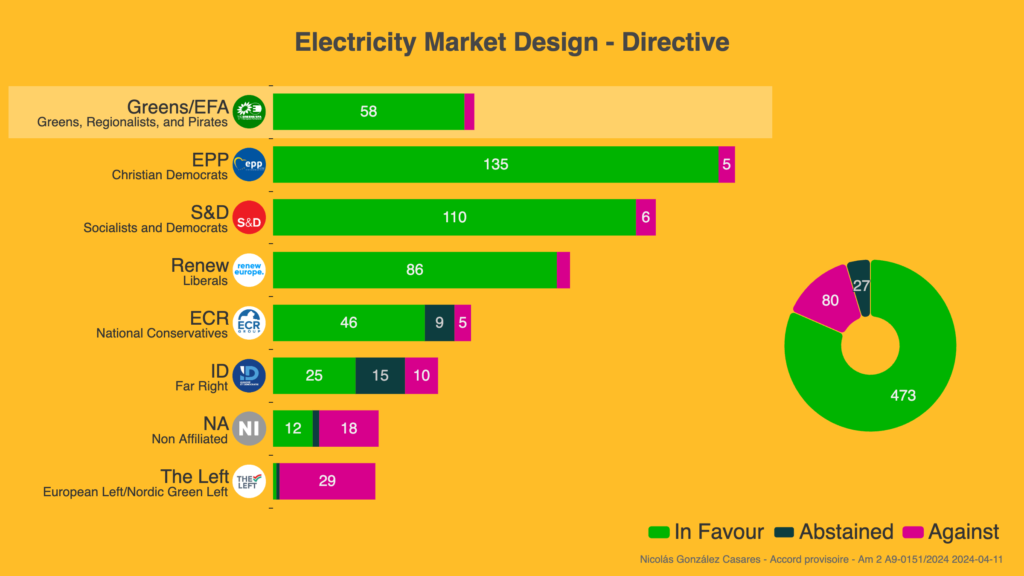
Louisa von Essen

Reisen wir ab 2023 also nur noch klimafreundlich?

Louisa Von Essen im Gespräch mit der Grünen/EFA Europaabgeordneten und Nachtzugfan Anna Deparnay-Grunenberg.

Warum mit dem Nachtzug reisen?

Die Möglichkeit, die Welt zu bereisen, ist eine der größten Errungenschaften des 20. Jahrhunderts. Günstige und leicht zugängliche Verkehrsmittel haben Menschen aus verschiedenen Ländern zusammengebracht, Freundschaften über große Entfernungen hinweg ermöglicht und uns geholfen, unseren kulturellen Horizont zu erweitern. 

Als Europäer sind viele von uns auf Autos, Züge und Flugzeuge angewiesen, um Freunde und Familie im Ausland zu besuchen oder einen Sommerurlaub in der Sonne zu verbringen. Aber der Klimawandel bedeutet auch, dass wir die Art, wie wir reisen, ändern müssen. Wir brauchen also einen Weg, um nachhaltig durch Europa zu reisen, ohne Ökosysteme, Menschen und Natur zu gefährden. Schließlich ist es das, was das Reisen wirklich lohnenswert macht!

Nachtzüge könnten uns dabei helfen. Und die gute Nachricht ist, dass wir gerade eine Renaissance der Nachtzüge erleben. Überall in der EU entstehen neue Nachtzugverbindungen. Zurzeit gibt es über 200 Nachtzugverbindungen in Europa und wir arbeiten daran, dass es noch mehr werden. Einige Nachtzüge verkehren innerhalb von Ländern. So kannst Du zum Beispiel deine Reise in Mailand in Norditalien beginnen und am Strand von Sizilien aufwachen. Andere Nachtzüge führen dich durch mehrere Länder, wie die Verbindung zwischen Wien und Bukarest über Budapest. 

Um die Planung deiner nächsten Reise zu erleichtern, haben die Grünen/EFA-Europaabgeordneten Anna Deparnay-Grunenberg und Daniel Freund diese Karte des europäischen Nachtzugnetzes entwickelt.

Was macht Nachtzüge zu einer so tollen Art zu reisen?

Nachtzüge sind die nachhaltigste Art des Reisens in Europa. Sie sparen dir Zeit (Du reist im Schlaf!) und Geld für die Unterkunft. Sie sind nicht nur ein Transportmittel, sondern auch eine Herberge oder ein Hotel auf Schienen. Je nach Budget kannst Du zwischen verschiedenen Betten wählen und wachst am Morgen ausgeruht an deinem Zielort auf, um den Tag zu beginnen.

Und Nachtzüge helfen uns, die Umwelt zu schützen. Eine Reise mit dem Nachtzug verursacht etwa 30 Mal weniger Emissionen als eine Reise mit dem Flugzeug. Back-on-track.eu schätzt, dass Nachtzüge viele der innereuropäischen Flüge bis zu einer Entfernung von 3000 km ersetzen könnten. Um die Klimaauswirkungen deiner Reise zu vergleichen, kannst Du das UIC EcoPassenger-Tool nutzen.

Bestelle jetzt kostenlos die neue Nachtzugkarte und plane deine nächste Reise! 🚄
(
Schnell, es sind nur 400 Stück verfügbar)

Anna, welche Nachtzugverbindung nutzt Du am häufigsten?

“Eindeutig die von Basel nach Berlin. Ich wohne in Baden-Württemberg und muss regelmäßig zu Treffen mit meiner Landespartei nach Berlin fahren. Deshalb ist der Nachtzug vom Süden Deutschlands in unsere Hauptstadt für mich sehr praktisch. Meine Tage sind sehr ausgefüllt, also kann ich viel Zeit sparen, wenn ich im Schlaf reise!”

Die Grünen/EFA Europaabgeordnete Anna Deparnay-Grunenberg 

Besuche Anna’s Website für die digitale Version der Nachtzugkarte.

Warum ist das Reisen mit dem Nachtzug gut für das Klima?

Um das 1,5°C-Ziel des internationalen Klimaabkommens von Paris einzuhalten, muss die EU bis 2050 90 % der Emissionen im Verkehrssektor reduzieren. Doch der Verkehrssektor schafft das noch nicht. Tatsächlich steigen die Verkehrsemissionen in Europa weiter an.

Nach Angaben der Europäischen Umweltagentur machen Züge nur 0,4 % dieser Emissionen aus. Die größten Verursacher der Emissionen sind der Straßenverkehr mit 76,7 %, Schiffe mit 15,3 % und Flugzeuge mit 7,1 %. Flugzeuge haben nicht nur wegen der erhöhten Emissionen, sondern auch wegen der sogenannten Nicht-CO2-Emissionen auch einen erheblichen Einfluss auf die Erderwärmung.

Um den Nachtzug zum beliebtesten Verkehrsmittel in Europa zu machen, muss jedoch noch viel getan werden. Eines der Hauptprobleme ist, dass nicht alle EuropäerInnen sich Nachtzüge leisten können.

Warum sind Nachtzüge so teuer?

Um zu verstehen, warum Nachtzug Tickets manchmal so teuer sind, müssen wir verstehen, warum das Reisen mit dem Flugzeug oder dem Autos vergleichsweise günstig sind. Es gibt einfach keine gleichen Wettbewerbsbedingungen für Züge, Autos und Flugzeuge.

Zum Beispiel müssen die Zuganbieter für die Nutzung der Gleise, die sie benutzen, Gebühren zahlen, die bei Nachtzügen etwa 20-30% des Preises ausmachen können. Für Autos gibt es jedoch keine EU-weit verbindliche Maut.

Außerdem spiegeln sich die Kosten und Schäden, die Autos und Flugzeuge der Umwelt und unserer Gesundheit zufügen, nicht in den Preisen für die verwendeten Kraftstoffe wider (z. B. Kerosin in Flugzeugen). Im Gegensatz dazu müssen die Bahnbetreibende – einige von ihnen sind Meister der erneuerbaren Energien – mit sehr hohen Energiekosten arbeiten.

Durch dieses ungerechte Ungleichgewicht ist die Fahrt mit dem Auto oder dem Flugzeug viel billiger als die Fahrt mit dem Zug, obwohl viel mehr Ressourcen und Geld verschwendet werden. Um das Reisen mit dem Nachtzug für alle erschwinglich zu machen, müssen wir die Wettbewerbsbedingungen angleichen. Wir müssen Zugreisen subventionieren und die Umweltschäden von Autos und Flugzeugen in die Treibstoffpreise miteinbeziehen.

Wie können wir die Zahl der Nachtzugverbindungen erhöhen?

Momentan sind die Kosten, um ein neues Zugnetzwerk zu betreiben, noch ein großes Hindernis. Nicht nur, weil Autos und Flugzeuge einen unfairen Vorteil gegenüber Nachtzügen haben, sondern auch, weil der Betrieb eines Nachtzugs teuer ist. Sie können nur nachts verkehren und weniger Fahrgäste mitnehmen als ein normaler Zug.

Die Angst vor höheren Kosten hat die großen und finanzstarken Bahnbetreiber davon abgehalten, sich für die Wiedereinführung von Nachtzügen einzusetzen. Stattdessen betreiben kleine Initiativen und private Betreiber einzelne Strecken. Für eine groß angelegte Einführung fehlen ihnen jedoch die Mittel.

Infrastruktur- und Nachtzugbetreibern sollte finanzielle Unterstützung gewährt werden. Die Renaissance des Nachtzugs braucht eine ordentliche Starthilfe!

Außerdem besteht ein akuter Mangel an Schlaf- und Liegewagen (dem sogenannten rollenden Material). Die Hersteller von Nachtzügen kämpfen mit einer unsicheren Nachfrage und unklaren Planungshorizonten.

Auch unterschiedliche nationale Vorschriften und technische Standards für Züge in den EU-Ländern sind ein weiteres Hindernis.

Die EU muss sich voll und ganz für den Wiederaufbau ihres Nachtzugnetzes einsetzen und dabei auch finanzielle Unterstützung anbieten. Das würde die Sicherheit für den europäischen Markt erhöhen und das Zeitalter des Nachtzugs einläuten!

Anna, welche Nachtzugverbindung fehlt noch in Europa?

“Persönlich würde ich mir einen Nachtzug von Süddeutschland nach Spanien wünschen. Der Grund: Mein Vater wohnt jetzt in San Sebastian, im Norden Spaniens. Im Moment würden wir fast zwei Tage und vier Züge brauchen, um mit der Bahn dorthin zu fahren. Es wäre fantastisch, wenn wir eine direkte Nachtzugverbindung zwischen Stuttgart und San Sebastian hätten! Auf diese Weise könnten meine Kinder ihren Großvater öfter besuchen – das wäre wirklich schön!”

Die Grünen/EFA Europaabgeordnete Anna Deparnay-Grunenberg 

Wie kann ich einen Nachtzug buchen?

Um ehrlich zu sein, ist die Buchung einer Nachtzugverbindung immer noch sehr kompliziert.

Es gibt keine Webseite, die alle Fahrpläne und verfügbaren Nachtzüge zusammenfasst. Stattdessen musst Du deinen Nachtzug auf verschiedenen Seiten buchen, die die Verbindung anbieten. Das kann dazu führen, dass Du verschiedene Einzelfahrkarten buchen musst.

Deshalb setzen wir uns als Grüne/EFA im Europäischen Parlament für eine einzige, umfassende europäische Buchungsplattform ein, die Verbraucherinnen und Verbraucher dazu ermutigt, Nachtzüge zu nutzen und alle möglichen Verbindungen auflistet.

In der Zwischenzeit findest Du hier ein paar Tipps, damit dein Nachtzug-Erlebnis reibungslos verläuft. Um einen Überblick über die verfügbaren Nachtzüge in Europa zu bekommen, schau dir unsere neu aktualisierte Nachtzugkarte an.

1.   Um nach bestimmten Verbindungen zu suchen, kannst Du Websites wie seat61.com, nachtzug-urlaub und rail.cc nutzen

2.  

Die Buchung eines Nachtzugs ist oft am einfachsten bei dem jeweiligen Betreiber. Auf der aktualisierten Nachtzugkarte findet ihr alle notwendigen Details inklusive des Links zur Buchungsplattform. Auch auf der gedruckten Version findet ihr diese Infos – hier könnt ihr die Karte kostenlos bestellen.

3.   Wenn Du einen Anschlusszug verpasst hast, kannst Du manchmal einfach den nächsten Zug nehmen: “Hop on the next available train” oder HOTNAT

Ein Bonus für alle Interrail-Fans da draußen: Viele Nachtzugverbindungen sind in deinem Ticket enthalten. Du musst nur deine bevorzugte Schlafgelegenheit reservieren und bezahlen.

Was macht das Jahr 2023 zum Jahr des Nachtzugs? 

Während 2021 das offizielle Europäische Jahr der Schiene war – und es war ein wichtiges Jahr für Nachtzüge – zeichnet sich 2023 als das Jahr ab, in dem Nachtzüge ihr großes Comeback feiern. Die Europäische Kommission und das Europäische Parlament sind unseren grünen Forderungen gefolgt und haben die entscheidende Rolle der Nachtzüge für die grüne Verkehrsrevolution klar erkannt.

Erst kürzlich hat die Europäische Kommission ihre Unterstützung für zehn Nachtzug Projekte in ganz Europa angekündigt, darunter eine Nachtzugverbindung von Amsterdam nach Barcelona.

 Hier sind einige neue Nachtzugverbindungen, auf die Du dich im Jahr 2023 freuen kannst:

  • 31. März – Eine neue Nachtzugverbindung zwischen Berlin und Stockholm wird eröffnet.
  • 25. Mai – Der neue Open-Access-Zugbetreiber European Sleeper eröffnet eine neue Nachtzugverbindung, die Brüssel, Antwerpen, Rotterdam und Amsterdam mit Berlin (und ab 2024 mit Dresden und Prag) verbindet.
  • 11. Dezember – Der ÖBB Nightjet stellt den “Metropol X” fertig, der täglich NachtzugverbinDungen zwischen den Städten Paris, Berlin, Brüssel und Wien anbietet

 Anna, was ist deine schönste Nachtzug-Erinnerung?

“Vor einigen Jahren bin ich mit dem Nachtzug von London nach Inverness in Nordschottland gefahren. Ich reiste mit meinem Mann. Das war in einer Zeit, in der es für uns beide etwas ganz Besonderes war, gemeinsam Urlaub zu machen. Also beschlossen wir, ein Nachtzugabteil zu buchen, und wir hatten eine wunderschöne Reise im sogenannten “Caledonian Night Sleeper”. Das ist ein schottischer Zug mit verschiedenen “Zimmern” – einige haben nur die Grundausstattung und andere sind ziemlich luxuriös! Außerdem gibt es einen “Lounge”-Wagen mit einer Bar und der Möglichkeit, morgens zu frühstücken. Wir haben beide gut geschlafen und kamen ganz entspannt im Norden Schottlands an. Wir nutzten unsere Zeit in Schottland, um die schöne Öko-Gemeinde Findhorn zu besuchen, bevor wir nach Hause zurückkehrten.”

Wie können wir Nachtzüge in Europa noch besser machen?

 Unsere 5 Forderungen der Grünen/EFA für mehr Nachtzüge in Europa:

  •  Ausweitung des Nachtzugnetzes: Wir wollen, dass mehr Haltestellen und Strecken mit Nachtzügen erreichbar sind.
  • Einfache Buchung: Nachtzugreisen müssen so einfach werden wie das Fliegen. Wir wollen eine einheitliche Buchungsplattform, mit der Nachtzüge einfach online gebucht werden können!
  • Erschwingliche Preise: 20 bis 30 Prozent der Kosten für Nachtzüge werden durch Trassenpreise, also die Nutzung der Schiene, verursacht. Diese Kosten müssen gesenkt werden, ebenso wie die Steuer auf Zugfahrten und die Ticketpreise.
  • Fairer Wettbewerb zwischen Flugzeug und Bahn: Wir können nicht zulassen, dass die Fluggesellschaften weiterhin von der Umweltverschmutzung profitieren. Wir brauchen eine Kerosinsteuer für Flüge!
  • Ein echtes Engagement für die Zukunft des Zugverkehrs: Wir brauchen ein gut abgestimmtes europäisches Nachtzugkonzept und klare Investitionen in das Schienennetz.