Posted by Die Grünen/EFA MdEP's Tilly Metz, Caroline Roose & Thomas Waitz
Jeden Tag werden Tausende Tiere unter entsetzlichen Bedingungen durch die Europäische Union und darüber hinaus transportiert, um sie zu züchten, zu mästen oder zu schlachten. Die Transporte können mehrere Tage lang dauern. Tiere leiden oft unter Platzmangel und haben keinen ausreichenden Zugang zu sauberem Wasser oder angemessenem Futter. Im Untersuchungsausschuss für Tiertransporte des Europäischen Parlaments (ANIT) kämpfen die Grünen/EFA für ein Ende dieser grausamen Praktiken. Die Verhandlungen stehen nun vor dem Abschluss.
Der Tiertransport Untersuchungsausschuss hat seine Arbeit im September 2020 aufgenommen. Die Grünen/EFA-Fraktion im europäischen Parlament haben besonders prominente Rollen erhalten: Tilly Metz ist die Vorsitzende und Thomas Waitz ist unser Schattenberichterstatter und somit im Zentrum der Verhandlungen. Caroline Roose übernahm die Koordination der Gruppe zum Thema. In den letzten Monaten hat der Ausschuss an einem Bericht und an Empfehlungen für die Europäische Kommission gearbeitet. Dieser wird die Grundlage für eine neue EU Tiertransportverordnung bilden.
Unsere wichtigsten Ziele ,um Tiere besser zu schützen, sind :
Ein Verbot des Transports von nicht abgesetzten Tieren
Eine Frist von 8 Stunden für den Transport lebender Tiere, unabhängig von der Art des Transports
Bessere Bedingungen für den Transport von lebenden Tieren auf See
Wie kämpfen die Grünen/EFA für den Schutz von Tieren in der EU?
Am 2. Dezember wird der ANIT-Ausschuss über einen Bericht und seine Empfehlungen für eine neue EU-Tiertransportverordnung abstimmen. Darin werden neue Regeln für Tiertransporte in der EU vorgeschlagen , einschließlich spezifischer Standards für den Tierschutz. Die Europäische Kommission hat angekündigt, dass sie ihren Vorschlag für die neue Verordnung im Jahr 2023 veröffentlichen wird. Dies ist also eine wichtige Gelegenheit für das Europäische Parlament, Erwartungen an das neue Gesetz darzulegen.
Unsere Grünen/EFA Mitglieder des Europäischen Parlaments im ANIT-Ausschuss haben hart daran gearbeitet, die Formulierungen zum Tierschutz im Bericht zu stärken. Als unser Schattenberichterstatter vertrat Thomas Waitz die Position der Grünen/EFA zu Tiertransporten während der Verhandlungen zwischen den verschiedenen Fraktionen. Sein Ziel war es, eine Einigung zu finden, die die höchstmöglichen Tierschutzstandards gewährleistet. Es gab weit über tausend Änderungsanträge von Abgeordneten aus dem gesamten politischen Spektrum. Die Verhandlungen, um Kompromisse zu finden, auf die sich alle einigen konnten, waren nicht einfach und stehen nun vor dem Abschluss.
Sollten Jungtiere, die noch nicht abgesetzt sind, transportiert werden?
Jungtiere, die noch von der Milch ihrer Mutter abhängig sind, so genannte “nicht abgesetzte Tiere”, sind definitiv nicht transportfähig. Dies ist eine der wichtigsten Botschaften, die die Experten und Expertinnen im ANIT-Ausschuss vorgetragen haben. Nicht abgesetzte Tiere haben, vor allem in den ersten Wochen ihres Lebens, noch nicht das Immunsystem entwickelt, das erforderlich ist, um den widrigen Transportbedingungen standzuhalten. Ein weiteres Problem ist der Zugang zu Nahrung, da es technisch noch nicht möglich ist, nicht abgesetzte Tiere während des Transports zu füttern.
Die derzeitigen Rechtsvorschriften erlauben jedoch den Transport von Tieren, die erst 10 Tage alt sind. Sie erlauben sogar Langstreckentransporte ab einem Alter von 14 Tagen. Im Falle von Kälbern bedeutet dies zum Beispiel eine Transportdauer von bis zu 19 Stunden am Stück. Wir fordern ein Verbot von kommerziellen Transporten für nicht abgesetzte Tiere.
Während der Verhandlungen im ANIT-Ausschuss stießen wir in dieser Frage auf großen Widerstand von Mitgliedern konservativer, liberaler und rechtsextremer Parteien. Diese fürchten finanzielle Verluste für große industrielle Betriebe.
Wie können wir die Bedingungen für den Transport von lebenden Tieren auf See verbessern?
Nach den geltenden Tiertransportgesetzen gibt es keine maximale Transportzeit für den Transport von Tieren auf dem Seeweg. Seetransporte können Tage oder sogar Monate dauern, ohne gegen die EU-Vorschriften für Tiertransporte zu verstoßen. Dies war allein im Jahr 2021 mehrfach der Fall, beispielsweise bei den Schiffen Karim Allah und Elbeik oder bei der Blockade des Suezkanals.
Die Bedingungen auf den Schiffen sind für die Tiere oft grausam. Tausende von Tieren werden an Bord eingepfercht, ohne ausreichenden Zugang zu Futter und Wasser. Es ist auch nicht vorgeschrieben, dass ein Tierarzt oder eine Tierärztin an Bord sein muss, um kranke Tiere zu behandeln.
Wir fordern eine maximale Transportzeit für Lebendtiertransporte unabhängig von der Transportart, also auch für Schiffstransporte. Darüber hinaus fordern wir, dass bei allen Seetransporten mindestens ein Tierarzt oder eine Tierärztin anwesend sein muss.
Wie lange sollte die Transportdauer für lebende Tiere maximal sein?
Es gibt zwei Arten von Tiertransporten auf der Straße: Kurzstreckentransporte mit einer maximalen Transportzeit von acht Stunden und Langstreckentransporte von mehr als acht Stunden.
Für Langstreckentransporte gibt es spezielle Vorschriften für verschiedene Tierarten. Bei einigen, wie Schweinen oder Hühnern, kann der Transport bis zu 24 Stunden dauern. Für andere, wie Fische, Hunde, Katzen oder Nerze, gibt es überhaupt keine zeitliche Begrenzung.
Wir fordern klare art- und altersspezifische maximale Transportzeit für Tiertransporte. Unabhängig vom Transportmittel sollte eine maximale Transportdauer von 8 Stunden gelten.
Was sind die nächsten Schritte auf dem Weg zu einem neuen europäischen Tiertransportgesetz?
Während der Verhandlungen gelang es den Grünen/EFA im Europäischen Parlament, einige Formulierungen des Abschlussberichts und der Empfehlungen an die Kommission zu verbessern. Leider waren die anderen Fraktionen immer noch nicht bereit, sich unserer Forderung nach maximalen Transportzeiten anzuschließen.
Am 2. Dezember wird der ANIT-Ausschuss über den Bericht und die Empfehlungen an die Europäische Kommission abstimmen. Die Fraktion der Grünen/EFA wird Kompromisse vorlegen, die Folgendes für Tiertransporte fordern:
Ein Verbot des Transports von Tieren unter 5 Wochen und eine maximale Transportzeit von 2 Stunden, solange das Tier nicht abgesetzt ist
Eine Frist von 8 Stunden für den Transport von lebenden Tieren auf der Straße oder im Flugzeug
Eine Frist von 24 Stunden für den Seetransport von lebenden Tieren
Wir hoffen, im Ausschuss eine Mehrheit für diese Kompromisse zu finden. Im Januar 2022 wird das Europäische Parlament im Plenum über diese Empfehlungen abstimmen.
Schließt euch uns an und bleibt über die neuesten Entwicklungen zu Forderungen für ein Ende von grausamen Tiertransporten auf dem Laufenden!
Posted by Greens/EFA MEP's Tilly Metz, Caroline Roose & Thomas Waitz
Every day, thousands of animals are transported in horrific conditions across the European Union and beyond for breeding, fattening or slaughter. Journeys can last days, and animals can often suffer from a lack of space, clean water or proper food. In the European Parliament’s Animal Transport Committee (ANIT), the Greens/EFA are fighting for an end to these cruel practices. Negotiations on the Committee’s report are now coming to an end.
The Animal Transport Committee started its work in September 2020. The Greens/EFA Group gained two particularly prominent roles: Tilly Metz MEP is the President and Thomas Waitz MEP is our shadow rapporteur at the heart of the negotiations and Caroline Roose coordinated the group on the subject. For the past months, the committee has been working on a report and recommendations to the European Commission. This will be the basis for a new animal transport regulation for the EU.
To better protect animals, our most important goals are:
A ban on the transport of unweaned animals
A time limit of 8 hours for transporting live animals regardless of the mode of transport
Better conditions for the transport of live animals at sea
How are the Greens/EFA fighting to protect animals being transported in the EU?
On 2nd December, the ANIT Committee will vote on a report and its recommendations for a new EU Animal Transport Regulation. This will set out mandatory new rules for transporting animals in the EU, including laying out specific standards for animal welfare. The European Commission has announced that it will publish its proposal for the new regulation in 2023, so this is a crucial opportunity for the European Parliament to set out what improvements it expects to see in the new law.
Our Greens/EFA members in the ANIT committee have been working hard to strengthen the wording on animal welfare in the report. As our shadow rapporteur, Thomas Waitz MEP represented the Greens/EFA’s position on animal transport during the negotiations between the different political groups. His goal was to find an agreement that would ensure the highest possible animal welfare standards. There were well over a thousand amendments from MEPs across the political spectrum. Negotiations to find compromises that everyone could agree on have been fierce, and are now coming to an end.
Should young animals that are still not weaned be transported?
Young animals that are still dependent on the milk of their mother, so-called ‘unweaned animals’, are definitely not fit for transport. This is one of the main lessons stressed by experts during the ANIT Committee. Unweaned animals, especially in the first few weeks of their life, have not yet developed the immune system required to withstand cruel transport conditions. There is also a question of access to food, as it is still technically impossible to feed unweaned animals during transport.
Current legislation, however, allows the transport of animals that are only 10 days old. It even allows long distance transport from 14 days old (in the case of calves, this means being in transit for a maximum of 19 hours).
We demand a ban on commercial transport for unweaned animals. During negotiations in the ANIT Committee, we faced a lot of resistance on this from members of conservative, liberal and far right parties who fear financial losses for big industrial farms.
How can we improve conditions for transporting live animals at sea?
According to current animal transport legislation, there is no maximum journey time for animals transported by sea. Sea journeys can last for days or even months without breaching EU legislation. This happened several times in 2021 alone for instance in the cases of the ships Karim Allah and Elbeik or during the blockage of the Suez Canal. The conditions on ships are often awful for those animals. Thousands of animals are crammed on board without proper food and water. There is also no requirement to have a vet on board to treat sick animals.
We demand that the time limit for live animal transports must apply to all journeys regardless of the mode of transport. In addition, we demand that there has to be at least one veterinarian present during all sea journeys.
What should the maximum journey time for transporting live animals be?
There are two types of animal transport by road: short distance with a maximum of 8 hours’ transport time, and long distance transport. For long distances, there are specific regulations for different types of animals. For some, like pigs or chickens, the journey can last up to 24 hours. For others, like fish, pets or mink, there is no time limit at all.
We demand clear species and age-specific journey time limits for transporting animals. There should be a maximum journey time of 8 hours regardless of the means of transport.
What are the next steps towards a new European Animal Transport law?
During the negotiations the Greens/EFA managed to improve some of the wording of the final report and recommendations to the Commission. Unfortunately, the other groups still were not willing to join us in our call for maximum journey times. On 2nd December, the ANIT Committee will vote on the report and recommendations to the European Commission. In January 2022, the European Parliament will vote on the recommendations in plenary.
Join us and keep informed on the latest developments:
Posted on 17 November 2021 by Greens/EFA MEPs, Marie Toussaint (FR), Heidi Hautala (FIN), Tilly Metz (LUX), Ville Niinisto (FIN), Anna Deparnay-Grunenberg (DE-FR), Rosa d’Amato (IT) and Anna Cavazzini (DE)
The European Commission has finally published its long-awaited proposal to reduce EU-driven deforestation, after years of pressure from the Greens/EFA and NGOs. Greens/EFA MEPs, Marie Toussaint (FR), Heidi Hautala (FIN), Tilly Metz (LUX), Ville Niinisto (FIN), Anna Deparnay-Grunenberg (DE-FR), Rosa d’Amato (IT), Anna Cavazzini (DE) and Grace O’Sullivan (IRL) argue that this deforestation law is an important step, but big improvements are needed if the law is to effectively end the EU’s complicity in the global destruction of nature and violation of human rights.
At last, the Commission has published its long-awaited proposal to reduce the EU’s contribution to global deforestation and forest degradation. Europeans need to be sure that nothing they add to their shopping baskets will make them complicit in the destruction of natural forests. The new deforestation law is sorely needed. The EU is responsible for 16% of tropical deforestation linked to internationally traded commodities such as meat, palm oil or soy.
With this new law, the European Union will oblige businesses to check, through a process called “mandatory due diligence”, that whatever they sell in Europe does not come from land where forests have been degraded or cleared entirely to make room for agricultural production.
Unfortunately, the final proposal from the Commission has some major gaps that would, if written into law, severely undermine its effectiveness.
Loopholes in the deforestation law: important products and ecosystems left out
The European Commission wants to stick to six commodities that can pose a serious risk to forests: beef, palm oil, soy, coffee, cacao and wood. But scientists have warned that the EU should not exclude certain commodities “prematurely” from its legislation. The production of rubber and maize, for example, is also known to cause deforestation.
The Commission wants the new deforestation law to protect forests but not other valuable ecosystems like savannahs, wetlands and peatlands. It says these can be added at a later point in time.
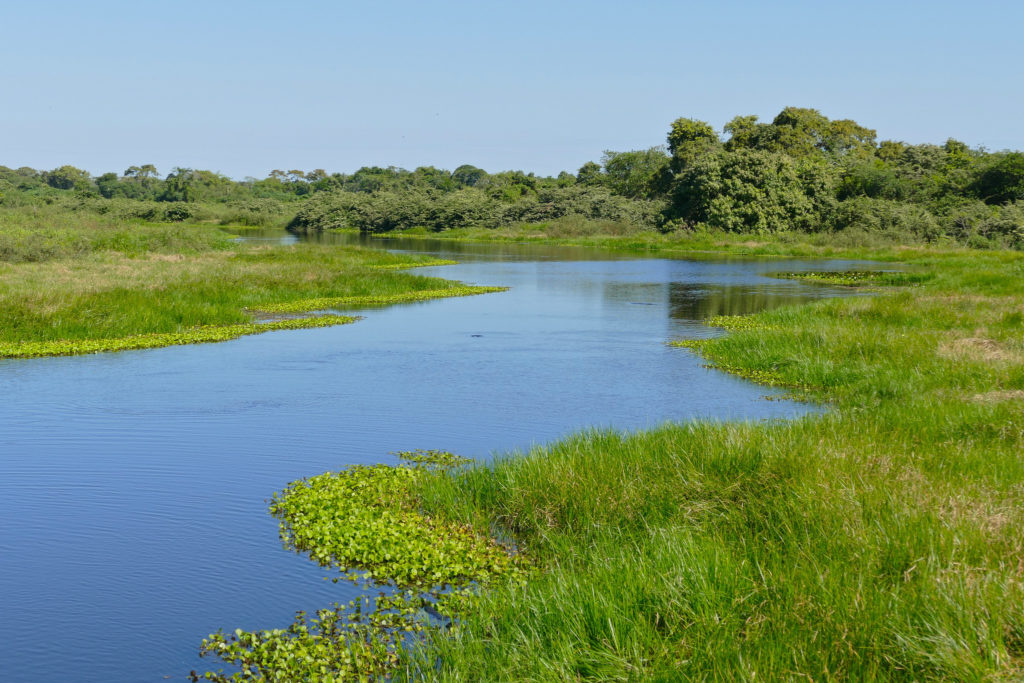
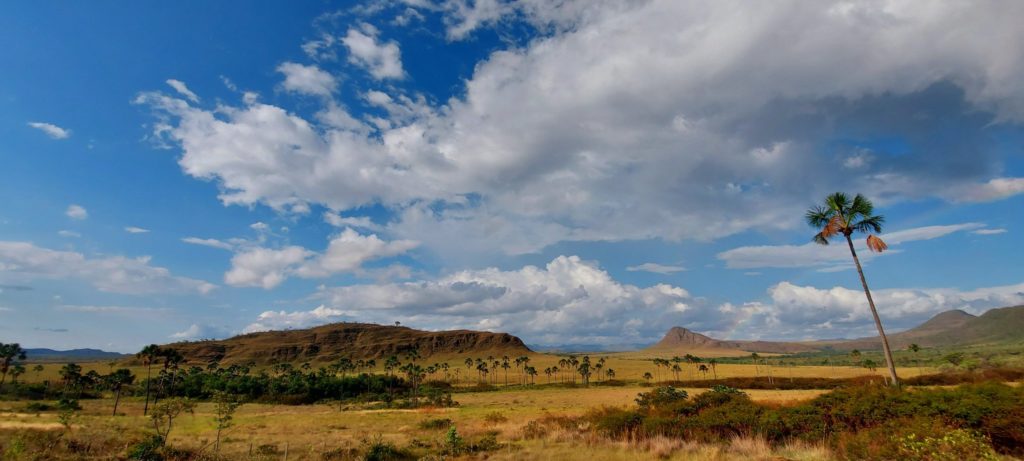
If these loopholes are not closed, there is a risk that the new deforestation law will trigger adverse effects. Companies could begin clearing forests for rubber instead of cocoa, or shifting destruction from forests to nature-rich ecosystems like the Pantanal wetlands or Cerrado savannah.
(RIGHT) One of the many rivers of Pantanal, Transpantaneira, Poconé, Mato Grosso, Brazil. Bernard DUPONT Flickr CC BY-SA 2.0 (LEFT) Cerrado savannah, Brazil / Brasil – Goiás – Chapada dos Veadeiros – Jardim Maytrea A. Duarte Flirck CC BY-SA 2.0
The EU deforestation law – a free pass for human rights abuses and for banks profiting from rainforest destruction
In the European Commission’s new deforestation proposal, companies do not have to check whether commodities are linked to human rights violations. This is an indefensible failure to defend human rights. The conversion of rainforests and other precious ecosystems to agricultural land is often linked to land-grabbing, violence, and adverse human rights impacts, particularly for Indigenous Peoples. The EU must not be complicit in human rights abuses just as it must not be complicit in tropical deforestation.
The proposal also turns a blind eye to financial organisations that prop up companies involved in the destruction of nature with investments, loans or other services. Between 2016 and 2020, banks and asset managers based in the EU generated €401 million in revenues on deals with companies accused of destroying tropical forests.
Lack of proper checks for commodities originating in certain countries
The European Commission wants to lower requirements for companies sourcing products and commodities from so-called “low risk countries”. This could create a loophole allowing operators to launder commodities produced in “high risk countries” by trading them through “low risk countries”.
Clearly, any law is only as good as its enforcement. If the EU adopts a ‘paper tiger’, with a deforestation law that looks fierce but is ineffectual in practice, it will continue to drive the destruction of fragile ecosystems around the world.
European Commission proposal to stop EU-driven deforestation: important improvements needed
There is a big task ahead of us. At the end of its legislative journey, we must pass a deforestation law that does two key things: firstly, the law must force companies to show that their supply chains are completely clean of nature destruction and human rights abuses. Secondly, the law must require banks operating in the EU to show that their investments are not contributing to these outcomes.
If we do not hold the companies that profit from these practices to account, the EU’s recent commitment to spend a billion euros to protect the world’s rainforests would be like throwing money into the wind. Neither would the EU be able to honour its COP26 pledge to do its part to “halt and reverse forest loss and land degradation by 2030”.
The EU should be leading the global fight to protect our forests. We cannot give a free pass to the companies responsible for destroying our precious ecosystems and gross violations of human rights. European consumers must be sure that our grocery shopping doesn’t accidentally bankroll rainforest destruction. The European Commission’s proposal makes some very good suggestions, but is lacking teeth. We need to make sure that our new deforestation law is not all bark and no bite.
Posted on 08 November 2021 by Alice Bah Kuhnke MEP, Vice President of the Greens/EFA Group and coordinator for the Committee on Women's Rights and Gender Equality.
Today, for Gender Day at the COP26, we list five goals that all feminists should be keeping their eyes on at the UN climate conference taking place right now.
Former Irish President, Mary Robinson, notoriously said, “Climate change is a manmade problem, that requires a feminist solution.”
The 26th UN Climate Change Conference of the Parties (COP26) is a massively important turning point for the future of gender equality, feminist policy and women’s human rights. Gender justice cannot be sidelined when debating the future of our planet. It’s time for governments and institutions to take note, and put gender equality at the heart of any viable strategies on climate and ecology.
What do we mean when we say that gender and climate go hand in hand?
Gender inequality is one of the major divides in our societies. The gender pay, pension and employment gaps remain significant. Women are still under-represented in positions of power and decision-making. The gendered division of labour keeps women responsible for the majority of unpaid care work. This means women are more likely to live in social and economic precarity, making women more vulnerable and with fewer means to respond and adapt to climate disasters. All aspects of climate change have a gender dimension. The causes, the impacts and the policies to respond to climate change all have different effects on women and men.
The slogan of gender activists in the international climate negotiations is ‘no climate justice without gender justice’. A just transition to a greener world must include efforts towards gender equality.
It’s time for a feminist, fierce and fossil free future. Here is why.
No climate justice without gender justice: we must reinforce leadership for women, girls and gender diverse people
Women, girls and gender diverse people are on the front line combatting the climate crisis in our communities. We need to ensure that women, girls and gender diverse people’s calls are heard and their needs addressed in the climate context. They need to be included throughout the whole decision-making process and at the negotiating table.
The wisdom, leadership and experiences of indigenous people, people from the Global South and people already suffering from the climate crises must be seen as agents of change. They must be at the centre when negotiating climate policies. This Australian study is only one of many research projects to prove that diversity in leadership has a massive positive impact.
Gender equality and women’s human rights are fundamental and undisputable in combating climate change. Recognising the important contributions of women and gender diverse people as decision-makers, stakeholders, educators, carers and experts across sectors and at all levels is the only way to achieve successful, long-term solutions to climate change. Fighting climate change must mean fighting for gender equality.
Nothing neutral about the crisis: states must recognize how the climate crisis affects us differently
Climate change deepens already existing inequalities. The poorest and most vulnerable people in the world are the hardest hit by the impacts of climate change. Food and water insecurity – and extreme weather events such as droughts, heat waves and floods – have a greater impact on the poor and most vulnerable. 70% of the world’s poor are women.
Climate change has damaging effects, and can endanger mental health as much as physical health.
Attempts to adapt to climate change, particularly in poorer countries, are failing. Resources are being wasted because they do not take gender inequality and the effects on women and girls into account. It is essential to assess, disseminate and raise awareness about the impacts of environmental policies on women, both by public policies, and public and private industries.
The principles of gender equality must be enshrined in all climate-related texts and mechanisms:
End the vicious cycle of gender roles and climate change: the climate crisis increases gender-based violence
The climate crisis and environmental degradation are increasing violence against women and girls. Gender-based exploitation is hampering our ability to tackle the crisis.
As our environment degrades and stress is put on our ecosystems, it stands to reason that this creates scarcity and stress for people. The evidence shows that where environmental pressures increase, acts of gender-based violence increase.
Ultimately, efforts towards gender justice in climate policy need to address the root causes of the high carbon emissions of our societies, as well as gender inequality. To do this, we will need to challenge our society’s own deeply embedded gender norms and power relations that influence perceptions and attitudes.
More attention and recognition must be given to dismantling the harmful, outdated norms around masculinities, which force men into a very limiting role. This can have severe consequences, such as triggering violence and assault against women and gender diverse people, and steering away from sustainable choices in their everyday lives.
Fulfil the strong commitment to human rights: uphold the Paris Agreement!
Climate change and its impacts erode human freedoms, limit choice and threaten the full enjoyment of human rights – both directly and indirectly.
By upholding the commitment to the Paris Agreement, parties have agreed to respect, promote and consider the human rights of all when taking action to address climate change. This commitment must be translated into actions.
The science is clear about the impact of failing to fulfill the most fundamental promise of the Paris Agreement: the target of keeping global warming below 1.5°C. A world of increasing climate disaster will deepen and exacerbate existing structural inequalities.
According to the United Nations High Commissioner for Refugees (UNHCR), climate-induced displacement forces nearly 20 million people to leave their homes every year. Scientists fear that these numbers will increase as the intensity and frequency of extreme weather events escalates. We must recognize how climate change and natural disasters interact with drivers of migration.We must address the specific needs, vulnerabilities and human rights of people who are forced to leave their homes because of the climate crisis.
Without the full recognition of human rights, including a full and inclusive voice and decision-making in all aspects of climate change policy-making at national level, we will fail to achieve a fair and just transition to a greener world. Women and gender diverse people will be left behind.
Make gender justice reality: build on the Gender Action Plan (GAP)
A key area of progress at COP25 2019 in Madrid was the adoption of the renewed Lima Work Programme and its 5-year Gender Action Plan (GAP).
It is about time that all parties, including the European Union, deliver on these renewed commitments and truly make equality a top priority.
The historical gender action plan sets out objectives, and concrete activities, to advance gender-responsive climate actions worldwide. For the first time in history, there are national gender and climate change focal points, responsible for transforming these commitments into change.
This is an unprecedented opportunity to strengthen the evidence and understanding of the gendered dimension of climate change, and share experiences and best practices on how to find truly sustainable solutions.
But we are in a hurry.
Two years on, COP26 must deliver a strong decision or set of conclusions on pushing forward progress under the Gender Action Plan – to fulfil the ambition set out in Madrid.
What can you do to work towards gender justice at COP26?
Alisdare Hickson (CC BY-NC 2.0)
Gender Day at the COP26 will be held today, Tuesday 9th November, to recognise and celebrate gender equality and the empowerment of women and girls in climate policy and action.
The Greens/EFA Group is proud to organise a session on gender equality at the Green Hub in Glasgow on 9th November. Participants will meet people working to end gender-based violence (GBV) in the European Parliament, learn about the upcoming European GBV Directive proposal, find out what they can do to put pressure on their own MEPs/policy-makers, and build their network by strengthening their voice in the green feminist movement at national and international level.
Help us spread the word on the important link between gender equality and climate by sharing this blog with your network!
Posted by Martina Comparelli and Marco Pitò, Climate Justice Activists at Fridays for Future
The climate crisis is affecting some parts of the planet more than others. But especially those most affected people and areas are not represented adequately at the COP in Glasgow. Continue reading to find out why climate justice at COP26 matters.
Same storm, different boat
One of the results of the negligence of the richest and most industrialized part of the world is the climate crisis, which impacts different populations in different ways. So, yes, we are all under the same storm, but not on the same boat. And yes, we must rely on each other to fight it, but those who started the climate emergency must take responsibility for it and act accordingly. We need climate justice now.
Our life on earth was made possible by a series of delicate balances and intricate systems. We all have a common responsibility to keep this equilibrium intact and to leave this amazing place like we found it. And we depend on each other to do it. However, the wealthiest people on this planet have increasingly altered our planet and have overcome a series of fundamental boundaries. MAPA: the only acronym you need to fight the climate crisis.
MAPA – Who are the people and areas most affected by climate change?
Those who are the least responsible are those who are already paying the worst consequences of the climate and ecological breakdown. Fridays for Future and Extinction Rebellion call these populations “MAPA”: Most Affected People and Areas. This definition does not create ideological barriers and is not merely a geographic term, but considers all the different talks of life of various people. However, often the term refers to people most affected by climate change in the Global South. In the words of Fridays For Future MAPA, “The factors making us the most impacted by the climate crisis are not just limited to geographical aspects but also socio-economic aspects that systematically make it difficult for us to adapt.”
The climate injustice towards MAPA is more than the impacts of a crisis that they have not caused. It’s about how systemic exploitation and neocolonialism intersect and amplify the climate crisis for the majority of the world population. This is why we need an intersectional approach to face the climate emergency.
Intersectional climate activism – what does it look like?
“Intersectionality” is another fundamental concept in climate action. We cannot understand this definition without recalling the work of Kimberle Crenshaw, a leading scholar of critical race theory and the creator of intersectional theory. According to Crenshaw, “Intersectionality is an analytic sensibility, a way of thinking about identity and its relationship to power.”
Looking at the climate crisis intersectionality means recognizing different patterns, including:
So while the place in which you were born largely influences your situation, it is not the only element in place: some of the most affected people live in the world’s richest countries.
So what should countries do at the COP26 to push for climate justice?
Each country needs to shift its narrative on climate. Intersectional climate policies have been acknowledged by the Intergovernmental Panel on Climate Change (IPCC, the United Nation body assessing climate science findings), which made the MAPA issue clear in the Special Report on 1.5°C.
The IPCC identified three big inequalities:
The first is “the contribution to the problem”: The countries that benefit the most from industrialization are also the ones that initiated and fueled the climate crisis.
The second inequality is about the impacts of the climate emergency, which “tend to fall on those least responsible for the problem, within states, between states, and between generations.”, and the capacity to mitigate the climate crisis.
The third asymmetry is about “capacity to shape solutions”. At the international level, this means that MAPA are not always well represented in climate diplomacy and summits.
And here lies the big problem of the COP. Climate justice is not taken into account.
Climate inequality – what needs to change?
Without taking into account the voices of those most affected, climate solutions will turn into climate segregation as stated by the United Nations Special Rapporteur on Extreme Poverty and Human Rights. On the one hand the heads of state know exactly where to park their jet in Glasgow. On the other hand, they are not even trying to bring those who are already experiencing the worst consequences of the climate crisis.
This is also reflected in the management of the Covid-19 restrictions for delegates by the COP Presidency, as the lack of vaccines and tests will prevent many delegates from MAPA countries from taking part in the negotiations. Realising climate justice would mean prioritising that those countries are represented adequately.
“For too long, MAPA countries have been underrepresented while the biggest global polluters had the chance to lobby in the Conferences of Parties. “
Even if polluters will have no official role at COP26, the lack of MAPA voices is highly problematic and undermines the efficacy and fairness of the negotiations. What’s even worse is that this COP is supposed to be the make-or-break on climate finance and on the 100 billions fund promised in 2009.
In theory the fund should be mostly aimed at reparations of loss and damages for those who are already suffering the devastation connected to the climate crisis. In practice, the fund will be discussed in a conference whose presidency did little to nothing to bring the most important voices to the table. As of today, rich countries have already broken their pledgeas they missed their $100 promise in the 2020-2025 period. Moreover, right now 71 percent of this climate money comes as loans. These funds were supposed to work as reparation to the historic injustices but they showed to be no more than a financial trick and fake gesture of kindness.
The IPCC had foreseen a fourth asymmetry in future response capacity. It states that some countries may be “left behind as the world progresses to a low-carbon economy”. From what we are observing in the development of COP26, this is already true.
What should the people less affected by climate change do?
While the climate movement in western countries has been largely driven by the narrative of teenagers fighting for their future. For the majority of the world’s teenage population the climate breakdown is already a reality. They are not simply fighting for their future, but for their present. For this reason, every group, movement, or association that is trying to do something about the climate emergency should prioritize the demands of MAPA, listen to their stories, and pass on the microphone. We need to put their voices at the center of the debate on climate. As MAPA activist Mitzi Jonelle Tan said, MAPA are unheard, not voiceless.
This means that we need to check our privilege as white activists from the global north and decolonize our own activism. As a matter of fact, eurocentrism and white saviorism are extremely problematic in the climate movement. White saviorism undermines the independence, strength, and agency of MAPA by framing white outsiders as heroes. It’s a tale of generosity and life lessons that embodies white supremacy and hides a colonial mindset. The fact that this blog post is written by two white activists from Europe demonstrates this problem.
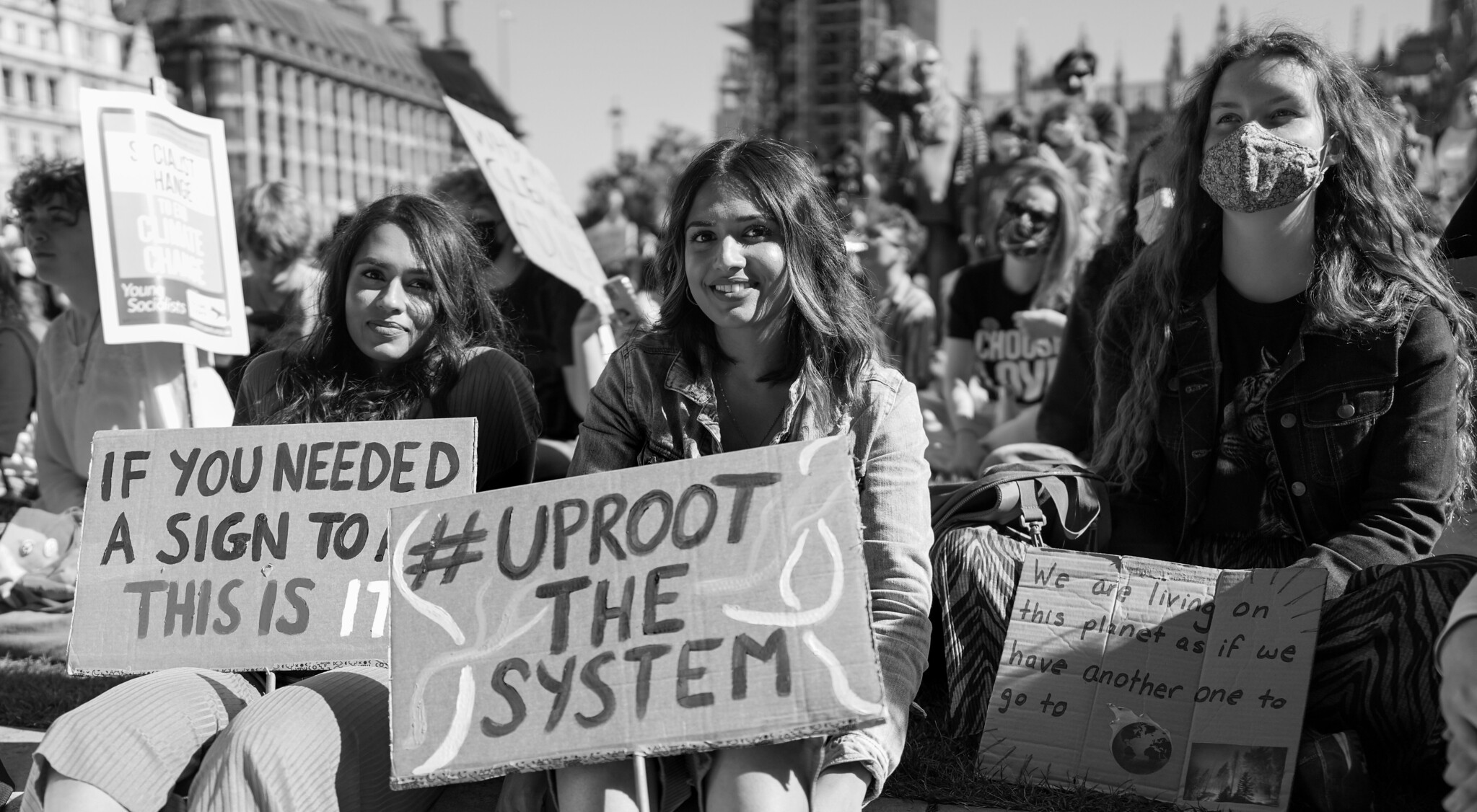
Acting to face the climate emergency in a just way means that we must recognise these patterns and accept that we won’t solve the climate emergency without uprooting the system that reiterates supremacy, exploitation, and climate injustice.
People most affected by climate change – not voiceless, but unheard
MAPA are not voiceless, but unheard. They are actively resisting and if we continue with the logic that we need to help them, we will not get out of the saviorism logic of the white man’s burden. We should not “help” them, but support, stand-aside, give space, and express solidarity.
“If you have come here to help me, you are wasting your time. But if you have come because your liberation is bound up with mine, then let us work together."
There is nothing wrong with being privileged. As those without privilege, nobody chose where to be born. The wrong thing is not to acknowledge it and not use that privilege in a meaningful way.
We are just at the beginning – Join the discussion!
Remember that this post is just a starting point to discuss MAPA issues and representation at the COP26. It summarises what we have read and studied over our years of protesting and raising awareness for climate justice.
Get in touch with us and learn more about and from MAPA:
On 30th September, the court in Locri, Italy, sentenced Domenico “Mimmo” Lucano, the former mayor of Riace, to 13 years and 2 months in prison for “criminal conspiracy to assist illegal immigration, fraud, embezzlement and abuse of office“.
The Prosecutor, who made no secret of the fact that he wanted to set an example with this punishment, had requested a sentence of 7 years. Mimmo Lucano got double that! An extremely heavy sentence, worthy of the worst criminals.
Although there were indeed some administrative errors, which Mimmo Lucano acknowledges, the sentence is disproportionate. It is difficult not to interpret it as a political sanction against someone who showed that another model of receiving migrants was possible in Europe: a model based on humanity, sharing and inclusion, when populists all over Europe compete with hatred and inhumanity.
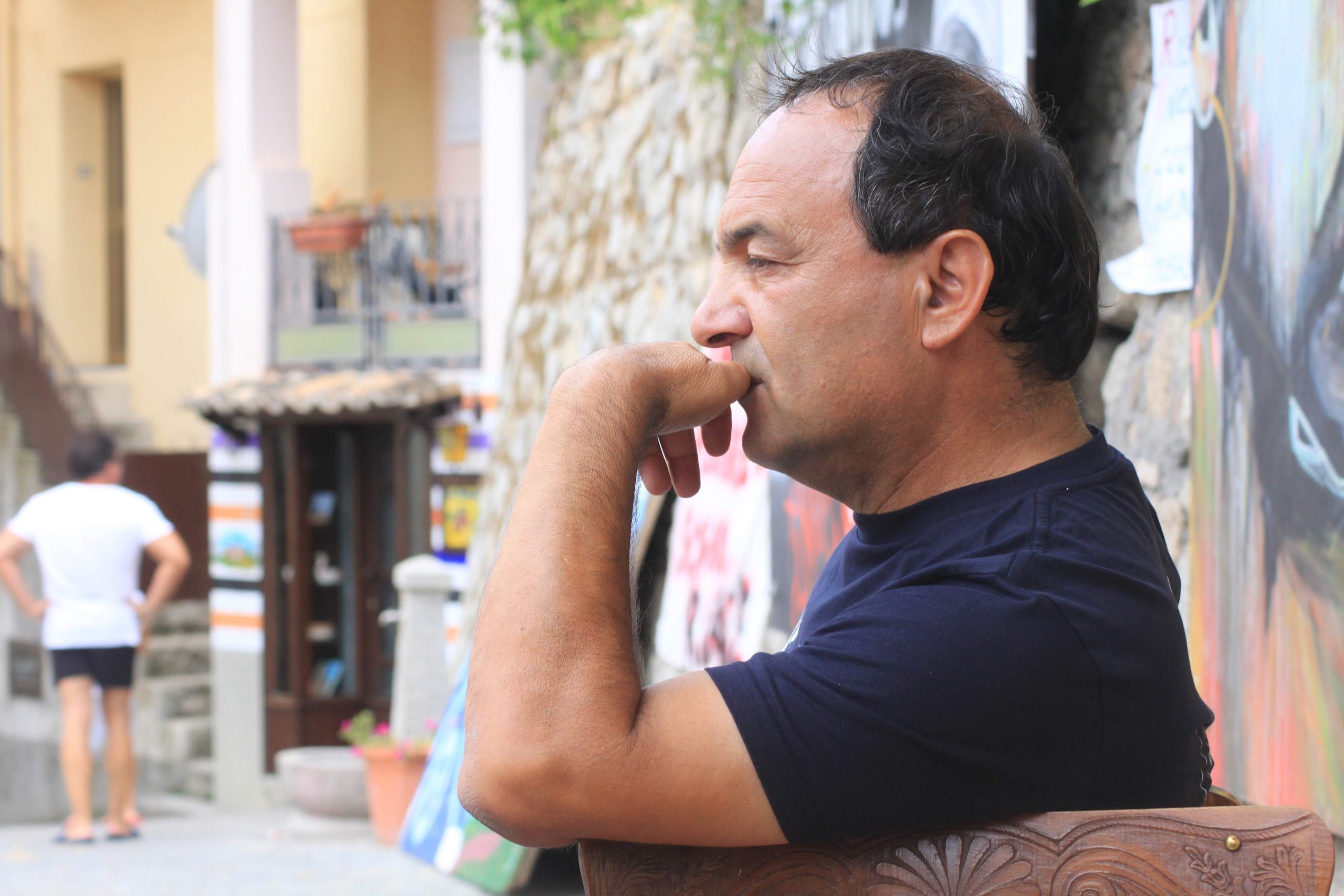
Domenico Lucano (Kualchevolta CC BY-SA 4.0)
It is neither a coincidence nor a mistake that the UN High Commissioner for Refugees has praised the “Riace model”. By welcoming them unconditionally, Mimmo Lucano reminded us that exiles are neither a danger nor a threat, but rather a source of openness, exchange, knowledge and solutions. Riace, a stagnating village, emptied of its population that had left for more prosperous lands, was revitalized by the arrival of these new inhabitants: local craft industry and olive oil production were revived and the school reopened. In the face of the disgraceful and austere living conditions of Europe’s refugee camps, Lucano has offered up an alternative – a welcoming, human and supportive village – with the support of his fellow citizens who have re-elected him twice.
Italy, like other countries in the south of the European Union, is bearing the brunt of the lack of solidarity from other Member States of the European Union, and must assume a significant part of the European refugee reception crisis. By imposing such a heavy sanction on Mimmo Lucano, the Italian justice system is making a thinly veiled trial of citizen solidarity. This is not the way to solve the reception crisis: it is rather by adopting a new European asylum policy as soon as possible, with greater solidarity and fairness. It is up to the European Council to assume its responsibilities.
We, Members of the European Parliament from several EU Member States, who are more than ever committed to a European reception policy based on solidarity and humanity, give our support to Mimmo Lucano. We salute his noble fight for a dignified reception of those seeking refuge.
Mimmo Lucano has dedicated his mandates as mayor to his constituents and to those seeking refuge. Each of his actions, even his administrative mistakes, have been guided only by his desire to welcome with dignity. Showing humanity in an increasingly harsh society should not be a source of punishment.
In Italy, in France and everywhere in the European Union, solidarity must no longer be criminalized. While the European reception crisis is dragging on dramatically, people who have helped and welcomed should no longer be subject to legal proceedings or convictions; local authorities who volunteer to welcome people in vulnerable situations should be able to do so freely and with dignity.
We, the undersigned MEPs, commit ourselves to defending solidarity and to bringing the end of its criminalization to the attention of the European institutions. Like Mimmo Lucano, many Europeans have been or are about to be sentenced for “simply” showing humanity and solidarity: Pierre Mannoni (France), Dragan Umičević (Croatia) Fredrik Önnevall (Sweden), Anouk Van Gestel (Belgium), Seán Binder and Sarah Mardini (Greece).
Le 30 septembre, le tribunal de Locri a condamné en première instance Domenico Lucano, l’ancien maire de Riace, à 13 ans et 2 mois d’emprisonnement pour « association de malfaiteurs visant à aider à l’immigration clandestine, d’escroquerie, de détournement de fonds et d’abus de fonction ».
Le Procureur, qui ne s’est pas caché de vouloir faire de cette sanction un exemple, avait requis 7 ans. Mimmo Lucano a écopé du double ! Une peine extrêmement lourde, digne des pires criminels.
S’il y a bien eu quelques erreurs administratives, que Mimmo Lucano reconnait, la sentence est démesurée. Difficile de ne pas l’interpréter comme une sanction politique contre celui qui a montré qu’un autre modèle de l’accueil était possible en Europe. Un modèle tourné vers la fraternité, l’échange, l’inclusion quand les populistes, partout en Europe, rivalisent de haine et d’inhumanité.
Domenico Lucano (Kualchevolta CC BY-SA 4.0)
Ce n’est ni un hasard ni une erreur si le Haut-Commissariat aux Réfugiés de l’ONU a salué le « modèle de Riace ». En accueillant de manière inconditionnelle, Domenico Lucano a rappelé que les exilés ne sont ni un danger, ni une menace mais qu’ils sont bien au contraire source d’ouverture, d’échanges, de savoirs et porteurs de solutions. Riace, village moribond, vidé de sa population partie vers des contrées plus prospères, a été redynamisé par l’accueil de ces nouveaux habitants : relance de l’artisanat local et de la production d’huile d’olives, réouverture de l’école. Aux conditions d’accueil parfois indignes et austères des camps, Lucano a opposé un village accueillant, humain et solidaire, soutenu par ses concitoyens qui l’ont réélu à 2 reprises.
L’Italie, comme d’autres pays du sud de l’Union européenne, subit de plein fouet le manque de solidarité des autres états membres de l’Union européenne, et doit assumer une part importante de la crise européenne de l’accueil. Mais en infligeant une sanction aussi lourde à Domenico Lucano, elle fait le procès à peine voilé de la solidarité citoyenne quand elle devrait bien plutôt élever la voix auprès de ses homologues au Conseil.
Nous, députés au Parlement européens issus de plusieurs Etats membres de l’UE, attachés plus que jamais à une politique européenne d’accueil solidaire et humaine, apportons notre soutien à Mimmo Lucano. Nous saluons son noble combat pour un accueil digne des chercheurs de refuge.
Domenico Lucano a voué ses mandats de maire à ses administrés et aux chercheurs de refuge. Chacune de ses actions, et même ses erreurs administratives, n’ont été guidées que par sa volonté d’accueillir dignement. Faire preuve d’humanité dans une société toujours plus dure ne devrait pas être source de sanctions.
En Italie, en France et ailleurs, la solidarité ne doit plus être criminalisée. Alors que la crise européenne de l’accueil s’éternise dramatiquement, les personnes ayant aidé et accueilli ne devraient plus faire l’objet de poursuites judiciaires, ni de condamnations ; les collectivités territoriales qui se portent volontaires devraient pouvoir accueillir librement et dignement les personnes en situation de vulnérabilité.
Nous, députés européens, nous engageons à défendre la solidarité et à porter auprès des institutions européennes la fin de sa criminalisation. Comme Mimmo Lucano, de nombreux·ses européen·ne·s ont été ou sont sur le point d’être condamné·e·s pour avoir « simplement » fait preuve d’humanité et de solidarité : Pierre Mannoni (France), Dragan Umičević (Croatie) Fredrik Önnevall (Suède), Anouk Van Gestel (Belgique), Seán Binder et Sarah Mardini (Grèce).
Cette situation est inacceptable et nous lutterons à leurs côtés pour que la solidarité ne soit plus considérée comme un crime. Nous réclamons pour cela, la modification rapide de la Directive 2002/90/CE afin qu’elle rende obligatoire l’exemption de condamnation pour les hommes et les femmes solidaires.
CAREME Damien Greens/EFA Francia
ALEMANNI Francesco Europa Verde Italia
ALFONSI François Greens/EFA Francia
AUBRY Manon The Left group Francia
BARRENA Pernando The Left group Spagna
BARTOLO Pietro S&D Italia
BITEAU Benoit Greens/EFA Francia
BJÖRK Malin The Left group Svezia
BLOSS Michael Greens/EFA Germania
BOATO Marco Europa Verde Italia
BOCCOLI Luca Europa Verde Italia
BOESELAGER Damian Greens/EFA Germania
BONELLI Angelo Europa Verde Italia
BRICMONT Saskia Greens/EFA Belgio
CHAIBI Leila The Left group Francia
CORMAND David Greens/EFA Francia
CORRAO Ignacio Greens/EFA Italia
CUCCHIARA Francesca Europa Verde Italia
DALUNDE Jakop Greens/EFA Svezia
DALY Clare The Left group Irlanda
D’AMATO Rosa Greens/EFA Italia
DELBOS-CORFIELD Gwendoline Greens/EFA Francia
DELLI Karima Greens/EFA Francia
DEVESA Ruiz S&D Spagna
DURAND Pascal RENEW Francia
ERNST Cornelia The Left group Germania
EVI Eleonora Greens/EFA Italia Coportavoce nazionale di Europa Verde
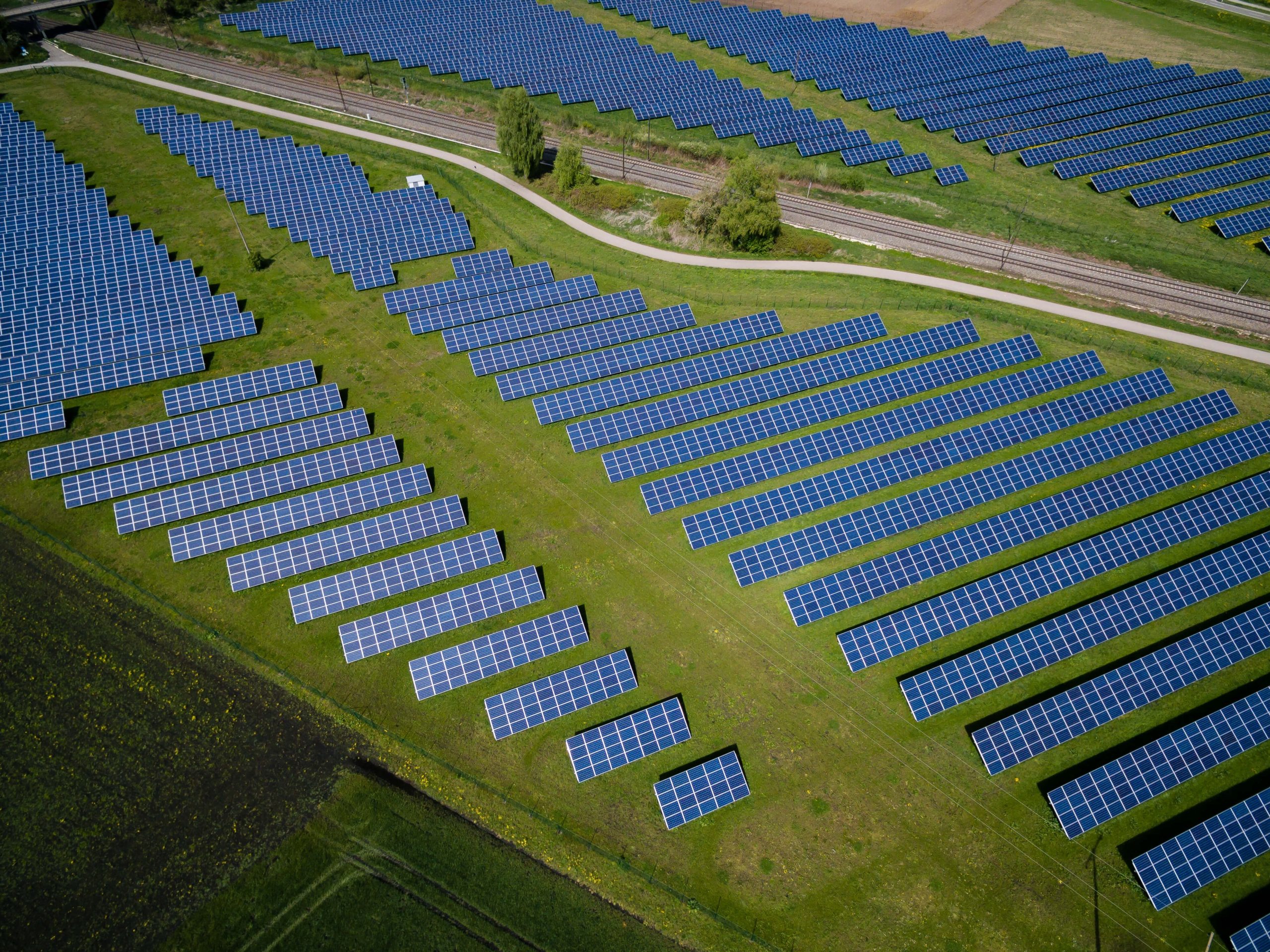
Renewable energy sources create jobs and economic activity covering a much wider area than conventional energy industries. With clever regional policy, we can maximise the positive impact and create a just transition that serves local communities instead of big business.
Posted by Greens/EFA MEP Niklas Nienass
Within the next few years, the European Union will see a substantial acceleration in renewable energy projects being deployed. A large-scale implementation of wind turbines, solar panels and other technologies is not only crucial to meet the climate targets of the Paris Agreement and the European Climate Law, but can also spark a variety of positive impacts on people’s lives. Research shows that a growing renewable energy sector — empowered by policy programmes such as the European Green Deal — will create jobs, increase GDP and raise household income on a global scale.
However, while climate change is definitely a topic of global concern, when we talk about how renewables and the energy transition will benefit people, we need to think on a much more local level. Renewables create employment and economic activity in a more geographically dispersed way than conventional energy industries. Think of a single gigantic power plant versus a multitude of wind turbines!
The local impact of renewable energy projects
We should not underestimate the profound social, economic and political implications of a deconcentrated energy sector. A recent study,commissioned by the Greens/EFA Group, shows that the socio-economic impact of renewable energy projects can indeed look very different whether you live in the Severozápad region of Czech Republic or Spain’s Castile and Leon.
In the former, 10,000 jobs in the coal industry today will be compensated by only an estimated 2,300 future jobs in the renewable sector. One of the main reasons being low national interest in stimulating green growth. However, Castile and Leon is the region with the highest potential for job creation among the coal transition regions in the EU. Although it has lost jobs through the closure of coal mines as well as nuclear and coal power plants in recent years, researchers estimate a net improvement of socio-economic conditions as a result of the energy transition. More than 21,000 jobs could be created, most of them in the wind energy sector.
The study compares five different EU regions, and finds that, despite many differences, the socio-economic impacts of renewable energies are generally positive. However, the study is very clear that the full socio-economic potential can only be realised if flanked by adequate policy measures. Mere technology is not enough, and the study states:
“Based on the regulatory signal given by the European Climate Law and the rapidly falling costs of renewable energy sources, the EU energy transition is now inevitable and irreversible, but the extent to which it achieves socio-economic benefits for local communities is not.”
Power to the regions – why a just transition has to happen locally
In other words, we’re standing in front of the next big challenge for a just transition. In over 30 years of political action, we have always addressed where our energy comes from. It’s clear that we also need to address the question of where the profits go. After resources, we need to talk about revenues. And we need to ensure that they land in the hands of the people — and not some offshore accounts of Big Corp.
For both challenges — regional disparities, as well as power asymmetries between local communities and big business — there is a simple and yet powerful solution. For a just transition, we need to empower local people. Beginning with active participation in planning processes and expanding to local ownership models.
Participation in the planning process goes far beyond those corporate info events that very rarely offer anything but a caricature of democratic discourse. For example, the study stresses that local stakeholders such as landowners often “have much less knowledge of regulations, the business environment and production data” leading to “relatively low levels of income even when there are benefit sharing arrangements”. Fostering participation means first and foremost establishing a level playing field for developers and local stakeholders.
Including regional and local stakeholders brings its own challenges. Communities typically lack access to capital, professional advice and strategic services. Depending on the governance structure of the country, regional and local governments may have a very important role to play in the deployment of renewable energy, but their priorities and capacities may not be aligned with national policy. Thus, the study finds, national planning often tends to favour corporate and institutional developments.
The EU must encourage regional policy for renewable energy – here is how
In this dynamic, the European Union can be the partner of regional and local structures. The EU can bring together different regions and involve them directly in decarbonisation strategies. On the ground, EU funding can be a powerful tool to enable regional groups and local people to realise projects on their own. Even today, with structural and investment funds such as the European Regional Development Fund, renewable energy projects are created with local ownership. In the past funding period (2014-2020), an additional capacity of renewable energy production of over 2 megawatts was implemented, and projects for over 7 megawatts were planned. That’s the capacity of seven standard nuclear power plants.
For the new funding period, we have achieved a strengthening of so-called Community-led Local Development (CLLD). Projects including local stakeholders with bottom-up approaches can now receive up to 10% more funding. Renewable energy projects using CLLD could be a major asset for a just transition.
Enabling regional and local stakeholders by giving them access to training, capital and participatory ownership models will help maximise the immense socio-economic potential of renewables. Let’s help foster a just transition with clever regional policy!
Posted by Greens/EFA MEP Bas Eickhout, official delegate to the COP26 in Glasgow
For our daily report live from COP in Glasgow click here.
This summer, fires, floods and heatwaves raged across the continents when the IPCC presented their long awaited climate report. If our worldwide annual emissions stay at the current level, the researchers conclude, our carbon budget – the amount of CO2 we can emit and still keep global temperature rise below 1.5°C – will be gone by the end of this decade. Staying below 1.5°C global warming, even eying it, will require a rapid and massive cut in our carbon emissions. There is no time to waste. The coming years will be pivotal in halting the worst effects of the climate emergency and living up to the Paris Climate Agreement.
Unfortunately, the ambitious IPCC scenarios are still far from reality. For a long time now, we’ve known what needs to be done, but according to Climate Action Tracker, policies currently in place around the world are projected to result in about 2.9°C warming. This shows that higher pledges – the core of the Paris Agreement – though crucial, will not be enough.This year’s COP26 needs to be about immediate action. Because every year counts.
IPCC 2021 Report main findings
It is undeniable that climate change was caused by humanity
Many changes in the climate due to greenhouse gas emissions are irreversible
Many changes in the climate system are exacerbated by global warming
If we do not decrease our emissions, it will be very likely that global temperatures rise by 3.3°C to 5.7°C
In the months before it hosts the COP26, the United Kingdom has been building coalitions of the willing to spur immediate action in four pillars, dubbed “cash, cars, coal and trees”. The use of coal and petrol cars cannot end soon enough, of course, but there is a great need for more attention to the first: cash. So, let us talk about finance.
Financial flows will make or break a green future – Here is why
Recently, we have seen new announcements from the EU and US, increasing their international climate finance. COP26 could be the moment when we finally live up to the pledge by developed countries to provide an annual 100 billion USD to developing countries to spur climate action on mitigation and adaptation. This, however, is only a small part of the finance agenda we need to be discussing in Glasgow. Paris Agreement article 2.1(c) is clear: we have to ‘mak[e] finance flows consistent with a pathway towards low greenhouse gas emissions and climate-resilient development’.
The 1.5°C carbon budget has massive implications for financial flows and assets of fossil fuel infrastructure and reserves. The exploration and development of new oil and gas fields has to stop today to stay in line with climate goals. In fact, a 1.5°C threshold would mean that energy producers would have to write off over 80% of their fossil fuel reserves as stranded. Not counting on large-scale carbon capture and negative emissions means not only coal and oil, but also global gas use needs to decline rapidly (down 25% by 2030 compared to 2010 levels, according to the IPCC scenario). In the EU, gas consumption needs to fall even faster.
Yet, since the Paris Agreement was signed, fossil finance has only grown. Between 2016 and 2020, the world’s 60 largest banks poured USD 3.8 trillion into fossil fuels. It’s not just the private sector, either. Public money has continued to flow to fossil fuels. Even after vowing to phase-out fossil subsidies, G20 members still provide at least three times as much international public finance for fossil fuels (USD 77 billion) as for clean energy (USD 28 billion) every year. This has to stop. It is high time that we put our money where our mouth is.
Taking the Paris Agreement seriously means immediately stopping public and private finance for fossil fuel activities. Every cent spent on fossil fuel infrastructure hinders the transition towards a climate neutral economy and carries a major risk of becoming a stranded asset in the near future.
To end fossil fuel finance, the EU must lead the way
Even against this stark reality, there is hope. There is a building momentum to put the issue of sustainable finance high on the agenda for the COP26 in November. The phase-out of coal (subsidies) is gaining traction. President Xi has declared an end to Chinese support for new coal power abroad. The UK has announced an end to direct government support for the fossil fuel energy sector overseas. Along with the European Investment Bank, the UK is inviting other governments and organisations to join them in alighting international finance with the Paris Agreement.
Where these organisations lead, the EU and its member states should follow suit. In January, EU foreign ministers stated that they would “discourage all further investments into fossil fuel based energy infrastructure projects in third countries, unless they are fully consistent with an ambitious, clearly defined pathway towards climate neutrality”. The COP26 is the perfect moment to do more than talk. The EU must also act as a climate leader.
The EU, however, cannot be a serious international partner in combating climate change as long as its own financial sector and public finance is fuelling our climate crisis. According to the European Commission, in 2018, EU countries still provided a staggering 50 billion EUR of fossil subsidies. Recent decisions on European energy funds like TEN-E are stoking the fire even more.
Private financing of gas is also far from over in Europe. Fossil fuel financing by the 16 largest banks in the EU has been increasing each year since 2017. The intention of the Commission to label natural gas as sustainable in the Taxonomy Regulation is not at all consistent with the Paris Agreement. It would be detrimental to the EU’s credibility during COP 26 for the EU to be engaging in greenwashing on such a massive scale.
Instead, initiatives like the Taxonomy Regulation should provide the basis for a much-needed shift towards sustainable finance. According to a McKinsey study, a net-zero EU would require investing an estimated 28 trillion EUR in clean technologies and techniques over the next 30 years. Most of these investments would come from shifting finance away from fossil technologies.
Action before and at the COP26 climate summit is therefore crucial. Glasgow needs to be the moment that marks the end to fossil fuel investments – both public and private. We therefore call on the European Commission and EU member states to show leadership and declare an end to fossil fuel finance, and translate it into binding legislation, such as the EU Taxonomy.
Let’s clean up finance in Glasgow!
For our daily report live from COP in Glasgow click here.
Posted by climate activists and Greens/EFA MEPs. Get the latest updates live from Glasgow.
SUNDAY 14 November
COP26 has failed to save us from climate disaster – why we’re walking out
Hedvig Sveistrup, Greens/EFA Climate Campaigner
Dramatic end to COP26 in Glasgow
On the very last day of COP26, there was tension in the air and everyone in the room looked like they desperately needed some sleep. Not least those who had spent days and nights negotiating to achieve the best possible solution for their country and people.
Around 19:45 on Saturday evening, the President of COP26, Alok Sharma, tearfully announced the adoption of the Glasgow Climate Pact. But not until a last minute amendment from India had reluctantly been adopted by the 197 parties in the enormous plenary hall.
John Kerry, the delegate of the United States proclaimed that all parties should be “equally uncomfortable”. The Global North seemed to be unhappy due to India’s watering down of the mitigation efforts – they wanted a phase-out of coal and subsidies for fossil fuels, while India had the wording changed into a phase-down of unabated coal power and phase-out of inefficient fossil fuel subsidies.
People power ✊
Hundreds of #COP26 delegates walked out of the UN climate summit today.
Hundreds of people united to demand #ClimateJusticeNOW and more ambition. It’s time to keep 1.5 alive!
Expectations were perhaps unrealistically high for this COP. Indeed, it is the first time that fossil fuels and coal are even mentioned in a final text. That is a huge milestone, albeit an insufficient one.
It is clear that we are nowhere near on track to a global emission reduction of 45% by 2030, but rather an additional 13,7% emission. But parties have agreed to resubmit their climate mitigation plans (the so-called Nationally Determined Contributions, or NDCs) before next year’s COP27 in Sharm El-Sheikh, Egypt to raise their ambitions.
Meanwhile, the Global South expressed their frustration with the lack of progress on financial support for the inevitable Losses and Damages to their people as a consequence of the changing global climate. For developing countries, financial support for adapting to climate change is a crucial issue, and the need is estimated to be in the trillions. Still, developed countries pledged only 313 million Euro to the Adaptation Fund. The Glasgow Pact urges developed countries to at least double their collective provision of climate finance for adaptation from 2019 by 2025. An agreement on a climate adaptation goal is to be agreed upon next year under Egyptian presidency. Since Egypt is part of the coalition of developing countries (G77+China), this would be expected to be high on the agenda of COP27.
After COP26 – Looking ahead to COP27 in Sharm El-Sheikh, Egypt
Each year, the importance of the climate crisis is becoming ever more apparent, and the output of negotiations do reflect this. The outcome of this year’s conference is no exception: it proves higher ambition, but far from enough.
We know that time is running out. Even if we halt the emissions now, the global climate system will continue to change for centuries. That is a scientific fact. But it is a political choice that the most vulnerable peoples and areas will pay the highest price.
The Greens/EFA will continue to fight for fairer and stronger outcomes of the global climate meetings. Until then, follow our work in the EU on our social channels.
See you at COP27!
FRIDAY 12 November
COP26 has failed to save us from climate disaster – why we’re walking out
Martina Comparelli and Marco Pitò, Climate Justice Activists at Fridays for Future
As climate activists, we’re always inventing new and creative actions. We want to create beautiful and straightforward visual moments that catch the attention of those passing by and deliver our message instantaneously. And, of course, we also aim to attract the press. We’re sure you have already heard the names of several different kinds of action, such as strikes, sit-ins, die-ins, lock-ons, banner drops, vigils, and so on.
But, for the last day of the COP26, as the so-called “world leaders” are running out of excuses and the world is running out of time, we will make our protest clear by “running out”. Literally.
On the supposed last day of negotiations, we won’t be expressing our dissent through giant props or creative street theatre. We will simply walk out of the COP26 venue.
We will walk out of that festival of greenwashing, exclusion and greed.
We will walk out because science is not being taken seriously inside.
We will walk out because failing to limit global warming to 1.5°C is a crime against humanity.
We will walk out because at COP26 there are two fossil fuel representatives for each representative from indigenous populations.
We will walk out in solidarity with the most affected people because their voices remain unheard.
We will walk out because staying inside would mean endorsing all of this.
One day, we will tell our children that we tried our best to be collaborative, but after twenty-six COPs with no solution to the climate crisis, we walked out.
Are COP26 negotiations finally reaching a turning point for global climate policies?
Martina Comparelli and Marco Pitò, Climate Justice Activists at Fridays for Future
Yesterday, COP26 felt like a rollercoaster. As new information popped up, the mood of negotiators, press and civil society observers changed.
At 05.51AM, the first draft of the final COP26 resolution was published. It was so bad that civil society and some news outlets renamed it ‘FLOP26’. Others tried to find a silver lining, noticing that for the first time the text used the term ‘fossil fuels’ and that the importance of limiting global temperature rise to 1.5°C was reaffirmed.However, delegates negotiate on every single word and comma on these documents. The lack of strong verbs is evidence of how cautious, or better, unambitious this COP26 resolution is.
Will the US-China COP26 deal pave the way to international climate ambition?
Suddenly, China and the USA called a press conference, revealing a new joint US-China declaration to address the climate crisis together. This was a turning point. Although predictably mild and vague, this moment may nonetheless set a new direction for the world of international relations. Will it spark a little trust from climate activists, who seem to have lost their faith in multilateralism?
We are sceptical. Firstly, declarations are no longer enough. Actually, they never have been. They can’t be – not when we are discussing an existential crisis. Secondly, does this agreement mean that the world’s two superpowers will finally treat the climate crisis as a crisis? Or, will they use it as a way to continue business as usual, with the only difference being that they are now friendlier with each other?
And, what about climate justice?
A journalist at the joint press conference asked John Kerry, United States Special Presidential Envoy for Climate, how the US-China deal would impact human rights. He answered that we are in a climate emergency. As though that justifies leaving millions of the world’s most vulnerable people behind. If Mr Kerry approached the climate crisis from a climate justice perspective, he would see that this is a false juxtaposition. Climate change is not just an environmental issue. It is an issue of fundamental human rights.
Without this lens, it is too easy for world leaders to make climate choices that destroy the lives and livelihoods of indigenous people and those in the Global South. This is the biggest problem of COP26 and, generally, of multilateral climate policies.
This year’s COP26 Green Family breakfast took place on 10th November in Glasgow. Greens/EFA MEPs came together with Green Ministers and Members of Parliaments from all over Europe and beyond. Thomas Waitz MEP tells us why more Green representation is the best way to stop climate change.
It has become a tradition for Green decision-makers and partners to come together for a breakfast during the annual UN Climate Conference. These events mark an important moment for global climate action. Climate policy put forward by the majority of EU and non-EU states is completely insufficient to tackle the climate crisis and ensure a just transition to a greener world.
But, it is no surprise that countries with Greens in Government are taking the lead and showing real climate ambition.
Never mind COP26, Greens are raising climate ambition all over Europe
Just this week, the Minister for Climate Action, Eamon Ryan – from the Irish Green Party – presented a Climate Action Plan for Ireland that proposes changes in climate policy at a scale beyond compare. Right now, the German Greens are playing a key role in negotiating the most ambitious German government coalition agreement to date.
Our civil society partners, Climate Action Network (CAN) Europe, joined us for the breakfast. Their director, Chiara Martinelli, commented “There is a clear role for the Greens to ensure that the energy and concerns from the climate activists on the streets are brought into the negotiations. You are now at key places to build bridges and show European leadership.”
That is a strong message and we could not agree more.
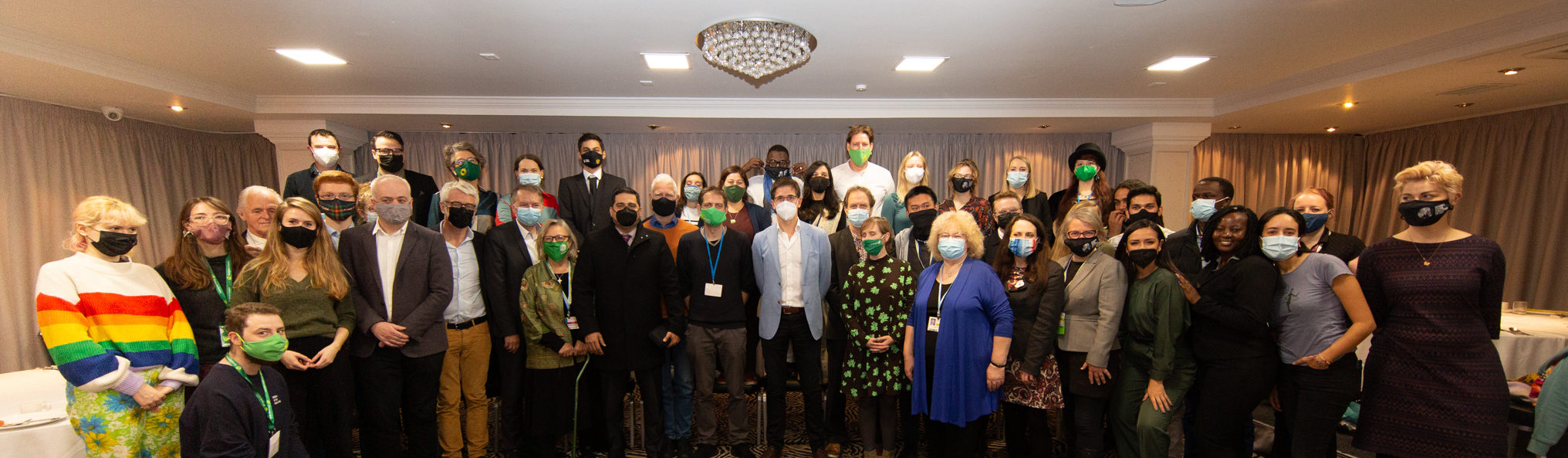
Greens from all over Europe at the Green breakfast at COP26 in Glasgow, November 10th 2021
In the final days of COP26, Greens are holding world leaders to account
In this last stretch of the COP26 negotiations, it will be the Greens keeping up the pressure to deliver on global climate promises.
We need an increase in ambition across the board – on green finance and on the climate targets for 2030. We need to keep global temperature rise below 1.5°C. We need enforceable commitments to tackling the climate crisis. Fossil fuels must be phased out entirely – not just coal or subsidies.
At COP26, there is no time to waste.
WEDNESDAY 10 November
A day as a climate activist inside the COP26
Martina Comparelli and Marco Pitò, Climate Justice Activists at Fridays for Future
In the months preceding the COP, everybody was desperately looking for accreditation to get inside. We were lucky enough to receive two badges as civil society observers. Unfortunately, this doesn’t mean that we are now getting essential insights on the climate negotiations. As usual, the most important decisions happen behind closed doors.
So, what does a day as a climate activist look like?
Yesterday, before we entered the COP venue, we joined Extinction Rebellion activists who were dancing to folk music outside the conference. This action has a precise and logical purpose: moving and dancing helps us activists to process the complex emotions caused by our governments’ inactions. It helps us deal with our feelings of frustration, anxiety and grief over the climate and ecological breakdown. It also helps us to feel part of a community of resistance and strengthens the connections between climate activists across the world. Some activists also brought free plant-based food based on the principle of “take what you need, give what you can”. Food in the COP is only 40% vegan and is simply unaffordable.
On the other hand, inside the COP, it was much darker and confusing. We got lost. The frantic rhythm, very different from the one outside, discouraged us for a moment. The official events felt like smoke and mirrors, with a lot going on but nothing really happening.
For COP26, climate activists cannot afford the luxury of losing heart
We try to get our voices heard through advocacy and a little disruption. In the morning, we joined urgent actions about Syrian girls and Afghani Fridays For Future activists that are trying to escape their countries. Around lunchtime, we wrote a letter to the Italian delegation to the COP urging them to join the Beyond Oil and Gas Alliance (BOGA), an initiative to phase out fossil fuel subsidies.
COP26 is not simply a conference: it’s a huge hive. Lobbyists and delegates rush from one event to another and it’s easy to get lost in the chaos. But the buzz we are creating, the activists dancing outside, seems much more organized. We are more ready to face the existential crisis we are diving into than the world leaders inside. We learned once again that change will and has to come from the people.
Commission propose more fossil fuel funding, right in the middle of COP26
As we meet for yet another COP on climate in Glasgow, states must commit to a definitive exit from all fossil fuels. To limit global warming to +1.5°C and protect our future, they must shift away from fossil fuels, including fossil gas, to an energy system based on renewable energies and on the principle of “energy efficiency first”, while ensuring a just transition that protects the most vulnerable.
Unfortunately, this is not the road that the world nor the EU, is taking. On 11th November, the European Commission will unveil a proposal for a list of “priority” energy infrastructures (the list of Projects of Common Interest, PCIs). Although it will benefit from public funds and accelerated procedures, gas projects are still a big part of this list!
This is in stark contradiction with the EU goals and duty to protect the climate and to be a global leader. I will propose instead an alternative list of sustainable and fair projects, 100% renewable, that the EU should rather fund to reach its climate goals.
Phasing out of fossil fuels also means stopping any new projects of exploration and exploitation. This is why I support the initiative for a Fossil Fuel Non Proliferation Treaty and the diplomatic dynamic to cease any production of fossil fuel in the world. We need to recognize ecocide internationally as a large-scale environmental crime so that those who keep on producing fossil fuels will finally be held responsible for the impacts of their actions.
TUESDAY 09 November
Gender and COP26: why the climate summit should be on every feminist’s agenda
Today, for Gender Day at the COP26, we list five goals that all feminists should be keeping their eyes on at the UN climate conference taking place right now.
Former Irish President, Mary Robinson, notoriously said, “Climate change is a manmade problem, that requires a feminist solution.”
The 26th UN Climate Change Conference of the Parties (COP26) is a massively important turning point for the future of gender equality, feminist policy and women’s human rights. Gender justice cannot be sidelined when debating the future of our planet. It’s time for governments and institutions to take note, and put gender equality at the heart of any viable strategies on climate and ecology.
It’s time for a feminist, fierce and fossil free future. Read why.
Gender Day at COP26 – Join our session on gender equality and climate
Gender Day at the COP26 will be held today, Tuesday 9th November, to recognise and celebrate gender equality and the empowerment of women and girls in climate policy and action.
The Greens/EFA Group is proud to organise a session on gender equality at the Green Hub in Glasgow on 9th November. Participants will meet people working to end gender-based violence (GBV) in the European Parliament, learn about the upcoming European GBV Directive proposal, find out what they can do to put pressure on their own MEPs/policy-makers, and build their network by strengthening their voice in the green feminist movement at national and international level.
Help us spread the word on the important link between gender equality and climate by sharing this blog with your network!
COP26 negotiations: is it time to celebrate?
Martina Comparelli and Marco Pitò, Climate Justice Activists at Fridays for Future
If you’ve been reading this daily blog from the beginning, you may think that we are being overly critical and pessimistic about the COP26 negotiations.
If you ask us, we cannot celebrate the fact that current emission reductions pledges may keep global warming at 1.8°C (instead of under 1.5°C) because, frankly, for too many vulnerable countries this is already a death sentence. We cannot celebrate that yesterday millions of euros were promised for loss, damages and adaptation to climate change when estimates say we need billions if not trillions of dollars to fill the gaps in climate protection created by our lack of action. Overall, we cannot celebrate baby steps, because it is younger generations and those not having a seat at the COP table that will live through the consequences of unambitious climate policies.
We cannot celebrate Obama’s beautiful yet hypocritical speech. “You are right to be frustrated”, he said. “Mr Obama, I was 13 when you promised $100B #ClimateFinance. The US has broken that promise, it will cost lives in Africa.”, rebuked Ugandan activist Vanessa Nakate in a tweet.
In the venue of the conference, Vanessa Nakate took part in an action with Keivn Mtai from Kenya, Mitzi Tan from the Philippines and other MAPA activists, holding up signs that said, “Show us the money”.
Youth activists @FFFMAPA welcome President @BarackObama to #COP26 — calling on USA to help deliver the $100bn in climate financing rich nations promised. “Obama promised $100bn in 2009. In 2009 I was 7, now I’m 19 & nothing has been done!” – Raeesah Noor-Mahomed, South Africa. pic.twitter.com/HWA0rgqigL
Martina Comparelli and Marco Pitò, Climate Justice Activists at Fridays for Future
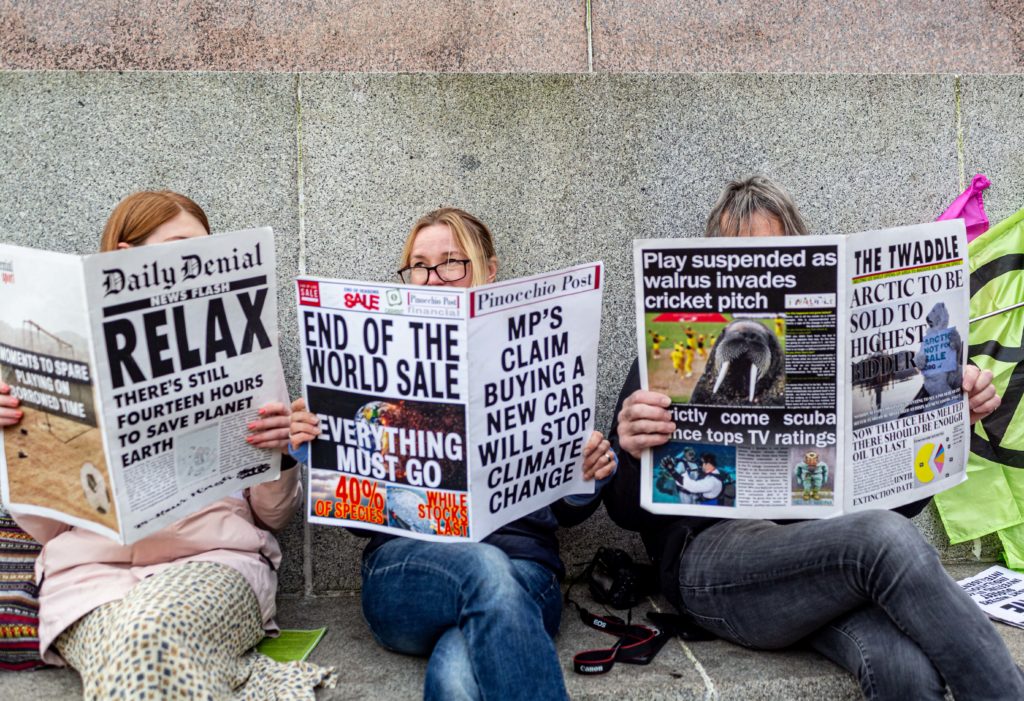
Despite all the failures and broken agreements of previous COPs, the media keep publishing triumphalist headlines. We decided to put ourselves in their shoes and propose some alternative headlines.
“Heads of State finally reach agreement on climate: in Glasgow, it sucks!“
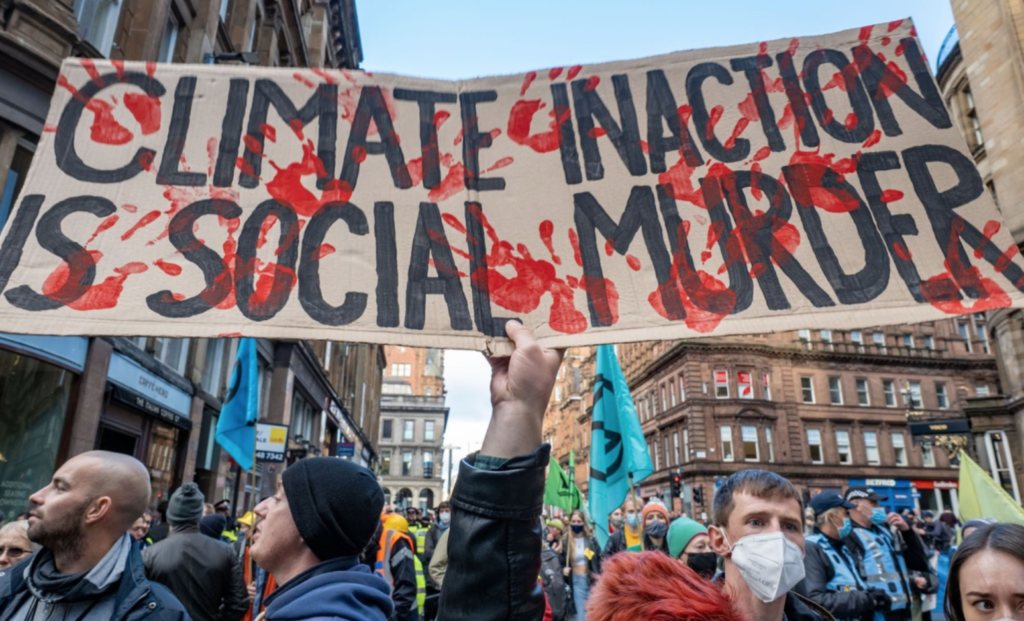
It’s one of the few times we can agree with the so-called “world leaders”. On Saturday, while we were marching with hundreds of thousands of people demanding climate justice and reparation, the rain was hitting hard and the cold was entering our bones. The weather wanted to introduce us to the Scottish climate! Nonetheless, we kept marching, chanting and dancing for hours. The sense of togetherness and liberation that we felt in taking part in that march is indescribable.
“Heads of State agree on climate goal “Net Doomed by 2050”“
This advertisement tells us about a climate agreement that is actually being respected! Find more about watching this informative video.
“Inspired by climate goals, man announces he will quit drinking by 2050“
“A Sydney man has set an ambitious target to phase out his alcohol consumption within the next 29 years, as part of an impressive plan to improve his health […] He has assured friends it will not affect his drinking plans in the short or medium term.” Read more on The Shovel.
The mainstream media are selling the idea that governments are properly facing the climate crisis during COP26. A closer look reveals that this is not the case. These proclamations de-mobilize people who may not recognise the loopholes in the headlines.
Some inventive activists shed light on the media problem using the power of irony and absurdity:
Martina Comparelli and Marco Pitò, Climate Justice Activists at Fridays for Future
“Listen Marco, don’t worry, don’t you see that world leaders have reached many agreements in those days?”; “Why are you so stressed Martina? Relax, you can trust us”. This is what we are repeatedly told by adults and politicians with a patronizing tone.
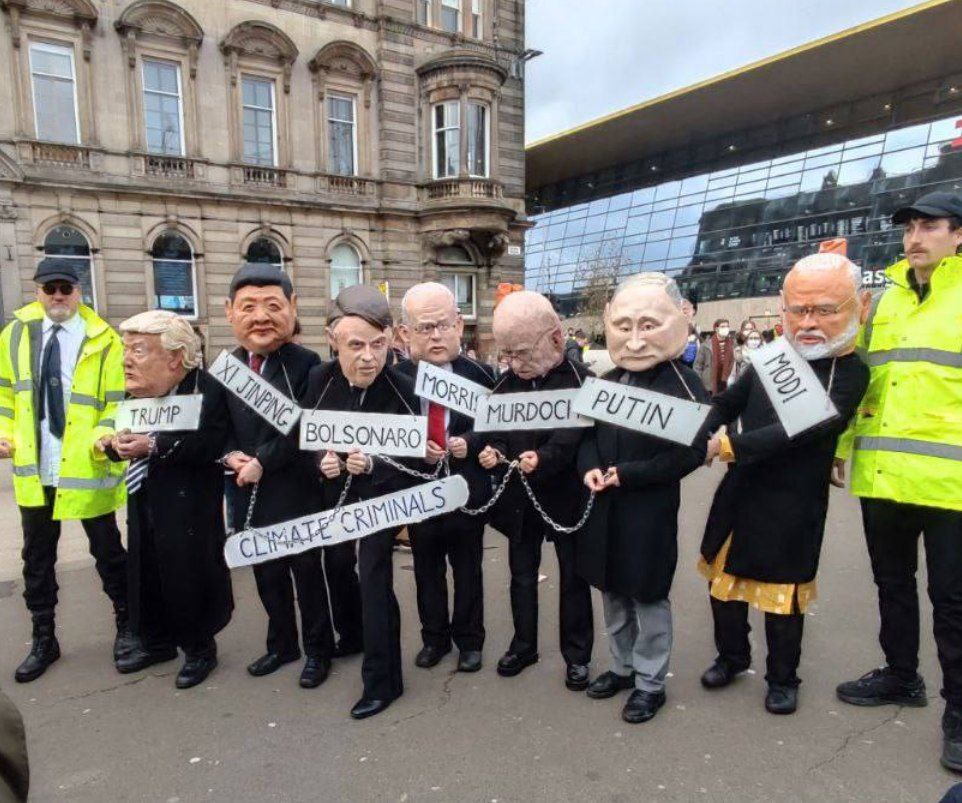
Climate Criminals arrested. Credits: Giorgio Brizio
Yes, diplomats and politicians reached some agreements at COP26. But how is the world going to be in a few decades if we keep going at this slow pace? And, beyond the grandiose tones of the agreements signed so far at COP26, what did the so-called “world leaders” really achieve so far?
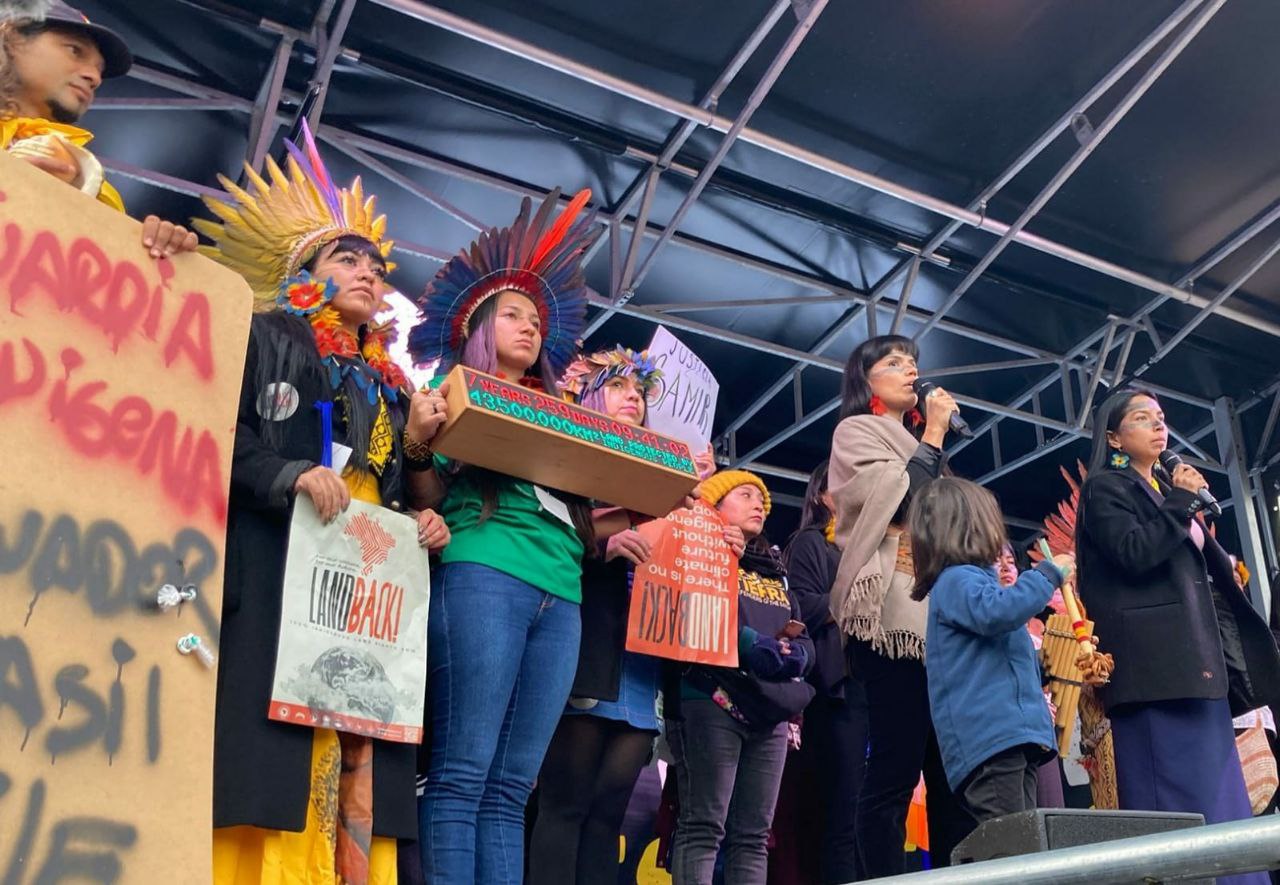
Indigenous people bringing their stories to Glasgow. Credits: Chris Duffy
One of the agreements that hit the headlines was on halting and reversing deforestation by 2030. Great news, right? Well, this is the third time that they shake hands on it, but no actions followed the pledges. The agreement also includes Brazil, led by the ecocidal government of Bolsonaro. To those adults that invite us look at the “bright side”, we answer with the words of the indigeneous people who spoke the truth about Bolsonaro at the rally yesterday. Their real-life stories demonstrate that Bolsonaro declared war on nature and its protectors, and has no intention to stop.
Actions speak louder than words. No “global leader” will come to save us, so we will have to do it ourselves. See you again on the streets today at 12:30 CET in Glasgow.
FRIDAY 05 November
Why the youth will skip the Youth and Future Generations Day at COP
Martina Comparelli and Marco Pitò, Climate Justice Activists at Fridays for Future
Today’s COP26 Presidency programme addresses young people and “how to elevate their voices”. But Fridays For Future, and all the young activists that reunited in Glasgow to fight for climate justice, will not be there. In the past three years we put climate at the center of public discussion and international politics. Today we will stay where we truly belong: on the streets.
Since we started the youth climate strike, the so-called “world leaders” have not listened to us, and after years of greenwashing and empty promises we do not expect them to “elevate our voice” either. We will keep doing that by ourselves – marching, demonstrating our power and screaming our demands.
At a rally on Monday, October 1st, Greta Thunberg said “we are the true leaders”. While it may seem like a slogan, it is actually a very logical and realist declaration: leaders are supposed to care about everyone, not about the interests of a rich minority. Leaders are supposed to protect people. Leaders are supposed to be fair. Leaders are supposed to change things when things are deeply wrong.
All those who will join us in the streets today are the leaders of change. The more we are, the more things will change. History teaches us the power of the collective and history will prove us right. This is why the people can be the real leaders. Leadership is about togetherness.
Join us on the streets today, November 5th, starting at 11am at Kelvingrove Park, Glasgow, Scotland.
Day 5 at COP26: As negotiations begin, beware of promising media headlines
by Yan Dupas, Advisor on Climate & Environment
As global leaders left the stage on Tuesday, one would expect COP26 to go back to normal, and focus mostly on negotiating the COP final decisions as well as on finalising the Paris Rulebook. But COP26 isn’t like other COPs, as the UK Presidency has been orchestrating a few multilateral coalitions meant to keep media headlines busy over the 2-week summit.
Yet those statements are non-binding and lack a proper governance & accountability framework to ensure targets are actually met in the future. In most cases, the statements themselves are ambiguous or include strong loopholes that were intended to gather larger support but at the end strongly endanger the credibility of those announcements.
Let’s take just two examples:
Yesterday the media reported that 25 countries (incl. the UK, the US, Canada, and 5 EU countries) agreed to stop financing fossil fuels abroad. Yet when you read carefully the statement, you understand it is limited to ending “newdirect public support for the international unabated fossil fuel energy sector” (every word counts). Moreover it includes an important exception: “except in limited and clearly defined circumstances that are consistent with a 1.5°C warming limit and the goals of the Paris Agreement”. What that sentence means is not clear and will remain unclear as again there is no governance framework or concrete rules that apply to those countries that have signed-up to it.
46 countries also signed the “coal to clean statement”, promising to phase out “unabated coal power generation in the 2030s (or as soon as possible thereafter) for major economies and in the 2040s (or as soon as possible thereafter) globally” (there as well every word counts). This statement – and the reference to 2030s/2040s created a lot of confusion. Only a few hours after the statement was issued, the Polish PM – one of the signatories – clarified that he had no intention to phase out coal before 2049.
This is not to say that those commitments are completely useless. They send the right message on the absolute need to phase out fossil fuels.
But for those commitments to truly deserve highlights, one would need to ensure that they translate into binding laws in those countries. A first step could be to ensure that the final COP26 resolution that should be agreed by the end of next week includes some of those elements, and ensure that countries come back together in one year to assess progress in the implementation of those commitments.
Stay tuned for more daily updates on the COP26 negotiations, live from Glasgow.
THURSDAY 04 November
Day 4 at the COP26: The pathway to global carbon pricing
by Greens/EFA MEP Jakop Dalunde, shadow rapporteur for the EU ETS
The ‘the-polluter-pays-principle’ must be respected. If not, the people who have contributed the least to the emissions will pay the price.
In theory we should introduce a single global carbon price. This is however unlikely to pass in the UN, where decisions are taken with consensus, meaning that all member states must agree. Article 6 in the Paris Agreement aims to establish market mechanisms to enhance climate action through trade with offset credits. These mechanisms are drastically different from emission trading schemes (ETS), both in design and function, and are today far from delivering a real global carbon price.
The pathway to sufficient global carbon pricing is through national and regional carbon taxes, ETS and carbon border adjustment mechanisms (CBAM). CBAM create incentives for countries outside the EU to introduce their own carbon pricing, to not lose revenues to the EU. The EU must therefore increase EU ETS prices and introduce a comprehensive CBAM as soon as possible. Money talks, and just months after the commission presented its CBAM proposal, Russia is considering introducing their own carbon tax.
There are strong synergies between the national, regional and international level. We need bold action on all these to deliver global carbon pricing. It’s a question of climate justice.
COP26: video messages from those already affected by the climate crisis
Numerous typhoons in the Philippines, unpredictable droughts in Uganda and life-threatening floods in Belgium – The climate crisis and its devastating effects are now everywhere and undeniable. But it’s the communities least responsible, that are most affected by climate change. These are just a few stories from the front-line of humanity’s greatest threat. Listen to climate activists Mitzi from the Philippines, Hilda from Uganda and Ben from Belgium.
Why we have to tackle the climate crisis and biodiversity loss simultaneously
by Greens/EFA MEP Ville Niinistö, live from COP26 in Glasgow
Everyone is talking about COP26 these days, and that’s a good thing. The Conference of the Parties of the UN climate convention is a major event in making sure that the whole world follows the 1,5 degree path set in the Paris Agreement. But climate change is not alone at the top of the list for the world’s most pressing problems. And COP26 is not the only COP that we should be aware of.
COP15 is going to be the 15th meeting of the parties of the UN Biodiversity Convention. Due to the COVID crisis, the meeting was first postponed and then split into two separate parts: the first was held remotely this October only shortly before the Glasgow meeting and the second part will be held in Kunming in China in April-May 2022.
This makes the biodiversity crisis and the climate emergency appear as two separate issues, but they are interconnected on very many levels. Until now they have been largely addressed as their own separate areas in both science and policy making.
What I am looking forward to seeing from the COP26 is a stronger understanding and action for measures that tackle both these crises at the same time. Luckily we know there are a lot of solutions that work for both. According to the IPCC and IPBES joint workshop report, some examples of good measures to take are to stop the loss and to restore carbon- and species-rich ecosystems, especially forests, wetlands, peatlands and grasslands. Also increasing sustainable agricultural and forestry practices and cutting off environmentally harmful subsidies helps both climate and nature.
At COP26, more than 100 world leadersreached a deal to end and reverse deforestation by 2030. This is an important step. However, as the previous commitments were not reached, there’s still reason to be alert whether these promises will be delivered. And that applies to the European Union as well: The Commission’s draft proposal to stop EU-driven deforestation has major loopholes. If we want to be a true global leader, we need to make sure our own actions are in line.
WEDNESDAY 03 November
Day 3 at COP26 in Glasgow: All about fossil fool finance
Martina Comparelli and Marco Pitò, Climate Justice Activists at Fridays for Future
On November 3rd, both COP26 and activists in the streets addressed the elephant in the room: climate finance. Or should we say: the lack of it?
The most surprising declaration came from Mark Carney, Chair of the Glasgow Financial Alliance for Net Zero (GFANZ), who stated that banks, investors, and insurers have committed $130 trillions to reach net zero emissions by 2050. However, the Financial Times wrote that the number lacks credibility. Last year private climate finance promised to invest $340 billion to save the climate per year, which is approximately 0.003% of what Carney declared. But again, bombastic promises at COP26 may end up being empty and, in this case, ridiculously fake too.
In the meantime, 20 nations are pledging to stop financing fossil fuels projects. Among the signatories, the pledge of the USA is maybe the most surprising. What’s not so surprising is that the pact is yet again non-binding. How can we believe action will follow words when all the past pledges weren’t followed?
Nevertheless, the news coming from inside the COP venue seems not to be influencing the energy on the streets. Thousands have been marching all day long with banners and large props, including a giant skeleton puppet demanding climate action. At the same time, at the COP, Greta Thunberg and Greenpeace interrupted the greenwashing by Shell, BP and other banks on stage, criticising the carbon offsetting panel.
Photo Credit: William Josha Templeton
Please join us on the streets in Glasgow! The next march will be on Thursday, November 5 and starts at 11am at Kelvingrove Park.
Why the EU is having a problem in Glasgow: fossil subsidies. And some countries like France even want more of it. This is what matters, not the speeches. https://t.co/50BmEkYO0E
Martina Comparelli and Marco Pitò, Climate Justice Activists at Fridays for Future
The Conference of the Parties (COP) has started this week. Within the first two days (1st and 2nd of November 2021) we have listened to a sequence of speeches by Heads of States from all across the globe. The COP26 presidency called it the ‘World Leader’s Summit’ but we activists prefer to call it what it is: the epitome of ‘bla bla bla’. The leaders looked like bored actors repeating the same old script over and over again.
With a lot of words, the politicians tried to make up for the lack of action by acknowledging the the incumbent climate breakdown in their declarations. In his welcoming speech, the British Prime Minister, Boris Johnson stated that “unlike James Bond movies,the doomsday device is real”. Mario Draghi, the Italian Prime Minister and co-host, said that “the climate crisis is already hitting and it contributes to terrorism, global insecurity and war”. But words are far from enough: none of the countries in the Global North has an emission reduction plan that respects the Paris Agreement.
More genuine and impactful in contrast to Johnson and Draghi, were the speeches by leaders and activists from the Most Affected People & Areas. Brianna Fruean, activist from the Pacific, powerfully stated: “We are not drowning, we are fighting“.
COP26 People’s Advocate Sir David Attenborough summarised the hope of millions of climate activists around the world: “If working apart, we are a force powerful enough to destabilise our planet. Surely working together, we are powerful enough to save it”.
Follow our daily updates from the COP26 as we see if the ‘bla bla bla’ can turn into concrete action!
TUESDAY 02 November
Outside of the COP26 negotiations activists started filling the streets with all their rage, love and creativity.
Credits: Luisa Neubauer
A march organised by Extinction Rebellion was happening in the vicinity of the COP venue. When the police blocked it, they created the perfect stage for a photo opportunity.
Credits Ranierifilm / Latest TV Brighton
The UN Climate Conference #COP26 starts today in #Glasgow!🌍
We must: 🌡️keep temperature rise below 1.5°C 🌏have the most affected at the center of the fight ⛽️make big polluters take responsibility 💸stop pouring money into fossil fuels
I love trains. Give me night trains, day trains, slow trains, fast trains.
That’s why I took the Climate Train to COP26 in Glasgow last Saturday from Brussels. The train was a special Eurostar that set off from Amsterdam at sunrise and ended in Glasgow Central Station as the sun went down. We passed through rain showers and there were glimpses of sunshine as we headed down through France under the English Channel and then sped northwards through England past the Scottish Border.
Each carriage on our train had a theme and en route we discussed the future of rail travel, climate mitigation, and fair and sustainable transport for all. The conversation was lively, and we felt we were solving the problems of the world. Certainly investment in rail travel as an alternative to short-haul flights is part of that future, as the Year of Rail draws to a close.
By the time we arrived in Glasgow the stage was set for the two-weeks of climate talks, kicking off with the opening ceremony on Sunday, and followed by a series of global leaders making the pitch for climate action.
SUNDAY 31 October
Climate Activists at the COP
Martina Comparelli and Marco Pitò, Climate Justice Activists at Fridays for Future
In a recent article, social scientist Mattias Wahlström explained his research on Social Movements based on past COP experiences. He warns activists who are currently strategizing for the COP26 against the negative effect that adopting a “now or never” framing could have,, as it was done for the COP15 in Copenhagen. In 2009, the negotiations were loaded with a lot of expectations, which were framed as the last chance to save the climate. On the one hand, this framing mobilized people by letting them feel a sense of urgency. On the other hand, it also led to an activism “hangover” that demobilized the climate movement when the negotiations did not reach the outcome they had hoped for.
Will there still be a need for climate activism after the COP?
At the COP21 in Paris, all 197 countries agreed to keep global warming below 1,5 degrees. In 2021 all countries must submit their plans on how to stay below 1,5 degrees. That is why the COP26 is the most important since Paris. We must keep the pressure on international governance high. No matter what, this COP will not be the end of the climate movement. Power still lies with the people. Our voices outside the COP venue can and will influence negotiations. Our daily pressure and activism will influence climate politics.
What we can do at the COP26 is to take part in the strikes with thousands of activists and people from civil society. We need to push the politicians at the table to take unprecedented action. Nothing will change, if no one fights for it.
We think the most exciting stories will be those happening outside of the COP venue in Glasgow. This is why we are going to spend a lot of time there to report to you daily.
Stay tuned for exciting news updates and join us at the COP26 from wherever you are!
SATURDAY 30 October
Let’s fix climate finance at COP26 – time to put our money where our mouth is
This summer, fires, floods and heatwaves raged across the continents when the IPCC presented their long awaited climate report. If our worldwide annual emissions stay at the current level, the researchers conclude, our carbon budget – the amount of CO2 we can emit and still keep global temperature rise below 1.5°C – will be gone by the end of this decade. Staying below 1.5°C global warming, even eying it, will require a rapid and massive cut in our carbon emissions. There is no time to waste. The coming years will be pivotal in halting the worst effects of the climate emergency and living up to the Paris Climate Agreement.
Unfortunately, the ambitious IPCC scenarios are still far from reality. For a long time now, we’ve known what needs to be done, but according to Climate Action Tracker, policies currently in place around the world are projected to result in about 2.9°C warming. This shows that higher pledges – the core of the Paris Agreement – though crucial, will not be enough.This year’s COP26 needs to be about immediate action. Because every year counts.
In the months before it hosts the COP26, the United Kingdom has been building coalitions of the willing to spur immediate action in four pillars, dubbed “cash, cars, coal and trees”. The use of coal and petrol cars cannot end soon enough, of course, but there is a great need for more attention to the first: cash. So, let us talk about finance.
Martina Comparelli and Marco Pitò, Climate Justice Activists at Fridays for Future
The Conference of the Parties (COP) was created to avoid that humans would compromise ourthe Earth’s life support systems and to pool international efforts to fight climate change. Since even after decades this aim has utterly failed, it is time to question how this system works, who takes part in it, and most importantly, who does not.
The Rio Declaration of 1992 states that the full participation at the COP of women, youth, indigeneous and generally oppressed people, is essential. However, their presence is scarce compared to that of fossil fuel companies and corrupt governments, who knew the consequences of their actions but have kept instilling doubts about climate science for decades. These are the real emperors of the United Nation climate arena.
But now these emperors are naked. We can all see that world “leaders” clearly broke all their pledges and stated principles. If — as they agreed in 1992 — “peace, development and environmental protection are interdependent and indivisible”, with their plans they are turning the world into an ungovernable place with war and social instability.
Who to trust, in a room full of polluters? After a huge push by civil society, for the first time the UN kicked out big polluters from official roles in the summit. But we should not have to trust a system that has failed us once and could fail us again and again. We should instead have faith in the people, who know that another world is necessary and in those who are terrified enough to work on making it possible. Follow us along the way, to hear some of their stories!
FRIDAY 29 October
The future is happening now. But we can still fix it at COP26
It’s happening. Extreme weather events and natural disasters, already a reality for people and countries in the Global South, are now occurring more often in Europe. This year alone has seen catastrophic flooding in Germany and Belgium, and raging fires in Greece, Italy and Spain.
We’ve even had severe forest fires as far north as my home country of Sweden. The climate emergency is not a problem for the future. It is already here. And yet, the European Union, all of its member states, and all the other countries in the world have one thing in common: they are not doing enough.”
Let’s hope that the rhetoric of politicians aligns to the radical steps that science demands.
FRIDAY 29 October
What is the COP26?
Martina Comparelli and Marco Pitò, Climate Justice Activists at Fridays for Future
From November 1st to November 12th, the 26th edition of the UN climate change Conference Of the Parties (COP) will be held in Scotland, Glasgow. It is the most important and significant climate event since the Paris agreement in 2015.
At the COP26, all 197 countries who have joined the United Nations Framework Convention on Climate Change (UNFCCC) will meet to agree on how to deal with the imbalances that human civilization is causing in the global climate system.
But often COPs are, in some way, used as greenwashing. Countries, parties or organisations, act as if they are taking radical action by distracting the public with conferences like these. Indeed, it is called COP26 as we have lived through twenty six years of talking and negotiations which did not lead neither to the start of emissions decrease, nor to strictly binding agreements.
The governments reached a pillar agreement in 2015, the Paris Agreement, but just one country out of the 197 is respecting it, namely Gambia. Even in their pledges – words agreed to on paper that often do not translate into concrete action – they are failing to reach the target: even if they would accomplish everything they said, the earth’s temperature will still rise by +2.7ºC.
A lot will happen inside the COP building, but most of the people who are travelling to Glasgow, such as activists, NGOs and citizens, will not have access to it. This is why many exciting actions and events will take place outside and we want to bring you along that journey. Jump on board and keep following us on this blog for daily updates!