At COP30, ten years after Paris, the climate clock is running out. In November 2025, world leaders, civil society, and climate activists will gather in Belém, Brazil, for the 30th UN Climate Conference (COP30). It’s a milestone event – exactly ten years after the Paris Agreement, when nations pledged to limit global heating to 1.5°C.
But as the UN Secretary-General António Guterres warned this week, “humanity has missed the 1.5°C target” unless we change course now. Global carbon emissions are still climbing, and 2024 saw the largest annual rise in CO₂ levels ever recorded.
COP30 isn’t just another climate summit – it’s the last big chance to rescue the Paris promise and show that political courage can match the energy of millions of citizens and activists demanding action.
+++ Update 22.11.2025 COP30 fails to deliver on roadmap to phase out fossil fuels +++
A deal has been reached late in the day in Belém at COP30. It has been a chaotic and slow COP, with even a real fire breaking out in one of the conference venues. But in these politically difficult times a compromise, as weak as it may look, should not be taken for granted. On the plus side, the negotiating parties agreed to triple international funding for climate adaptation by 2035. On the downside they could not agree on a roadmap to phase out fossil fuels once and for all. 10 years after the Paris-Agreement we would have hoped for more ambition, especially from the EU. Meanwhile, influence from fossil and gas lobbyists was at an all time high at COP30.
MEP Bas Eickhout, President of the Greens/EFA Group and part of the European Parliament delegation to COP30 comments: “This could have been the COP that agreed to the phase out of fossil fuels but the Saudi, Indian and other governments held the world back. We cannot allow global efforts to end the use of climate killing fuels to be thwarted by oil giants and fossil fuel addicts.”
Hope at COP30 came in the shape of thousands of climate activists and Indigenous communities protesting at the conference and fighting for a liveable future. Join the fight and sign up on this page.
COP30: Who is meeting in Belém – and why does it matter?
Delegations from nearly 200 countries will meet from 10th–22nd November under the UN Framework Convention on Climate Change (UNFCCC). They will negotiate national commitments, or NDCs (Nationally Determined Contributions), which set each country’s emissions targets and adaptation plans.
Crucially, COP30 will be the first COP held in the Amazon, a region symbolising both the planet’s climate potential and its vulnerability. The Amazon rainforest, often called “the lungs of the Earth”, is now dangerously close to a tipping point due to deforestation and fires.
Hosting the conference in Belém should send a clear signal: Protecting nature, indigenous peoples, and biodiversity is inseparable from protecting the climate.

Activist Annah Bikouloulou at COP30
“ I’m going to the COP to make sure the voices of young people and working-class communities are heard. I want real action, not just words. It’s time to move from promises to concrete policies: funding for the transition in the Global South, a clear path out of fossil fuels, and real protection for the people most impacted by climate breakdown.”
Europe’s role at COP30: From words to action
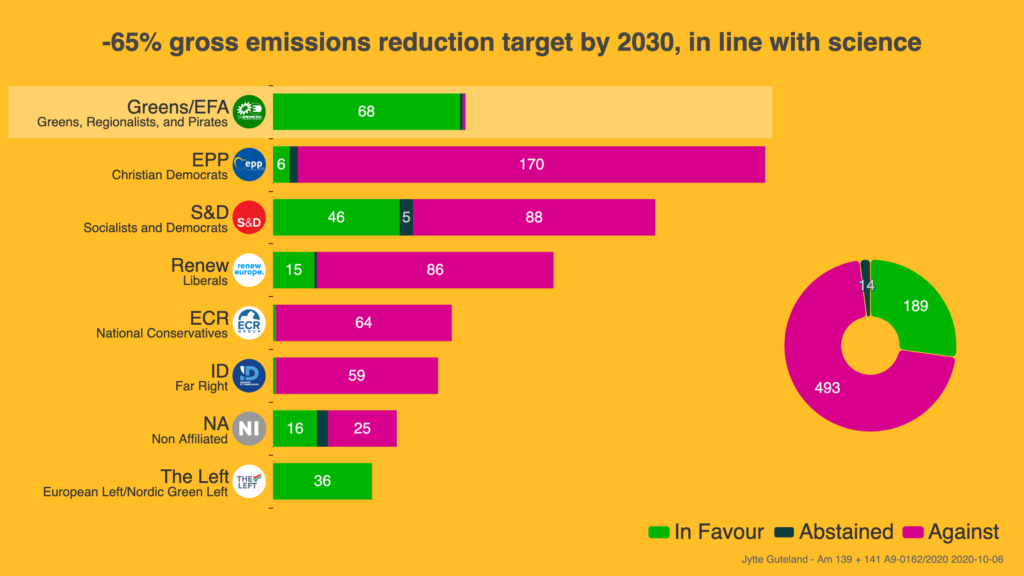
In October Members of the European Parliament adopted their resolution ahead of COP30, calling on the EU to show global leadership and keep the 1.5°C goal alive. We, as the Greens/EFA Group, pushed for strong language: tripling renewables, doubling energy efficiency, and phasing out fossil fuels.
The promises made to younger generations in Paris ten years ago must be kept. The EU must act as a world leader on climate and commit to the strongest possible 2040 target.
Yet Europe’s credibility is on shaky ground. Despite a UN deadline for submitting new national climate plans, the EU has so far missed the mark, submitting only a non-binding statement of intent. Without unity, Europe risked arriving in Belém empty-handed, undermining its negotiating power and its claim to climate leadership.
Only one week before COP – and after the EPP had delayed the negotiations massively – the EU can now present its climate target for 2040, but it’s a weakened one. The goal is still to reduce greenhouse gas emissions by 90 per cent by 2040. But the majority in the European Parliament voted to outsource five per cent of this to certificates for EU-funded climate projects in countries outside the EU. This will cost around €100 billion – money that will not be invested into climate protection investments by the EU.
10 years after the Paris Agreement: What is at stake at COP30?
The stakes could not be higher. This year’s European heatwaves killed more than 16,000 people, wildfires ravaged forests from the Mediterranean to the Amazon, and droughts have intensified global food insecurity.

At COP30, leaders will need to:
- Reaffirm the 1.5°C target and commit to stronger NDCs
- Phase out fossil fuels and end fossil fuel subsidies once and for all
- Scale up renewables and energy efficiency, the fastest path to energy security
- Deliver on climate finance, especially for vulnerable countries facing floods, droughts, and rising seas
- Operationalise the Loss and Damage Fund, agreed at COP27, to compensate those already suffering the consequences of climate chaos
- Advance the Global Goal on Adaptation, ensuring nations prepare for unavoidable impacts
- Strengthen rights and equity, especially for women, Indigenous Peoples, and youth
A Civil Society Comeback
After three years of exclusion under the shadow of autocratic hosts and Big Polluters’ lobbies, civil society is finally back at COP. And it matters. Every major leap in global climate action, from the Paris Agreement to the Loss and Damage Fund, was pushed forward by people power.
Movements for climate justice, youth strikes, Indigenous rights, and just transition will once again have their voices heard in Belém. They’ll remind negotiators that climate action isn’t just about carbon numbers — it’s about human lives, fairness, and survival.
The EU’s moment of truth on climate
The European Parliament’s resolution sets out clear expectations:
- Reaffirm 1.5°C as the non-negotiable limit
- Commit to tripling renewables and doubling energy efficiency
- End fossil fuel subsidies and define a clear phase-out timeline
- Provide transparent, grant-based finance aligned with the Paris Agreement
- Advance a new Gender Action Plan and a Just Transition Programme
- Uphold the rights of Indigenous Peoples and protect biodiversity
But will EU leaders follow through? Without a unified 2040 target, the EU might fail to deliver strong climate ambition. As Greens/EFA Co-President warned:
China is just waiting to fill the climate policy gap. EU governments must not allow President von der Leyen to go to the UN Climate Conference empty-handed.
The Commission has proposed a 90% emissions cut by 2040, paving the way to climate neutrality by 2050. But without agreement, that proposal remains just empty promises.
A call to courage from Antonio Guterres
Guterres’s message this week couldn’t be clearer: “Change course now.”
The world has already overshot many safety limits, from record heat to collapsing ecosystems, but the future isn’t set in stone yet. Every tonne of carbon avoided, every megawatt of clean energy installed, and every hectare of forest protected still makes a difference.
“The promises made in Paris must not become empty words. We owe it to those who died in Europe’s heatwaves, to future generations, and to the planet we share.
Ten years after Paris, the test is not whether we can make new promises, but whether we have the political will to keep them.
Belém: Where promises must become action
COP30 will test whether the global community, and especially the European Union, can rise to the challenge of the decade. Ten years after Paris, we’re out of excuses.
If the EU wants to remain a credible leader, it must go to Belém with a united front, ambitious targets, and the courage to act.The planet cannot afford another round of empty words.
Belém must be where promises become progress.
What You Can Do
As citizens, voters, and consumers, we all have a role to play in holding leaders accountable. Here are five ways to support climate action ahead of COP30:
- Vote for climate leadership – demand strong national commitments
- Support civil society groups fighting for climate justice and Indigenous rights
- Stay informed — follow COP30 developments and share trusted updated
- Speak up — use your voice online and offline to demand courage from decision-makers