Posted by Greens/EFA MEP Bas Eickhout, official delegate to the COP26 in Glasgow
For our daily report live from COP in Glasgow click here.
This summer, fires, floods and heatwaves raged across the continents when the IPCC presented their long awaited climate report. If our worldwide annual emissions stay at the current level, the researchers conclude, our carbon budget – the amount of CO2 we can emit and still keep global temperature rise below 1.5°C – will be gone by the end of this decade. Staying below 1.5°C global warming, even eying it, will require a rapid and massive cut in our carbon emissions. There is no time to waste. The coming years will be pivotal in halting the worst effects of the climate emergency and living up to the Paris Climate Agreement.
Unfortunately, the ambitious IPCC scenarios are still far from reality. For a long time now, we’ve known what needs to be done, but according to Climate Action Tracker, policies currently in place around the world are projected to result in about 2.9°C warming. This shows that higher pledges – the core of the Paris Agreement – though crucial, will not be enough.This year’s COP26 needs to be about immediate action. Because every year counts.
IPCC 2021 Report main findings
It is undeniable that climate change was caused by humanity
Many changes in the climate due to greenhouse gas emissions are irreversible
Many changes in the climate system are exacerbated by global warming
If we do not decrease our emissions, it will be very likely that global temperatures rise by 3.3°C to 5.7°C
In the months before it hosts the COP26, the United Kingdom has been building coalitions of the willing to spur immediate action in four pillars, dubbed “cash, cars, coal and trees”. The use of coal and petrol cars cannot end soon enough, of course, but there is a great need for more attention to the first: cash. So, let us talk about finance.
Financial flows will make or break a green future – Here is why
Recently, we have seen new announcements from the EU and US, increasing their international climate finance. COP26 could be the moment when we finally live up to the pledge by developed countries to provide an annual 100 billion USD to developing countries to spur climate action on mitigation and adaptation. This, however, is only a small part of the finance agenda we need to be discussing in Glasgow. Paris Agreement article 2.1(c) is clear: we have to ‘mak[e] finance flows consistent with a pathway towards low greenhouse gas emissions and climate-resilient development’.
The 1.5°C carbon budget has massive implications for financial flows and assets of fossil fuel infrastructure and reserves. The exploration and development of new oil and gas fields has to stop today to stay in line with climate goals. In fact, a 1.5°C threshold would mean that energy producers would have to write off over 80% of their fossil fuel reserves as stranded. Not counting on large-scale carbon capture and negative emissions means not only coal and oil, but also global gas use needs to decline rapidly (down 25% by 2030 compared to 2010 levels, according to the IPCC scenario). In the EU, gas consumption needs to fall even faster.
Yet, since the Paris Agreement was signed, fossil finance has only grown. Between 2016 and 2020, the world’s 60 largest banks poured USD 3.8 trillion into fossil fuels. It’s not just the private sector, either. Public money has continued to flow to fossil fuels. Even after vowing to phase-out fossil subsidies, G20 members still provide at least three times as much international public finance for fossil fuels (USD 77 billion) as for clean energy (USD 28 billion) every year. This has to stop. It is high time that we put our money where our mouth is.
Taking the Paris Agreement seriously means immediately stopping public and private finance for fossil fuel activities. Every cent spent on fossil fuel infrastructure hinders the transition towards a climate neutral economy and carries a major risk of becoming a stranded asset in the near future.
To end fossil fuel finance, the EU must lead the way
Even against this stark reality, there is hope. There is a building momentum to put the issue of sustainable finance high on the agenda for the COP26 in November. The phase-out of coal (subsidies) is gaining traction. President Xi has declared an end to Chinese support for new coal power abroad. The UK has announced an end to direct government support for the fossil fuel energy sector overseas. Along with the European Investment Bank, the UK is inviting other governments and organisations to join them in alighting international finance with the Paris Agreement.
Where these organisations lead, the EU and its member states should follow suit. In January, EU foreign ministers stated that they would “discourage all further investments into fossil fuel based energy infrastructure projects in third countries, unless they are fully consistent with an ambitious, clearly defined pathway towards climate neutrality”. The COP26 is the perfect moment to do more than talk. The EU must also act as a climate leader.
The EU, however, cannot be a serious international partner in combating climate change as long as its own financial sector and public finance is fuelling our climate crisis. According to the European Commission, in 2018, EU countries still provided a staggering 50 billion EUR of fossil subsidies. Recent decisions on European energy funds like TEN-E are stoking the fire even more.
Private financing of gas is also far from over in Europe. Fossil fuel financing by the 16 largest banks in the EU has been increasing each year since 2017. The intention of the Commission to label natural gas as sustainable in the Taxonomy Regulation is not at all consistent with the Paris Agreement. It would be detrimental to the EU’s credibility during COP 26 for the EU to be engaging in greenwashing on such a massive scale.
Instead, initiatives like the Taxonomy Regulation should provide the basis for a much-needed shift towards sustainable finance. According to a McKinsey study, a net-zero EU would require investing an estimated 28 trillion EUR in clean technologies and techniques over the next 30 years. Most of these investments would come from shifting finance away from fossil technologies.
Action before and at the COP26 climate summit is therefore crucial. Glasgow needs to be the moment that marks the end to fossil fuel investments – both public and private. We therefore call on the European Commission and EU member states to show leadership and declare an end to fossil fuel finance, and translate it into binding legislation, such as the EU Taxonomy.
Let’s clean up finance in Glasgow!
For our daily report live from COP in Glasgow click here.
Posted by climate activists and Greens/EFA MEPs. Get the latest updates live from Glasgow.
SUNDAY 14 November
COP26 has failed to save us from climate disaster – why we’re walking out
Hedvig Sveistrup, Greens/EFA Climate Campaigner
Dramatic end to COP26 in Glasgow
On the very last day of COP26, there was tension in the air and everyone in the room looked like they desperately needed some sleep. Not least those who had spent days and nights negotiating to achieve the best possible solution for their country and people.
Around 19:45 on Saturday evening, the President of COP26, Alok Sharma, tearfully announced the adoption of the Glasgow Climate Pact. But not until a last minute amendment from India had reluctantly been adopted by the 197 parties in the enormous plenary hall.
John Kerry, the delegate of the United States proclaimed that all parties should be “equally uncomfortable”. The Global North seemed to be unhappy due to India’s watering down of the mitigation efforts – they wanted a phase-out of coal and subsidies for fossil fuels, while India had the wording changed into a phase-down of unabated coal power and phase-out of inefficient fossil fuel subsidies.
People power ✊
Hundreds of #COP26 delegates walked out of the UN climate summit today.
Hundreds of people united to demand #ClimateJusticeNOW and more ambition. It’s time to keep 1.5 alive!
Expectations were perhaps unrealistically high for this COP. Indeed, it is the first time that fossil fuels and coal are even mentioned in a final text. That is a huge milestone, albeit an insufficient one.
It is clear that we are nowhere near on track to a global emission reduction of 45% by 2030, but rather an additional 13,7% emission. But parties have agreed to resubmit their climate mitigation plans (the so-called Nationally Determined Contributions, or NDCs) before next year’s COP27 in Sharm El-Sheikh, Egypt to raise their ambitions.
Meanwhile, the Global South expressed their frustration with the lack of progress on financial support for the inevitable Losses and Damages to their people as a consequence of the changing global climate. For developing countries, financial support for adapting to climate change is a crucial issue, and the need is estimated to be in the trillions. Still, developed countries pledged only 313 million Euro to the Adaptation Fund. The Glasgow Pact urges developed countries to at least double their collective provision of climate finance for adaptation from 2019 by 2025. An agreement on a climate adaptation goal is to be agreed upon next year under Egyptian presidency. Since Egypt is part of the coalition of developing countries (G77+China), this would be expected to be high on the agenda of COP27.
After COP26 – Looking ahead to COP27 in Sharm El-Sheikh, Egypt
Each year, the importance of the climate crisis is becoming ever more apparent, and the output of negotiations do reflect this. The outcome of this year’s conference is no exception: it proves higher ambition, but far from enough.
We know that time is running out. Even if we halt the emissions now, the global climate system will continue to change for centuries. That is a scientific fact. But it is a political choice that the most vulnerable peoples and areas will pay the highest price.
The Greens/EFA will continue to fight for fairer and stronger outcomes of the global climate meetings. Until then, follow our work in the EU on our social channels.
See you at COP27!
FRIDAY 12 November
COP26 has failed to save us from climate disaster – why we’re walking out
Martina Comparelli and Marco Pitò, Climate Justice Activists at Fridays for Future
As climate activists, we’re always inventing new and creative actions. We want to create beautiful and straightforward visual moments that catch the attention of those passing by and deliver our message instantaneously. And, of course, we also aim to attract the press. We’re sure you have already heard the names of several different kinds of action, such as strikes, sit-ins, die-ins, lock-ons, banner drops, vigils, and so on.
But, for the last day of the COP26, as the so-called “world leaders” are running out of excuses and the world is running out of time, we will make our protest clear by “running out”. Literally.
On the supposed last day of negotiations, we won’t be expressing our dissent through giant props or creative street theatre. We will simply walk out of the COP26 venue.
We will walk out of that festival of greenwashing, exclusion and greed.
We will walk out because science is not being taken seriously inside.
We will walk out because failing to limit global warming to 1.5°C is a crime against humanity.
We will walk out because at COP26 there are two fossil fuel representatives for each representative from indigenous populations.
We will walk out in solidarity with the most affected people because their voices remain unheard.
We will walk out because staying inside would mean endorsing all of this.
One day, we will tell our children that we tried our best to be collaborative, but after twenty-six COPs with no solution to the climate crisis, we walked out.
Are COP26 negotiations finally reaching a turning point for global climate policies?
Martina Comparelli and Marco Pitò, Climate Justice Activists at Fridays for Future
Yesterday, COP26 felt like a rollercoaster. As new information popped up, the mood of negotiators, press and civil society observers changed.
At 05.51AM, the first draft of the final COP26 resolution was published. It was so bad that civil society and some news outlets renamed it ‘FLOP26’. Others tried to find a silver lining, noticing that for the first time the text used the term ‘fossil fuels’ and that the importance of limiting global temperature rise to 1.5°C was reaffirmed.However, delegates negotiate on every single word and comma on these documents. The lack of strong verbs is evidence of how cautious, or better, unambitious this COP26 resolution is.
Will the US-China COP26 deal pave the way to international climate ambition?
Suddenly, China and the USA called a press conference, revealing a new joint US-China declaration to address the climate crisis together. This was a turning point. Although predictably mild and vague, this moment may nonetheless set a new direction for the world of international relations. Will it spark a little trust from climate activists, who seem to have lost their faith in multilateralism?
We are sceptical. Firstly, declarations are no longer enough. Actually, they never have been. They can’t be – not when we are discussing an existential crisis. Secondly, does this agreement mean that the world’s two superpowers will finally treat the climate crisis as a crisis? Or, will they use it as a way to continue business as usual, with the only difference being that they are now friendlier with each other?
And, what about climate justice?
A journalist at the joint press conference asked John Kerry, United States Special Presidential Envoy for Climate, how the US-China deal would impact human rights. He answered that we are in a climate emergency. As though that justifies leaving millions of the world’s most vulnerable people behind. If Mr Kerry approached the climate crisis from a climate justice perspective, he would see that this is a false juxtaposition. Climate change is not just an environmental issue. It is an issue of fundamental human rights.
Without this lens, it is too easy for world leaders to make climate choices that destroy the lives and livelihoods of indigenous people and those in the Global South. This is the biggest problem of COP26 and, generally, of multilateral climate policies.
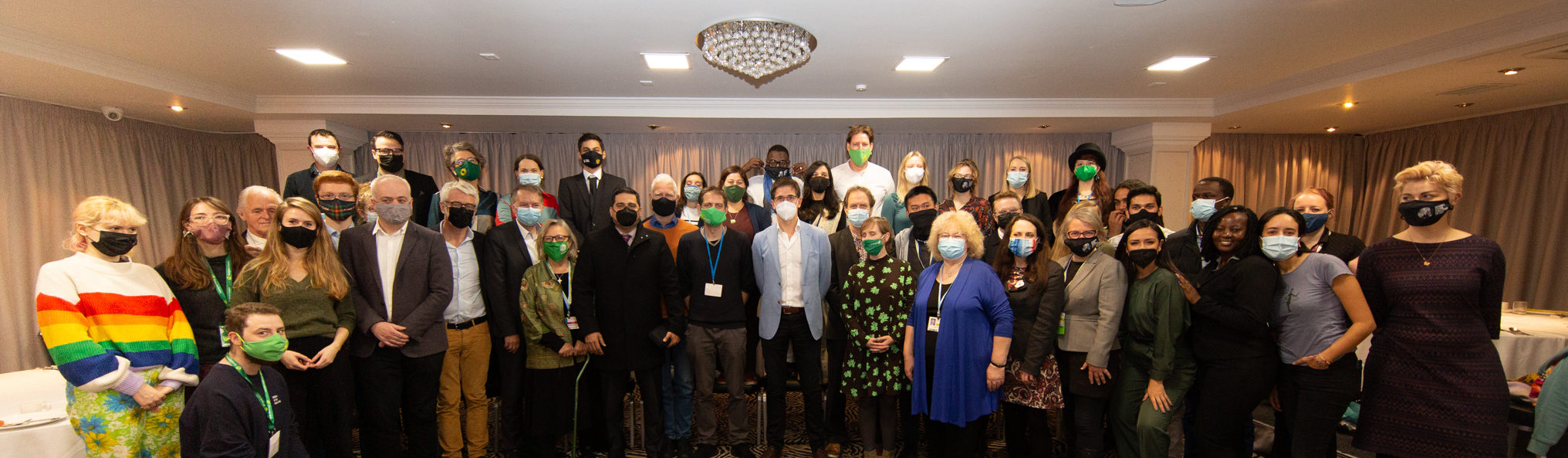
This year’s COP26 Green Family breakfast took place on 10th November in Glasgow. Greens/EFA MEPs came together with Green Ministers and Members of Parliaments from all over Europe and beyond. Thomas Waitz MEP tells us why more Green representation is the best way to stop climate change.
It has become a tradition for Green decision-makers and partners to come together for a breakfast during the annual UN Climate Conference. These events mark an important moment for global climate action. Climate policy put forward by the majority of EU and non-EU states is completely insufficient to tackle the climate crisis and ensure a just transition to a greener world.
But, it is no surprise that countries with Greens in Government are taking the lead and showing real climate ambition.
Never mind COP26, Greens are raising climate ambition all over Europe
Just this week, the Minister for Climate Action, Eamon Ryan – from the Irish Green Party – presented a Climate Action Plan for Ireland that proposes changes in climate policy at a scale beyond compare. Right now, the German Greens are playing a key role in negotiating the most ambitious German government coalition agreement to date.
Our civil society partners, Climate Action Network (CAN) Europe, joined us for the breakfast. Their director, Chiara Martinelli, commented “There is a clear role for the Greens to ensure that the energy and concerns from the climate activists on the streets are brought into the negotiations. You are now at key places to build bridges and show European leadership.”
That is a strong message and we could not agree more.
Greens from all over Europe at the Green breakfast at COP26 in Glasgow, November 10th 2021
In the final days of COP26, Greens are holding world leaders to account
In this last stretch of the COP26 negotiations, it will be the Greens keeping up the pressure to deliver on global climate promises.
We need an increase in ambition across the board – on green finance and on the climate targets for 2030. We need to keep global temperature rise below 1.5°C. We need enforceable commitments to tackling the climate crisis. Fossil fuels must be phased out entirely – not just coal or subsidies.
At COP26, there is no time to waste.
WEDNESDAY 10 November
A day as a climate activist inside the COP26
Martina Comparelli and Marco Pitò, Climate Justice Activists at Fridays for Future
In the months preceding the COP, everybody was desperately looking for accreditation to get inside. We were lucky enough to receive two badges as civil society observers. Unfortunately, this doesn’t mean that we are now getting essential insights on the climate negotiations. As usual, the most important decisions happen behind closed doors.
So, what does a day as a climate activist look like?
Yesterday, before we entered the COP venue, we joined Extinction Rebellion activists who were dancing to folk music outside the conference. This action has a precise and logical purpose: moving and dancing helps us activists to process the complex emotions caused by our governments’ inactions. It helps us deal with our feelings of frustration, anxiety and grief over the climate and ecological breakdown. It also helps us to feel part of a community of resistance and strengthens the connections between climate activists across the world. Some activists also brought free plant-based food based on the principle of “take what you need, give what you can”. Food in the COP is only 40% vegan and is simply unaffordable.
On the other hand, inside the COP, it was much darker and confusing. We got lost. The frantic rhythm, very different from the one outside, discouraged us for a moment. The official events felt like smoke and mirrors, with a lot going on but nothing really happening.
For COP26, climate activists cannot afford the luxury of losing heart
We try to get our voices heard through advocacy and a little disruption. In the morning, we joined urgent actions about Syrian girls and Afghani Fridays For Future activists that are trying to escape their countries. Around lunchtime, we wrote a letter to the Italian delegation to the COP urging them to join the Beyond Oil and Gas Alliance (BOGA), an initiative to phase out fossil fuel subsidies.
COP26 is not simply a conference: it’s a huge hive. Lobbyists and delegates rush from one event to another and it’s easy to get lost in the chaos. But the buzz we are creating, the activists dancing outside, seems much more organized. We are more ready to face the existential crisis we are diving into than the world leaders inside. We learned once again that change will and has to come from the people.
Commission propose more fossil fuel funding, right in the middle of COP26
As we meet for yet another COP on climate in Glasgow, states must commit to a definitive exit from all fossil fuels. To limit global warming to +1.5°C and protect our future, they must shift away from fossil fuels, including fossil gas, to an energy system based on renewable energies and on the principle of “energy efficiency first”, while ensuring a just transition that protects the most vulnerable.
Unfortunately, this is not the road that the world nor the EU, is taking. On 11th November, the European Commission will unveil a proposal for a list of “priority” energy infrastructures (the list of Projects of Common Interest, PCIs). Although it will benefit from public funds and accelerated procedures, gas projects are still a big part of this list!
This is in stark contradiction with the EU goals and duty to protect the climate and to be a global leader. I will propose instead an alternative list of sustainable and fair projects, 100% renewable, that the EU should rather fund to reach its climate goals.
Phasing out of fossil fuels also means stopping any new projects of exploration and exploitation. This is why I support the initiative for a Fossil Fuel Non Proliferation Treaty and the diplomatic dynamic to cease any production of fossil fuel in the world. We need to recognize ecocide internationally as a large-scale environmental crime so that those who keep on producing fossil fuels will finally be held responsible for the impacts of their actions.
TUESDAY 09 November
Gender and COP26: why the climate summit should be on every feminist’s agenda
Today, for Gender Day at the COP26, we list five goals that all feminists should be keeping their eyes on at the UN climate conference taking place right now.
Former Irish President, Mary Robinson, notoriously said, “Climate change is a manmade problem, that requires a feminist solution.”
The 26th UN Climate Change Conference of the Parties (COP26) is a massively important turning point for the future of gender equality, feminist policy and women’s human rights. Gender justice cannot be sidelined when debating the future of our planet. It’s time for governments and institutions to take note, and put gender equality at the heart of any viable strategies on climate and ecology.
It’s time for a feminist, fierce and fossil free future. Read why.
Gender Day at COP26 – Join our session on gender equality and climate
Gender Day at the COP26 will be held today, Tuesday 9th November, to recognise and celebrate gender equality and the empowerment of women and girls in climate policy and action.
The Greens/EFA Group is proud to organise a session on gender equality at the Green Hub in Glasgow on 9th November. Participants will meet people working to end gender-based violence (GBV) in the European Parliament, learn about the upcoming European GBV Directive proposal, find out what they can do to put pressure on their own MEPs/policy-makers, and build their network by strengthening their voice in the green feminist movement at national and international level.
Help us spread the word on the important link between gender equality and climate by sharing this blog with your network!
COP26 negotiations: is it time to celebrate?
Martina Comparelli and Marco Pitò, Climate Justice Activists at Fridays for Future
If you’ve been reading this daily blog from the beginning, you may think that we are being overly critical and pessimistic about the COP26 negotiations.
If you ask us, we cannot celebrate the fact that current emission reductions pledges may keep global warming at 1.8°C (instead of under 1.5°C) because, frankly, for too many vulnerable countries this is already a death sentence. We cannot celebrate that yesterday millions of euros were promised for loss, damages and adaptation to climate change when estimates say we need billions if not trillions of dollars to fill the gaps in climate protection created by our lack of action. Overall, we cannot celebrate baby steps, because it is younger generations and those not having a seat at the COP table that will live through the consequences of unambitious climate policies.
We cannot celebrate Obama’s beautiful yet hypocritical speech. “You are right to be frustrated”, he said. “Mr Obama, I was 13 when you promised $100B #ClimateFinance. The US has broken that promise, it will cost lives in Africa.”, rebuked Ugandan activist Vanessa Nakate in a tweet.
In the venue of the conference, Vanessa Nakate took part in an action with Keivn Mtai from Kenya, Mitzi Tan from the Philippines and other MAPA activists, holding up signs that said, “Show us the money”.
Youth activists @FFFMAPA welcome President @BarackObama to #COP26 — calling on USA to help deliver the $100bn in climate financing rich nations promised. “Obama promised $100bn in 2009. In 2009 I was 7, now I’m 19 & nothing has been done!” – Raeesah Noor-Mahomed, South Africa. pic.twitter.com/HWA0rgqigL
Martina Comparelli and Marco Pitò, Climate Justice Activists at Fridays for Future
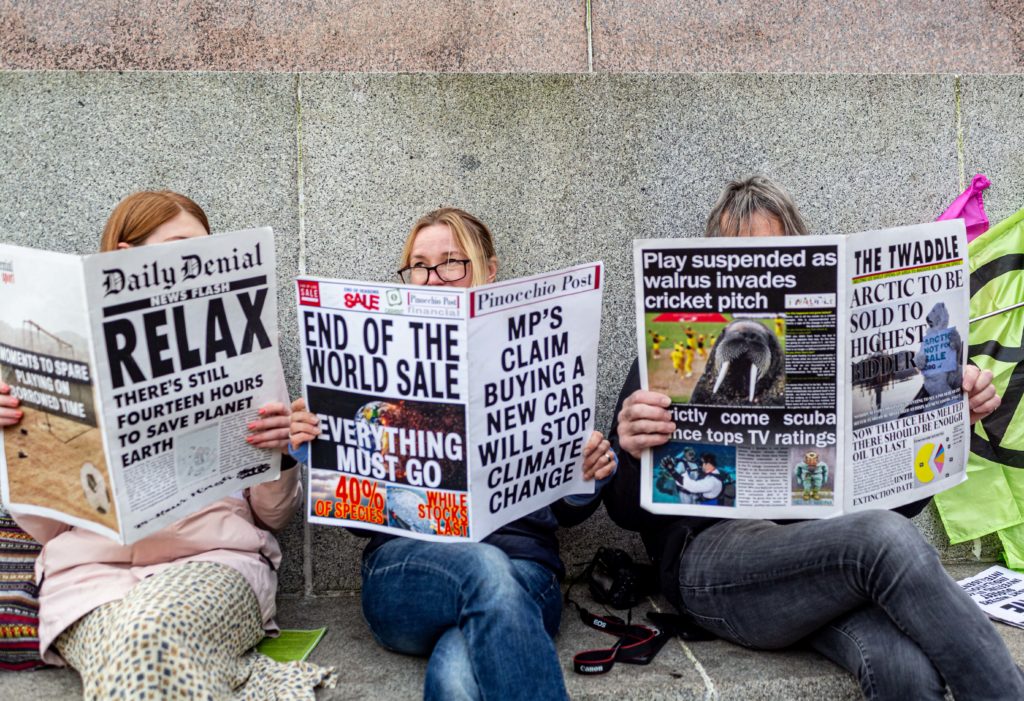
Despite all the failures and broken agreements of previous COPs, the media keep publishing triumphalist headlines. We decided to put ourselves in their shoes and propose some alternative headlines.
“Heads of State finally reach agreement on climate: in Glasgow, it sucks!“
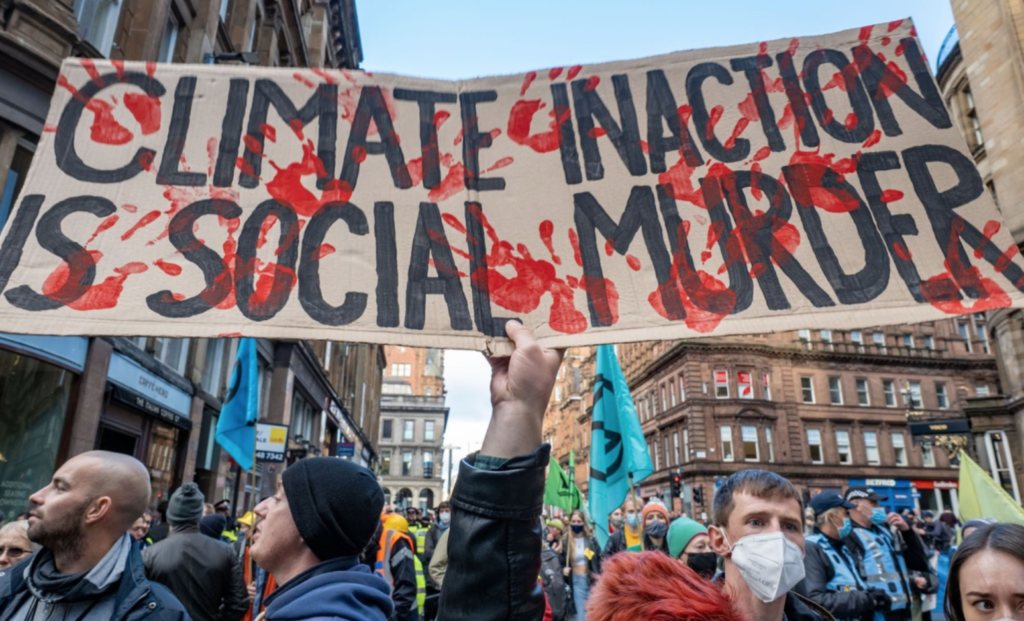
It’s one of the few times we can agree with the so-called “world leaders”. On Saturday, while we were marching with hundreds of thousands of people demanding climate justice and reparation, the rain was hitting hard and the cold was entering our bones. The weather wanted to introduce us to the Scottish climate! Nonetheless, we kept marching, chanting and dancing for hours. The sense of togetherness and liberation that we felt in taking part in that march is indescribable.
“Heads of State agree on climate goal “Net Doomed by 2050”“
This advertisement tells us about a climate agreement that is actually being respected! Find more about watching this informative video.
“Inspired by climate goals, man announces he will quit drinking by 2050“
“A Sydney man has set an ambitious target to phase out his alcohol consumption within the next 29 years, as part of an impressive plan to improve his health […] He has assured friends it will not affect his drinking plans in the short or medium term.” Read more on The Shovel.
The mainstream media are selling the idea that governments are properly facing the climate crisis during COP26. A closer look reveals that this is not the case. These proclamations de-mobilize people who may not recognise the loopholes in the headlines.
Some inventive activists shed light on the media problem using the power of irony and absurdity:
Martina Comparelli and Marco Pitò, Climate Justice Activists at Fridays for Future
“Listen Marco, don’t worry, don’t you see that world leaders have reached many agreements in those days?”; “Why are you so stressed Martina? Relax, you can trust us”. This is what we are repeatedly told by adults and politicians with a patronizing tone.
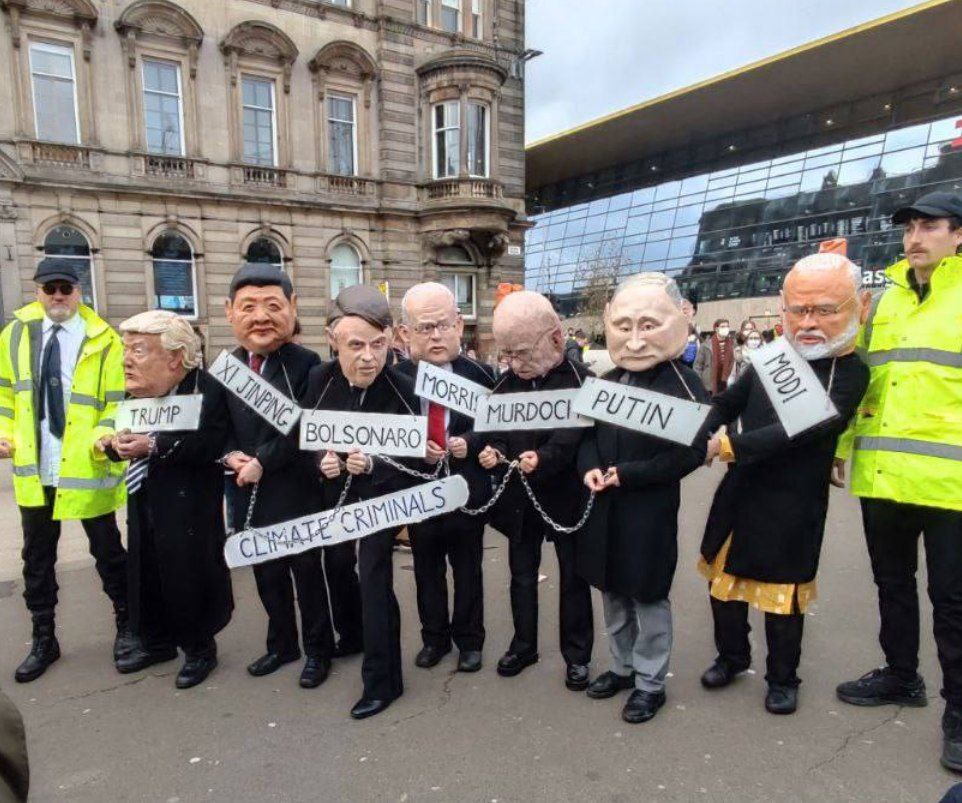
Climate Criminals arrested. Credits: Giorgio Brizio
Yes, diplomats and politicians reached some agreements at COP26. But how is the world going to be in a few decades if we keep going at this slow pace? And, beyond the grandiose tones of the agreements signed so far at COP26, what did the so-called “world leaders” really achieve so far?
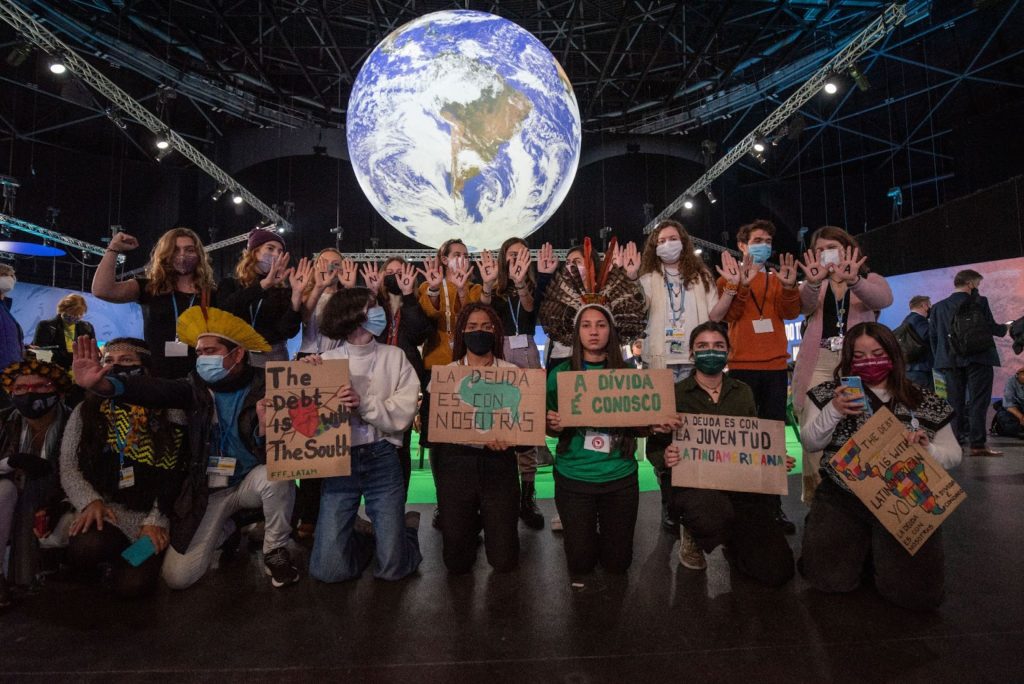
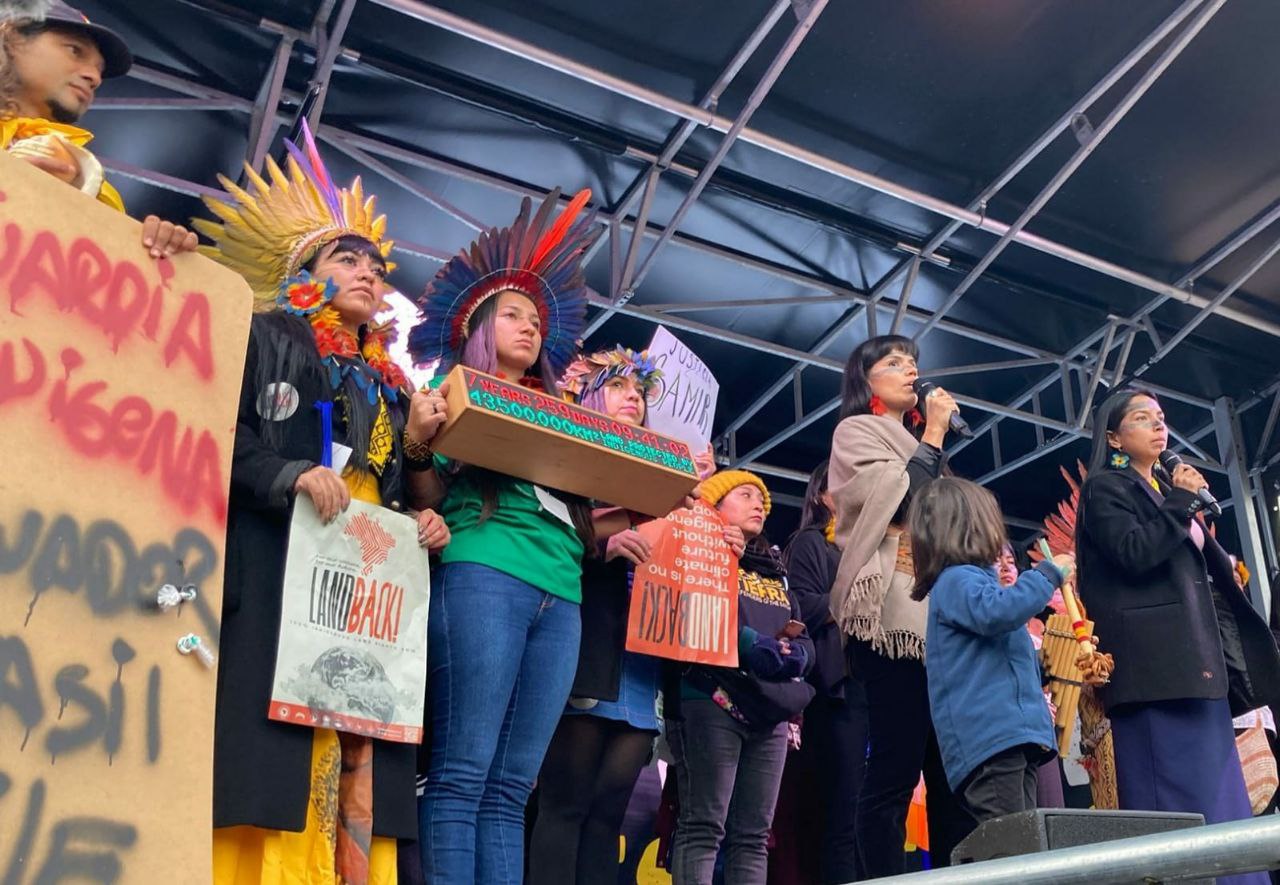
Indigenous people bringing their stories to Glasgow. Credits: Chris Duffy
One of the agreements that hit the headlines was on halting and reversing deforestation by 2030. Great news, right? Well, this is the third time that they shake hands on it, but no actions followed the pledges. The agreement also includes Brazil, led by the ecocidal government of Bolsonaro. To those adults that invite us look at the “bright side”, we answer with the words of the indigeneous people who spoke the truth about Bolsonaro at the rally yesterday. Their real-life stories demonstrate that Bolsonaro declared war on nature and its protectors, and has no intention to stop.
Actions speak louder than words. No “global leader” will come to save us, so we will have to do it ourselves. See you again on the streets today at 12:30 CET in Glasgow.
FRIDAY 05 November
Why the youth will skip the Youth and Future Generations Day at COP
Martina Comparelli and Marco Pitò, Climate Justice Activists at Fridays for Future
Today’s COP26 Presidency programme addresses young people and “how to elevate their voices”. But Fridays For Future, and all the young activists that reunited in Glasgow to fight for climate justice, will not be there. In the past three years we put climate at the center of public discussion and international politics. Today we will stay where we truly belong: on the streets.
Since we started the youth climate strike, the so-called “world leaders” have not listened to us, and after years of greenwashing and empty promises we do not expect them to “elevate our voice” either. We will keep doing that by ourselves – marching, demonstrating our power and screaming our demands.
At a rally on Monday, October 1st, Greta Thunberg said “we are the true leaders”. While it may seem like a slogan, it is actually a very logical and realist declaration: leaders are supposed to care about everyone, not about the interests of a rich minority. Leaders are supposed to protect people. Leaders are supposed to be fair. Leaders are supposed to change things when things are deeply wrong.
All those who will join us in the streets today are the leaders of change. The more we are, the more things will change. History teaches us the power of the collective and history will prove us right. This is why the people can be the real leaders. Leadership is about togetherness.
Join us on the streets today, November 5th, starting at 11am at Kelvingrove Park, Glasgow, Scotland.
Day 5 at COP26: As negotiations begin, beware of promising media headlines
by Yan Dupas, Advisor on Climate & Environment
As global leaders left the stage on Tuesday, one would expect COP26 to go back to normal, and focus mostly on negotiating the COP final decisions as well as on finalising the Paris Rulebook. But COP26 isn’t like other COPs, as the UK Presidency has been orchestrating a few multilateral coalitions meant to keep media headlines busy over the 2-week summit.
Yet those statements are non-binding and lack a proper governance & accountability framework to ensure targets are actually met in the future. In most cases, the statements themselves are ambiguous or include strong loopholes that were intended to gather larger support but at the end strongly endanger the credibility of those announcements.
Let’s take just two examples:
Yesterday the media reported that 25 countries (incl. the UK, the US, Canada, and 5 EU countries) agreed to stop financing fossil fuels abroad. Yet when you read carefully the statement, you understand it is limited to ending “newdirect public support for the international unabated fossil fuel energy sector” (every word counts). Moreover it includes an important exception: “except in limited and clearly defined circumstances that are consistent with a 1.5°C warming limit and the goals of the Paris Agreement”. What that sentence means is not clear and will remain unclear as again there is no governance framework or concrete rules that apply to those countries that have signed-up to it.
46 countries also signed the “coal to clean statement”, promising to phase out “unabated coal power generation in the 2030s (or as soon as possible thereafter) for major economies and in the 2040s (or as soon as possible thereafter) globally” (there as well every word counts). This statement – and the reference to 2030s/2040s created a lot of confusion. Only a few hours after the statement was issued, the Polish PM – one of the signatories – clarified that he had no intention to phase out coal before 2049.
This is not to say that those commitments are completely useless. They send the right message on the absolute need to phase out fossil fuels.
But for those commitments to truly deserve highlights, one would need to ensure that they translate into binding laws in those countries. A first step could be to ensure that the final COP26 resolution that should be agreed by the end of next week includes some of those elements, and ensure that countries come back together in one year to assess progress in the implementation of those commitments.
Stay tuned for more daily updates on the COP26 negotiations, live from Glasgow.
THURSDAY 04 November
Day 4 at the COP26: The pathway to global carbon pricing
by Greens/EFA MEP Jakop Dalunde, shadow rapporteur for the EU ETS
The ‘the-polluter-pays-principle’ must be respected. If not, the people who have contributed the least to the emissions will pay the price.
In theory we should introduce a single global carbon price. This is however unlikely to pass in the UN, where decisions are taken with consensus, meaning that all member states must agree. Article 6 in the Paris Agreement aims to establish market mechanisms to enhance climate action through trade with offset credits. These mechanisms are drastically different from emission trading schemes (ETS), both in design and function, and are today far from delivering a real global carbon price.
The pathway to sufficient global carbon pricing is through national and regional carbon taxes, ETS and carbon border adjustment mechanisms (CBAM). CBAM create incentives for countries outside the EU to introduce their own carbon pricing, to not lose revenues to the EU. The EU must therefore increase EU ETS prices and introduce a comprehensive CBAM as soon as possible. Money talks, and just months after the commission presented its CBAM proposal, Russia is considering introducing their own carbon tax.
There are strong synergies between the national, regional and international level. We need bold action on all these to deliver global carbon pricing. It’s a question of climate justice.
COP26: video messages from those already affected by the climate crisis
Numerous typhoons in the Philippines, unpredictable droughts in Uganda and life-threatening floods in Belgium – The climate crisis and its devastating effects are now everywhere and undeniable. But it’s the communities least responsible, that are most affected by climate change. These are just a few stories from the front-line of humanity’s greatest threat. Listen to climate activists Mitzi from the Philippines, Hilda from Uganda and Ben from Belgium.
Why we have to tackle the climate crisis and biodiversity loss simultaneously
by Greens/EFA MEP Ville Niinistö, live from COP26 in Glasgow
Everyone is talking about COP26 these days, and that’s a good thing. The Conference of the Parties of the UN climate convention is a major event in making sure that the whole world follows the 1,5 degree path set in the Paris Agreement. But climate change is not alone at the top of the list for the world’s most pressing problems. And COP26 is not the only COP that we should be aware of.
COP15 is going to be the 15th meeting of the parties of the UN Biodiversity Convention. Due to the COVID crisis, the meeting was first postponed and then split into two separate parts: the first was held remotely this October only shortly before the Glasgow meeting and the second part will be held in Kunming in China in April-May 2022.
This makes the biodiversity crisis and the climate emergency appear as two separate issues, but they are interconnected on very many levels. Until now they have been largely addressed as their own separate areas in both science and policy making.
What I am looking forward to seeing from the COP26 is a stronger understanding and action for measures that tackle both these crises at the same time. Luckily we know there are a lot of solutions that work for both. According to the IPCC and IPBES joint workshop report, some examples of good measures to take are to stop the loss and to restore carbon- and species-rich ecosystems, especially forests, wetlands, peatlands and grasslands. Also increasing sustainable agricultural and forestry practices and cutting off environmentally harmful subsidies helps both climate and nature.
At COP26, more than 100 world leadersreached a deal to end and reverse deforestation by 2030. This is an important step. However, as the previous commitments were not reached, there’s still reason to be alert whether these promises will be delivered. And that applies to the European Union as well: The Commission’s draft proposal to stop EU-driven deforestation has major loopholes. If we want to be a true global leader, we need to make sure our own actions are in line.
WEDNESDAY 03 November
Day 3 at COP26 in Glasgow: All about fossil fool finance
Martina Comparelli and Marco Pitò, Climate Justice Activists at Fridays for Future
On November 3rd, both COP26 and activists in the streets addressed the elephant in the room: climate finance. Or should we say: the lack of it?
The most surprising declaration came from Mark Carney, Chair of the Glasgow Financial Alliance for Net Zero (GFANZ), who stated that banks, investors, and insurers have committed $130 trillions to reach net zero emissions by 2050. However, the Financial Times wrote that the number lacks credibility. Last year private climate finance promised to invest $340 billion to save the climate per year, which is approximately 0.003% of what Carney declared. But again, bombastic promises at COP26 may end up being empty and, in this case, ridiculously fake too.
In the meantime, 20 nations are pledging to stop financing fossil fuels projects. Among the signatories, the pledge of the USA is maybe the most surprising. What’s not so surprising is that the pact is yet again non-binding. How can we believe action will follow words when all the past pledges weren’t followed?
Nevertheless, the news coming from inside the COP venue seems not to be influencing the energy on the streets. Thousands have been marching all day long with banners and large props, including a giant skeleton puppet demanding climate action. At the same time, at the COP, Greta Thunberg and Greenpeace interrupted the greenwashing by Shell, BP and other banks on stage, criticising the carbon offsetting panel.
Photo Credit: William Josha Templeton
Please join us on the streets in Glasgow! The next march will be on Thursday, November 5 and starts at 11am at Kelvingrove Park.
Why the EU is having a problem in Glasgow: fossil subsidies. And some countries like France even want more of it. This is what matters, not the speeches. https://t.co/50BmEkYO0E
Martina Comparelli and Marco Pitò, Climate Justice Activists at Fridays for Future
The Conference of the Parties (COP) has started this week. Within the first two days (1st and 2nd of November 2021) we have listened to a sequence of speeches by Heads of States from all across the globe. The COP26 presidency called it the ‘World Leader’s Summit’ but we activists prefer to call it what it is: the epitome of ‘bla bla bla’. The leaders looked like bored actors repeating the same old script over and over again.
With a lot of words, the politicians tried to make up for the lack of action by acknowledging the the incumbent climate breakdown in their declarations. In his welcoming speech, the British Prime Minister, Boris Johnson stated that “unlike James Bond movies,the doomsday device is real”. Mario Draghi, the Italian Prime Minister and co-host, said that “the climate crisis is already hitting and it contributes to terrorism, global insecurity and war”. But words are far from enough: none of the countries in the Global North has an emission reduction plan that respects the Paris Agreement.
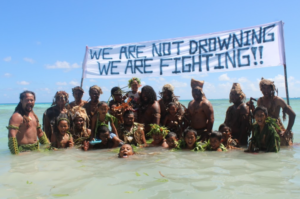
More genuine and impactful in contrast to Johnson and Draghi, were the speeches by leaders and activists from the Most Affected People & Areas. Brianna Fruean, activist from the Pacific, powerfully stated: “We are not drowning, we are fighting“.
COP26 People’s Advocate Sir David Attenborough summarised the hope of millions of climate activists around the world: “If working apart, we are a force powerful enough to destabilise our planet. Surely working together, we are powerful enough to save it”.
Follow our daily updates from the COP26 as we see if the ‘bla bla bla’ can turn into concrete action!
TUESDAY 02 November
Outside of the COP26 negotiations activists started filling the streets with all their rage, love and creativity.
Credits: Luisa Neubauer
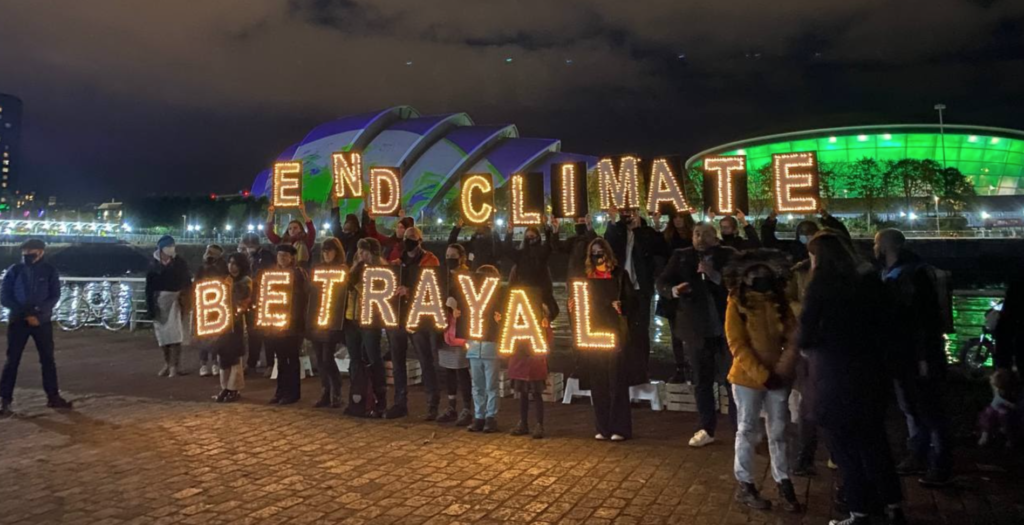
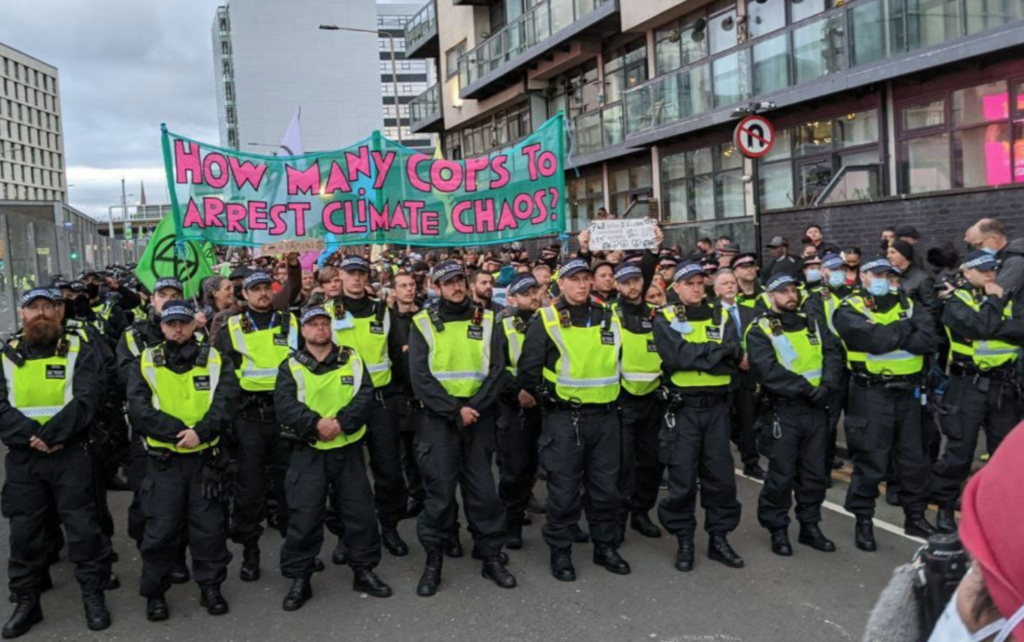
A march organised by Extinction Rebellion was happening in the vicinity of the COP venue. When the police blocked it, they created the perfect stage for a photo opportunity.
Credits Ranierifilm / Latest TV Brighton
The UN Climate Conference #COP26 starts today in #Glasgow!🌍
We must: 🌡️keep temperature rise below 1.5°C 🌏have the most affected at the center of the fight ⛽️make big polluters take responsibility 💸stop pouring money into fossil fuels
I love trains. Give me night trains, day trains, slow trains, fast trains.
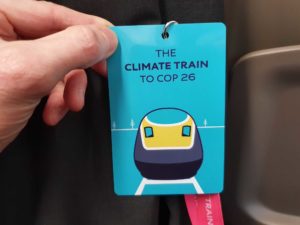
That’s why I took the Climate Train to COP26 in Glasgow last Saturday from Brussels. The train was a special Eurostar that set off from Amsterdam at sunrise and ended in Glasgow Central Station as the sun went down. We passed through rain showers and there were glimpses of sunshine as we headed down through France under the English Channel and then sped northwards through England past the Scottish Border.
Each carriage on our train had a theme and en route we discussed the future of rail travel, climate mitigation, and fair and sustainable transport for all. The conversation was lively, and we felt we were solving the problems of the world. Certainly investment in rail travel as an alternative to short-haul flights is part of that future, as the Year of Rail draws to a close.
By the time we arrived in Glasgow the stage was set for the two-weeks of climate talks, kicking off with the opening ceremony on Sunday, and followed by a series of global leaders making the pitch for climate action.
SUNDAY 31 October
Climate Activists at the COP
Martina Comparelli and Marco Pitò, Climate Justice Activists at Fridays for Future
In a recent article, social scientist Mattias Wahlström explained his research on Social Movements based on past COP experiences. He warns activists who are currently strategizing for the COP26 against the negative effect that adopting a “now or never” framing could have,, as it was done for the COP15 in Copenhagen. In 2009, the negotiations were loaded with a lot of expectations, which were framed as the last chance to save the climate. On the one hand, this framing mobilized people by letting them feel a sense of urgency. On the other hand, it also led to an activism “hangover” that demobilized the climate movement when the negotiations did not reach the outcome they had hoped for.
Will there still be a need for climate activism after the COP?
At the COP21 in Paris, all 197 countries agreed to keep global warming below 1,5 degrees. In 2021 all countries must submit their plans on how to stay below 1,5 degrees. That is why the COP26 is the most important since Paris. We must keep the pressure on international governance high. No matter what, this COP will not be the end of the climate movement. Power still lies with the people. Our voices outside the COP venue can and will influence negotiations. Our daily pressure and activism will influence climate politics.
What we can do at the COP26 is to take part in the strikes with thousands of activists and people from civil society. We need to push the politicians at the table to take unprecedented action. Nothing will change, if no one fights for it.
We think the most exciting stories will be those happening outside of the COP venue in Glasgow. This is why we are going to spend a lot of time there to report to you daily.
Stay tuned for exciting news updates and join us at the COP26 from wherever you are!
SATURDAY 30 October
Let’s fix climate finance at COP26 – time to put our money where our mouth is
This summer, fires, floods and heatwaves raged across the continents when the IPCC presented their long awaited climate report. If our worldwide annual emissions stay at the current level, the researchers conclude, our carbon budget – the amount of CO2 we can emit and still keep global temperature rise below 1.5°C – will be gone by the end of this decade. Staying below 1.5°C global warming, even eying it, will require a rapid and massive cut in our carbon emissions. There is no time to waste. The coming years will be pivotal in halting the worst effects of the climate emergency and living up to the Paris Climate Agreement.
Unfortunately, the ambitious IPCC scenarios are still far from reality. For a long time now, we’ve known what needs to be done, but according to Climate Action Tracker, policies currently in place around the world are projected to result in about 2.9°C warming. This shows that higher pledges – the core of the Paris Agreement – though crucial, will not be enough.This year’s COP26 needs to be about immediate action. Because every year counts.
In the months before it hosts the COP26, the United Kingdom has been building coalitions of the willing to spur immediate action in four pillars, dubbed “cash, cars, coal and trees”. The use of coal and petrol cars cannot end soon enough, of course, but there is a great need for more attention to the first: cash. So, let us talk about finance.
Martina Comparelli and Marco Pitò, Climate Justice Activists at Fridays for Future
The Conference of the Parties (COP) was created to avoid that humans would compromise ourthe Earth’s life support systems and to pool international efforts to fight climate change. Since even after decades this aim has utterly failed, it is time to question how this system works, who takes part in it, and most importantly, who does not.
The Rio Declaration of 1992 states that the full participation at the COP of women, youth, indigeneous and generally oppressed people, is essential. However, their presence is scarce compared to that of fossil fuel companies and corrupt governments, who knew the consequences of their actions but have kept instilling doubts about climate science for decades. These are the real emperors of the United Nation climate arena.
But now these emperors are naked. We can all see that world “leaders” clearly broke all their pledges and stated principles. If — as they agreed in 1992 — “peace, development and environmental protection are interdependent and indivisible”, with their plans they are turning the world into an ungovernable place with war and social instability.
Who to trust, in a room full of polluters? After a huge push by civil society, for the first time the UN kicked out big polluters from official roles in the summit. But we should not have to trust a system that has failed us once and could fail us again and again. We should instead have faith in the people, who know that another world is necessary and in those who are terrified enough to work on making it possible. Follow us along the way, to hear some of their stories!
FRIDAY 29 October
The future is happening now. But we can still fix it at COP26
It’s happening. Extreme weather events and natural disasters, already a reality for people and countries in the Global South, are now occurring more often in Europe. This year alone has seen catastrophic flooding in Germany and Belgium, and raging fires in Greece, Italy and Spain.
We’ve even had severe forest fires as far north as my home country of Sweden. The climate emergency is not a problem for the future. It is already here. And yet, the European Union, all of its member states, and all the other countries in the world have one thing in common: they are not doing enough.”
Let’s hope that the rhetoric of politicians aligns to the radical steps that science demands.
FRIDAY 29 October
What is the COP26?
Martina Comparelli and Marco Pitò, Climate Justice Activists at Fridays for Future
From November 1st to November 12th, the 26th edition of the UN climate change Conference Of the Parties (COP) will be held in Scotland, Glasgow. It is the most important and significant climate event since the Paris agreement in 2015.
At the COP26, all 197 countries who have joined the United Nations Framework Convention on Climate Change (UNFCCC) will meet to agree on how to deal with the imbalances that human civilization is causing in the global climate system.
But often COPs are, in some way, used as greenwashing. Countries, parties or organisations, act as if they are taking radical action by distracting the public with conferences like these. Indeed, it is called COP26 as we have lived through twenty six years of talking and negotiations which did not lead neither to the start of emissions decrease, nor to strictly binding agreements.
The governments reached a pillar agreement in 2015, the Paris Agreement, but just one country out of the 197 is respecting it, namely Gambia. Even in their pledges – words agreed to on paper that often do not translate into concrete action – they are failing to reach the target: even if they would accomplish everything they said, the earth’s temperature will still rise by +2.7ºC.
A lot will happen inside the COP building, but most of the people who are travelling to Glasgow, such as activists, NGOs and citizens, will not have access to it. This is why many exciting actions and events will take place outside and we want to bring you along that journey. Jump on board and keep following us on this blog for daily updates!
As an effort to promote privacy and human rights in the EU, we at Greens/EFA got together with a team of international experts to understand where biometric mass surveillance, like facial recognition, is put to use this very moment in different European cities and states.
Keep reading to find out what we learned, and why must take action to ban the use of these technologies now – before it is too late.
Bye bye privacy – Current practices of biometric mass surveillance in the EU
Biometric mass surveillance wrongfully reports large numbers of innocent citizens systematically discriminates against under-represented groups and has a chilling effect on a free and diverse society.
If not regulated, they have the potential to change our societies fundamentally. This is why we must stop them before it’s too late. More and more people are standing up against the deployment of these technologies. In the United States, lawmakers have already started to impose bans on the use of some of the most invasive forms of algorithmic decision-making software: namely facial recognition technologies.
In the European Union, on the other hand, governments are beginning to experiment with systems of facial recognition and other biometric mass surveillance technologies in public spaces. With the upcoming Artificial Intelligence Regulation, the European Union has the chance to safeguard our fundamental rights and to ban biometric surveillance technologies that magnify the discrimination that women, people of colour and other marginalised groups in the European Union already face today.
What is biometric mass surveillance?
Biometric mass surveillance is the monitoring, tracking, and otherwise processing of the biometric data of individuals or groups in an indiscriminate or arbitrarily targeted manner. Biometric data includes highly sensitive data about our body or behaviour. When used to scan everyone in public or publicly accessible spaces (a form of mass surveillance) biometric processing violates a wide range of fundamental rights.
We have long called for a ban on these highly intrusive and error-prone technologies in publicly accessible spaces. This week, we published a large study and mapping of the current practices in the EU, which shed light on how these privacy-infringing practices have already been put into use in cities, and even entire countries in the European Union. The study is online here, the pdf of the study can be found here .
The study also provides recommendations on how these technologies should be regulated. The study also gives the reader a closer look at seven case studies of the use of biometric mass surveillance technologies in the EU.
Keep reading to learn more about them!
Mapping Mass Surveillance – Can we still hide?
Our map shows that different technologies are being tested or implemented across Member states, often without most citizens even knowing about it. Our lives are being tracked without our consent, and our personal data, also those of children and youth, saved without our knowledge.
What could this look like in real life?
These seven cases below paint a daunting picture on the use of these technologies in cities across Europe. Let’s have a closer look.
The Dragonfly project, Hungary (2019 – Present)
Hungary’s 35 000 CCTV cameras now operate as part of a single centralised searchable system, and its biometric databases have been connected, allowing police to identify any citizen from their face. The Hungarian Secret Services and police have already made use of the system, resulting in 6000 matches, 250 stop-and-searches and 4 arrests.
Mannheim , Germany (2018 – Present)
In Mannheim, the local police installed cameras that were designed to record moving patterns of individuals, with software analysing the movement patterns for suspicious behaviour. The software reports numerous false positives, mistaking hugs for suspicious behaviour.
Nice, France (2017 – Present)
The Mayor of Nice sought to make it a “laboratory” for testing biometric mass surveillance, investing heavily. The tests were criticised heavily by the French Data Protection Authority. Further deployments in schools, and through an app that allowed citizens to film other citizens were shut down following legal rulings against them.
Rotterdam, Netherlands (2019 – 2021)
In October 2019, a courtyard in a neighbourhood in Rotterdam was equipped with cameras and microphones designed to detect suspicious movement and trajectories and to react, influencing the behaviour of the suspect. The technology was unsuccessful, posed legal issues, and failed to reconcile privacy and efficiency. The test ended in 2021.
Brussels, Belgium (2017 – 2019)
Brussels International Airport used four cameras connected to a facial recognition to capture and isolate faces, then check them against a blacklist. The technology was ineffective, with features such as skin colour or facial hair leading to numerous false positives. The system has since been suspended, as the system had been ruled to be operating without legal basis.
Hamburg, Germany (2017 – 2020)
Hamburg Police began using facial recognition technology to profile protestors following the G20 protests. This resulted in a three-year legal battle with the Hamburg Data Protection Supervisor.
Südkreuz, Germany (2017 – 2018)
At Südkreuz Train Station in Berlin, German Federal Police used technology to match faces in CCTV footage with high quality photos of individuals. The test lasted until 2018 and was found to create a significant number of false positives.
Our demand is clear: Ban biometric mass surveillance now!
We don’t want to live in a society in which people are tracked, judged and classified based on their appearance and behaviour. This is what the research suggests:
The EU should prohibit the deployment of both indiscriminate and “targeted” Remote Biometric and Behavioural Identification technologies in public spaces, as well as ex-post identification. The analysis shows that both practices, even when used for “targeted surveillance” amount to mass surveillance.
The EU should strengthen transparency and promote the reinforcement of robust accountability mechanisms for biometric surveillance systems.
The EU should promote individual rights under the GDPR through the promotion of digital-rights-by-design technologies, and ensure effective enforcement of GDPR purpose limitation.
The EU should support voices and organisations which are mobilised for the respect of EU fundamental rights. Supporting civil society organisations that operate in the sector of digital rights is instrumental for a healthy democratic debate and oversight. Civil society needs to be able to participate in all relevant legislative and other decision-making procedures.
The EU should take into account the global dimension of the Biometric and Behavioural Analysis Technology Industry. EU policy needs to consider its impact both inside and outside of Europe.
We need the European Commission to impose a ban of biometric mass surveillance technologies throughout the European Union and to acknowledge the adverse effect of biometric surveillance methods on our fundamental rights.
Klimattoppmötet i Glasgow är bara ett par dagar bort. Mötet är det viktigaste på länge, för vi har bara sett början på klimatkrisen. För det som vi klimatforskare har varnat för i årtionden händer nu. Extremväder och naturkatastrofer som skördar dödsoffer har varit ett faktum i fattiga utvecklingsländer länge, men börjar nu bli allt vanligare även i Europa. Bara under detta år har översvämningar i Tyskland och Belgien dödat hundratals samtidigt som bränder och extremhetta har dominerat Grekland, Italien och Spanien.
Det pågår här, och det pågår nu.
Men ändå finns det en sak som EU, dess medlemsländer och alla andra länder i världen har gemensamt – de gör alla alldeles för lite för att stävja klimatkrisen. Såväl dess orsak som konsekvenser hanteras inte som utmaningen förtjänar. Klimatomställningen är det viktigaste politiska projekt vi har framför oss. Det är kampen för att alla människor ska utvecklas inom ramen för planetens gränser, snarare än att drabbas av konsekvenserna av att ett fåtal förstör för ett flertal. Det är kampen för dem som inte har en röst.
Men världsledarnas handlingsförlamning blev alltmer uppenbar när FN:s klimatpanel IPCC i somras presenterade den första delen av sin sjätte stora rapport. Det blev smärtsamt uppenbart att ingenting hade förbättrats sedan tidigare rapporter. Klimatforskningen har varit tydlig sedan den första IPCC-rapporten för snart trettio år sedan. Men politiken är otillräcklig – och för varje år som går, krymper vår koldioxidbudget, och sannolikheten för att vi ska lyckas begränsa den globala uppvärmningen till 1,5 grad minskar snabbt.
COP26 i Glasgow – det finns ingen tid att förlora
Det är av yttersta vikt att världens ledare samarbetar internationellt för att tillsammans lösa vår tids stora ödesfråga. Klimattoppmötet COP26 i Glasgow som går av stapeln under första halvan av november är ett unikt tillfälle att gå från ord till handling. Vad som blir allt tydligare är att COP26 kan vara den allra sista chansen världens ledare har på sig att förhindra de allra värsta effekterna av klimatförändringarna. Som officiell delegat för den gröna gruppen är mina krav tydliga. Världens ledare måste gå från vackra ord och löften om nollutsläpp, till konkreta utsläppsminskningar i linje med Parisavtalets mål.
Det här är den gröna gruppens krav på världens ledare:
Vi måste behålla 1,5 gradersmålet inom räckhåll. Utsläppen ökar fortfarande över hela världen. Det måste få ett slut. Alla länder i världen och alla sektorer måste kraftfullt och resolut höja sina ambitioner. Förändringar som måste ske nu, under detta årtionde. För de som redan drabbas är klimatkrisen redan här. EU måste leda vägen i klimatomställningen.
Höjda ambitioner betyder slutet för den fossila eran. Kolet och oljan måste stanna i marken. Den fossila eran ska förpassas till historien. En total utfasning av kol, olja och gas måste stå högst upp på dagordningen. Vi måste även se över de finansiella systemen, subventionerna och investeringarna för att stoppa alla flöden till fossila projekt. Även här kan EU leda vägen.
Femåriga tidsramar. Parterna måste säkerställa femåriga klimatmål för att vi ska kunna agera i tid. Länder som inte anpassar sina åtaganden utefter vad som krävs ska ställas till svars. Även inom EU finns länder som vill ha längre tidsramar, vilket är oacceptabelt.
Implementera artikel 6 i Parisavtalet med regler som utesluter dubbelräkning och användning av gamla krediter från Kyoto-perioden och som säkrar skydd av mänskliga rättigheter. Artikel 6 handlar om att länderna ska samarbeta för att minska utsläppen genom marknadsbaserade mekanismer. Det omfattar bland annat handel med utsläppsminskningar. Tyvärr är många av världens största utsläppare starka kritiker till artikeln, och vill bygga in kryphål och gräddfiler i reglerna, vilket föranledde att de rekordlånga förhandlingarna under förra klimattoppmötet avslutades utan framgång.
Alla konsekvenser kommer inte gå att förhindra – vi behöver ordentligt stöd för att hantera det oundvikliga Även om vi minskar utsläppen är negativa konsekvenser av klimatförändringarna oundvikliga, särskild i länder som redan är hårt drabbade. En grupp som kallas “the Santiago network” ska leda arbetet med hur vi ska minimera, undvika och återhämta sig från skador och förluster med tekniskt stöd. Deras rekommendationer måste implementeras och tillräckliga resurser måste tillföras.
EU:s egna klimatmål måste höjas innan vi pekar finger
För ett par veckor sedan höll EU-kommissionens ordförande Ursula von der Leyen sitt årliga tal till unionen. Det blev dessvärre smärtsamt uppenbart att EU är nöjda med sina nuvarande ambitioner. Att vi har gjort vårt. Det kunde inte vara längre från sanningen. Hon säger sig vilja leva upp till Parisavtalet och pekar på allvaret i situationen i IPCC:s rapport, men om von der Leyen menar allvar med att lyssna på forskningen måste EU göra betydligt mer än vi gör idag.
För när medlemsstaternas nationella åtaganden analyseras visar det att utsläppen snarare ökar. Alla länder måste lämna in rapporter till FN inför toppmötet för att visa hur de ämnar leva upp till Parisavtalets mål. För att vara i linje med våra åtaganden måste utsläppen till 2030 minska med 45 procent. När NDC Synthesis Report presenterades i september visade det sig att utsläppen istället ökar med 16 procent. Det är fullkomligt oacceptabelt. Enligt FN leder nuvarande nationella åtaganden till 2,7 graders uppvärmning till år 2100.
Misslyckandet är ett faktum
Ska EU kunna vara världsledande i klimatomställningen måste våra klimatmål höjas. Enligt Climate Action Tracker skulle temperaturen stiga med tre grader till slutet av århundradet om hela världen antog vår klimatpolitik. Det finns ingen motsättning, snarare tvärtom, mot att andra länder ska göra mer. För varför ska länder som Kina, Australien och Brasilien göra mer om inte ens EU bedriver en trovärdig klimatpolitik? Fiaskot från Ursula von der Leyens tal till unionen kan inte vara hur EU ska uppfattas på COP26. Man ska inte kasta sten om man bor i ett glashus.
Posted on October 21, 2021 by Greens/EFA MEP Pär Holmgren
For our daily updates from the COP in Glasgow click here.
It’s happening. Extreme weather events and natural disasters, already a reality for people and countries in the Global South, are now occurring more often in Europe. This year, in the year of the COP26, we have seen floods in Germany and Belgium that have killed hundreds, and fires and heat waves in Greece, Italy and Spain. We’ve even had severe forest fires as far north as my home country of Sweden.
The thing that scientists, such as myself, have been warning about for more than three decades – back when man-made climate change was established as fact – is happening now.
The climate emergency is not a problem for the future. It is already here. And yet, the European Union, all of its member states, and all the other countries in the world have one thing in common: they are not doing enough. This became clear once again in this year’s IPCC report. The Intergovernmental Panel on Climate Change (IPCC) released the first part of its sixth assessment report earlier this year, and it was a damning indictment of climate inaction. It was clear that nothing had improved since the previous report from 2014. The science has been clear for three decades, but climate policies are still insufficient. For each year without ambitious political decisions, our remaining carbon budget gets smaller.
At 2021’s UN climate change conference (COP26), there is no time to waste
We are in an emergency situation. It is more important than ever to join forces internationally and work together to solve the biggest crisis of our time. This year’s UN climate change conference – known as COP26 – is a unique chance to put our plans into action. In a couple of days, the world’s leaders will gather in Glasgow for the COP26 climate summit. This is a crucial chance to limit the damage humanity has done and pull ourselves back from the brink of devastating climate change. As a delegate for the Greens/EFA in the European Parliament at the COP26, my agenda is clear: we will bring concrete climate demands to the table and hold global players (like China and Australia) accountable for their promises and raise their ambition.
These are the Greens/EFA’s demands for the COP26 in Glasgow:
We have to keep the 1.5 pathway within reach. Most countries’ emissions are still rising – this trend needs to be reversed. All countries and all sectors must urgently raise their ambition. For the lives of the most affected, such as the Global South, but also big areas within Europe, the climate emergency is already here. They can’t afford failure, we can’t afford failure. The EU has a responsibility to lead the way.
Raising ambition means ending the era of fossil fuels. All fossil fuel energy must remain in the past and in the ground. Phasing out coal, oil and gas energy sources must be a priority, as well as halting harmful financial flows, subsidies and investment to all fossil fuel projects. Also here, Europe has to lead by example.
An agreement on 5-year common timeframes. We need to have short-term targets now. We can’t push our goals further into the future. Even within the EU, there are member states calling for longer time frames for reduction targets. We can no longer afford having only long-term goals as that just pushes necessary change further into the future.
No double counting to ensure environmental integrity. Implementing Article 6 of the Paris Agreement should avoid all forms of double counting and ensure that no units issued under the Kyoto Protocol, the United Nations Framework Convention on Climate Change, can count towards existing and future nationally determined contributions. The rules also need to include guarantees for the protection of human rights.
Damage will be done – we need a climate safety net. Even if we reduce emissions, some negative impacts will remain unavoidable. Both political space and additional finance streams need to align to support developing countries and the challenges they will face under the aims of the Santiago Network on Loss and Damage.
For the world to fight climate change we need to align financial flows. Read Greens/EFA MEP Bas Eickhout’s opinion on why green finance matters here.
The EU’s Climate goals: why we need to get our own house in order
The President of the European Commission, Ursula von der Leyen’s State of the Union address last month was very disheartening. When climate policy was mentioned, it regrettably became clear that the Commission considers itself done. Her answer to solving the climate crisis was that other parts of the world should do more. She referenced the latest IPCC report and claimed to be listening to science. But, listening to science means that the EU should be doing more as well. A lot more.
All EU member states have to come forward with their own increased Nationally Determined Contributions (NDCs) before the COP26 negotiations. NDCs establish how each country intends to reach the goals set out in the Paris Agreement. When comparing the NDCs put forward so far with what the science shows we should be aiming for, the gap is huge. According to the UN’s NDC Synthesis Report from September 2021, current NDCs would still lead to a 16 % increase of greenhouse gas emissions by 2030 (vs 2010). Science says NDCs have to be reduced by at least 45 % to remain on a pathway towards 1.5° C of global warming. Overall, current NDCs will lead to about 2.7 °C global warming by the end of the century. The EU needs to support member states in concrete action to reach those national targets for the EU to be able to keep within the Paris Agreement ambitions.
The clock is ticking to raise the EU’s ambitions in line with the Paris Agreement
The EU should be a global role model for climate action, but the fact is that, right now, the EU is not doing enough to meet the goals of the Paris Agreement. Climate Action Tracker rates the EU’s climate policy as “insufficient”. If all countries were to follow the EU’s approach, global warming would reach up to 3° C, whereas the IPCC has warned that anything over 1.5° C would be catastrophic.
No-one is denying that other countries should be stepping up their climate ambition. But, if the EU wants to be credible when we insist that China, Australia and Brazil have to do more, we must urgently get our own house in order. The fiasco of the State of the Union cannot be how the EU is perceived at COP26. The EU must take responsibility for our own climate targets before pointing fingers at others.
The Emissions Gap: why we need climate justice at the COP26 now
Even more so, because poor and marginalised communities are the ones hit hardest by the devastating effects of climate change. Developed countries need to step up with finance to support the transition to a green economy in developing countries, to adapt and mitigate the effects of unavoidable climate change. Promises were made years ago that this climate finance would amount to at least 100 billion dollars a year, starting from 2020, but this goal is still far from being reached.
We also still need an agreement on the climate finance agenda after 2025, taking into account lessons learned from the failure of our last climate finance commitment. As we know that women are more vulnerable to the effects of climate change than men, we also need to build on the EU’s new strengthened Gender Action Plan, and all national climate commitments and financing need to be gender-responsive.
The Paris Agreement: we have a plan, let’s stick to it!
Six years after the Paris Agreement climate plan was signed and ratified, there is only one country in the world that is actually on track to fulfilling the 1.5° C target, and that is The Gambia.
To follow in its footsteps at the COP26 summit – and to actually implement the Paris Agreement – we have to finalise the Paris Rulebook. The Paris Rulebook is meant to guide countries through the steps they need to take to meet the goals in the Paris Agreement. It should lead as the transparency framework, setting common timeframes, implementing the “no double counting” of carbon markets emissions according to Article 6, as well as how to deal with loss and damage due to climate change (for example to a country’s economy, cultural heritage or public health). This was meant to be decided at COP25 in Madrid two years ago, but was postponed until now. We do not have time to postpone it once again.
The Greens/EFA message to decision makers at COP26 is quite simple. We want the Paris Agreement to be upheld. That is not too much to ask for. Almost every country in the world says they want the same thing – but they still don’t have the climate policy needed.
What can you do to help us achieve these green goals at the COP26?
You can be part of the change! As tens of thousands of people in every big city march for climate justice, world leaders, ministers and other political delegates are getting ready to pack their bags to attend the climate conference in Glasgow, COP26. Call on them to keep the 1.5° C target within reach. Let them know we still have hope for a just and sustainable future world. Call on them to keep that hope alive.
Pär Holmgren, Greens/EFA member of European Parliament and official delegate to the COP26 in Glasgow.
Follow our daily report live from the COP in Glasgow with news and debriefs from climate activists and MEPs here.