Revenu minimum européen : nous permettra-t-il de payer nos factures

La Commission européenne a proposé de relever les revenus minimums afin qu’ils atteignent au moins le seuil de pauvreté dans tous les pays de l’UE. Un tel salaire minimum adéquat, fixé à l’échelle de l’UE, assurerait une vie décente à tous.tes les européen.ne.s. Il nous garantirait à tous et toutes, dans l’UE, un revenu de subsistance qui nous permettrait de payer le loyer, de nous nourrir sainement, de poursuivre notre éducation, d’accéder aux soins de santé, et – le plus urgent à l’heure actuelle – de pouvoir payer nos factures d’énergie. Afin de veiller à ce que les États membres soient à la hauteur de l’enjeu, les Verts/ALE préconisent une loi contraignante, plus précisément une directive sur le revenu minimum adéquat, alors que la Commission veut se contenter de recommandations non contraignantes.

Les systèmes de revenu minimum constituent l’un des outils sociaux les plus puissants pour sortir les gens de la pauvreté. Mais qu’est-ce qu’un revenu minimum, exactement ? Comment pourrait-il vous aider ? Et qu’est-il prévu pour établir un revenu minimum au niveau européen ?

👉 Inscrivez-vous ici pour une séance de questions-réponses 🔴 en direct avec l’eurodéputée Verts/ALE Sara Matthieu sur les solutions vertes pour la justice sociale.

Lundi 13 février – 18h sur Youtube 👈

Quelle est la différence entre un revenu minimum et un salaire minimum ?

On confond souvent le revenu minimum avec le salaire minimum.

Le salaire est la rémunération que l’on perçoit en contrepartie d’un travail presté sur le marché du travail. Les Verts/ALE recommandent fermement que le salaire soit suffisamment élevé pour garantir un niveau de vie décent. Récemment, les institutions de l’UE ont  adopté une loi visant à introduire un salaire minimum lié au coût de la vie. Il s’agit d’un grand pas en avant vers une Europe véritablement sociale, dans laquelle tout le monde pourra mener une vie décente. Désormais, il appartient aux gouvernements des États membres d’appliquer cette loi le plus rapidement possible. La crise du coût de la vie sévit maintenant, et les travailleur.e.s à bas salaire ont besoin de cette aide de toute urgence.

Un revenu minimum est une allocation sociale versée par les pouvoirs publics aux personnes qui ne sont pas sur le marché du travail, temporairement ou pour une plus longue période, et n’ont pas accès aux prestations de chômage. Cette sortie du marché du travail peut avoir différentes raisons, par exemple une maladie, ou une période difficile dans sa vie privée. La demande d’emploi peut être faible dans une région donnée, ou il peut y avoir un déséquilibre entre l’offre et la demande. Il se peut qu’on ne dispose pas de l’éducation, des compétences ou de l’expérience nécessaires pour obtenir un emploi équitablement rémunéré. Les femmes effectuent souvent du travail de soin non rémunéré. Toutes ces situations peuvent nous concerner, qui que nous soyons, à un moment de notre vie. Certaines personnes ne sont tout simplement pas en mesure de travailler. Dans tous ces cas, un revenu minimum permet de vivre dignement.

Un revenu minimum adéquat : combien d’argent faut-il pour vivre ?

Les filets de sécurité et systèmes de prestations sociales, tels que les systèmes de revenus minimums, existent dans tous les États membres. Toutefois, le niveau du revenu minimum national n’est pas adéquat. Pour l’être, il faudrait que l’allocation soit suffisamment élevée pour couvrir les coûts de tous les aliments, les biens et les services dont nous avons besoin pour mener une vie décente, ce qui n’est actuellement le cas dans aucun pays de l’UE.

Pour qu’un revenu minimum soit adéquat, il doit être fixé à un niveau égal ou supérieur à ce que l’on appelle le « seuil de pauvreté », soit 60 % du revenu médian national. Ce seuil varie énormément d’un pays de l’UE à l’autre. En Belgique, il se situe actuellement à 1 085 euros par mois pour une personne célibataire et à 2 279 euros pour une famille avec deux enfants. Même dans un État-providence riche et développé tel que la Belgique, 14,9 % de la population vit dans la pauvreté ou est à risque d’exclusion sociale. En Bulgarie, en 2023, le seuil de pauvreté correspond à un revenu de 257 euros ou moins par mois. Environ 1,5 million de citoyens bulgares, soit 22 % de la population, vivent actuellement sous ce niveau. L’Irlande est le seul pays à avoir un niveau d’allocation proche du seuil de pauvreté national.

Il n’est guère surprenant que la pauvreté reste intolérablement élevée en Europe. En 2021, l’UE comptait 95,4 millions de personnes à risque de pauvreté et d’exclusion sociale, soit 21,7 % de sa population. Des revenus minimums adéquats contribueraient grandement à la réduction de la pauvreté.

La dignité humaine est un droit humain

Nous avons tous le droit de vivre dans la dignité. Nous avons tous le droit d’avoir un toit au-dessus de notre tête, de manger sainement, de bénéficier de soins de santé abordables, d’accéder à une éducation de qualité. La pauvreté constitue souvent un piège pour ceux qu’elle frappe, en les excluant du reste de la société : ils peuvent se retrouver privés du droit à la parole, et menacés par l’insécurité sociale et économique. Les revenus minimaux peuvent les aider à se sortir de cette impasse. La sécurité financière offerte par un revenu minimum peut leur offrir la possibilité de participer à la société, de suivre une formation, de chercher du travail ou de faire du bénévolat pour les aider à améliorer leur situation.

Qui bénéficierait le plus d’un revenu minimum ?

Les groupes les plus susceptibles d’être confrontés à des niveaux élevés d’instabilité et de discrimination, tels que les parents célibataires, les femmes, les chômeurs de longue durée, les personnes issues de l’immigration, les Roms et les personnes handicapées ou malades de longue durée, seraient ceux qui bénéficieraient le plus de revenus minimaux fixés au seuil de pauvreté. Mais voyons par nous-mêmes avec quelques exemples imaginés sur la base de statistiques nationales.

Comment l’accès à un revenu minimum adéquat bénéficierait-il à Ulrike, Lucija, Juan et Jean ?

  • Ulrike, Allemagne, 50 ans, femme au foyer
    Ulrike a été femme au foyer presque toute sa vie et ne touche aucun revenu elle-même. Elle dépend financièrement de son mari, qui est devenu violent avec les années. Si elle avait accès à un revenu minimum suffisamment élevé pour en vivre, elle pourrait échapper à sa situation et construire sa propre vie.

  • Lucija, Croatie, 27 ans, mère célibataire
    Lucija a eu un enfant à l’âge de 18 ans. Elle a élevé sa fille avec l’aide de ses parents, mais préfère être financièrement indépendante de ceux-ci. Elle rêve d’étudier pour devenir assistante sociale. Elle n’a pas droit aux prestations de chômage, étant donné qu’elle n’a jamais contribué à un fonds de sécurité sociale. Grâce à un revenu minimum adéquat, elle peut désormais accomplir son rêve, puisque ce montant mensuel lui servira de filet de sécurité pendant cette période de transition.

  • Juan, Espagne, 19 ans, étudiant
    Juan ne s’entend pas avec son père, qui insiste pour qu’il reprenne son exploitation agricole d’échelle industrielle. Juan, lui, veut étudier pour devenir ingénieur. Pour cela, il devra être étudiant à temps complet, mais ses parents refusent de payer. Malheureusement, dans certains pays de l’UE, dont l’Espagne, il faut avoir au moins 25 ans pour bénéficier du revenu minimum. Si Juan avait accès à un tel revenu, il pourrait payer son loyer et suivre sa formation d’ingénieur.

  • Jean, France, 56 ans, ancien fonctionnaire
    Jean n’a pas eu de chance dans la vie. Il y a 10 ans, un accident l’a rendu incapable de travailler pendant longtemps. Il a perdu son emploi, s’est mis à boire énormément et est tombé dans la dépression. Il est parvenu à reprendre sa vie en main, mais malheureusement, il n’arrive pas à trouver du travail. Les employeurs sont méfiants et disent qu’il est resté trop longtemps sans travailler. Comme il n’est plus sur le marché du travail, il a perdu ses allocations de chômage. Actuellement, il effectue du travail bénévole qui lui procure une grande satisfaction. S’il peut se le permettre, c’est grâce au revenu minimum qu’il touche. Le montant de ce revenu ne lui permet toutefois pas d’en vivre, c’est pourquoi il loue un logement avec deux autres personnes. Il préférerait vivre seul, mais cela ne serait possible que si son allocation était plus élevée.

La proposition de revenu minimum de l’UE est-elle suffisamment sociale et écologique ?

Dans sa proposition de septembre 2022, la Commission européenne reconnaît que le revenu minimum devrait être fixé au minimum au seuil de pauvreté national. Jusqu’ici, tout va bien. Malheureusement, la Commission européenne n’adresse que des « recommandations » aux États membres de l’UE. Ces recommandations n’étant pas contraignantes, les gouvernements nationaux n’ont aucune obligation légale de les suivre.

En outre, ce n’est pas la première fois que les États membres de l’UE sont invités à fixer leurs prestations sociales à des niveaux décents. Ils ne l’ont pas fait depuis des années. Pourquoi changeraient-ils soudainement d’avis et modifieraient leurs politiques afin de se conformer à des normes qui ne sont même pas obligatoires ? 

C’est pourquoi le groupe des Verts/ALE réclame une nouvelle loi européenne, à savoir une directive européenne sur le revenu minimum. S’il a été possible d’adopter une  loi sur l’augmentation des salaires, pourquoi ne pourrait-on pas faire de même pour les revenus minimums ?
👉 Inscrivez-vous ici pour une séance de questions-réponses 🔴 en direct avec l’eurodéputée Verts/ALE Sara Matthieu sur les solutions vertes pour la justice sociale.

Lundi 13 février – 18h sur Youtube 👈

The indigenous Sámi people living in the Arctic have a saying: “Eennâm Lii Eellim”. Land is life. These communities rely on the land and the wildlife living there for their survival and the preservation of their culture. But climate change is threatening the fragile balance of people and nature in the Arctic region.

Julia Kerkela Sami

Our trainee in the Greens/EFA Group, Julia Kerkelä, was born and raised above the Arctic Circle, and explores what is happening to the Sámi as different industries eye up traditional Sámi land.

Recently, the largest source of rare minerals in Europe was found in the northern area of Kiruna, Sweden. Rare minerals are used to produce high-tech goods, like batteries for electric cars, electronic devices, and wind turbines. It might sound like good news for Europe, but the discovery has wreaked havoc on the indigenous community, the Sámi.

For the Sámi, reindeer are vital to their way of life. They provide for food, clothing, snow shoes, tools and even simple things like buttons. Reindeer are inextricably linked to the continued survival – and cultural heritage – of the Sámi, going back countless generations.  We learned that the Sámi arrived in northern Scandinavia at the end of the last ice age. As the existing mine near Kiruna keeps expanding, reindeer herders in the area have to quit their traditions and livelihoods.

Unique wildlife is under attack in the Arctic

The Kiruna mine expansion is not only dangerous for the Sámi. The impact on the unique Arctic flora and fauna has been fatal. Arctic wildlife and landscapes are unique and irreplaceable. Global warming and industrial development are a serious risk for the sensitive biodiversity. This is because they render habitats uninhabitable for the wildlife that depend on them. Many species are unable to move further north due to global warming and melting ice caps. They’re staring extinction in the face. Once you get to the northernmost tip of the world, there’s literally nowhere else to go.

In the fight for land in the Arctic, local communities seem to lose time after time. Mining, forestry and energy production play a significantly bigger role than the thriving Arctic culture when it comes to political decision-making at all levels. The EU should be a force for protecting the Arctic as a global heritage. But the Sámi in Kiruna say that the way the European Commission is approaching the green transition is threatening their way of life and their very existence. An EU strategy that was built to protect life on the earth should not seek success with the price of social and cultural harm.

No climate justice without social justice – also in the Arctic

Don’t get me wrong – renewable energies are the solution to the climate crisis. But what we really need is a change of mindset. Everlasting growth in a renewable world will still put pressure on ecosystems and untouched lands as we continue to guzzle more energy and resources. No matter if it is oil, gas or rare ressources. Climate justice includes social justice, and especially the integrity of indigenous communities and their lands. Any violation towards this is not acceptable.

But what is at stake in the Arctic? How do the Sámi live in precarious balance with the changing wildlife and climate? And how can we support the local communities in the Arctic who are preserving the biodiversity and scenery of the area, and by extension their culture?

A fragile balance – how is climate change threatening the Arctic?

In the Arctic, climate change and the loss of biodiversity are more interlinked than anywhere else on Earth. Temperatures in the Arctic are rising four times as fast as the global average. We are already witnessing the changes – with melting sea ice, warming permafrost and the Arctic treeline accelerating towards the pole. What is happening in the Arctic is likely to provoke extreme temperature events in other areas of the world. The effects will be global – and not only environmental, but financial, cultural, and social.

The Arctic is home to more than four million people. Approximately 10 percent of them are indigenous. The indigenous people of the Arctic hold significant cultural, social, and historical differences. But a common feature for most is the fact that they have already undergone substantial changes to their way of life. This is due to national policies, industrialisation and social change.

Globally, the lands inhabited by indigenous peoples contain 80% of the world’s remaining biodiversity. Besides undergoing changes, what connects the indigenous peoples all around the world is their connection to the land that they live on.

Climate change is threatening the life of the Sámi people

In Northern Europe, the Sámi people inhabit the region of Sápmi. Sápmi covers large parts of northern Norway, Sweden, Finland, and the Murmansk Oblast in Russia. Traditional Sámi livelihoods are reindeer herding, fishing, hunting, gathering and handicrafts. Climate change is threatening the continuity of these livelihoods and culture.I

One example of this is how global warming has changed the weather conditions in the Arctic. Warmer global temperatures have meant that there is now more rain falling in the Arctic than snow. Rain creates a layer of ice on top of the snow when it freezes. This prevents animals like reindeer from getting to their food. This has devastating consequences on wildlife, but also on cultural practices, like reindeer herding.

Another example is that of ice roads, a typical form of transportation in the Arctic. The warming weather has caused changes in the river and lake ice. This is making it very dangerous – or impossible – to use ice roads as a way of transportation. Climate change is deeply affecting people in many communities. But in the case of the Arctic it’s threatening the cultural survival of the indigenous population.

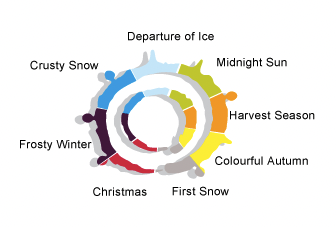
What is “Crusty Snow”? The eight seasons of the Arctic

crusty snow visual / sami / rovaniemi.fi

The Arctic year has never been divided into four seasons. Instead, the people living in the Arctic have structured time into eight periods.

From “First Snow” to “Crusty Snow”, to “Harvest Season” and “Colourful Autumn”. Arctic seasons are almost like rhythms that help the people adapt to the rhythms of the river, the forest, and the landscape. They aren’t defined by the Earth’s rotation, but by the changing of culture during the time of year.

Spring brings with it crusted snow, meaning it is safe to get on your skis without falling into the snow while wandering through the forests and the fells. When the ice in the rivers breaks up in the late spring, and starts its journey downriver, it means the first plants will soon begin to bloom and the reindeers will give birth to calves. The landscape suddenly fills with life, new and returning.

Based on the rhythms of the year, the locals know what to prepare for. When it is safe to walk on the river ice. When it is the right time to move reindeers from winter to summer pastures. Fishing and hunting – every task has its season. This is especially true for the indigenous Sámi community of northern Europe. They define their years by the behaviour of the reindeer. Reindeer are extremely sensitive to variations in weather and temperatures.

Land is life how do the indigenous Sámi live in balance with nature?

The Sámi in the Arctic have a saying: “Eennâm Lii Eellim”. Land is life.

By adjusting their daily lives with the changing of seasons, the Sámi balance their livelihoods in nature. They avoid scarcity of food and other resources they need to survive. A long history of living on the land has made it possible for the Sámi people to use their traditional ecological knowledge to protect and restore their environment’s biodiversity.

The northern way of life and the northern state of mind are a mentality which imitates nature. Nature is in a constant state of change – moving from one season to another – and so are the people. Always preparing for tomorrow. While this being one of the most defining parts of not only the Sámi culture, but the arctic culture overall, the eight seasons still define the thinking and acting of the people in the area through all generations. But because of the effects of climate change, and the increasing pressure for exploitation of the mineral deposits and the land use of the region, the Sámi are unsure about the changes happening in the landscape.

The river, that would always tell us what tomorrow would look like, can’t do that anymore after being strangled by hydropower plants. The warming climate has brought longer summers and warmer winters, merging the eight seasons into four with mid-seasons disappearing. It is becoming harder and harder to prepare for tomorrow, without the signs that we were used to seeing by observing nature.

The green transition must also be fair: can climate adaptation turn into a cultural threat?

Arctic regions are witnessing some of the most rapid rises in temperature. Climate adaptation (taking actions to reduce the harm caused by climate change, like switching to renewable energy) is a priority. But to do this in a fair way, we must be mindful of the existing discrimination against indigenous communities.

It’s the wealthy western civilisation that has caused the climate crisis. But the people who are the least responsible are paying the highest price. Indigenous peoples are among the first to face the direct consequences of climate change. This is due to their dependence and close relationship to the environment. On top of that, climate change exacerbates the difficulties already faced by indigenous peoples. This includes the exploitation of their land and resources, human rights violations, and political marginalisation.

We need to stop exploiting the Arctic now

Growing pressure in the Arctic and conflict over land is pitting different interest groups against each other. In the case of the Sámi people, both sovereign states and multi-billion-dollar companies are now interested in the same land the Sámi have herded for centuries.

Historically, the Global North has achieved a high standard of living by exploiting the labour and land of the Global South. But this can also take place within a country or an area. In the case of the Arctic, land that was previously frozen solid is becoming more and more accessible for industry due to the melting of permafrost and the Arctic Ocean.

We also need to be careful of ‘green colonialism’. As we invest in renewable energy and infrastructure, it can often happen at the expense of marginalized communities, like indigenous communities. Take, for example, the giant wind farms built in northern Norway which have destroyed reindeer pastures and migration routes.

Getting justice for the Sámi – how can the EU help?

If we want to make sure that EU laws protect Sámi rights and culture, the Sámi must be involved in making those laws.

In the last couple of years, the Sámi Council, a voluntary Sámi organisation that promotes Sámi rights and interests, created the Sapmi project. Established with EU funding, the aim was to raise awareness about the Sámi people within the European institutions. Sámi civil society became involved in EU decision-making processes. Luckily the Sámi people´s concerns were heard on crucial new EU policies, such as the Farm to Fork agricultural strategy, the Biodiversity strategy, the Just Transition Fund, and the European Climate Pact.

Meanwhile, in the European Parliament, our Greens/EFA MEP, Alice Bah Kuhnke, who is from Sweden, has called for “real political leadership”. She calls for a climate transition that must not come at the expense of climate justice.

Alice Bah Kuhnke Sámi

’’We cannot save our planet and humanity by continuing to exploit the earth and sacrificing indigenous peoples rights. We need real political leadership in this time of climate crisis, to make sure that the climate transition goes hand in hand with climate justice – for all, including indigenous populations.”

Alice Bah Kuhnke, Greens/EFA MEP, Sweden

We still have a lot of questions to answer, and a lot more to learn about our Arctic indigenous peoples. As the pressure on the Arctic grows, the question at the centre of it all is: who has the right to the land? And how can we find solutions for a more inclusive and sustainable future? One thing is for sure, the traditional Sámi world view can teach us all much more than we ever thought.

The EU minimum income – so will everyone be able to pay their bills?

The European Commission has proposed to raise minimum incomes to at least the poverty line in all EU countries. Such an adequate EU-wide minimum income would ensure every European can live a decent life. It would guarantee everyone in the EU a living income to pay our rent, buy healthy food, continue our education, secure access to health care, and – most pressingly right now – that we can cover our energy bills. To ensure that Member States live up to this, the Greens/EFA advocate a binding law, namely a directive on adequate minimum income, whereas the Commission wants to stick to non-binding recommendations.

Minimum income schemes are one of the strongest social tools to lift people out of poverty. So, what exactly is a minimum income? How could it benefit you? And what’s the plan for an EU minimum income?

What is the difference between a minimum income and a minimum wage?

Minimum income is often confused with minimum wage.

A wage is a remuneration that people get in return for carrying out a job in the labour market. The Greens/EFA strongly advocate that wages must be high enough to guarantee a decent standard of living. Recently, the EU institutions adopted a law to introduce a minimum wage that is linked to the cost of living. This is a big step forward towards a truly social Europe in which everybody can live a good life. Now, it is up to EU governments to apply this law as soon as possible. The cost-of-living crisis is happening now and people with low wages need this support urgently.

A minimum income is a social allowance provided by public authorities to people who are temporarily, or for a longer period, out of the labour market and lack access to unemployment benefits. There can be several reasons for this. People might get sick or go through a difficult private situation. Job demand can be low in a specific region; or there can be a mismatch between offer and demand. People might lack education, skills, or the experience to get a fairly paid job. Women often perform non-paid care tasks. Those are situations that could affect any one of us at a certain point in our lives. Some people are just not able to work. In all these cases, a minimum income enables a life of dignity.

An adequate minimum income – How much money do we need to live?

Safety nets and benefit systems, such as Minimum Income Schemes, exist in all Member States. However, the level of national minimum income is not adequate. Being adequate would mean that the allowance is high enough to cover the costs of all food, items, and services that we need to live a decent life. As of now, this is not the case in any of the EU countries.

For a minimum income to be adequate, it needs to be set at or above the so-called ‘poverty threshold’, which is 60% of the national median income. This threshold differs enormously from country to country across the EU. In Belgium, it currently amounts to 1085 euro a month for a single person and 2279 euro for a family with two kids. Even in a rich and developed welfare state such as Belgium, 14.9 % of the population is living in poverty or at risk of social exclusion. In Bulgaria, as of 2023, the poverty threshold is equivalent to an income of 257 euro or less per month. Around 1.5 million Bulgarian citizens or 22% of the population is currently living below this level. Only in Ireland, the benefit levels are close to the national poverty threshold.

It is not surprising then that poverty remains unacceptably high in Europe. In 2021, 95.4 million people in the EU were at risk of poverty and social exclusion, representing 21.7% of the EU population. Adequate minimum incomes would contribute greatly to the reduction of poverty.

Watch Sara Matthieu discuss green solutions for social justice.

Human dignity is a human right

We all have the right to live a life in dignity. We all have the right to have a roof over our heads. To eat healthy food, to benefit from affordable health care, to access quality education. Living in poverty often traps people because it excludes them from the rest of society. They can be denied a say and threatened by social and economic insecurity. Minimum incomes can help them escape this predicament. The financial security of a minimum income can enable people the opportunity to participate in society, undergo training, look for a job or do voluntary work to help better their situation.

Who would benefit most from a minimum income?

Groups who are more likely to face higher levels of financial instability and discrimination, such as single parents, women, people who are long-term unemployed, people with migrant backgrounds, Roma, and people with disabilities or long-term illnesses would be the ones to benefit most from minimum incomes set to the poverty threshold. But let’s see for ourselves with some examples, that we came up with based on national statistics.

How would access to an adequate minimum income benefit Ulrike, Lucija, Juan, and Jean?

  • Ulrike, Germany, 50 yo, housewife
    Ulrike has been a housewife for most of her life and does not get any income herself. She depends financially on her husband, who has become violent over time. If she had access to a minimum income high enough to live on, she could escape her situation and build a life of her own.
  • Lucija, Croatia, 27 yo, single mom
    Lucija had a child at the age of 18. She raised her daughter with the aid of her parents, but prefers to be financially independent from her parents. She dreams of studying to become a social worker. She is not entitled to unemployment benefits because she never contributed to a social security fund. Thanks to an adequate minimum income, she can now achieve her dream, as this monthly amount will serve as her safety net during this transitioning period.
  • Juan, Spain, 19 yo, student
    Juan does not get along with his father, who insists that he takes over his industrial scale farm. Juan, however, wants to study to become an engineer. For this, he will need to become a full-time student, but his parents refuse to pay. Unfortunately, in some EU countries, like Spain, you need to be at least 25 to be eligible for minimum income. If Juan had access to a minimum income, he could pay his rent and take up his engineering course.
  • Jean, France, 56 yo, former civil servant
    Jean was unlucky in life. 10 years ago, a car accident left him unable to work for a time. He lost his job, began drinking heavily and became depressed. He managed to get his life back on track. Unfortunately, he cannot find a job. Employers are suspicious and say he has been without a job for too long. Because he’s out of the job market, he lost his unemployment benefit. He is conducting satisfying voluntary work now. He can do this thanks to the minimum income he gets. The amount is hardly enough to live on, so he rents together with two other people. He would prefer to live alone, but that is only possible if the allowance was higher.

The EU’s proposal for a minimum income – is it social and green enough?

In its proposal from September 2022, the European Commission acknowledges that minimum income should be set minimally at the national poverty line. So far, so good. But unfortunately, the European Commission only issues ‘recommendations’ to the EU Member States. They are not binding, so EU governments have no legal requirement to follow them.

Moreover, this is not the first time that EU Member States have been asked to adjust their welfare benefits to decent levels. They have failed to do so for years. Why would they suddenly have a change of heart and change their policies to live up to standards that aren’t even mandatory? 

This is why the Greens/EFA group have been calling for a new EU law, namely a European Directive on minimum income. Given that a law for wage increase was possible, why should it not be possible for minimum incomes too?

Happy 30th Birthday, EU Single Market! Ready to join the fight against the climate crisis?

The EU Single Market is turning 30 years old. Anna Cavazzini and Kim van Sparrentak, Members of the Greens/EFA Members in the European Parliament, reflect on its maturity – and make suggestions how the EU Single Market can help us fight for a more green and just society.

A 30th birthday is the perfect occasion to reflect: What have you achieved so far? What regrets do you have? And what are your plans for the future?

Back in 1993, a joint effort of the then 12 EU member states led to the foundation of the EU single market. A star was born! More economic integration and cooperation should lead to the biggest internal market in the world with frictionless trade and global competitiveness. However, it is time to also look beyond the economic dimension. We need to ensure that social and green aspects are playing a bigger role in the future.

What is the EU Single Market?

Living, studying, shopping and working in European countries is easy because of the European Single Market. This internal market also allows us to buy food and other products from all over Europe. The EU Single Market facilitates easy trade and business without legal or bureaucratic barriers.

Thank you, EU Single Market!

Today, 30 years and one Brexit later, we still really appreciate that we have the EU Single Market. The Covid-19 pandemic, interrupted supply chains due to the climate crisis and the terrible war against Ukraine make the need for cooperation bigger than ever. The global economic challenges would be too huge for Member States to face them alone.

The EU Single Market: More freedom and jobs

We live, love, study and work across borders. ‘Generation Erasmus’ naturally looks for jobs in neighbouring countries. This is a freedom the internal market brought to us and that we cannot take for granted. Closed borders during the pandemic have proven that we need to protect this freedom of open borders.

And the numbers speak for themselves: We owe the single market an estimated 56 million jobs. It is also responsible for roughly 70% of exports of small and medium-sized enterprises and trade in goods. This trade alone accounts for around 25% of the EU GDP.

People using mobile phones Single Market / CC0 Antoine Schibler
People using mobile phones / CC0 Antoine Schibler

No roaming within Europe without the EU Single Market

It is the prime example of the success of the Single Market. We enter a train in Amsterdam, drive via Brussels to Cologne and all the while we use our mobile phone as if at home. The time of extra costs for SMS and calling someone within Europe is a thing of the past. Thanks to EU single market legislation we can now “roam like at home”. This means that there is no difference between using your mobile in your home country or in another EU country.

Better consumer protection within the EU

No matter if you are in Poland, Sweden or Italy you can rely on the same consumer protection standards that apply for all 500 million consumers in the EU. Because of the single market citizens can be sure that no harmful products from outside the EU end up in our stores or supermarkets. This is what we fought for when updating our product safety rules: If you shop online, products are equally safe. Consumers have the same rights on and offline.

The EU Single Market provides democratic rules for the online world

In 2022 we have set a first step away from self-regulation and set democratic rules for social media platforms and online marketplaces. This happened due to two landmark legislation, the Digital Services Act and Digital Markets Act. 20 years of deregulation have contributed to a deep void in the area of ethics online. This resulted in large digital companies deciding which dynamics are acceptable online and how our digital market functions.

How can we make the EU Single Market even better?

One is usually already pretty grown up when turning 30 years old. And don’t get us wrong – we hope to celebrate the EU Single Market for many years to come!

However, in the last 30 years we have also seen that not everyone has benefited from the Single Market. Wealth is still unequally distributed across regions and between individuals. We’ve witnessed the weakening of social protection due to competitiveness. National welfare systems have been put under pressure and we have seen waves of privatisation of public services. The Single Market improved the lives of many Europeans. But now, on the advent of its 30th birthday it needs to show responsibility. It needs to help us fight the climate crisis. We need to protect workers and to fulfil higher standards for social justice, consumer protection and environmental conservation.

We as Greens in the European Parliament have a strong vision for the future of the EU’s economic engine. Single Market, you need to:

Help your friends!

The Single Market can make a quick and smooth transition to a circular and climate-neutral economy possible. The planet is burning and there is no time to waste! We have to speed up the transition with the help of digitization. Let’s put consumer protection at the core of the economy. This way more products and services can be  rented, used, shared and reused – not bought, used and thrown away. Fighting the climate crisis is in our Green DNA. Thanks to our constant political pressure the EU Green Deal has set a new framework to transform the single market.

We want to ensure that the European market rules contribute to achieving the goals of the Green Deal. Here are some legislations we are currently working:

  • Products should live longer and must be able to repair, reuse and recycle.
  • Labels should not greenwash but tell the truth to take consumers on board of the green transition
  • Public money should be used for good through introducing mandatory sustainability criteria for public procurement
  • A fully circular EU economy by 2050.
Mobile phone repair Single Market / CC0 PR Media
Mobile phone repair / CC0 PR Media

Improve the online world further!

We see our democracies still increasingly under pressure by the viral spread of disinformation and extremism online. This is where – even with our current digital legislation negotiated – tech companies’ business models, manipulative recommender algorithms and addictive dynamics on social media still allow for a handshake between Putin, Musk and the far right. More fundamental measures for how platforms cope with disinformation and online hate remain necessary to defend democracy. With the upcoming Artificial Intelligence Act the EU is also again leading in digital policy and setting global standards with internal market legislation.

Go out more!

We can further improve European economic cooperation and use the Single Market to make the EU safer for everyone. Cooperation in the single market has always been the engine at the core of European integration. And with every crisis, it has evolved. We as Greens believe the single market can compensate for the strengths and weaknesses of Member States by enhancing cooperation. We want to strengthen our right for citizens to live, work and love across borders. Especially at a time of such global insecurity, we must further develop the internal market in terms of its governance, crisis preparedness and reaction capabilities so that everyone benefits from it.

Be a role-model!

The single market can set a world-wide example for a more green and just world. The EU’s high social and environmental standards are spilling over and expanding across the world. This is also true for those standards relating to the digital sphere. We have to make use of this power more. Let’s integrate it into our trade policy and cooperating further with like-minded partners around the world. Let’s prove that our green model of economy is competitive.

Make an impact!

There are limits to ‘removing barriers’ in order to fulfil the four freedoms, mainly with regard to services and labour rights. With free movement, we have also seen the rise of social dumping in sectors such as transport, construction and the meat processing industry. They use loopholes and fraudulent constructions to exploit workers from EU countries with lower wages and social protection. We should therefore measure the internal market’s successes and achievements beyond GDP, beyond price and beyond numbers. We need to look at its social and environmental impacts, as well as the quality of life it is able to deliver. When coming up with new proposals for the internal market, a social impact assessment should always be undertaken.

What is your favourite thing about the EU Single Market? And what would you like to see change? Let us know on our social media channels and sign up to our newsletter to stay up to date on green news and wins!

Net zero pledges and carbon removals – greenwashing the climate disaster

Instead of providing real solutions to the climate and biodiversity crisis, net zero pledges and carbon removals divert attention from real action and have negative effects on ecosystems, food security and people’s rights. Michael Staniszewski explains why we have to end fossil fuels and protect nature instead of “planting trees” for business as usual.

Michael Staniszewski

Michael Staniszewski is a Fridays for Future (FFF) climate justice activist from Germany. He is part of the movement’s #NotMyTaxonomy campaign and actions.


The climate and biodiversity crises are interconnected

We need to understand that we cannot solve one without the other.

Now businesses have found a way to link them in a way that does not serve either. They pretend they will stop harming the climate and help bring back nature, but are bound to fail on both accounts.

Protecting business as usual – how net zero pledges ignore science and nature

Scientists trying to model a world in which our lives and economic system remain mostly unchanged yet produce no greenhouse gas emissions have found that some sectors will face real problems. They say not only must we do as much as we can to reduce emissions, but we must also absorb and store emissions to get to net zero. For the latter, nature is key. Peatlands, forests or seagrass beds – they are all so-called ‘carbon sinks’ (which naturally absorb carbon) and are crucial in the fight against the climate crisis.

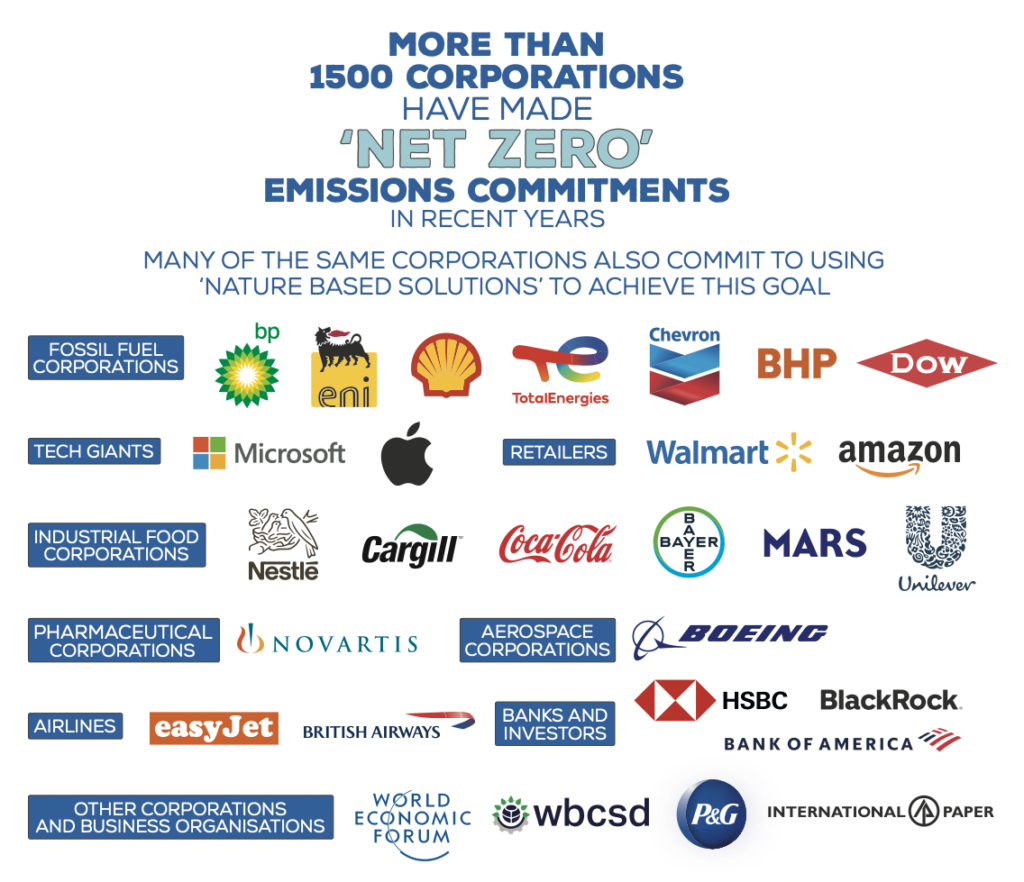
But, there is a problem. Global corporations have been more than happy to go down the net zero route. From fossil fuel giants, like TotalEnergies, Shell and BP, to multi-million dollar corporations, like British Airways, Coca Cola and Nestlé, a large number of businesses are making net zero emission commitments. Doesn’t sound sketchy at all, right?

Net zero emissions commitments - Source Friends of the Earth International report 2022
Net zero emissions commitments – Source Friends of the Earth International report 2022

These corporations won’t be drastically changing their business model. Instead, they reckon that they can continue to cause more emissions and have them “offset” by others.

Their pledges divert attention from the need to radically reduce their emissions. And they also “make the politics, violence, social and ecological destruction of fossil fuel burning and industrial farming invisible”, say Friends of the Earth.

The companies want to look good without doing good. They want to continue hurting the climate whilst telling us that they don’t.

The carbon offset scam     

The ‘carbon offset credits’ these companies rely on can be generated in two ways. They either come from projects that aim to “prevent, avoid or reduce emissions”, or from projects that aim to remove CO2 from the atmosphere. So far, most projects fall under the category of ‘avoided emissions’, such as ‘avoided deforestation’. It’s simple – a forest that could be cut down will not be cut down, or so project developers claim. And somehow this counts as saving carbon emissions! What’s more, the carbon savings from such projects are usually exaggerated.

Carbon Offsets: Last Week Tonight with John Oliver (HBO).

Environmental NGOs, like Greenpeace, have called carbon offsets a “scam”, demanding #realzero instead. Greenpeace has made it clear that we need to reduce emissions and protect nature to prevent a climate breakdown – and they are right. There is no time for offsets!

Now, the European Commission has released the so-called Carbon Removals Certification framework, which has been harshly criticised by the European Environmental Bureau (EEB) as a proposal that “falls woefully short of what is needed”. They’ve called the proposal a “framework to certify greenwashing.”

Nature for money – the carbon removal market

Today, more and more offset projects are based on the premise that they will “remove emissions”. Conservation organisations like The Nature Conservancy partner with corporations like Shell, Cargill and Syngenta to develop such “nature-based solutions”.

The finance industry sees “nature-based solutions” as a huge opportunity. It estimates the potential market value to be 3.3 trillion dollars, seeing “enormous new opportunities for both project developers and investors”.

Don’t get me wrong. We need to preserve and restore ecosystems where possible. Healthy ecosystems that function as carbon sinks like peatlands, tidal flats or seagrass beds are essential for a stable climate on this planet. But the way “nature-based” carbon removals work currently could have massive negative effects on ecosystems, food security and people’s rights.

Why can’t we just plant trees to fight climate change?

Most projected “nature-based” carbon removals, promoted by The Nature Conservancy and others, are supposed to come from reforestation, mainly in the Global South.

That sounds like an attractive proposition. Everybody loves trees. Donald Trump wants to plant a trillion trees. The EU only wants 3 billion (and has achieved 1% of that). And I guess Elon Musk wants to plant trees on Mars…

But, it is not that simple. A forest is a highly complex and interlinked ecosystem. It consists of a broad community of organisms like various kinds of fungi, lichen, shrubs, insects, mammals and even specific bacteria, which are actually responsible for that familiar earthy forest smell. It takes decades and specific environmental conditions for these exact conditions to establish. Only this way can a forest function in a holistic way and become a proper carbon sink.

With climate change, environmental conditions become unpredictable. Areas that have favourable conditions for a certain species today might not have them anymore in 10 to 20 years. There is no guarantee that a newly planted tree will survive.

A recent study has found that about half of the planted trees in tropical and sub-tropical forest restoration efforts did not survive more than five years. The researchers concluded that “planting for restoration is potentially rewarding but risky and context-dependent.”

You can plant trees, not forests

But it gets worse. In most cases, tree planting will create a plantation made up of a single tree species – not forests. The UN says that almost half of reforested areas around the world are monocultures used to produce wood.

A forest is not just trees. Whilst natural forests have high levels of biodiversity and a large ability to absorb and store carbon, plantations do not have that. You can only plant trees, not forests. The word reforestation is misleading, as its outcome is not necessarily a forest.

Planting trees can even have adverse effects. Invasive species, like the eucalyptus tree, have been introduced throughout the world and are outcompeting native species. Eucalyptus reduces the water available to other plants as its roots grow very deep, lowering the groundwater level. This has a negative effect on the ecosystem composition, leading to lower biodiversity.

Yet, this is exactly what is happening in Brazil where Suzano, a pulp and paper company, plants fast-growing eucalyptus to increase wood yields and claims its operations remove carbon from the atmosphere. The company has even applied for – and received – a licence to plant genetically modified eucalyptus trees that are resistant to the herbicide glyphosate. But these plantations are not forests. From an ecological perspective, they are green deserts without biodiversity.

There is not enough land to offset the carbon we produce

Proponents of “nature-based solutions” say we should reforest no less than 678 million hectares of land, approximately the size of Brazil or Australia.

Where should we plant a million, a billion or even a trillion trees? In your backyard?

Essentially that would not be in the Global North where land is expensive and planting trees would drive prices further up.

Most of these measures would happen in the Global South, in the regions most affected by the climate crisis, putting pressure on the land available. Scientists and environmental NGOs such as Greenpeace and Friends of the Earth International agree that nature-based carbon removals in these areas will exacerbate negative impacts on livelihoods, land rights, food production and ecosystems. This means basically human rights violations, huge land grabs, expansion of large monocultures and biodiversity loss.

Let’s finally protect pristine ecosystems

The priority must be to protect existing, pristine ecosystems. These are most resilient in the face of climate change, show high levels of biodiversity and have large carbon binding as well as storage abilities. This goes for forests and other ecosystems that function as carbon sinks, like peatlands, tidal flats or seagrass beds.

Indigenous and local communities are key to this process. They guard against deforestation and conserve biodiversity while sustainably producing food for their communities. Indigenous land makes up to 20% of the Earth’s territory, but contains around 80% of the remaining biodiversity. Indigenous communities are the guardians of biodiversity, while belonging to the group most affected by the climate crisis.

Cut emissions instead of offsetting them – The system has to change

Instead of greenwashing the climate crisis, we need to address the problem at its root – fossil fuels and the destruction of ecosystems. For real climate action, the historical and current largest emitters have to step up. This includes radically cutting their emissions and providing loss and damage reparations for the most affected people and areas.

We need regulations that effectively end the use of fossil fuels and allow for a socially just transition. This will also prevent further environmental destruction and pollution through open pit mines, fracking for gas or oil spills.

Net zero pledges from companies that want to continue business as usual are not an option. Business as usual means no future!

Carbon offsetting projects overestimate the amount of carbon they save. They are a surefire way for us to miss our hard-fought climate targets. Carbon removal and “nature-based solutions” are greenwashing at its best. Instead of saving us from climate breakdown, they threaten livelihoods, human rights and biodiversity.

For climate justice, we need to rethink the entire capitalist system that is based on the use of fossil fuels and destruction of nature. We need true solutions that put people over profits and protect both our climate and nature at once.

Pourquoi la COP15 à Montréal doit aboutir à un New Deal pour la nature

Du 7 au 19 décembre, les gouvernements du monde entier se réunissent à Montréal, au Canada, pour la 15e Conférence des parties à la Convention des Nations unies sur la diversité biologique – également connue sous le nom de COP15. Nos député·e·s européen·e·s, Ville Niinistö (Finlande), Jutta Paulus (Allemagne) et Caroline Roose (France), affirment que les gouvernements ne peuvent pas laisser passer cette occasion unique de faire progresser la protection et la restauration de la nature dans le monde. Ils doivent conclure un nouveau pacte pour la nature dès maintenant.

Suivez Ville et Jutta sur Twitter à Montréal du 14 au 17 décembre.

Pas de protection du climat sans nature

Notre nature est en crise. Nous avons perdu un tiers des zones humides de la planète et la moitié de tous les coraux – et nous continuons à détruire les forêts naturelles à un rythme alarmant. Un million d’espèces sont en danger d’extinction. En fait, les scientifiques pensent que nous vivons la sixième extinction de masse, et la première extinction de masse depuis que l’homme occupe la Terre.

Des écosystèmes sains sont tout aussi importants qu’un climat stable. Ils nous fournissent de la nourriture et de l’eau douce, nous protègent des catastrophes et des maladies, et constituent la base de notre économie.

Les océans, les forêts et les tourbières jouent également un rôle essentiel dans la régulation du climat mondial. Ils absorbent les émissions de carbone et nous protègent des phénomènes météorologiques extrêmes liés au changement climatique. Mais ils ne peuvent le faire que s’ils sont en bonne santé.

C’est pourquoi nous devons nous attaquer à la fois à la destruction de la nature et à la crise climatique mondiale. Nous ne pourrons les résoudre qu’en s’attaquant aux deux à la fois. Mais la bonne nouvelle c’est que de nombreuses actions visant à sauver la nature contribuent également à sauver notre climat !

Lors de la COP15 à Montréal, nous avons besoin d’un nouveau pacte pour la nature

La tâche la plus importante de la conférence COP15 de Montréal est de mettre au point un nouveau Cadre mondial pour la biodiversité (GBF) qui guidera les actions visant à protéger la biodiversité jusqu’en 2030. Ce cadre doit être pour la nature ce que l’accord de Paris est pour le climat – un guide clair pour une action commune des gouvernements du monde entier.

Les enjeux sont plus élevés que jamais. Nous sommes arrivés à un point où nous devons non seulement arrêter la destruction en cours du monde vivant, mais aussi l’inverser et faire revenir la nature ! Nous avons besoin d’un plan mondial solide pour protéger et restaurer la nature au cours de la prochaine décennie – un New Deal pour la nature.

Ce cadre devrait inclure une série d’objectifs chiffrés et mesurables, tels que la protection robuste d’au moins 30 % des terres, de l’eau douce et des océans de la planète d’ici à 2030, ainsi que des objectifs mondiaux de restauration de la nature.

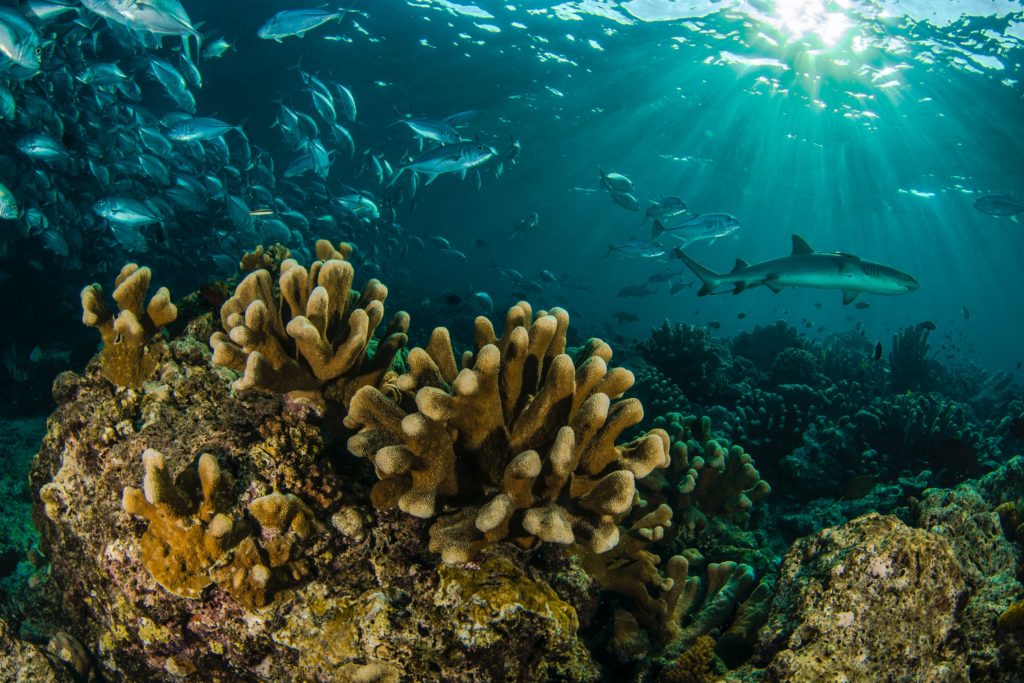
Seascape with corals / Unsplash

Un plan solide pour mettre en œuvre les mesures de protection de la biodiversité

Ce n’est pas la première fois que les gouvernements se fixent des objectifs en matière de protection de la nature. Mais jusqu’à présent, ils n’ont pas réussi à atteindre efficacement ces objectifs. Aucun des objectifs fixés pour 2020, les “objectifs d’Aichi” convenus au Japon en 2010, n’a été pleinement atteint.

Même lorsqu’ils ont été partiellement atteints, comme la désignation de zones protégées, ils n’ont pas toujours été efficaces pour protéger la faune sauvage. Des pays ont créé des “parcs de papier” sans connectivité suffisante, sans gestion adéquate et sans gouvernance équitable.

C’est pourquoi un plan de mise en œuvre solide est tout aussi important que des objectifs bien définis. Lors de la COP15, les parties doivent convenir d’un mécanisme de mise en œuvre parallèlement au cadre mondial. Les étapes telles que la planification, le suivi et l’établissement de rapports, ainsi que l’examen et le renforcement de l’action, doivent être claires dès le départ. Elles doivent également convenir d’un calendrier pour la réalisation de ces étapes.

Les parties doivent pouvoir commencer à mettre en œuvre le cadre immédiatement en fixant des objectifs nationaux et en actualisant leurs stratégies et Plans d’Actions Nationaux pour la Biodiversité (SPANB).

Un financement suffisant est essentiel pour parvenir à la mise en œuvre. L’argent devrait provenir principalement de sources publiques et être détourné des subventions néfastes à l’environnement versées aujourd’hui. En effet, les investissements publics dans la conservation et la restauration de la biodiversité n’ont guère de sens s’ils sont dépassés par des investissements qui contribuent à détruire la nature.

Pas d’accord à la COP15 sans les peuples autochtones et les communautés locales

La protection effective de 30 % des terres, de l’eau douce et des océans de la planète d’ici à 2030 ne sera pas possible sans la pleine participation et le leadership des peuples autochtones et des communautés locales (IPLC).

Des générations de peuples autochtones et de communautés locales ont protégé efficacement la nature et l’ont utilisée de manière réellement durable. Ils sont les meilleurs gardiens de la nature. Les terres appartenant à ces communautés couvrent au moins un tiers de toutes les terres de la planète, y compris des zones particulièrement précieuses et riches en nature, et elles sont généralement en bon état.

Aujourd’hui, 80 % de la biodiversité restante se trouve sur les terres, les eaux et les territoires des peuples autochtones et des communautés locales. Si nous voulons réparer notre relation brisée avec la nature, nous devons apprendre de ces alliés de longue date de la nature et soutenir leurs efforts pour protéger, défendre et restaurer leurs terres et leurs eaux.

Mais la capacité de ces peuples à sauvegarder la nature est menacée. Au cours de la dernière décennie, plus de 1 700 défenseurs de la terre et de l’environnement ont été assassinés, dont un nombre disproportionné issus de peuples autochtones.

La protection de la nature commence par la protection des droits, des moyens de subsistance et des cultures des peuples autochtones. Lors de la COP15, leur voix doit être au centre de la prise de décision, de la gestion et du financement de la protection de la nature.

Montrer l’exemple : l’UE doit faire plus pour la biodiversité

Enfin, l’Union européenne doit aussi balayer devant sa porte. La Commission européenne a annoncé des plans ambitieux pour protéger et restaurer la nature. Si nous voulons être crédibles sur la scène internationale, ces plans doivent être mis en œuvre.

Les objectifs de l’UE visant à protéger au moins 30 % des zones terrestres et maritimes de l’UE (et à protéger strictement au moins 10 % de ces zones) ne peuvent pas dépendre de la bonne volonté des gouvernements de l’UE. Ils doivent être contraignants pour tous les pays, tout comme l’objectif de 20 % proposé pour les mesures de restauration de la nature.

Ces actions nous aident également à protéger le climat au niveau mondial et à nous protéger des effets du changement climatique. Comme l’ont dit les architectes de l’Accord de Paris : il n’y a pas de voie pour limiter le réchauffement climatique à 1,5°C sans action de protection et de restauration de la nature.

En tant que Groupe des Verts/ALE au Parlement européen, nous défendons des actions fortes tant au niveau mondial qu’européen. Nous nous engageons à rendre notre Terre à nouveau habitable, en protégeant la nature et le climat.

Lire nos demandes pour la conférence des Nations unies sur la biodiversité (COP15) ici (en anglais).

COP15 – A Paris Moment for Biodiversity?

Why the COP15 in Montréal must deliver a New Deal For Nature.

From 7 to 19 December, governments from around the world are gathering in Montréal, Canada, for the 15th Conference of the Parties to the United Nations’ Convention on Biological Diversity – also known as COP15. Our MEPs, Ville Niinistö (Finland), Jutta Paulus (Germany) and Caroline Roose (France), argue that governments cannot waste this once-in-a-decade opportunity to advance the protection and restoration of nature worldwide. They need to strike a New Deal For Nature now.

Follow Ville and Jutta on Twitter in Montréal from 14 to 17 December.

+++ Update 19th December 2022: HISTORIC RESULTS FOR BIODIVERSITY AT COP15. 
VILLE NIINISTÖ, MEP: "COP15 has approved a historic deal to protect nature and to stop the loss of biodiversity by 2030. Countries agreed to protect 30% of the land and marine areas and to ensure that by 2030 at least 30% of degraded ecosystems are under effective restoration. They also agreed to putting more financial resources to the implementation of the Global Biodiversity Framework and to push towards more sustainable economies by cutting environmentally harmful subsidies.” Read our full press release on the COP15 here. +++

No climate protection without nature

Our nature is in crisis. We have lost a third of the Earth’s wetlands and half of all corals – and we continue to destroy natural forests at an alarming rate. A million species are in danger of extinction. In fact, scientists believe that we are living through the sixth mass extinction, and the first mass extinction since humans occupied the Earth. 

But healthy ecosystems are just as important as a stable climate. They provide us with food and fresh water, protect us from disasters and disease, and form the basis of our economy.

Oceans, forests and peat bogs also play a vital role in regulating the global climate. They absorb carbon emissions and shield us from extreme weather events linked to climate change. But they can only do that when they are in good health.

That’s why we must tackle the destruction of nature and the global climate crisis together. We can only solve both or solve neither. The good news? Many actions that work to save nature also help to save our climate!

At COP15 in Montréal, we need a New Deal For Nature

The most important task for the COP15 Montréal conference is to hash out a new Global Biodiversity Framework (GBF) that will guide actions to protect biodiversity until 2030. This framework must be for nature what the Paris Agreement is for the climate – a clear guide to common action by governments around the world. 

The stakes are higher than ever. We have come to a point where we must not only stop the ongoing destruction of the living world, but reverse it and bring back nature! We need a strong global plan for protecting and restoring nature in the coming decade – a New Deal For Nature.

The framework should include a range of numerical, measurable targets, such as the robust protection of at least 30 percent of the world’s land, freshwater and oceans by 2030, and global targets for nature restoration.

Seascape with corals / Unsplash

A strong plan to implement biodiversity protections

It is not the first time that governments set themselves targets on the protection of nature. But so far, they have failed to effectively reach those targets. None of the 2020 targets, the so-called Aichi targets agreed in Japan in 2010, have been fully achieved.

Even when they were partly reached, such as the designation of protected areas, they were not always effective in protecting wildlife. Countries have established “paper parks” without sufficient connectivity, adequate management and equitable governance.

That is why a solid implementation plan is just as important as well-defined targets. At COP15, parties must agree on an implementation mechanism alongside the global framework. Steps such as planning, monitoring and reporting, as well as reviewing and ratcheting up of action, must be clear from the start. They must also agree on a calendar for taking those steps.

Parties must be able to begin to implement the framework immediately by setting national targets and updating their National Biodiversity Strategies and Action Plans (NBSAPs).

Sufficient finance is critical to achieve implementation. Money should mainly come from public sources and be redirected from harmful subsidies paid out today. Public investments in biodiversity conservation and restoration make little sense if they are outpaced by investments in nature destruction.

No deal at COP15 without Indigenous Peoples and local communities

The effective protection of 30 percent of the world’s land, freshwater and oceans by 2030 will not be possible without the full inclusion of and leadership from Indigenous Peoples and local communities (IPLCs).

Generations of Indigenous peoples and local communities have effectively protected nature, and used it in a truly sustainable way. They are nature’s best guardians. Lands owned by these communities cover at least a third of all land on Earth, including particularly valuable, nature-rich areas, and they are generally in a good state.

Today, 80 percent of remaining biodiversity is in the lands, waters and territories of Indigenous Peoples and local communities. If we want to mend our broken relationship with nature, we must learn from nature’s long-standing allies and support their efforts to protect, defend and restore their lands and waters.

But these peoples’ ability to safeguard nature is under threat. In the past decade, more than 1,700 land and environmental defenders were murdered, including a disproportionate number of Indigenous people.

The protection of nature begins with the protection of the Indigenous peoples’ rights, livelihoods and cultures. At COP15, their voices must be at the centre of decision making, management and funding for nature protection.

Leadership by example – EU must do more for biodiversity

Finally, the EU needs to get its own house in order. The European Commission has announced ambitious plans to protect and restore nature. If we want to be credible on the international scene, these plans need to be put into action.

The EU’s targets to protect at least 30 percent of both the EU’s land and sea areas (and strictly protect at least 10 percent of these areas) cannot rely on the good will of EU governments. They must be binding for all countries, just like the proposed 20 percent target for measures to restore nature.

These actions also help us protect the global climate, and protect us from the effects of climate change. As the architects of the Paris Agreement have said: there is no pathway to limiting global warming to 1.5C without action on protecting and restoring nature.

As the Greens/EFA Group in the European Parliament, we defend strong actions on both the global and EU level. We are committed to making our Earth habitable again, through the protection of nature and our global climate. 

Read our demands for the COP15 of the Convention for Biological Diversity here.

For a feminist future – End forced sterilisation of persons with disabilities in Europe

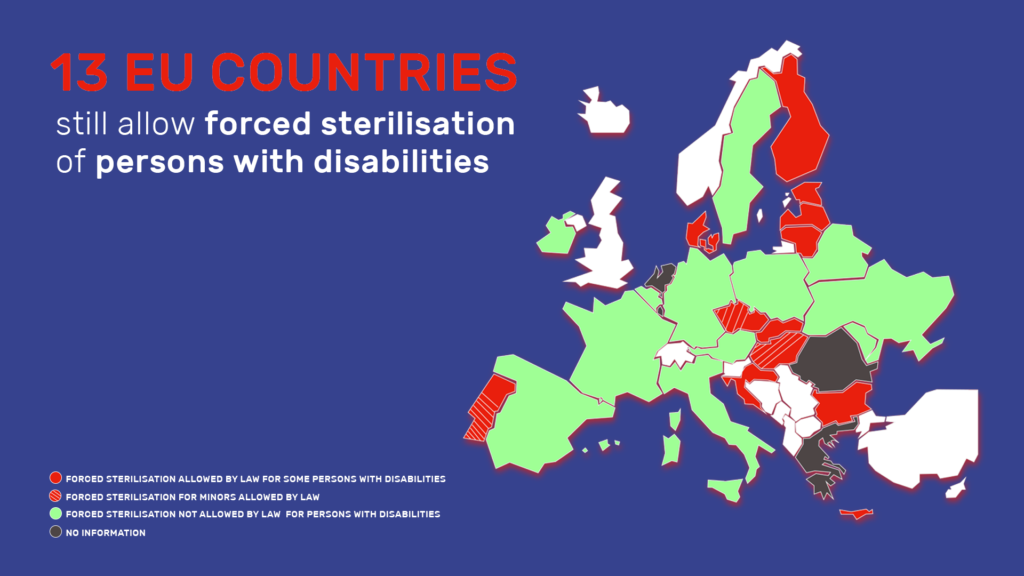
Did you know that 13 EU countries still authorise forced sterilisation?

And this might only be the tip of the iceberg.

MEP and co-chair of The European Parliament’s Disability Intergroup Katrin Langensiepen explains why this human rights violation is still happening, and what you can do to put an end to it.

forced sterilisation map / GreensEFA

Forced sterilisation: What we know so far and what we don’t know yet

As shocking as it may sound, today in Europe, people with disabilities can still have their capacity to have children forcibly removed.

Women and girls with disabilities, and all those that can carry pregnancies, are overwhelmingly targeted by this torturous practice. People with intellectual or psychosocial disabilities are among the most at risk of being sterilised without their consent. This is especially true for those under guardianship measures.

Sterilisation is the process resulting in a permanent incapacity of natural reproduction. It is forced sterilisation when a person undergoes sterilisation without their knowledge or consent, after expressly refusing it or if the sterilisation takes place in the absence of a serious and immediate threat or risk to health and life.

Multiple EU Member States still willingly engage in the practice. The facts are staggering.

• Only 9 EU Member States explicitly criminalise forced sterilisation

• At least 14 EU Member States still allow some forms of forced sterilisation in their legislation. They authorise either a guardian, a legal representative, an administrator or a doctor to consent to the sterilisation of a person with disabilities on their behalf.

• 3 Member States authorise the forced sterilisation of minors.

What is Ableism?

Forced sterilisation is often linked to ableism in our societies. Ableism is the discrimination in favour of able-bodied people.  

Ableism amplifies discrimination against women with disabilities, through the wrong assumption that they are somehow different than women without disabilities that they do not have sexual preferences, family plans and are not able to decide for themselves.

Particularly women with intellectual disabilities are often written off from having the capacity to consent to sex. Ironically, women with disabilities are also the ones most affected by sexual violence and harassment. Forced sterilisation can actually make someone more vulnerable to sexual abuse. In this way, forced sterilisation is a direct consequence of a patriarchal system.  The history of forced sterilisation is rooted in the racist, ableist and discriminatory eugenics movement of the 1900s which aimed to rid society of “undesirable traits”.

Forced sterilisation is done behind closed doors, often with the consent of the State.

There is a lack of research, funding and data on how many countries still put into practice this human rights violation. We don’t know how many women, girls and gender-diverse persons are affected.

As with many other disability-related fields, data on the topic is dramatically lacking. In order to bring the facts to light, we should start a European investigation to know where and how much forced sterilisation happens in the EU. 

A new EU law against gender-based violence can change this – here’s how

In March 2022, the European Commission published their proposal for the long-awaited Gender Based Violence Directive.

After repeated calls by the European Parliament and the Greens/EFA Group, the European Commission finally outlined concrete action towards ending gender-based violence across the EU.

The European Parliament is now drafting its position on the proposal.

The Directive must introduce a criminalisation of forced sterilisation in the European Union. The European Disability Foundation proposes the inclusion of a specific article prohibiting forced sterilisation.

Forced sterilisation is prohibited under the United Nations Convention on the Rights of Persons with Disabilities, ratified by the EU and all its Member States. It is also forbidden under the Council of Europe Convention on preventing and combating violence against women and domestic violence (‘Istanbul Convention’). The Istanbul Convention has not been ratified by the EU yet. We need to put pressure on all Member States to finally complete the process and ratify the agreement.

Accessibility, adequate support and training of professionals are key to ensure access to justice and to support services for women and girls victims of violence against women and domestic violence.

The Directive must strengthen the existing framework established by the Victims’ Rights Directive. It must ensure accessibility of shelters and other interim accommodations. It also has to require States to provide training to relevant authorities on disability related rights and needs and.

INDEPENDENT LIVING – RIGHTS FOR PERSONS WITH DISABILITIES

A key factor to break with this circle of violence is for Member States to strengthen independent living of persons with disabilities. Living in an institution often creates power imbalances and it is often in this context that forced sterilisation happens.

As mentioned in the EU Disability Strategy 21-30, we need to strengthen free assistance, community-based services and accessible housing. We need to create an environment where people with disabilities are informed and are empowered to make decisions for themselves.

For that, Member States need to provide targeted help and information in an accessible way. These types of services are drastically lacking in the Member States. The EU needs to provide funds to help establish these services in a sustainable way.

In addition, data and research are urgently needed to identify the root causes of violence and monitor progress in preventing and combating gender-based violence. There is a structural lack of comparable data on gender-based violence against women and girls with disabilities in the EU.

In this regard, the Directive should require Member States to collect disaggregated equality data to inform on the specific situation of marginalised groups. This should include women and girls with disabilities, in various settings such as in institutions, schools and workplace.

The future is accessible – Let’s end forced sterilisation

As green feminists, our work for a feminist, free and equal Europe is intersectional.

The European Parliament will soon be voting on its position on the new Gender-based Violence Directive. This is our opportunity to make sure that we ban forced sterilisation in the EU once and for all.

The directive needs to tackle the widespread discrimination against women, girls and gender-expansive persons by protecting all of our sexual and reproductive rights.

Do you agree? Share this blog post to your support to sexual and reproductive health for all!

CYBERVIOLENCE – WHY WE NEED A SAFE AND FEMINIST INTERNET NOW

European collaboration can offer solutions on how to end cyberviolence. Sylwia Spurek MEP on why ending online violence should be considered a priority for the European Parliament when fighting gender-based violence. 

Cyberviolence -the new face of gender-based violence?

Gender-based violence, a concept we are sadly all too familiar with, is more than violence against women. It also includes violence against persons with marginalised sexual orientations or gender identities. I am a feminist, lawyer, activist and women’s rights defender engaged in combating gender-based violence for over 20 years. And I have seen the cyber dimension of gender-based violence evolving.

And just as for violence offline, the risk of being affected by cyberviolence increases if you are Black, a person of color, from an ethnic or religious minority, have a disability, identify as LGBTIQA+ or are if you are outspoken about anything to do with feminism or equal rights.

Gender-based violence online is not a new phenomenon. It is a continuum of the violence that women, girls and gender diverse people face offline.

Crimes that are a form of gender-based cyberviolence include:
  • Online hate speech/trolling
  • cyber harassment
  • cyberstalking
  • sharing content without consent
  • hacking
  • identity theft
  • cyberbullying
  • and image-based sexual abuse.

However, the attempts to make such a list exhaustive are pointless. As the UN Special Rapporteur on violence against women noted, every new technology can give rise to different and new kinds of gender-based violence.

The World Wide Web Foundation found, already in July 2020, that we face a parallel pandemic of cyberviolence. 52 % of women and girls reported that they experienced some form of online abuse. 87 % said they think that the problem of cyberviolence is getting worse.

But how can we build a safer world online, to counter this ever-evolving form of gendered violence?

The cost of cyberviolence for a society

An Australian research shows the real cost of cyberviolence. When calculating the price tag of online harassment and cyberhate, the 2019 research shows that online violence has cost Australians an estimated $3.7 billion in health costs and lost income.

What do you think the economic cost would be for Europe, a region with a population nearly twenty times larger than that of Australia?

Gender-based violence is a human rights epidemic, an economical threat, and a barrier to thriving democratic societies. The EU can no longer be a by-stander to the evolving crisis. We need to go from empty words to practising our values.

The patriarchy feeds gender-based violence online

To understand and tackle the phenomenon of gender-based cyberviolence we need to understand that either offline or online, gender-based violence has a structural nature.

Patriarchal structures are some of the main social mechanisms that disadvantage all persons who don’t conform to old gender norms in society. It is the same mechanism of patriarchy that manifests in domestic violence, sexual violence, transphobia and other types of physical, psychological, or economical violence.

Cyberviolence does not happen independently from offline reality – they go hand in hand.

In many cases perpetrators of online violence are the same as offline. They are partners, ex-partners, relatives, classmates or work colleagues. Crimes online often follow or precede the offline ones.

We need to educate vulnerable groups online on how to protect themselves. How can we safely store passwords, remove personal information that we don’t want to see online and what can we do when facing harassment online? But we also finally seak responsibility with the perpetrators. We must invest in education and prevention of the violent behavior, before it even takes place.

The basis for this needs to be a European approach to gender-based violence online and offline. This is why we are working on the ‘EU directive against gender-based violence’. Only with a common approach can we fight cyberviolence across borders together.

What can we do to combat gendered cybercrimes?

The current response to gender-based cyberviolence in the EU is weak, fragmented, and insufficient.

The interventions against cyberviolence at EU Member State level don’t take the gender dimension into account enough. But also other intersecting discriminatory factors like ethnicity and sexual orientation fall short in these measures against cyberviolence . Instead, they rely only on general provisions of offline crimes to be applied in these cases, such as for stalking or harassment. But standardisation is vital to successfully combating online crimes. Yet, the EU legislation has for far too long been silent on the topic of gender-based cybercrimes.

In the 21st century, while women and girls are still facing violence every day and do not feel safe in their own home. The EU has also still not ratified the Istanbul Convention, that aims to prevent and end gender-based violence.

This is why we as the Greens/EFA in the European Parliament believe that the problem needs to be tackled with the urgency. This can be done with help of the European Parliament’s position on the European Commission’s proposal for an EU directive against gender-based violence. We still call on the Council to activate the passerelle clause by adopting a unanimous decision identifying gender-based violence against women and girls as one a new of the areas of crime listed in Article 83(1) of the TFEU.

In the coming months the Parliament will form its position on the directive. We invite all MEPs to make the most of this historic and incredible opportunity. They can contribute to building a feminist, free and equal internet.

As green feminists, we will show the highest determination to end gender-based violence including gender-based cyberviolence, once and for all.

Gender as a dimension of cyberviolence should influence how we perceive it, and how we take action against it, also in EU laws and policies!

If every country would follow the EU’s ambition when it comes to tackling climate change the world would be steering towards three degrees of global warming by the end of the century. Read here why the Greens/EFA MEP Michael Bloss will be fighting for more EU climate action at COP27 in Sharm el-Sheikh.

Read the Greens/EFA demands for the COP27 climate conference in Sharm el-Sheikh here.

Greens/EFA MEP Michael Bloss at COP27

The Greens/EFA MEP Michael Bloss:
“At COP27 The EU needs to finally show real climate leadership to keep the 1.5 degree promise.”

COP27: Where is the EU’s climate ambition?

I often get asked what a world 3 degrees hotter would look like. I am not a climate scientist, but I listen to the experts. They say our house is on fire. We face a future of droughts, floods, and fires that we are now already witnessing.

This year, Europe experienced its worst drought in 500 years. Water levels in large rivers like the Rhine in Germany or the Po in Italy dropped so low that industrial output was threatened. The bed of the river Loire in France could be crossed by foot. Farmers had to choose which fields of crops to water and which ones to let die. Fires ripped through vast swathes of Europe, devastating communities and livelihoods. Our forests experienced a heat shock that will impact them for years to come.

Not only nature was suffering. In 2022, the EU saw 53,000 excess deaths in July from heat waves. This is the reality of a world just 1.2 degrees warmer. So what is the European Climate Commissioner Frans Timmermans doing about it? His claim that Europe is already doing enough against the climate crisis is not a good enough answer – and looking at the events this summer simply not true. In the weeks and days before the COP27 climate conference, Europe’s global climate diplomacy to promote international climate action is non-existent.  

EU climate action – where is our European Climate Commissioner?

Shortly before the 27th UN climate conference, there is no coordinated push to raise international climate ambition and stop us rocketing past 1.5 or even 2 degrees, and therefore breaching the Paris Agreement. In fact, Climate Commissioner Timmermans and President of the European Commission Ursula von der Leyen did not even show up at the debate on the COP27 in the European Parliament last month. The self-proclaimed champions of the Green Deal have fallen silent. They should be coordinating global initiatives to fulfil the Paris Agreement. Instead there is a full-blown conflict with the Global South on liability for climate loss and damages. But without the EU showing real climate leadership, how can we win the global fight against the climate crisis? 

While the EU denies its responsibilities and financial obligations to the Global South, the situation becomes even more absurd. EU money is readily available for new oil and gas pipelines in Hungary or Spain. But when it comes to ambitious climate policy and investing in renewables, the cheapest energy supply in the world, little is put on the table.

We Europeans started the climate crisis and we are still fuelling it. And yet we continuously ignore our historical climate debt, invest in coal, oil and gas. The EU even subsidises fossil fuels in the European Union by an eye-watering €112 billion per year.  

Climate leadership at COP27 – the ideas are there, let’s act on them

A full-blown conflict with the Global South is a failure of climate leadership – and all eyes are on Europe. If Timmermans does not act, von der Leyen needs to step up. We have to foster a global coalition to stop the breach of the Paris Agreement. This requires the EU to increase its climate targets to 65 per cent emission reduction until 2030. It must say loud and clear what is already being implemented and thus put pressure on other industrialised countries to do the same.

We need more climate action – for the Global South and for the planet.
The Greens/EFA MEP Michael Bloss

The reform of the EU’s carbon market, the end of the combustion engine, the deforestation law and the ambitious renewable energy targets can already lead the EU to reduce its CO2 emissions by more than 60 per cent by the year 2030. What is missing is the European Commission’s push on the international stage, stalling a dynamic where industrialised countries put more climate action on the table. It is this decade that decides on the future of hundreds of generations to come. We do not need cowards, we need bold decision makers to save the future. 

Getting rid of fossil fuels – climate action is our security policy

Climate justice risks becoming an empty word, unless Europe understands what is at stake: We can only solve this together. The Global South should be our key allies in this fight for survival. If countries decide instead to take the same fossil fuel economic development pathway we are all doomed. The only credible way to avoid such a situation is to acknowledge our historical responsibility for the floods in Pakistan, the droughts in Kenya and the disappearance of islands due to sea level rise. Climate losses and damages are real and we need to accept the liability.    

Let’s get serious – the switch to renewable energy is also the only way to free ourselves from the fossil fuel shackles that tie us to Russia, Qatar and Kazakhstan. They have led to instability, war and now a full blown energy crisis in Europe and beyond. Climate action is within our deepest interest, it is also the security policy of the future. It is our shield to protect freedom and peace for us, future generations and everyone on this planet.

Frans Timmermans and Ursula von der Leyen need to wake up. Our future is at stake at COP27. For me, my generation and future generations will ask this question: Why did you not act when it was not too late? 

Read the Greens/EFA demands for the COP27 climate conference in Sharm el-Sheikh here.