A greener Europe and better healthcare – recommendations from the Conference on the Future of Europe

An independent and randomly-selected panel of EU citizens has called for better climate protection and equal access to healthcare systems at the Conference on the Future of Europe. The recommendations, agreed last weekend, will be presented to politicians and decision-makers today. Greens/EFA MEPs, Eleonora Evi and Michèle Rivasi, ask that these demands be taken seriously.

EU citizens are being asked to help decide on the direction of the EU for the coming years in a project called the Conference on the Future of Europe (COFE).

A panel of 200 participants has clearly shown a marked desire for change. Many of their demands are in line with the issues that the Greens/EFA have been pushing for a long time. The EU must now deliver on the people’s demand for European democracy, climate protection and a better quality of life. Read on to find out what their demands are.

Farming and Food: We need a complete overhaul, European citizens say

The people at the Conference on the Future of Europe have asked for more small organic farms, more non-intensive farms and farms with short supply chains. Further, they are also in favour of more subsidies for organic farming and organic pesticides. They want a complete reversal of the EU’s current agriculture rules, known as the Common Agricultural Policy (CAP).

The citizens at the conference made clear that they want food to be made locally and to be more affordable. They felt that current prices don’t reflect the low impact of local, sustainable, food on the environment. For the same reasons, the Greens/EFA made exactly the same proposals on sustainable agriculture during the last reform of the CAP.

People at the conference insisted that everyone in the EU should have the right to good, seasonal food in schools, and they called it “a question of social -justice”. They want food production to be a part of education. Governments should promote urban gardening and gardens in schools.

Energy Production: EU citizens want more renewables and less greenwashing

When it comes to energy, the people at the Conference on the Future of Europe have asked for more financial investment to explore new eco-friendly sources of energy. These recommendations come at a time when the European Commission is trying to label fossil gas and nuclear power as “green” by adding them to the EU’s list of sustainable investments in the so-called EU taxonomy. (Sign our petition against the greenwashing of gas and nuclear energy.) Jen, from Sweden, says:

My main goal from the beginning was to talk about as many topics as possible but due to time limits I chose energy. I was more pessimistic about the EU before I came to the Conference on the Future of Europe.
Jens, from Sweden

Biodiversity at the Conference on the Future of Europe: Bring our nature back!

The people involved in the Conference on the Future of Europe recommended that we promote and protect Europe’s biodiversity. This includes mammals, birds, insects and plants. They said we should extend today’s nature conservation areas and make sure the protections are better enforced.

Furthermore, the citizens recognised the urgent need to reverse the degradation of our nature and restore our ecosystems. They called for a special focus to be given to the restoration of exploited or destroyed forests and areas with degraded soil. These recommendations are especially important as the European Commission will publish a new proposal for nature restoration soon and we have high expectations.

The COVID-19 pandemic has shown that we need to preserve the fragile balance between humanity and nature. When we destroy the natural habitats of wild species, this can become a dangerous vehicle for zoonotic viruses.

One of the best things we can do for nature is to reduce the number of polluting cars on our roads.  Augustus, from Latvia, suggests:

I would really like the EU’s cycling routes infrastructure to be improved so I could safely bike from Riga to Warsaw for example
Augustus, from Latvia

Healthcare is a priority: We need better access for all

The COVID-19 pandemic has reminded us how important public health care is. It is no wonder that people are demanding better and equal access to health care agere across Europe.

People at the conference called for increased funding to the public health care system and more funding for research and innovation. They placed special focus on the need for better mental healthcare and sexual education.

Beyond an increase in research funding, or the establishment of a minimum wage for health care providers everywhere in Europe, European citizens also demand that private providers do not unfairly benefit from public funds and do not drain public health system resources. Therefore, a stronger public healthcare system also means better preparedness for future pandemics.

Just recently, the Greens/EFA managed to triple the EU funding to tackle cross-border health threats (such as the Corona pandemic) and for tools to strengthen our healthcare systems.

Sofia, from Spain, says:

One of the most important issues that has come up at the conference is access to health care for everyone. This means that no one should be denied access to health care because of the lack of resources
Sofia, from Spain

Let’s listen to the people at the Conference on the Future of Europe: The EU needs to step up and deliver

Citizens want better health care and a healthy environment. It is clear that the EU can and must do more to respond to these concerns.

The recommendations by EU citizens at the Conference on the Future of Europe confirms the trend in EU-wide opinion polls that people are in favour of consistent climate action. Their concern for the climate has been growing for years. Europe’s citizens are ready for a new start – in agriculture, energy, health and biodiversity.

We cannot let these proposals be ignored by the European Commission or be blocked by European governments. The President of the European Commission, Ursula von der Leyen, must take the voices of European citizens seriously. She must follow up these proposals with concrete actions and legislation, not empty words.

The Conference on the Future of Europe should be the EU’s finest hour of democracy. The people have spoken. The European Commission now needs to show them that it’s listening.

The Digital Services Act is coming. What will it mean for you?

The European Parliament has voted on a new law for online services, known as the Digital Services Act. Alexandra Geese MEP talks us through some of the problems of the digital age and what the Greens/EFA are doing to protect our fundamental rights.

We shop online, we bank online, we listen to music online. Since the COVID-19 pandemic struck, most of us now work online, chat with our friends on WhatsApp and take our exercise classes via Zoom. The last EU law to set out rules for online services was adopted in 2000 (the e-commerce directive). A lot has happened since then. Back in 2000, the world was still using ICQ and MSN Messenger. It’s safe to say the way we use the internet has changed dramatically.

The last couple of decades have seen the rise of a few giant online platforms. By now, it’s hard to imagine life without Facebook, Google and Amazon. And while millions of us use these services, it’s undeniable that they’ve shifted the balance of power.

Over half (57%) of all Europeans are on social media networks. And, in most EU countries, a majority of us get news from social media every day. Online platforms have a direct impact on our fundamental rights, our society and democracy.

These big changes have come with some big challenges. We’re all aware of the spread of disinformation. We all see the rise of hate speech and online harassment. New ways of influencing elections and votes. Manipulative features that trick us out of our data. Companies tracking our clicks and targeting ads based on what they think we’ll buy next. Fake traders selling scams or dangerous goods with no accountability.

Clearly, after more than 20 years, it is time for an updated European digital law.

What will the Digital Services Act do?

The Digital Services Act will tackle some of these challenges. New rules will clarify how illegal content is taken down. New transparency requirements for companies will help ensure products sold online are safe and that buyers can see exactly who they are buying from. It will also give us more control over what we see online and a real choice about whether to allow companies to advertise to us (and how). If done right, the Digital Services Act will make the internet both safer and fairer for all of us.

Of course, some of the new rules have been met with powerful opposition. The Greens/EFA have been fighting to protect our fundamental rights online. We want the EU to set a global  standard for regulating digital content.

The journey is far from over. We’ve managed to convince the European Parliament to adopt some powerful new rules into its version of the Digital Services Act. But, we still need to persuade European governments to take the changes on board during the upcoming negotiations with the Council of the European Union on the final law.

Read on to find out what we’ve managed include in the new Digital Services Act so far, and what it could mean for your daily life online.

Clear rules on surveillance advertising

What’s the issue?

“It’s so weird. Yesterday I said to my friend that I needed a new pair of Speedos, and now I’m seeing ads for Speedos everywhere I look”. Sound familiar?

Our personal info is valuable. Many platforms will do anything they can to get it. We’re being spied on. What we google. What we click on. How long we lingered on that website. How we answered that online quiz. It’s all used to create a detailed profile and target us with advertising. Online services and apps use privacy-intrusive default settings, misleading wording or choices hidden deep in a service’s interface that invade our privacy. We’re left unaware we’re being surveilled or why we’re being targeted for certain ads.

How can the Digital Services Act fix online advertising?

By banning surveillance advertising! This is what the Greens/EFA campaigned for, and we managed to achieve a partial ban. The European Parliament now officially supports a ban on surveilling minors for advertising purposes and for using any sensitive data, such as our sexual orientation or our political beliefs.

It’s shocking that we even need to say this but, crucially, children and minors should never be targeted for surveillance advertising. It’s good to know that a majority of the European Parliament is on our side here. (And, tech giants, before you even think about trying this: don’t collect additional data to identify children for the sole purpose of respecting this obligation. There, closed that loophole).

However, powerful conservative politicians are not on board. Tech giants have been heavily lobbying these MEPs to protect their business model over our right to privacy. (Join our campaign to help us pile on the pressure!)

We also managed to improve the rules on transparency around advertising. Platforms should tell us what settings they use to target us with ads and how to change those settings.

And, of course, we should have a fair choice to say no to surveillance advertising. It should be easy to switch it off. It shouldn’t be possible to trick internet users by making it harder to deny consent than to give it. Browser settings to deny consent should be mandatory.

Stopping online manipulation by banning ‘dark patterns’

What’s the issue?

Pop-up boxes asking “Are you sure you want to leave?”. Extra items appearing in our shopping basket. That opt-out button that we didn’t see. An eye-watering phone bill because we accidentally downloaded a dodgy app. Terms and conditions so long that we’d grow old and die trying to read it all. We’ve grown used to being annoyed on the internet, but these manipulative practices, known as ‘dark patterns’, should be a thing of the past.

How can the Digital Services Act fix dark patterns?

With a new set of rules designed to prevent ‘dark patterns’, based on Greens/EFA suggestions.

In the new Digital Services Act, online services should not be allowed to:

  • give more visual prominence to any of the consent options.
  • repeatedly ask a user for consent.
  • urge a user to change a setting or configuration.
  • make it difficult to cancel a service.
  • ask for consent even though the user has already objected via an automated tool (like a “Do Not Track” signal in the browser).

More control over what content we’re recommended

What’s the issue?

Why am I watching this?” It’s a familiar thought to anyone who has fallen down a video-streaming rabbit hole in the middle of the night. You start off watching a funny video about cats, and two hours later you’re shown something that makes you sit up. Big social media networks want you to keep watching and sharing their content. Their algorithms (the software that decides what to show you next) are designed to display content that is shocking, extreme or attention-grabbing. This fuels the spread of fake news. It helps hate speech go viral.

Most of the big social media networks use automated systems to recommend content or products. Think YouTube’s “Next Up” or Facebook’s “Groups you should join”. Online platforms have no legal requirement to be transparent about what recommender systems they are using or how they are using them to target people.

How can the Digital Services Act fix recommender systems?

First of all by making the use of them more transparent. Any platform’s recommender systems, regardless of their size, must transparently explain the main parameters for recommending content. Big online platforms should assess the risks and be held accountable for their use.

The Greens/EFA have been fighting for more transparency about the exact criteria that recommender systems use to target or to exclude users.

We want to allow users to modify recommender systems. Let’s say we want to get content presented in a different order. Very large online platforms have to provide at least one option that is not based on profiling.

Better reporting of hate speech and illegal content

What’s the issue?

There is no harmonised system allowing internet users to report illegal content – such as defamation and libel – when they come across it.

How can the Digital Services Act fix reporting systems?

By making reports conform to certain standards. Any report of illegal content should include important details like the digital location. Reports should be supported by evidence whenever possible.

Online platforms should have to send a detailed explanation to the person whose content they remove for being illegal or contrary to their terms and conditions. This will help people to complain in case of wrongful take-downs. The Greens/EFA successfully argued for content to be left online in cases of doubt while an assessment is done. Online platforms also have a duty to deal with reports quickly and in a fair, transparent and non-discriminatory way.

Holding platforms accountable for the way they moderate content

What’s the issue?

“I’m sure I posted a picture of Uncle Bob’s bald head yesterday and now I can’t find it”. You may have found that one of your social media posts was removed automatically, leaving you mystified as to what you did wrong.

Social media giants use automated tools to scan and moderate the content we post. An algorithm monitors each post for keywords and certain types of image or video, blocking or taking down content that does not pass through its filters. Users could also find themselves ‘shadowbanned’. They can still post and comment on a platform, but are unaware that the system is stopping their content from being visible to others.

This unfair system censors our free speech with no accountability. And what’s worse, those spreading hate speech will always find a way to sneak their posts past the algorithms and keep them going viral.

How can the Digital Services Act fix content moderation?

By putting it back in human hands. The  Greens/EFA successfully pushed for “human oversight” to double check that posts are being moderated accurately, transparently and fairly. Platforms can still use automated tools, but they are not allowed to scan and monitor every piece of content shared online.

Making it safer to buy online


What’s the issue?

No-one could have foreseen just how big online shopping was going to get. Many of us are choosing to buy groceries, clothes, gifts, cleaning products, household goods and even medicines over the internet. Consumer organisations have found that online marketplaces are full of risky and dangerous goods. Say it with us: hair dryers shouldn’t start fires.

When sellers sign up to sell via an online marketplace, there is nothing to stop them from entering a fake company name, fake address and fake contact details. The online platforms don’t check, and there are no consequences. It makes it impossible to track them down and hold them responsible for selling unsafe or broken items.

How can the Digital Services Act fix scammers and fake traders?

By introducing a ‘Know Your Business Customer’ obligation for online marketplaces. This will help to identify genuine and trustworthy traders, while preserving the anonymity of private users.

Understanding how social media algorithms are a threat to our democracy

What’s the issue?

In Europe, 80% of us use the internet on a daily basis. That’s a lot of clicks and a lot of google searches. It’s a lot of data. And data is worth dollars. But, more scarily, this data can be used to influence us. What we see online can influence what we think, what we do and who we vote for. It’s powerful, and right now no-one is watching what happens to our precious collective data. We don’t know who has it or what they plan to do with it. Big picture: this is a huge threat to our society and our democracy.

How can the Digital Services Act fix the lack of access to platform data?

By giving  researchers and civil society organisations (NGOs) access to the algorithms of major platforms like Google, Facebook and YouTube for the first time ever. They’ll be able to answer crucial questions for our digital future. How are profit-driven algorithms a danger to our democracy? How can we stop public discourse from being radicalised?  We can use these answers to establish better rules to protect our democracy.

We won’t have to rely on whistleblowers because other organisations will be watching. The Greens/EFA fought hard to make sure that NGOs are also granted access to platform data.

Big online platforms will no longer be able to play russian roulette with our fundamental rights. Before rolling out any new service, tech giants will have to carry out a risk assessment under the watchful eye of independent agencies. The risk assessment will need to look at how the platform’s algorithm could spread content that is harmful to children, human dignity, privacy, media freedom and public discourse.

This is a massive win for our rights, our freedoms and a safer internet for everyone.

  • The vote on the Digital Services Act in the European Parliament took place on 20th January 2022. After this, negotiations will begin with ministers from European governments to agree to the final text of the law. 
  • Join our campaign to help us defend our digital rights and fight for a fair and safer internet for everyone.
Climate activists: The EU Taxonomy is a financial and environmental threat to younger generations and we will not accept it

Anyone would have thought that the year 2021 could not get any worse. But, late last year, the European Commission had one last disappointing Christmas present for the planet. Just before the clock struck midnight on New Year’s Eve, they published the draft for the new law on sustainable investments (known as the EU taxonomy) and quietly tried to include gas and nuclear power on this list.

Perhaps they thought we wouldn’t notice? They were wrong.

Quickly, youth activists from Fridays For Future and Youth For Climate organised a protest in front of the European Commission building in Brussels. Sneaking dirty energy onto a list of sustainable investments is the worst kind of greenwashing. We told the EU Commission that we do not want their dirty present.

What is the EU taxonomy?

The European Taxonomy for Sustainable Activities is a list that defines which investments should be considered green and sustainable investments… and which ones not. There is a very simple set of rules to determine what can be on the EU taxonomy list:

Step 1. The activity must achieve one or more of the following benefits to be labelled as “green”:

  • Climate change mitigation (stopping greenhouse gasses emissions that created and are exacerbating the climate crisis);
  • Climate change adaptation (measures to help with the consequences of the climate emergency);
  • Protection or restoration of biodiversity;
  • Improvement of the circular economy;
  • Pollution prevention and control;
  • Sustainable management of water resources.

Step 2. It must not do significant harm.

Pretty clear, right? But the European Commission managed to ignore their own rules by adding both fossil gas and nuclear power to the “green” mix.

Why did the European Commission add fossil fuel to the EU taxonomy of sustainable activities?

It’s under pressure from national governments. European countries who clearly want to invest in new fossil gas power plants – such as Germany and Italy – agreed with the French President, Emmanuel Macron, to pressure the European Commission to include both fossil gas and nuclear energy in the taxonomy. With national elections coming up in France, Macron is under a lot of political pressure to promote investment in nuclear energy. And, of course, the President of the European Commission, Ursula von der Leyen, agreed with their petty interests.

But why is fossil gas not sustainable?

Once more for the people in the back: Leave. Fossils. Fuels. In. The. Ground.

We’ve said it ‘til we’re blue in the face, but it looks like EU leaders still don’t want to listen to the facts. The planet’s resources are finite. They take millions of years to replenish. We can’t keep burning them just to make rich fossil fuel companies even richer. Not when renewable alternatives exist!

According to the European Commission itself, fossil gas consumption must be reduced by 32-37% by 2030. This is one of their own climate goals. It’s even listed in the EU’s “Fit For 2030” package of climate laws (also known as “FitFor55”). At the same time, they’re defining gas as a “transitional energy”, with the condition that permits for new gas plants are granted by the end of 2030. This is just one of many contradictions in the EU taxonomy.


Even the European Investment Bank (EIB) has announced that it will not put any more money into gas because it is simply not cost effective. Fossil gas is the second largest source of energy in Europe but we buy 90% of it from other countries, such as Russia. We pay so much for it that many European citizens are now suffering from energy poverty.

Climate targets will make investments in gas increasingly disadvantageous. Continuing to fund fossil fuels is an incredible waste of money. And, guess who’ll have to pay for it? The same generations that will have to face the consequences of the climate emergency that the EU is failing to fight.

Climate activists agree: the European Commission cannot get away with a misleading EU taxonomy

On January 13th, youth activists from all over Europe protested with two handcrafted fossil gas plant cooling towers provided by Greenpeace. They were painted green, exactly as the European Commission is doing to greenwash gas plants right now.

This can still be stopped. We have four months to convince at least 353 Members of the European Parliament to block this EU taxonomy.

Will you help us? Spread the word. Join a protest (or organise one!). Write to your MEPs. And don’t lose hope. We will not accept this scam. Not for our generation and not for the ones to come.

Let’s listen to the people: Citizens demand stronger democracy and fundamental EU reform

An independent panel of EU citizens has called for the European Union to be more democratic. As part of the Conference on the Future of Europe (COFE), EU citizens are being asked to help decide on the direction of the EU for the coming years. Greens/EFA MEPs Daniel Freund, Gwen Delbos-Corfield and Damian Boeselager explain how the project works and argue that the EU must trust its citizens by following through on their demands.

Last weekend, 200 randomly-selected European citizens decided on strong recommendations for EU reform. It’s the first time a representative panel of citizens from every EU country, assembled by randomised telephone calls, has deliberated on and made recommendations directly to politicians.

The EU Citizens’ Panel, formed as part of the Conference on the Future of Europe, emphasized that they want a stronger, more democratic Europe that defends its values. They also called for work to begin on a European constitution. The recommendations show that the people of Europe want more democracy, better enforcement of European values and more investment in a fairer economy.

The panel was made up of 200 strangers, all total newcomers to the complex world of EU politics. They gathered over three weekends and put together their proposals in a spirit of serious and friendly deliberation. Seeing people from different countries coming together to dream about a fairer and greener future for the EU is truly inspiring. And that’s why it’s so important that we take these proposals seriously.

It is the duty of European and national politicians to turn these recommendations into laws. The Conference on the Future of Europe was an invitation to our citizens to shape the future of the EU, and so their proposals must be properly implemented. The Greens/EFA Group has always believed in the power of democracy, and we will keep pushing to make sure that the people of Europe are taken seriously.

What changes do citizens want from the EU?

The Citizens’ Panel on democracy, rights, rules of law and security called for several ground-breaking recommendations to be carried out by the EU:

  • European public investment to create good jobs and improve the quality of life across the EU. And incentive schemes for companies to create childcare services at work.
  • Tax Justice: Large companies should be properly taxed, and tax havens in the EU abolished.
  • Independent media should be better protected and financially supported.
  • Tougher measures against EU member states who violate the rule of law. The current rules to freeze EU funding only apply if there’s a threat to the EU budget, but citizens feel this is not enough.
  • A “European Vote”, meaning that European Parties would create lists with candidates from all over Europe (also known as “transnational lists”). EU citizens would then be able to vote for a European list in addition to the national and regional constituencies that exist currently.
  • A European Constitution that protects democracy and fundamental rights and is voted on by the people of Europe.
  • A solution to the problem with unanimity in votes in the Council of Ministers. Currently only one country can veto all the other countries from moving forward with new EU laws. If necessary, this could mean amending the EU Treaties.
  • More assemblies of randomly selected EU citizens to help solve complex problems, with an obligation for politicians to comply with their recommendations or explain why they did not.

What happens next? Politicians must reply to EU citizens’ demands

On Friday 17 December, representatives of the Citizens’ Panel will present their recommendations to the working groups of the Future of Europe Conference. This is where representatives of the EU institutions and national parliaments will give their initial feedback on the people’s proposals. It will be a key litmus test to see how seriously the other political forces are taking them.

On 22 January 2022, the citizens’ recommendations will be debated publicly for the first time in the “plenary session” of the Future of Europe Conference.

By February, three more Citizens’ Panels will vote on their recommendations and also present them in the Conference plenary.

In March, the Conference on the Future of Europe will begin discussing a draft declaration, with the involvement of citizens but also of other EU and national politicians. The conference is supposed to decide on its conclusions in May 2022.

For the final declaration to be adopted, it will need the approval of the European Parliament, European Council and European Commission and also of national parliamentarians in the Conference Plenary.

Big profits should mean fair taxes: the EU’s minimum tax rules need to be stronger to achieve tax justice

A new proposal on European minimum taxation is released today (22/12) by the European Commission. Our Greens/EFA MEPs Kira Peter-Hansen, Ernest Urtasun, Claude Gruffat, Damien Carême explain what’s included in the new plans and where they fall short of the changes needed to achieve tax justice.

New plans, released today by the European Commission, lay out the next steps needed to carry through on the recently agreed global tax deal for the world’s largest multinational companies.

At the end of October,  137 countries agreed on a minimum effective tax on multinationals after years of negotiations. The deal sets out a minimum tax of 15% for corporations with a yearly revenue of €750 million. This will directly impact the largest multinationals in the world.

What will a minimum tax rate change?

What this means in practice is that there would no longer be any incentive for a large German car manufacturer to shift profits to a country that has a lower effective tax rate, as Germany would tax the difference. The aim is to stop countries from ‘racing to the bottom’ by lowering their tax thresholds.

Large multinational companies in the EU are making millions in profits each year. Thanks to the differing tax rules in every country they’re able to pick and choose how much tax they pay. This means that they often shift profits to countries with very low tax rates. This means taxpayers are losing out. Giant companies take all the benefits of trading in the EU without giving back their fair share. Companies making huge profits should pay fair taxes.

The Greens/EFA wanted to see more ambition from this international tax deal. We strongly advocated for a minimum tax rate of 21%, in support of the Biden administration in the US. Unfortunately, this opportunity was lost during the international negotiations. Pressured by tax havens, the rate was lowered to 15% and part of the profits were made exempt from the minimum tax rate. Some EU member states were at the forefront of watering down the ambition in the deal. This raises questions about the EU’s requirement for a unanimous vote on tax matters. Right now, the threat of a single veto means that individual EU countries are able to water down international agreements despite opposition from other EU member states.

What happens next? The Commission’s proposal on European Minimum Taxation

Now all eyes are on the European Commission’s proposal. The same EU countries that helped to water down the international deal now stand ready to use their veto power against any attempt to increase minimum tax by the European Commission. In reality, the European Commission has the power to go beyond the agreed deal and propose minimum tax rules for the EU that are both stronger and more effective than the global minimum.

They could lower the threshold of €750 million in profits and target more multinational companies. They could also disregard the exemptions on certain profits when applying the minimum tax rules within the EU. This would significantly increase the effectiveness of the minimum tax.

Is European Minimum Taxation the path towards tax justice?

A European minimum tax is certainly a necessary step in the right direction, but the current plans will need to be significantly strengthened if we want to achieve tax justice. At the very least, the minimum tax should apply to more multinational companies and to all profits.

Tax justice is democratic justice. Stalling this deal and blocking its implementation only benefits European tax havens and business lobbyists.

EU countries such as Estonia, Hungary and Ireland attract profits by offering tax exemptions to large corporations. Business lobbyists have already mobilised to protect the benefits they get from countries competing aggressively against each other to lower tax rates at the expense of tax revenues. We cannot allow them to win and destroy any ambition for tax justice.

What needs to change on European Taxation?

We need to see a change on tax in the EU. The European Commission and the French presidency of the European Council must strive for the highest ambition when introducing the minimum tax in the EU. We cannot allow a few EU countries to block the needed progress in tax matters in 2022.

If needs be, the EU treaties offer the tools for the Commission to use a legal base that does not require a unanimous vote. If it’s not willing to use it, then European member states with more ambition should further their cooperation and move forward together.

This is the first step to achieve some form of tax justice across the EU. If we want to see this happen, we must spare no effort.

Feminist, fierce and fossil-free: Meet 5 feminist game-changers to watch in 2022

This year wasn’t an easy one for any of us. But we’ve been inspired by some truly incredible people who have been fearlessly fighting for the rights of women, gender diverse people and our planet. During the 16 Days of Activism against gender-based violence, we reached out to some of our favorite feminists to find out their hopes for a feminist and fierce future free from fossil fuels. 

Whether in the streets or in government – each of them are fighting for a feminist future in their own way. But what gives them hope for 2022?

Line: “Climate activism is run by girls, trans and non-binary people around the world.”

Line Niedeggen has been an activist for global climate justice at Fridays For Future Germany since 2019. She was among the activists who led the major climate strikes in Heidelberg. At Fridays for Future, she works on national strategy and public relations with a special focus on intersectionality.

What made you start identifying a feminist? Share the story with us!

Growing up, I never questioned my ability to become anything I wanted to be. But as I grew older, the world seemed to keep questioning me. I get treated differently. My expertise is often not taken seriously. Looking at the relationship between climate and gender, we know that FLINTA* (Female, Lesbian, Intersex, Trans and Agender and anyone who is structurally oppressed in a cispatriarchal society) people are more heavily affected by climate change. Discrimination intensifies in crisis situations. Logically, fighting for climate justice means breaking down patriarchal structures.

If you could give one piece of advice to make climate activism and advocacy better for women and gender diverse people, what would it be?

Climate activism is run by girls, trans and non-binary people around the world. Joining our struggles, standing in solidarity with each other and building feminist structures in our local activist groups will make our fight sustainably empowering!

Petra: “When we join forces, we can truly achieve a feminist future.” 

Petra De Sutter is the Deputy Prime Minister of Belgium. She is also the Belgian Minister for Public Administration, Public Enterprises, Telecommunications and Postal Services. Before getting into politics, Petra worked as a gynecologist and fertility specialist. Petra is a champion for women’s sexual and reproductive health and rights, for refugee rights and for people from the LGBTI community.

©Jesse De Meulenaure

What gives you hope for a feminist future?

The energy and the inspiration of young people. So many young people are committed to climate justice and social justice. They are fighting for gender equality. Young people are shaping their own future and making it equal. When we join forces, we can truly achieve a feminist future. This gives me hope that our work for a fair society will only get more support.

Tell us your biggest feminist policy goal in 5 words!

Sexual and reproductive rights for every person.

Kim: “It’s not up to individuals to fight against injustices on their own. We need to change society.”

Kim van Sparrentak is a Dutch politician and Member of the European Parliament (MEP) in the Greens/EFA Group. Kim is a strong advocate for LGBTIQ+ rights and all things related to digital rights and the online space. 

What made you start identifying a feminist? Share the story with us!

I started identifying as a feminist when I became active in the Federation of Young European Greens. I realised that women and queer people were facing the same struggles everywhere. This really opened my eyes that it’s a systemic issue. It’s not up to individuals to fight against injustices on their own. We need to change society. When I joined the fight to change patriarchal structures with other intersectional feminists, that’s when I started callling myself a feminist.

Who is your ultimate feminist icon?

Tarana Burke, the person who started the #MeToo movement. For me, Tarana exemplifies a true feminist icon. She has done so much important work in her own community, bringing tangible change to women who suffered from sexual violence. Ultimately, she’s inspired the entire world to speak up. 

She became an icon because of hard work and dedication. It really shows that people at all levels can make change in their own communities.

Fatim: “When attacks happen against women in politics, I make it a point to show up and defend them”

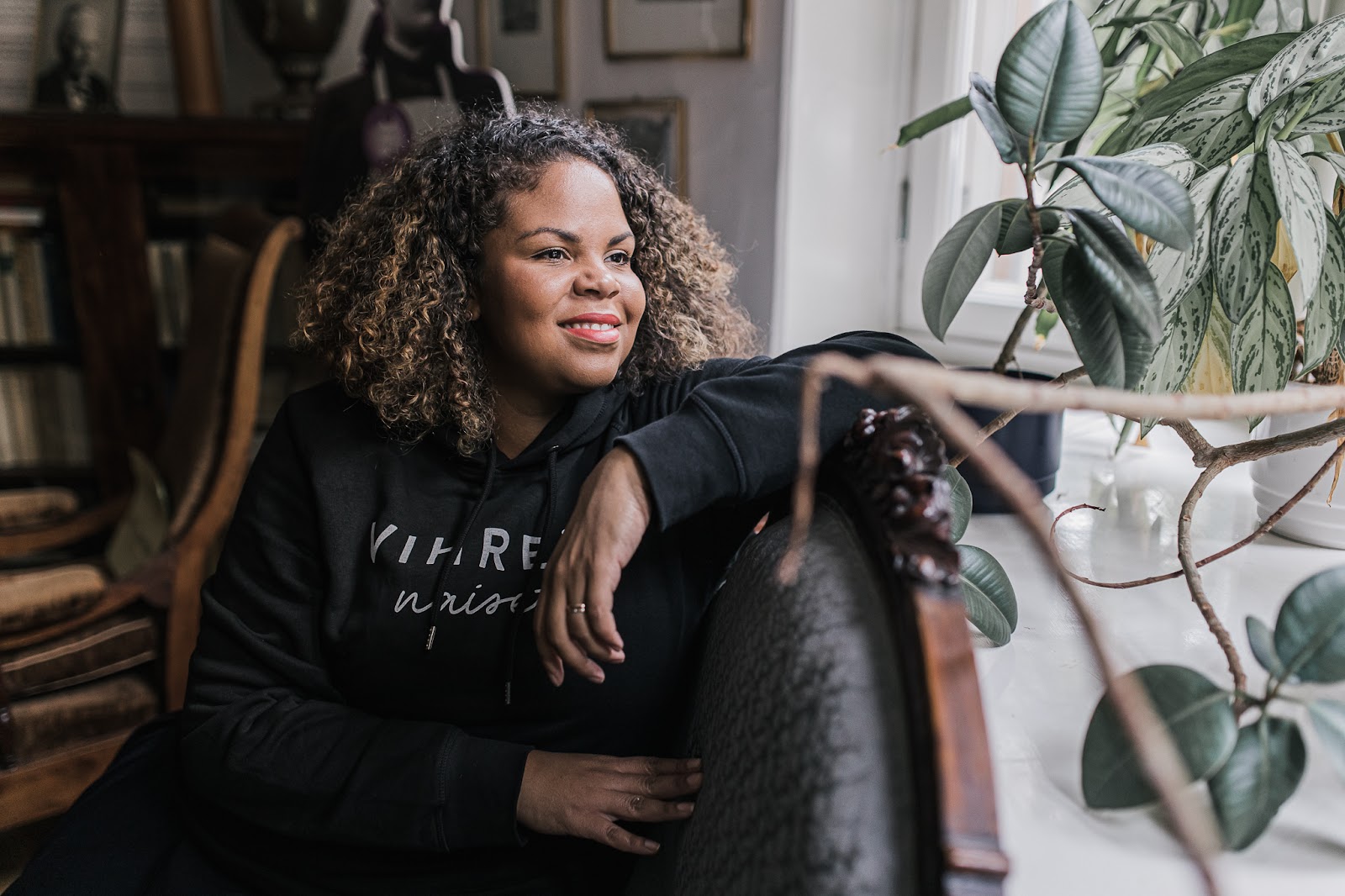
Fatim Diarra is the Chair of Helsinki City Council where she advocates for the rights of women and minorities. Her priorities are climate change, education, equality and anti-racism. Fatim is also the Chair of the Feminist Association Unioni, Finland’s oldest women’s rights organisation. 

©Satu Mali


If you could give one piece of advice to make your field of work better for women and gender diverse people, what would it be?

Let’s be there for each other. For me, it is an honor to support and be there for other women and gender diverse people in politics. When coordinated attacks happen against women in politics, I make it a point always to show up and defend my colleagues.  

What gives you hope for a feminist future? 

Social media! I feel like our collective efforts for feminism are growing as we connect to each other by social media. 

Margaux: “The exploitation of minority groups and of the Earth is a common problem”

Margaux De Ré is a Member of the Brussels Parliament and the Wallonia-Brussels Federation. She’s active in the areas of economy, employment and digital, gender equality, culture and media. Margaux’s ambition is to contribute to a more inclusive, more altruistic society, where everyone feels good and free to build a future for themselves.

We’re now in the middle of #16DaysofActivism against gender-based violence. What example of feminist activism has inspired you?

I am inspired and empowered by activism which combines environmental ethics with feminism. We live in a world where all fights are one. For this reason, the exploitation of minority groups and of the Earth as a common problem, with deep roots in the sexist, capitalist and colonialist mindset of violating instead of preserving and growing together. The change I want to be a part of is moving towards a society which recognises women and nature as fundamental and irreplaceable parts of humanity. We may walk under different conditions of opportunity, but we’re all going in the same direction.

Tell us your biggest feminist policy goal in 5 words!

From school to retirement, more autonomy for women! 

Digital technologies in Europe: An environmental life cycle approach

Did you know that digital technologies in Europe weighs more than all humans on earth? This is why the Greens/EFA are demanding an environmental life cycle approach to make our technological devices last longer and therefore more sustainable. Read the full study on the environmental impact of digital technologies here.

Key policy recommendations

Fewer, longer lasting and more sustainable digital devices:

  • To reduce the number of devices, make them multifunctional
  • Fight all forms of obsolescence by extending the legal duration of software update periods to a minimum of 5 years
  • Increase reuse rates by moving from proprietary systems to interoperable and open ones and making the right to return compulsory
  • Incentivise the durability of products, second hand purchases and refurbishment with consumer protection

Providing European citizens with reliable data on digital responsibility:

  • Create a scientific observatory and committee capable of providing consensus and peer-reviewed information to the European Commission on the environmental and health impacts of digital technology
  • Obligatory environmental impact assessments for manufacturers and/or distributors of digital products
  • Make environmental labelling mandatory for digital products and services
  • Regularly quantify the impact of digital technology in Europe and analyse the evolution of the structure of impacts

Strengthening the strategic autonomy of the EU on raw materials

  • Make Europe the industrial leader in secondary raw materials by establishing efficient recyclability standards and targets
  • Ensure the systematic collection of e-waste and prevent illegal pathways to keep the benefit of our valuable resources
  • Ban the opening of new raw material mines in Europe

Our digital world impacts our physical world

A constant and uncontrolled increase in our green-house gas emissions will make our reality one of cataclysmic and irreversible climate change.

Biodiversity is under unparalleled attack, with the sixth mass extinction underway. In the Anthropocene era, the evidence that our “extractivist” industrial model and our “consuming” society disrupt the Earth’s natural cycles is indisputable. We need to take action.

This study highlights the resounding impact of digital technology and the IT sector on our environment. It deconstructs the notion that the digital world is light and dematerialised – “virtual”, “in the clouds” – and that it has no impact on the physical world.

The COVID-19 pandemic has highlighted the Euro-pean Union’s heavy dependence on critical resources for the production of our digital devices. This is not just an environmental threat, but is precarious for the EU’s digital sovereignty.

How can we ensure our digital resilience for the times to come?

A systemic approach to change is fundamental. The industrial revolution saw a tenfold increase in humanity’s mechanical and energy capacity, but brought with it an environmental sacrifice that has taken us centuries to fully comprehend. The digital revolution will bring about equally fundamental changes – be they ecological, social, economic, democratic or geopolitical. We need to ensure that we do not usher in a similar Trojan horse.

Data will be key to ensuring that the digital and climate transitions do not hamper each other. Knowing the exact environmental cost of technology is a pre-requisite for green digital innovation. In order to make strong policy decisions for the future, we urgently need to assess the ecological impact of digital technology and its contribution to the European Green Deal. This must be backed up by action in European legislation: we need environmental standards for digital technologies, networks and infrastructures for their entire life cycle and condition our digital strategic decisions to their cost/benefits in terms of environmental impact.

A need for sustainable digital innovation

The European Commission, under the presidency of Ursula Von der Leyen, has declared its ambition to adapt the European economy to the urgency of our time with its flagship policies, the European Green Deal and Europe Fit for the Digital Age. Reconciling the dual ecological and digital transitions will be an essential pillar of future EU legislation.

Accurately assessing the impact of our digital technology will encourage sustainable digital innovation. This is the best way to ensure that digital advancement stays in line with the European Green Deal.

A European approach is essential to achieving a green and sustainable digital economy. We hope that this study will help lay the evidence-based foundations for the urgent political decisions that we must take to meet the challenges of our time.

Methodology

The study includes two complementary parts:

(1) A life-cycle assessment of digital technologies in Europe

The first part quantitatively assesses the impacts of digital technologies on the environment: it takes an inventory of the stock of equipment in use in the EU-28 in 2019 and assesses their impact across their whole life cycle: the manufacturing, distribution, use, and end-of-life. To ensure that all environmental impacts are taken into account, the methodology follows a multi-criteria approach that accounts for several environmental indicators beyond climate change. 

This approach ensures that so-called “impact transfers” – measures adopted to solve one environmental problem that eventually create another – or lesser-known harmful effects are not overlooked in the assessment.  

This life cycle assessment is groundbreaking for research as it is the first to create a harmonised inventory across the entire EU. 

(2) In depth-studies “Beyond the Numbers”

This part adopts a qualitative approach for emerging technologies and concepts like IoT, artificial intelligence, Cloud, 5G, autonomous vehicles, rebound effects, raw materials, e-waste and the circular economy. Each case study explains why the technology addressed is a help or a hindrance for the environment, highlighting some key findings, an expert’s input and when possible, some examples of solutions.

It is the first time that such extensive and harmonised data has been collected and gathered in one document, following a common standard and methodology. This study has been peer-reviewed with ISO 14071 methodology and complies with the best international standards regarding life cycle methodology (ISO 14040-44).

More information about the Greens/EFA’s campaign

On several occasions, the Greens/EFA Group in the European Parliament have brought to the Commission’s attention the importance of the digital transition for promoting the green transition. In 2020, the European Parliament voted in favour of the report, Towards a sustainable single market for business and consumers, by Greens/EFA MEP, David Cormand. This report  proposes measures to tackle premature obsolescence, reduce digital waste and ensure greater transparency and consumer protection.

Several letters have been shared with the Commission: a letter dated from April 2021 calling on the European Commission to introduce a clear legislative proposal for sustainable circular data centres in the EU, and another letter dated from October 2021 calling on the European Commission to adopt an ecological approach to connectivity. 

Le Numérique en Europe : Une approche des impacts environnementaux par l’analyse du cycle de vie

Le premier quart du XXIe siècle a été marqué par une augmentation sans précédent du nombre d’incendies de forêt, d’inondations et de phénomènes météorologiques extrêmes. Le constat que notre modèle de développement actuel a atteint ses limites et constitue désormais une menace directe pour notre civilisation et notre planète est clair. Les rapports scientifiques se précisent et sont de plus en plus alarmants.

Recommandations politiques

Diminuer les impacts environnementaux en réduisant le nombre de dispositifs en :

  • Réduisant le nombre d’appareils
  • Luttant contre toutes les formes d’obsolescence en portant la durée légale des périodes de mise à jour des logiciels à un minimum de 5 ans
  • Augmentant les taux de réemploi en passant de systèmes propriétaires à des systèmes interopérables et ouverts et en rendant le droit de retour obligatoire.

Encourager la durabilité des produits, l’achat d’occasion et la remise à neuf en protégeant les consommateurs

Fournir aux citoyens européens des données fiables sur le numérique responsable en :

  • Créant un observatoire et un comité scientifique capable de fournir à la Commission européenne des informations consensuelles et ayant faut l’objet d’une revue critique sur les impacts environnementaux et sanitaires des technologies numériques
  • Imposant des analyses du cycle de vie obligatoires des impacts environnementaux pour les fabricants et/ou distributeurs de produits numériques
  • Rendant obligatoire l’affichage environnemental pour les produits et services numériques
  • Quantifiant régulièrement l’impact du numérique en Europe et analysant l’évolution de la structure des impacts.

Renforcer l’autonomie stratégique de l’UE en matière de matières premières en :

  • Faisant de l’Europe le leader industriel des matières premières secondaires en établissant des normes et des objectifs efficaces en matière de recyclabilité
  • Assurant la collecte systématique des déchets électroniques et en prévenant les filières illégales afin de conserver le bénéfice de nos précieuses ressources
  • Interdisant l’ouverture de nouvelles mines de matières premières en Europe

Le virtuel impacte le monde physique

Une augmentation constante et incontrôlée de nos émissions de gaz à effet de serre fera advenir dans notre réalité un changement climatique cataclysmique et irréversible.

La biodiversité subit une attaque sans précédent avec la sixième extinction de masse en cours. À l’ère de l’Anthropocène, les preuves que notre modèle industriel « extractiviste » et notre société de « consummation » perturbent les cycles naturels de la Terre sont indiscutables. Nous devons agir.

Cette étude met en évidence l’impact retentissant du numérique et du secteur informatique sur notre environnement. Elle déconstruit l’idée que le monde numérique est léger et dématérialisé – « virtuel », « dans les nuages » – et qu’il n’a aucun impact sur le monde physique.

La pandémie du COVID-19 a mis en évidence la forte dépendance de l’Union européenne à l’égard de ressources critiques pour la production de nos appareils numériques. Il ne s’agit pas seulement d’une menace environnementale, mais d’une menace pour la souveraineté numérique de l’Union Européenne.

Comment pouvons-nous assurer notre résilience numérique pour les temps à venir ?

Pour faire face aux enjeux, il est fondamental d’adopter une approche systémique. La révolution industrielle qui a vu la capacité mécanique et énergétique de l’humanité décupler a aussi entraîné un sacrifice environnemental dont nous avons mis plusieurs siècles à prendre la mesure. La révolution numérique est en train d’entrainer des mutations tout aussi fondamentales, qu’elles soient écologiques, sociales, économiques, démocratiques ou géopolitiques. Nous devons nous assurer que la révolution industrielle numérique ne devienne pas un nouveau cheval de Troie.

Les données seront essentielles pour que les transitions numérique et climatique ne s’entravent pas mutuellement. Connaître le coût environnemental exact d’une technologie est une condition préalable à l’innovation numérique verte. Afin de prendre des décisions politiques fortes pour l’avenir, il est urgent d’évaluer l’impact écologique des technologies numériques et leur contribution au Pacte Vert européen. Cela doit être soutenu par des actions dans la législation européenne : nous avons besoin de normes environnementales pour les technologies, les réseaux et les infrastructures numériques pour l’ensemble de leur cycle de vie et conditionner nos décisions stratégiques numériques à leurs coûts/bénéfices en termes d’impact environnemental.

Un besoin d’innovation numérique durable

La Commission européenne, sous la présidence d’Ursula Von der Leyen, a affiché son ambition d’adapter l’économie européenne à l’urgence de notre temps avec ses politiques phares, le Pacte Vert européen et l’Europe adaptée à l’ère numérique. La conciliation de la double transition écologique et numérique sera un pilier essentiel de la future législation européenne.

L’évaluation précise de l’impact de notre technologie numérique encouragera l’innovation numérique durable. C’est le meilleur moyen de s’assurer que les progrès du numérique restent en phase avec le Pacte Vert européen.

Une approche européenne est essentielle pour parvenir à une économie numérique verte et durable. Nous espérons que cette étude contribuera à jeter les bases factuelles des décisions politiques urgentes que nous devons prendre pour relever les défis de notre époque.

Méthodologie

L’étude comprend deux parties complémentaires :

(1) Une évaluation du cycle de vie des technologies numériques en Europe

La première partie évalue quantitativement les impacts des technologies numériques sur l’environnement : elle réalise l’inventaire du stock d’équipements numériques en usage dans l’UE-28 en 2019 et évalue leur impact sur l’ensemble de leur cycle de vie : la fabrication, la distribution, l’utilisation et la fin de vie. Pour s’assurer que tous les impacts environnementaux sont pris en compte, la méthodologie suit une approche multicritère qui tient compte de plusieurs indicateurs environnementaux au-delà du changement climatique.

Les évaluations multicritères sont essentielles pour fournir une vue d’ensemble systémique des impacts environnementaux et éviter les transferts d’impact.

Cette évaluation du cycle de vie est inédite en qu’elle est la première à créer un inventaire harmonisé dans toute l’UE.

(2) Des études de cas approfondies “Au-delà des chiffres”.

Afin d’assurer une compréhension globale des impacts environnementaux du numérique et apporter des réponses à ces problématiques, nous avons rédigé 8 études de cas.

Cette partie adopte une approche qualitative pour les nouvelles technologies comme les objets connectés, l’intelligence artificielle, le Cloud, la 5G, les véhicules autonomes, les effets rebonds, les matières premières, les déchets électroniques et l’économie circulaire. Chaque étude de cas explique en quoi la technologie abordée est une aide ou un obstacle pour l’environnement, en mettant en avant certains résultats clés, l’avis d’un expert et, lorsque cela est possible, quelques exemples de solutions.

C’est la première fois que des données aussi complètes et harmonisées sont collectées et rassemblées dans un seul document, selon une norme et une méthodologie communes. Cette étude a été examinée par des experts selon la méthodologie ISO 14071 et est conforme aux meilleures normes internationales concernant la méthodologie du cycle de vie (ISO 14040-44).

Plus d’informations sur la campagne des Verts/ALE :

A plusieurs reprises, le Groupe des Verts/ALE au Parlement européen a attiré l’attention de la Commission sur l’importance de la transition numérique pour promouvoir la transition verte. En 2020, le Parlement européen a voté en faveur du rapport “Vers un marché unique durable pour les entreprises et les consommateurs” du député européen Verts/ALE David Cormand. Ce rapport propose des mesures pour lutter contre l’obsolescence prématurée, réduire le gaspillage numérique et assurer une plus grande transparence et protection des consommateurs.

Plusieurs lettres ont été partagées avec la Commission : une lettre datée d’avril 2021 demandant à la Commission européenne d’introduire une proposition législative claire pour des centres de données circulaires durables dans l’UE, et une autre lettre datée d’octobre 2021 demandant à la Commission européenne d’adopter une approche écologique de la connectivité.

Loi contre la déforestation importée : une proposition de la Commission en demie teinte. La bataille ne fait que commencer.

La Commission européenne a finalement publié sa tant attendue proposition visant à réduire la déforestation provoquée par l’Union, après des années de pression exercée par les Verts/ALE et les ONG.  Les députés européens Verts/ALE, Marie Toussaint (FR), Heidi Hautala (FIN), Tilly Metz (LUX), Ville Niinisto (FIN), Anna Deparnay-Grunenberg (DE-FR), Rosa d’Amato (IT), Grace O’Sullivan (IR) et Anna Cavazzini (DE) affirment qu’il s’agit d’une étape importante, mais que des améliorations considérables sont nécessaires si l’on veut protéger la nature et mettre un terme à la violation des droits humains provoquée par la consommation de l’Union européenne.

La Commission a enfin publié sa proposition, attendue de longue date, visant à réduire la contribution de l’UE à la déforestation et à la dégradation des forêts dans le monde ! Les Européens ont besoin de savoir si leurs achats ne les rendent pas complices de la destruction des forêts naturelles, et pour cela, de nouvelles mesures sont absolument nécessaires. En effet, l’UE est responsable de 16 % de la déforestation tropicale liée aux échanges internationaux de produits tels que la viande, l’huile de palme ou le soja.

Grâce à cette nouvelle réglementation, l’Union européenne obligera les entreprises à vérifier, dans le cadre d’un processus appelé «devoir de diligence obligatoire», que quelque soit les produits vendus sur le marché européen, ils ne proviennent pas de terrains où les forêts ont été dégradées ou entièrement défrichées pour les produire.

Malheureusement, la proposition finale de la Commission présente des lacunes majeures qui, si elles étaient inscrites dans la législation finale, nuiraient gravement à son efficacité.

Une définition de “déforestation” excluant des écosystèmes à risques ; des produits responsables de déforestation exclus

La Commission européenne souhaite s’en tenir à six produits qui peuvent poser un grave danger pour les forêts: bœuf, huile de palme, soja, café, cacao et bois. Toutefois, les scientifiques ont averti que l’UE ne devrait pas exclure certains produits de base «prématurément» de sa législation. La production de caoutchouc et de maïs, par exemple, est également à l’origine de la déforestation.

La Commission souhaite que la nouvelle loi protège les forêts, mais pas d’autres écosystèmes précieux tels que les savanes, les zones humides et les tourbières.

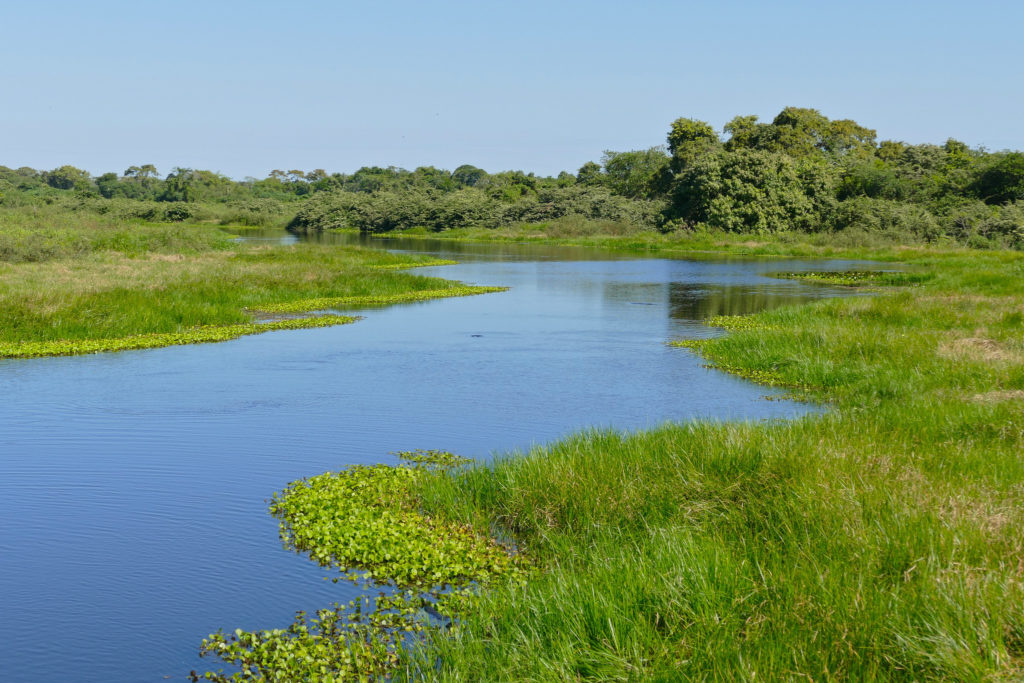
Bien que la Commission indique que ces zones et produits pourraient être ajoutés ultérieurement, ce délai présente des risques. En effet, si ces lacunes ne sont pas comblées, la nouvelle loi risque de provoquer des effets pervers : les entreprises pourraient commencer à déboiser les forêts pour le caoutchouc plutôt que le cacao, ou à déplacer la destruction des forêts vers des écosystèmes riches en nature tels que les zones humides du Pantanal ou Cerrado savannah.

Impunité pour les violations des droits humains et pour les banques qui s’enrichissent de la destruction des forêts tropicales

Dans la nouvelle proposition de la Commission européenne relative à la déforestation, les entreprises n’ont pas à vérifier si les produits de base sont liés à des violations des droits humains.

La conversion des forêts tropicales et d’autres écosystèmes précieux en terres agricoles est souvent liée à l’accaparement des terres ou à des actes de violence, en particulier envers les peuples autochtones. Il est donc primordial d’inclure la défense des droits humains dans le texte sur la déforestation importée ! L’UE ne doit pas être complice des violations des droits de l’homme, tout comme elle ne doit pas être complice de la déforestation tropicale.

La proposition néglige également les organisations financières qui soutiennent les entreprises impliquées dans la destruction de la nature par des investissements, des prêts ou d’autres services. Entre 2016 et 2020, les banques et les gestionnaires d’actifs basés dans l’UE ont généré 401 millions d’euros de recettes dans le cadre d’accords avec des entreprises accusées de détruire les forêts tropicales.

Une absence de contrôle potentielle pour les produits originaires de certains pays

La proposition de la Commission se base sur un classement des États importateurs selon les «risques» qu’ils font courir à la forêt. La Commission européenne souhaite abaisser les exigences applicables aux entreprises qui s’approvisionnent en produits dans des pays dits «à faible risque». Mais cela risque de créer une faille importante : il suffirait de «blanchir» les produits provenant de «pays à haut risque» en les faisant passer par l’intermédiaire de «pays à faible risque».

De toute évidence, une loi n’est efficace que si elle est mise en œuvre et appliquée. Or, si l’UE adopte une coquille vide, un texte aux apparences ambitieuses mais totalement inefficace dans la pratique, alors elle continuera à entraîner la destruction d’écosystèmes fragiles dans le monde entier.

Proposition de la Commission visant à mettre un terme à la déforestation provoquée par l’UE: des améliorations peuvent et doivent être incluses dans le texte

La bataille ne fait que commencer. La proposition de la Commission va maintenant être suivie d’une réponse par le Parlement Européen. Ici donc, nous devons réussir à adopter un texte fort avec notamment deux points essentiels : Premièrement, la loi doit contraindre les entreprises à montrer que leurs chaînes d’approvisionnement sont totalement exemptes de destruction de la nature et de violations des droits humains. Deuxièmement, la loi doit exiger des banques opérant dans l’UE qu’elles démontrent que leurs investissements ne contribuent pas à ces résultats.

Si nous ne tenons pas compte des entreprises qui tirent profit de ces pratiques, l’engagement pris récemment par l’UE de dépenser un milliard d’euros pour protéger les forêts du monde reviendrait à des paroles en l’air. L’UE ne serait pas non plus en mesure d’honorer l’engagement qu’elle a pris lors de la COP 26 de contribuer à «enrayer et inverser la perte de forêts et la dégradation des terres d’ici à 2030».

L’UE doit jouer un rôle moteur dans la lutte mondiale en faveur de la protection de nos forêts ; nous ne pouvons pas fermer les yeux sur les entreprises responsables de la destruction de nos précieux écosystèmes et des violations flagrantes des droits humains. Les consommateurs européens doivent être sûrs que leurs achats ne détruisent pas les forêts. Si la proposition de la Commission européenne formule quelques très bonnes suggestions, elle manque toutefois de s’attaquer aux racines du problème. Les Verts au parlement européen veilleront à ce que notre nouvelle réglementation sur la déforestation importée ne soit pas une coquille vide.

Pour en savoir plus sur ce sujet, consultez notre page de la campagne.